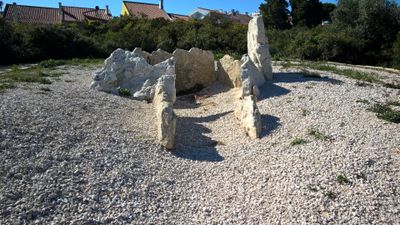
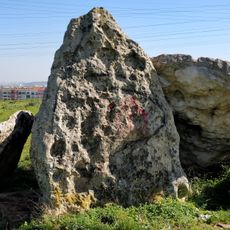
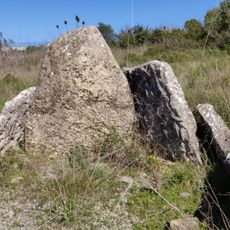
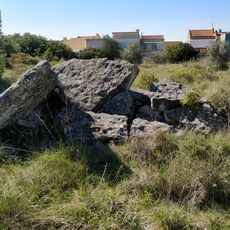
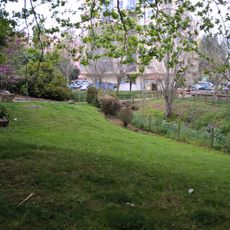
Anta de Agualva, Neolithic dolmen in Agualva-Cacém, Portugal.
Anta de Agualva is a Neolithic megalithic chamber with a polygonal shape, supported by seven standing stones and reached through an access passage. The interior space measures roughly 3.7 by 3.8 meters and demonstrates the construction skills of prehistoric builders.
The structure dates to the 4th millennium BC and was used as a burial site in ancient times. It was first documented in 1875 by researcher Carlos Ribeiro, who systematically studied megalithic monuments across the region.
This ancient monument served as a communal burial ground during the late Neolithic period, where people were interred along with personal objects. The remains discovered at the location reveal how these prehistoric communities honored and remembered their dead.
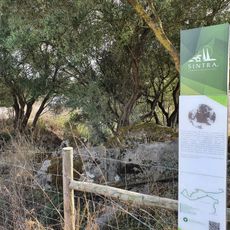
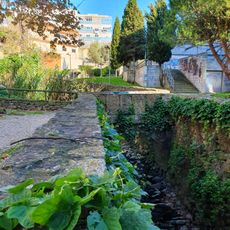
The site is located within the Jardim da Anta park, established in 2004, where the ancient structure has been integrated into a modern landscaped setting. Visitors will find maintained pathways and information signs that make access straightforward.
Three large stones at the site are remnants of the original covering slab that sealed this prehistoric tomb. These fragments offer rare physical evidence of the burial chamber's original construction and antiquity.
The community of curious travelers
AroundUs brings together thousands of curated places, local tips, and hidden gems, enriched daily by 91,724 contributors worldwide.