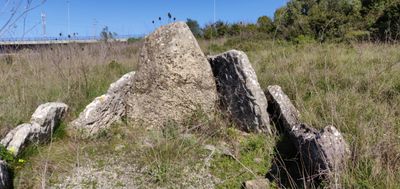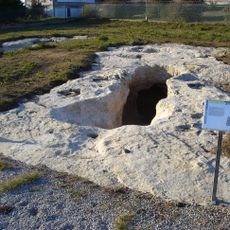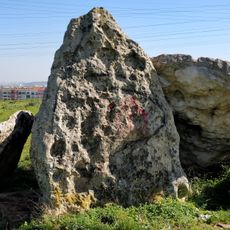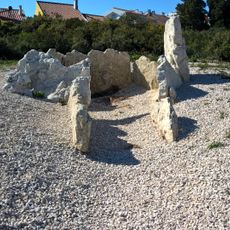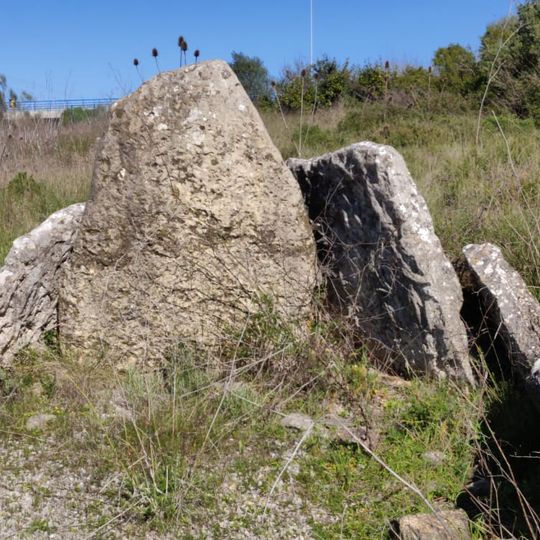
Estria dolmen, Neolithic dolmen in Queluz e Belas, Portugal.
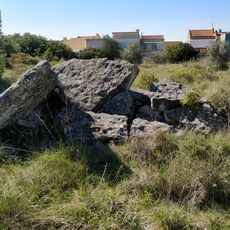
Estria dolmen is a prehistoric burial structure made of stone slabs arranged in a polygonal chamber shape, about 2.5 meters wide and 2.75 meters tall. A corridor passage connects to the main chamber, creating a distinctive enclosed space within the surrounding landscape.
The structure was built during the Neolithic period between 4000 and 2500 BC as a burial site on the Iberian Peninsula. Researchers excavated and studied it in 1875, finding human remains along with stone and bone artifacts.
The monument reflects how prehistoric communities honored their dead by building stone burial chambers that served their communities for generations. These structures reveal deep-rooted beliefs about death and remembrance in ancient Iberian society.
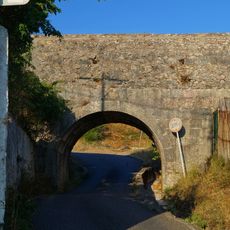
The site is accessible year-round through a footbridge that crosses over a nearby highway slip road. Wear sturdy shoes when visiting as the ground is uneven and the stone structure requires careful footing.
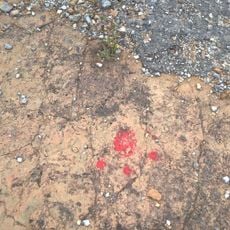
The corridor was deliberately oriented using a natural rock depression that already existed in the landscape. This clever adaptation shows how ancient builders worked with the natural features already present in the terrain.
The community of curious travelers
AroundUs brings together thousands of curated places, local tips, and hidden gems, enriched daily by 91,372 contributors worldwide.