Satu Mare Synagogue, Synagogue and historic monument in Satu Mare, Romania.
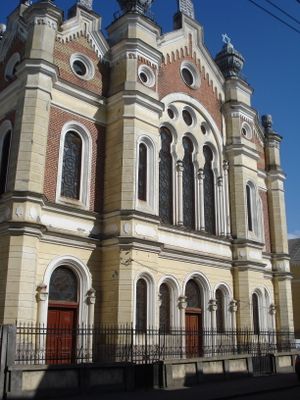
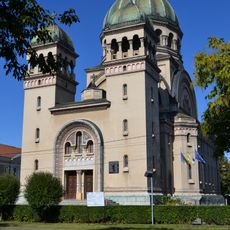
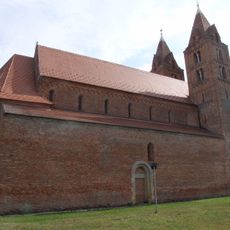
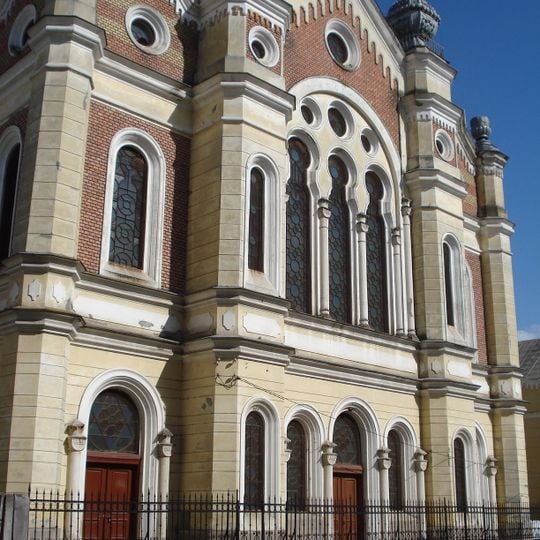
The Satu Mare Synagogue is a Neo-Mudéjar building with a three-part facade that mirrors its internal three-nave structure. Detailed brickwork and ornamental patterns cover the entire building, showing the careful craftsmanship of its design.
The Great Temple was built between 1889 and 1892 in Moorish style to designs by Hungarian architect Nándor Bach, replacing the first synagogue erected on Decebal Street in 1852–1858. It seats 846 people and had an organ from the outset. In 1927 the smaller Saare Tora prayer house was added beside it.
The Great Temple is a Neolog (liberal) synagogue with 846 seats and an organ installed from the outset. Beside it stands the Saare Tora prayer house, built in 1927 in Baroque style; unlike the temple, it served only for prayer, while the temple could host cultural events. A memorial plaque unveiled on 12 June 2005 lists the names of Satu Mare Jews killed at Auschwitz-Birkenau in 1944.
The synagogue stands at 4 Decebal Street, with the prayer house beside it at no. 6. The Holocaust memorial is in the courtyard shared by the two buildings. The complex is listed on Romania's National Register of Historic Monuments.
The prayer house next to the Great Temple, built in 1927, is in Baroque style, unlike the Moorish Revival temple; the two buildings stand side by side with different functions, the prayer house serving only for worship while the temple also hosted cultural activities. The Great Temple has 846 seats and was fitted with an organ from the start.
The community of curious travelers
AroundUs brings together thousands of curated places, local tips, and hidden gems, enriched daily by 94,527 contributors worldwide.