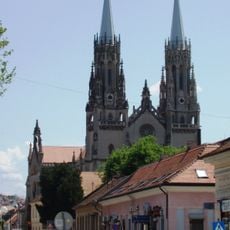
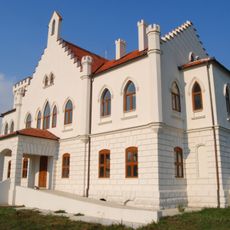
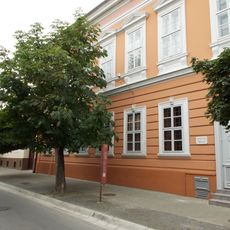
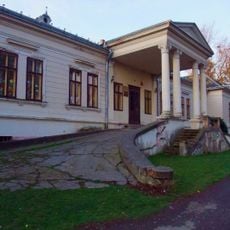
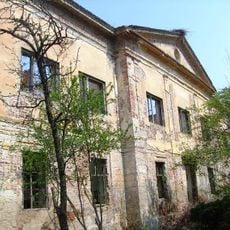
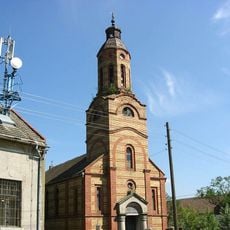
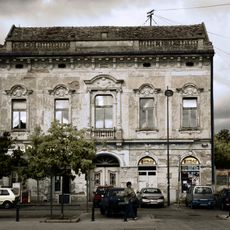
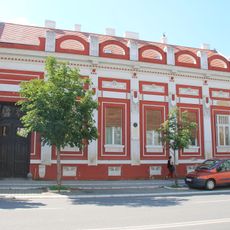
Sveti Đurađ monastery, Serbian Orthodox monastery in Timiș County, Romania.
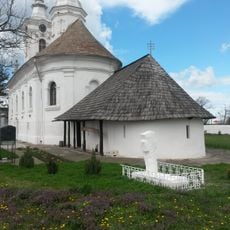
Sveti Đurađ is a Serbian Orthodox monastery featuring a church with a cruciform base crowned by a dome. The overall complex was largely built in 1794 and includes residential and service buildings alongside the main place of worship.
Serbian despot Jovan Branković founded this monastic community in 1485 as a religious and cultural center. The complex underwent substantial renewal in the second half of the 18th century under the leadership of Iguman Augustin Petrović.
The monastery takes its name from Saint George, reflecting deep reverence for this figure in Serbian Orthodox tradition. The iconostasis displays work by local artists from the 18th century, representing an important part of Serbian Baroque art in the region.
The monastery lies at Mânăstire, on the right bank of the Bârzava, beside the Vršac–Timișoara road, about 20 km from the Serbian border. The church and the monks' cells are listed as separate historic monuments, so look for both entries on site. Services are held in Serbian and Old Church Slavonic; the last resident nun, Sister Evgenija, died in 2020, so the buildings are not always open.
The monastery's most unexpected relic is a piece of the chain with which Saint Peter was bound, kept alongside a fragment of Saint George's skull brought in the 15th century by Đorđe Branković. The skull fragment is the reason the Branković family's foundation bears George's name.
The community of curious travelers
AroundUs brings together thousands of curated places, local tips, and hidden gems, enriched daily by 93,611 contributors worldwide.