Szászhermányi láp, Nature reserve in Brașov County, Romania.
Mlaștina Hărman is a two-hectare spring-fed fen immediately west of Hărman village, between the Lempeș hill and the DJ112A road. Several cold springs and streams cross flat ground where the water table lies 15–25 cm deep, and about one metre of eutrophic peat rests on sand and gravel. It is the only part of the commune's former marsh that was not drained for pasture.
The marsh was declared a botanical reserve in 1962, originally covering 8 hectares. Drainage and grazing reduced it to 4.5 hectares, of which 2 hectares are the actual swamp and 2.5 hectares a buffer zone. Since 2007 it has been part of the Natura 2000 site Dealul Cetății Lempeș – Mlaștina Hărman (ROSCI0055), together with the neighbouring Lempeș hill.
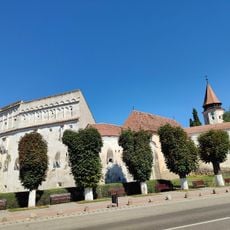
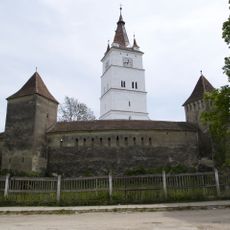
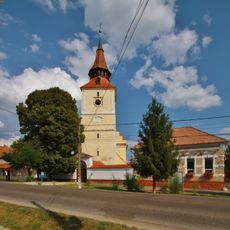
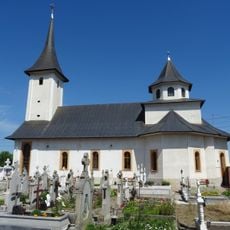
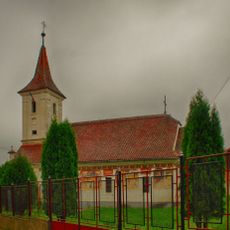
The swamp's Hungarian name, Szászhermányi láp, links it to the village of Szászhermány (Hărman), while its German name, Honigberger Moor, refers to the same settlement. The surrounding Saxon villages keep fortified churches: Hărman's 13th-century church has a Gothic west portal and a 14th-century triple ring of walls, and Prejmer's complex includes two towers and two bastions.
You can reach the reserve by car along National Road DN11 from Brașov toward Hárman. Continue on County Road DJ112A where the reserve entrance appears on the left side of the road.
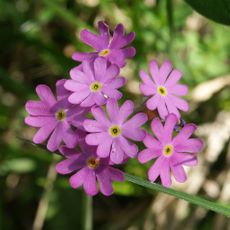
The marsh is fed by cold springs, and its groundwater lies only 15–25 cm below the surface, under which about a metre of eutrophic peat has formed on sandy, gravelly subsoil. Several species reach their southernmost European limit here, among them Pedicularis sceptrum-carolinum, Primula farinosa, Pedicularis sylvatica and Calamagrostis neglecta.
The community of curious travelers
AroundUs brings together thousands of curated places, local tips, and hidden gems, enriched daily by 94,199 contributors worldwide.