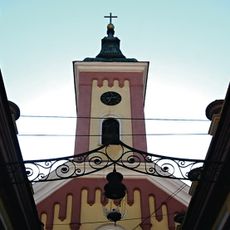
Mănăstirea Călugăra, Orthodox monastery at Oravița, Romania.
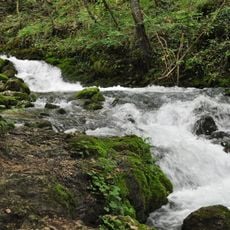
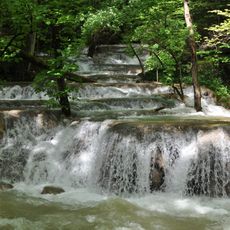
Mănăstirea Călugăra stands on the Ciclova Valley, 2 km east of Ciclova Montană, at the foot of a limestone crag called Stânca Rolului that rises nearly a thousand metres above it. The monastery church, listed as historic monument CS-II-m-B-11095, was built of stone and brick by local farmers in 1860–1861 under the hieromonk Alexie Nedici. Springs run down the slopes around the buildings.
The monastery was founded in 1859 on the site of an old monastic cell in the Ciclova Valley. Local residents, mostly farmers, built the church in 1860–1861 at the initiative of hieromonk Alexie Nedici. The site had been venerated since 1830, when shepherd Iancu Cârșovanul reported hearing angelic singing beneath Stânca Rolului.
The monastery serves as a place where Orthodox believers gather for worship and prayer throughout the year. You can observe how the community maintains traditional religious practices through daily rituals and devotional activities.
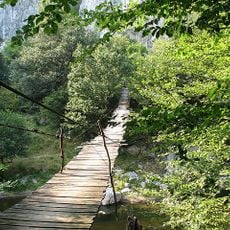
The monastery lies about 2 km east of Ciclova Montană, near Oravița, at the foot of Stânca Rolului, reached by an uphill path through forest. The church is listed as historic monument CS-II-m-B-11095. Visitors come on Sundays and major feast days, when locals gather with candles and icons.
Within the monastery grounds stands a remarkable artistic feature - a sacred image carved directly into a beech tree that has remained exposed without bark covering for more than a century. This unusual religious artifact has captured the attention of visitors and continues to intrigue those who discover it.
The community of curious travelers
AroundUs brings together thousands of curated places, local tips, and hidden gems, enriched daily by 93,128 contributors worldwide.