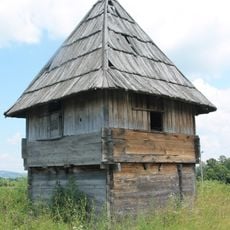
Ravna Gora, Mountain summit in Valjevo region, Serbia.
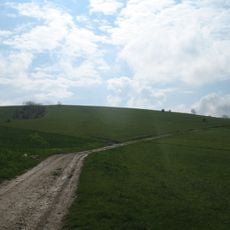
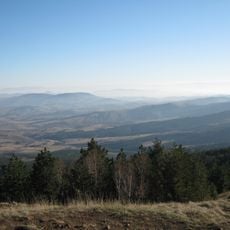
Ravna Gora is a highland on the western and southwestern slopes of Mount Suvobor in western Serbia. It is mostly made of serpentine with some limestone, covered in meadows and pastures, while its edges are cut by dry valleys and dense beech forests. Until 1941 there were about 120 shepherd huts, over 50 of them at Vežinac, mostly owned by residents of Koštunići.
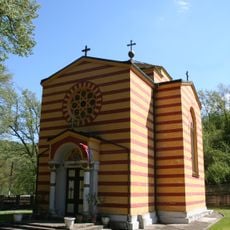
In 1941, Colonel Draža Mihailović chose this highland on Suvobor's western slopes as the headquarters of the Yugoslav Army in the Fatherland, the Chetnik movement. A memorial complex was built here in the 1990s to preserve the memory of that army and its leader. In 1995 the site hosted a celebration of the 50th anniversary of Victory Day, attended by Richard Felman, one of over 400 US airmen rescued by the Chetniks.
In the village of Koštunići, to which Ravna Gora belongs, Serbia's first tourist ethno-village opened in the 1990s, with apartments and restaurants; the model then spread across the country. The hamlet of Vežinac held over 50 shepherd huts before 1941, mostly owned by Koštunići families, and only 5 remained by 1984.
Ravna Gora is a highland on the western and southwestern slopes of Mount Suvobor, reached from the village of Koštunići, to which it belongs. The terrain is mostly serpentine with some limestone, covered by meadows and pastures, while the edges drop into dry valleys and dense beech forest. The forest house near Damjanov Kamen was later taken over by a hunting society.
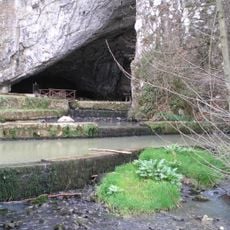
Mokra Pećina, a cave cut into a steep limestone wall north of Damjanov Kamen, has an entrance about 15 m wide and a 4.5 m ceiling with three small openings above it. A strong stream flows out of it, giving the cave its name; some 200 m downstream a spring rises from the rock beside the stream.
The community of curious travelers
AroundUs brings together thousands of curated places, local tips, and hidden gems, enriched daily by 94,359 contributors worldwide.