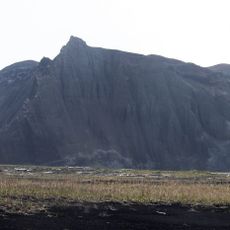
Zheltovsky, Stratovolcano in Kamchatka Peninsula, Russia.
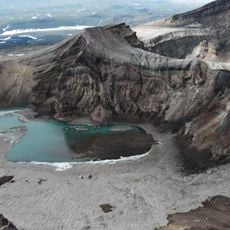
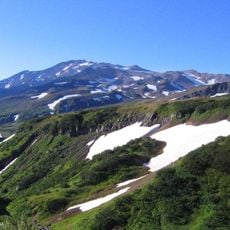
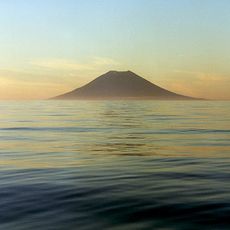
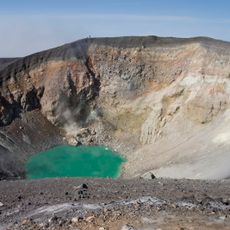
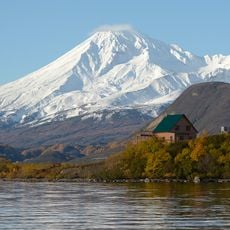
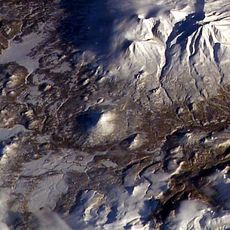
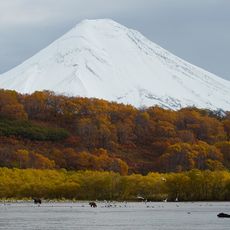
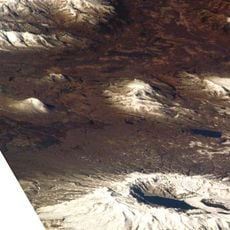
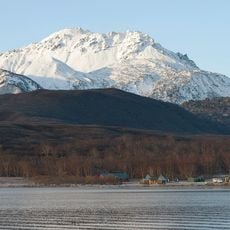
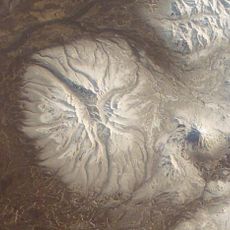
Zheltovsky is a stratovolcano on Russia's Kamchatka Peninsula that rises to roughly 1,950 meters at its peak. The summit contains a broad crater depression, and the volcano is composed of two distinct cones with sloping flanks built from layered rock and ash deposits.
Zheltovsky began forming in the Upper Pleistocene and finished in the Holocene. One of its largest eruptions occurred in 1823; after a century-long pause, activity resumed for two months. The last eruption was recorded in March 1972, and since then the volcano has been in a stage of fumarolic activity. A large collapse occurred in summer 2012.
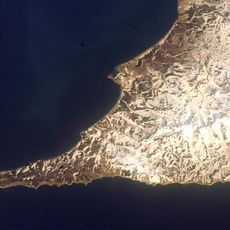
The Itelmen name Utashud was used for the volcano in local Kamchatkan speech until the end of the last century; it was also given to a small island in Vestnik Bay. From the 19th century, sailors more often called it Tretya Sopka, the third landmark after Kambalnaya and Ilyinskaya on the route from Cape Lopatka northeast.
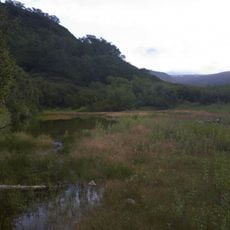
This location sits within a protected natural reserve and access is limited, so visitors should check current conditions and permitting requirements before planning a trip. The terrain is rough and weather can change quickly, so proper equipment and thorough preparation are important.
Until the late 20th century the Itelmen name Utashud was still used locally for the volcano, and the same name was given to a small island in Vestnik Bay. Sailors from the 19th century more often called it Tretya Sopka, the third landmark after Kambalnaya and Ilyinskaya on the route from Cape Lopatka.
The community of curious travelers
AroundUs brings together thousands of curated places, local tips, and hidden gems, enriched daily by 93,700 contributors worldwide.