Nizhnesini︠a︡chikhinskiĭ muzeĭ-zapovednik, Regional cultural heritage museum in Nizhni︠a︡i︠a︡ Sini︠a︡chikha, Russia.
The Nizhnesinyachikhinsky Museum-Reserve of Wooden Architecture and Folk Art, named after I. D. Samoylov, occupies 64 hectares on the banks of the Sinyachikha River beside the Spaso-Preobrazhenskaya Church. Its complex holds more than 20 buildings, among them three peasant estates of the 17th, 18th and 19th centuries, five chapels, a windmill, a fire tower and the tower of the Aramashevsky ostrog.
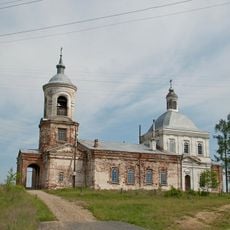
The village of Nizhnyaya Sinyachikha, founded in 1680, lay near the Tsar's highway linking European Russia with Siberia. From 1947 the land surveyor Ivan Samoylov bought icons, painted wall panels and household objects at his own expense; in 1967 he began restoring the derelict late-18th-century Spaso-Preobrazhensky church, consecrated in 1823. The museum opened in that building on 16 September 1978, and in 1988 gained the status of an open-air reserve of wooden architecture and folk art.
The five chapels now serve as exhibition rooms. The Ascension chapel shows textile and papier-mâché work by villager Kristina Chuprakova, the Alexander Nevsky chapel holds a collection of old wood engravings, and the Savvaty and Zosima Solovetsky chapel displays local paintings by Anna Ivanovna Trofimova.
The open-air grounds cover 64 hectares on the banks of the Sinyachikha river, with the Spaso-Preobrazhenskaya church as the starting point and the wooden buildings set out around it. The chapels of Alexander Nevsky and of Zosima and Savvaty hold small displays, and the Alexander Nevsky chapel has a viewing platform on its roof reached above the river. Allow time to cross the whole site on foot.
The museum holds a rare collection of Ural folk paintings that decorated shutters and household items. These colorful patterns tell stories about the daily lives of the people who lived in the region.
The community of curious travelers
AroundUs brings together thousands of curated places, local tips, and hidden gems, enriched daily by 94,671 contributors worldwide.