Epiphany Monastery, Orthodox monastery in Kitay-gorod, Moscow, Russia
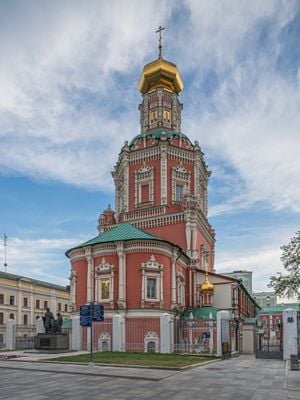
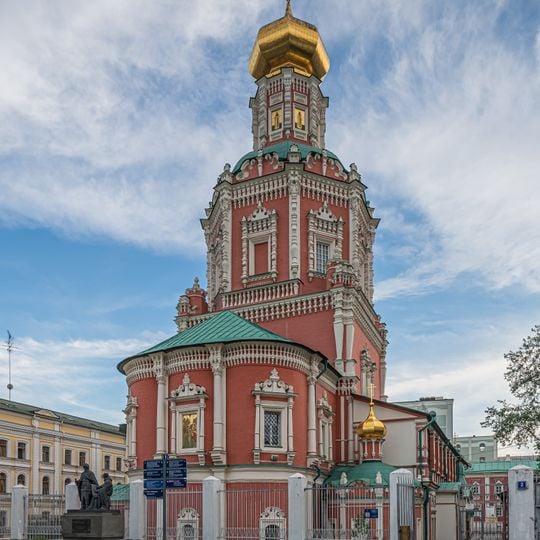
Epiphany Monastery stands in Bogoyavlensky Lane in Kitay-gorod, one block from the Kremlin. Its Epiphany Cathedral, consecrated in 1696 in the Muscovite baroque style, is built of red masonry with dense white stone ornament; a green band with scalloped edge sits below an octagonal drum topped by a ribbed golden onion dome. A 1739 belltower rises beside it, and a white fence with stone pillars runs along the base.
The monastery was established in the late 13th century and became one of Moscow's oldest religious institutions. It gained prominence when educational activities expanded within its walls during the 17th century.
The monastery's name comes from the feast of the Epiphany (Theophany). In 1685 a school opened here under the Greek monks Ioannikios and Sophronios Likhud, teaching about 180 pupils within two years; in 1687 it moved to the Zaikonospassky Monastery and became the Slavic Greek Latin Academy. The Kazan Icon, carried by Minin and Pozharsky's militia in the Time of Troubles, was later transferred into the cathedral.
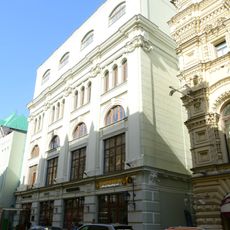
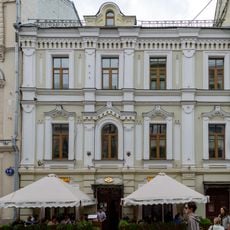
The monastery stands in Bogoyavlensky Lane, one block from the Kremlin. Only the Epiphany Cathedral with its bell tower, the lower Kazan church, the monks' cells and the abbot's chambers survive; an office building occupies the rest of the site. The cathedral functions as a parish church, so visits are fitted around services.
The 1696 Epiphany Cathedral incorporated medieval sepulchres, and the monastery long drew estates and gifts from Vasili III, Ivan the Terrible and Boris Godunov. In 1867 it displayed relics from the Russian St. Panteleimon Monastery on Mount Athos, including the "Quick to Hear" icon and a fragment of the Stone of the Holy Sepulchre.
The community of curious travelers
AroundUs brings together thousands of curated places, local tips, and hidden gems, enriched daily by 93,136 contributors worldwide.