See the monuments around you in AROpen chests in the app
Around Us is built for your phone — point your camera at the streets and discover the monuments and places around you in augmented reality.Around Us is built for your phone — chests unlock when you walk, explore and capture nearby places.
From London's tilted towers to Berlin's transparent dome, Norman Foster designs buildings that mix clean lines with engineering precision.
Norman Foster has shaped contemporary architecture through technical innovation and design clarity. His buildings feature extensive glass facades, exposed steel structures and energy systems. The Reichstag dome in Berlin with its spiral ramp and the circular Apple Park in Cupertino demonstrate his approach to combining function with geometric form.
In London, Foster created several landmarks that define the city's modern skyline. The tower at 30 St Mary Axe, known as the "Gherkin" for its distinctive shape, rises above the financial district. The Millennium Bridge connects the Tate Modern to St Paul's Cathedral as a slender pedestrian crossing. His portfolio includes airport terminals, office towers and cultural buildings across multiple countries, documenting his influence on international construction.
From London's tilted towers to Berlin's transparent dome, Norman Foster designs buildings that mix clean lines with engineering precision.
Norman Foster has shaped contemporary architecture through technical innovation and design clarity. His buildings feature extensive glass facades, exposed steel structures and energy systems. The Reichstag dome in Berlin with its spiral ramp and the circular Apple Park in Cupertino demonstrate his approach to combining function with geometric form.
In London, Foster created several landmarks that define the city's modern skyline. The tower at 30 St Mary Axe, known as the "Gherkin" for its distinctive shape, rises above the financial district. The Millennium Bridge connects the Tate Modern to St Paul's Cathedral as a slender pedestrian crossing. His portfolio includes airport terminals, office towers and cultural buildings across multiple countries, documenting his influence on international construction.
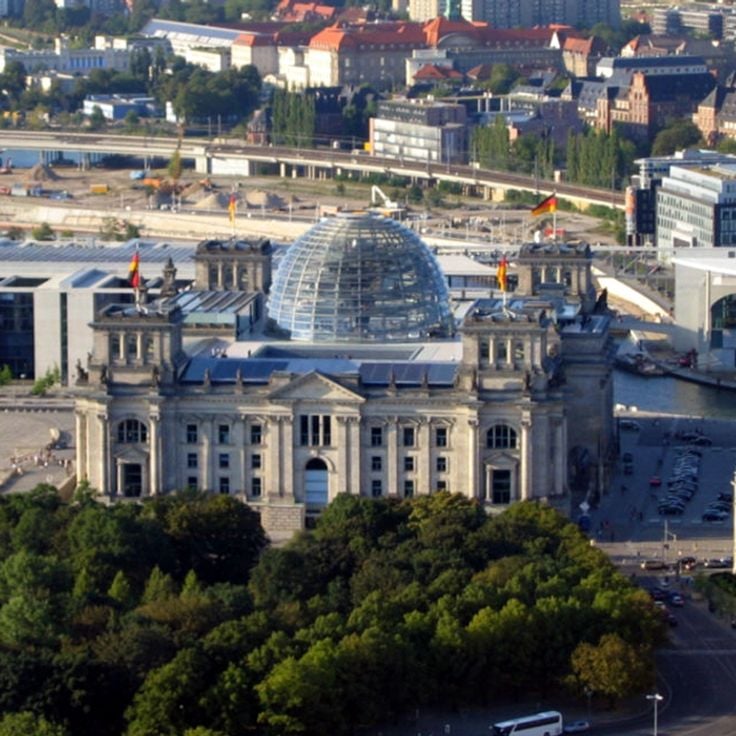
The Reichstag Dome was designed by Norman Foster and completed in 1999. This glass construction features a transparent cupola with two spiral ramps that wind around a central mirrored cone. Visitors can walk up the ramps while looking down through the glass floor directly into the plenary chamber of the German Bundestag. The dome simultaneously serves as a functional element of the building's infrastructure, providing natural ventilation and lighting for the parliamentary building.
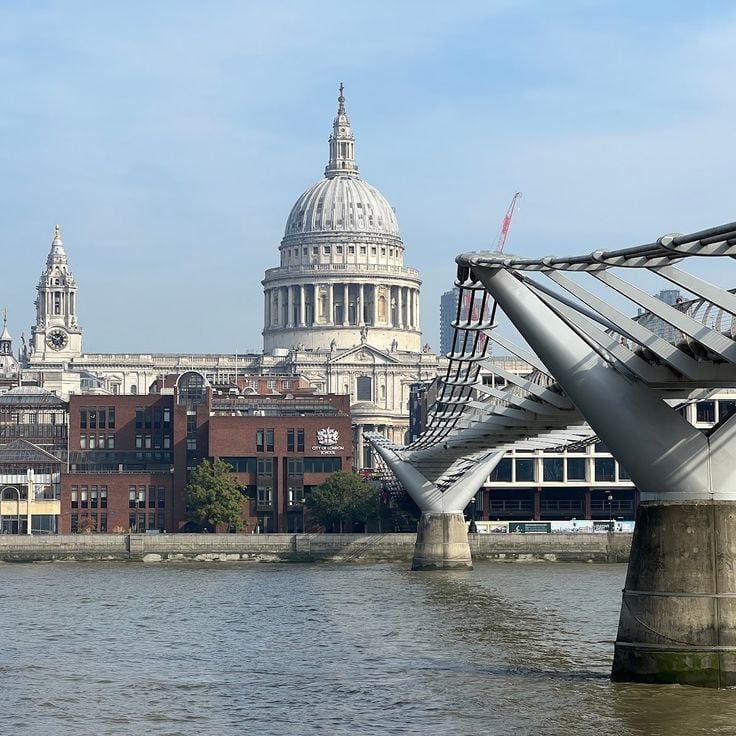
The Millennium Bridge is a steel footbridge that connects Tate Modern on the south bank of the Thames to St. Paul's Cathedral on the north bank. Norman Foster designed it with a flat, open structure that keeps the sightlines to the river clear. Part of Foster's work in London, the bridge gives pedestrians a direct path between two of the city's most visited cultural sites, with open views of the water and the buildings along the riverbanks on either side.
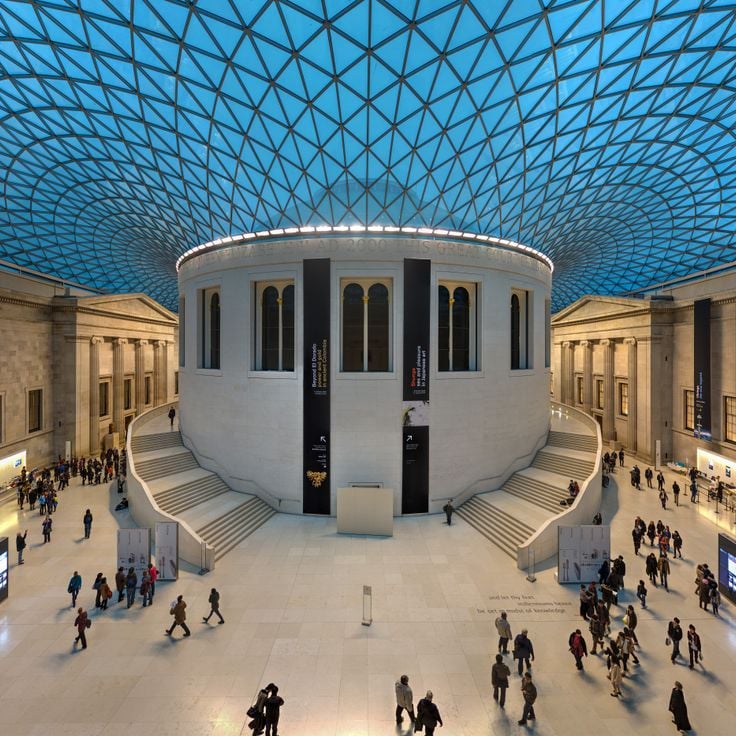
The Great Court of the British Museum spans 6000 square meters and is covered by a roof structure of geometric glass panels designed by Norman Foster. At the center of this space stands the cylindrical Reading Room, originally used as a library. The glass construction comprises more than 3000 individual panes, no two of which are identical. The Great Court serves as the central distribution space for the museum's various galleries and provides visitors with access to exhibition rooms, cafés, and the museum shop.
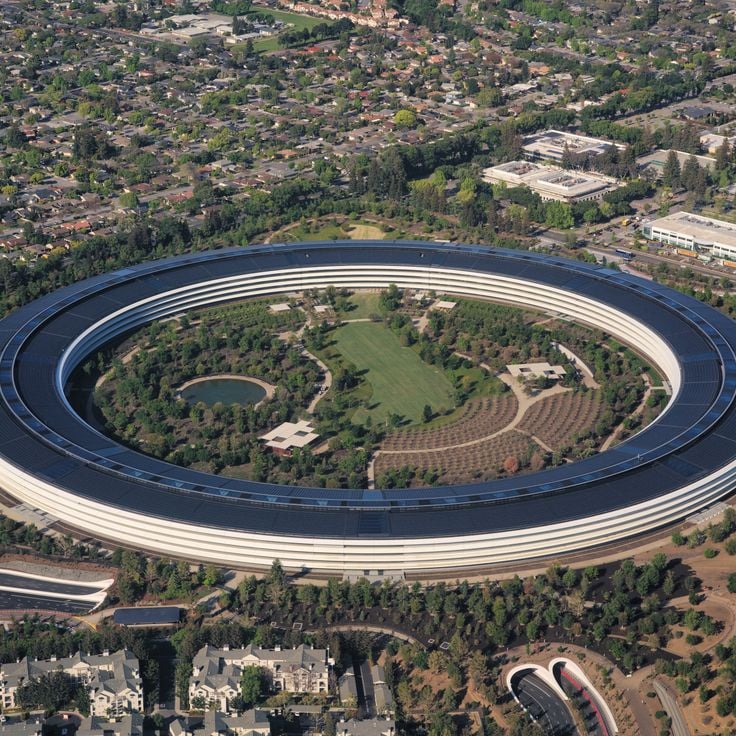
Apple Park serves as the headquarters of Apple Inc. in Cupertino, California. Completed in 2017, this Norman Foster designed complex features a circular building with a diameter of 461 meters. The structure provides workspace for 12000 employees and is surrounded by green spaces, orchards, and a visitor center. The campus operates on renewable energy and includes one of the largest solar roof installations in North America.
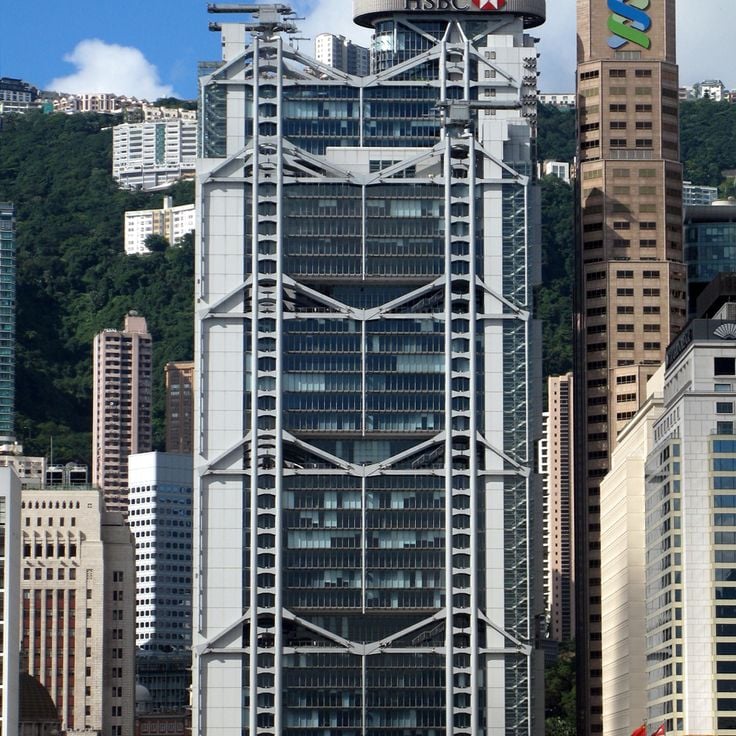
The HSBC Main Building was completed in 1985 and represents one of Norman Foster's major works. The 179-meter skyscraper features an exposed steel structure and modular construction system. The design consists of eight steel towers divided into three vertical modules that support the building's load. The facade eliminates load-bearing internal walls, creating flexible floor plans. At ground level, a public plaza extends underneath the building.
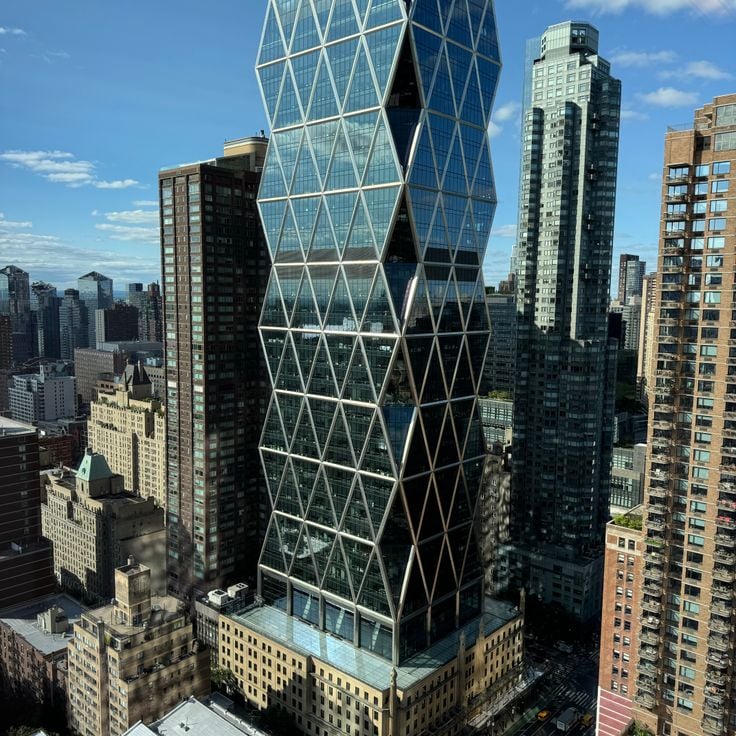
The Hearst Tower rises 182 meters above Midtown Manhattan, combining the preserved 1920s stone facade with a modern glass tower. The 2006 construction employs a triangular steel frame system known as a diagrid, which requires approximately 20 percent less steel than conventional skyscrapers. The building serves as headquarters for Hearst Corporation and was the first office tower in New York to receive LEED Gold certification.
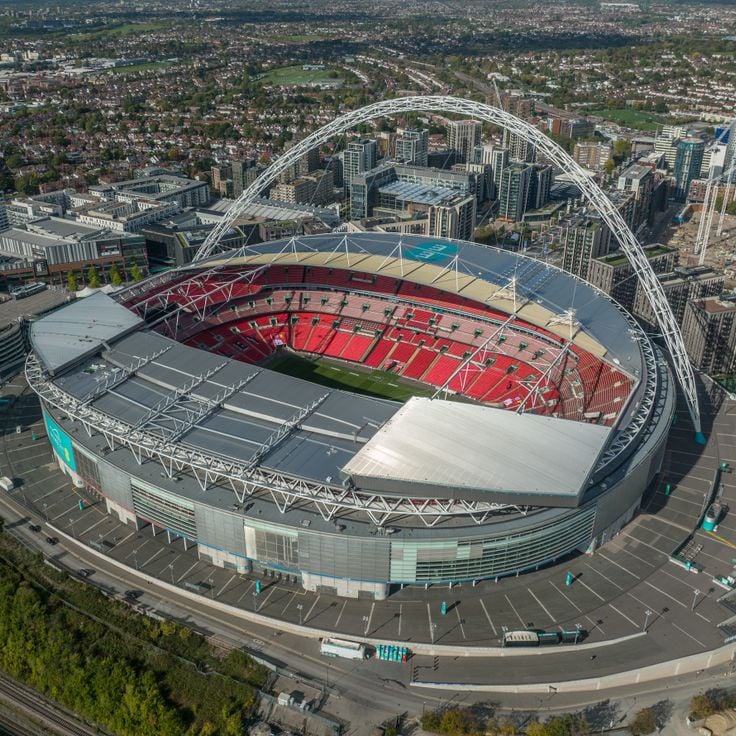
Wembley Stadium opened in 2007 as the home of England's national football team. Designed by Norman Foster, it seats 90,000 people and is defined by a steel arch that rises to 433 feet (133 meters) above the pitch. The stadium hosts FA Cup finals, major concerts and other sporting events. The arch acts as a landmark visible from across London.
The City Hall is a glass building with an asymmetrical form located on the south bank of the Thames. The curved structure was designed by Norman Foster and completed in 2002. The building houses the administration of Greater London, including the office of the Mayor and the London Assembly. The helical ramp inside connects the ten floors of the building.
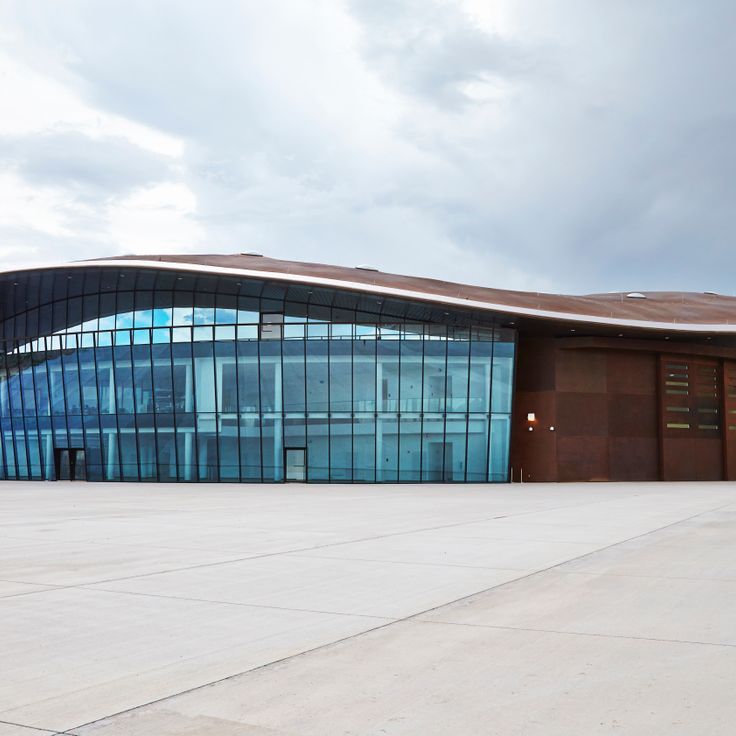
Spaceport America is the world's first purpose-built commercial spaceport. Designed by Foster + Partners, this facility in the New Mexico desert combines terminal, hangar and control center under a curved roof. The structure uses geothermal energy for climate control and maximizes natural daylight. The building's facade integrates with the surrounding desert landscape.
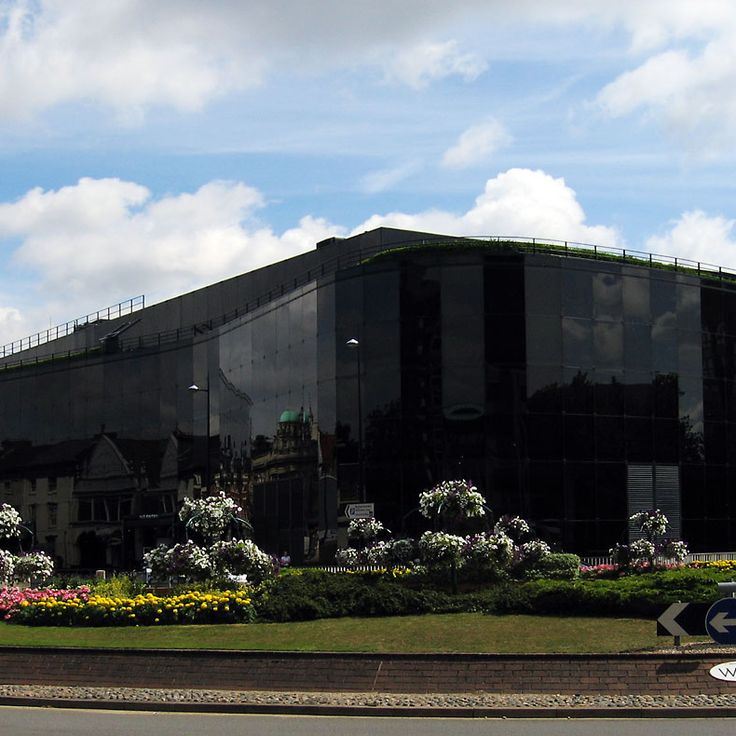
The Willis Building is an office tower located in the heart of the City of London. Constructed between 2005 and 2007, the building rises 125 meters across 28 floors. The facade combines glass and steel in a distinctive design. The tower provides modern office space and contributes to the contemporary architecture of London's financial district.
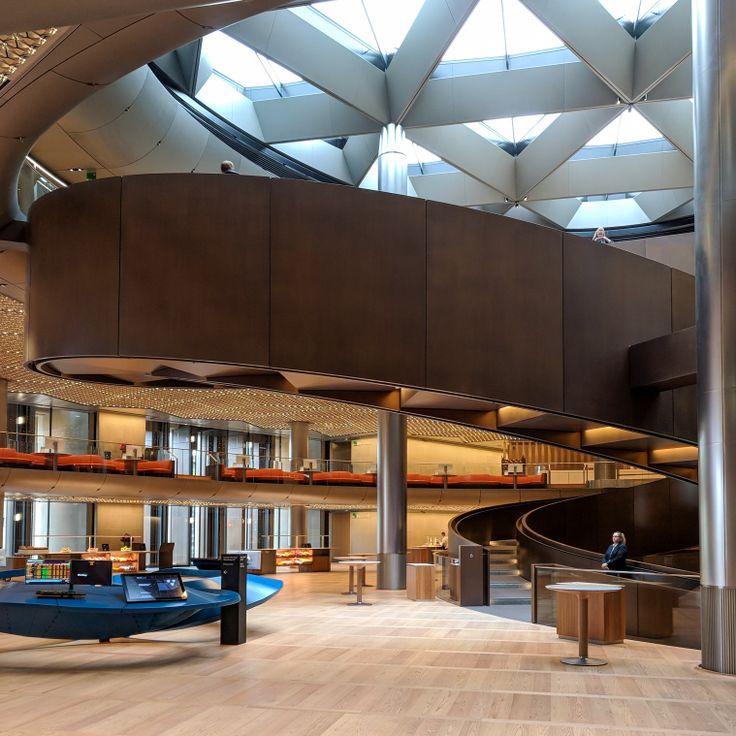
Bloomberg London comprises two office buildings connected by a bridge. The facades feature bronze and sandstone materials. The complex is located in the financial district of the British capital and serves as the European headquarters for the media company. The architecture combines contemporary elements with traditional materials and integrates into the urban environment.
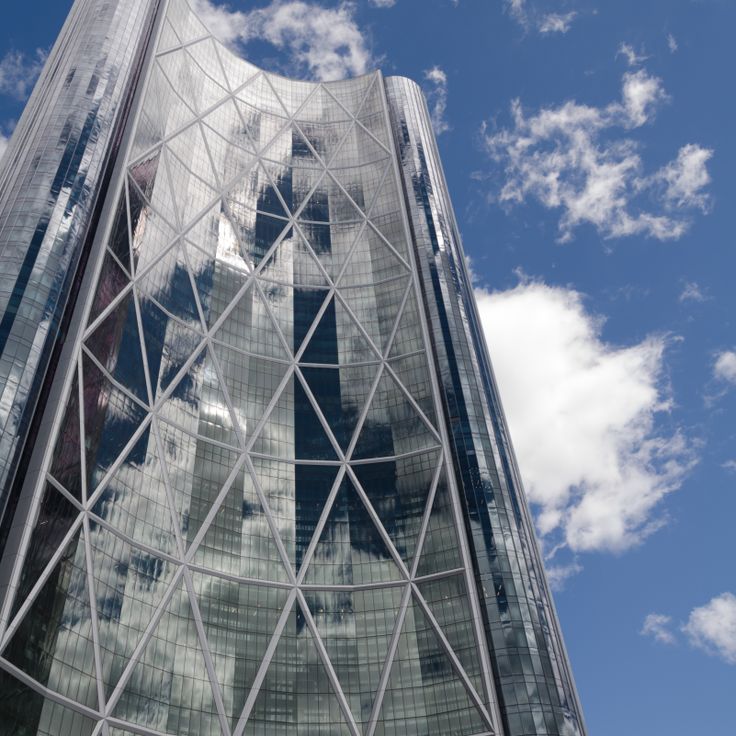
The Bow rises 236 meters above Calgary, forming one of the tallest buildings in Canada outside Toronto. The tower was constructed between 2009 and 2012 following designs by Norman Foster. The curved glass facade follows the path of the Bow River that flows through the city. The building primarily houses offices for energy companies and contains 58 floors. The structure uses a diagonal steel skeleton that supports the characteristic arched form.
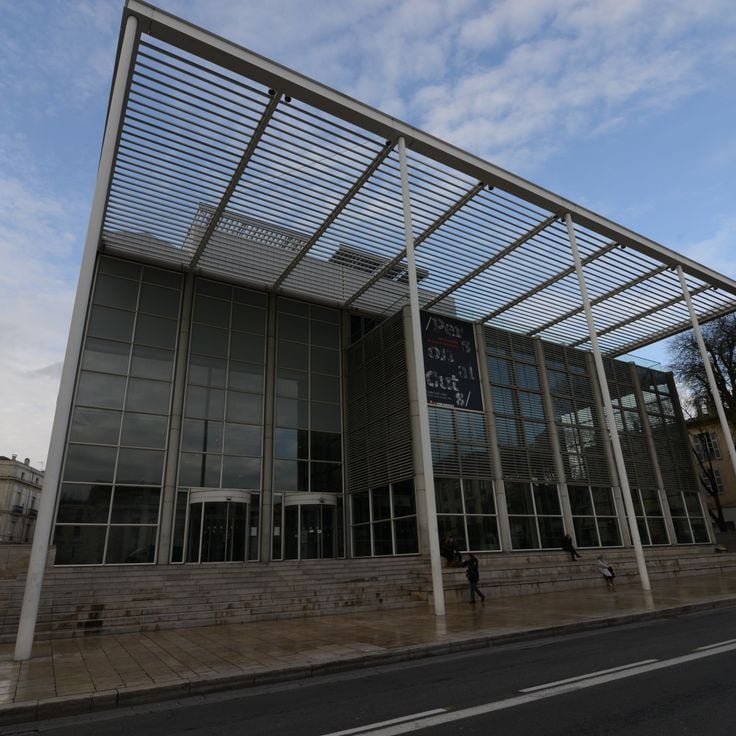
The Carré d'Art is an art museum designed by Norman Foster and completed in 1993. It stands directly across from the Roman temple Maison Carrée, which dates back to the 1st century, and the contrast is hard to miss: glass and steel facing ancient stone. The building spans nine floors, housing exhibition spaces and a media library. From the rooftop terrace, visitors get a clear view over the old town of Nîmes.
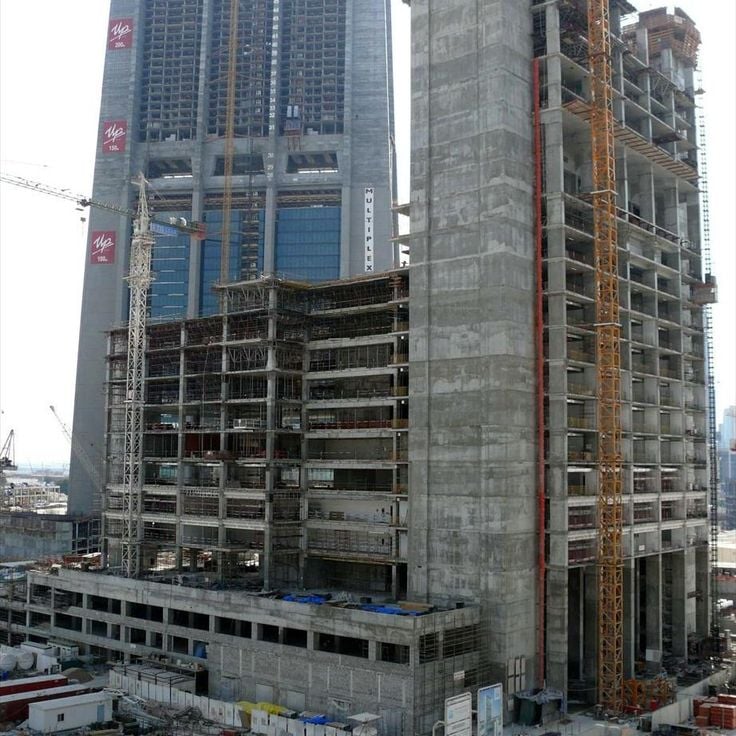
The Index is a 326-meter skyscraper in Dubai designed by British architect Norman Foster. Completed in 2010, the tower comprises four separate vertical elements connected by horizontal floor plates. These offset levels create a distinctive architectural form and allow for different uses within the building. The Index houses office spaces, residential apartments, and retail shops. The innovative structure contributes to Dubai's contemporary skyline and demonstrates Foster's approach to high-rise architecture in hot climates.
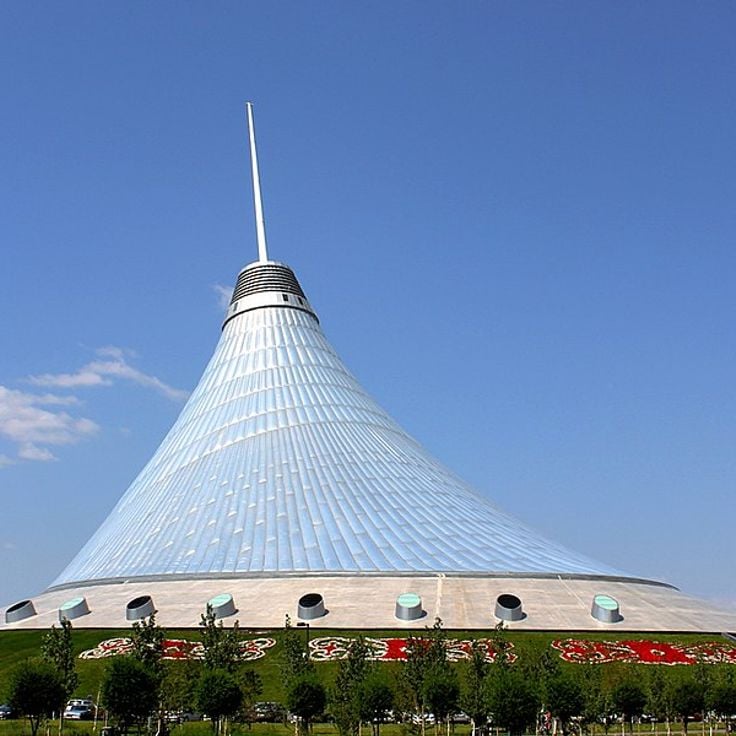
The Khan Shatyr Entertainment Center rises 150 meters above the Kazakh capital. Designed by Norman Foster, the construction consists of a steel framework covered with transparent ETFE foil. Inside, visitors find shops, restaurants, cinemas, and recreational facilities. The structure creates a climate-controlled microclimate that maintains comfortable temperatures throughout the year.
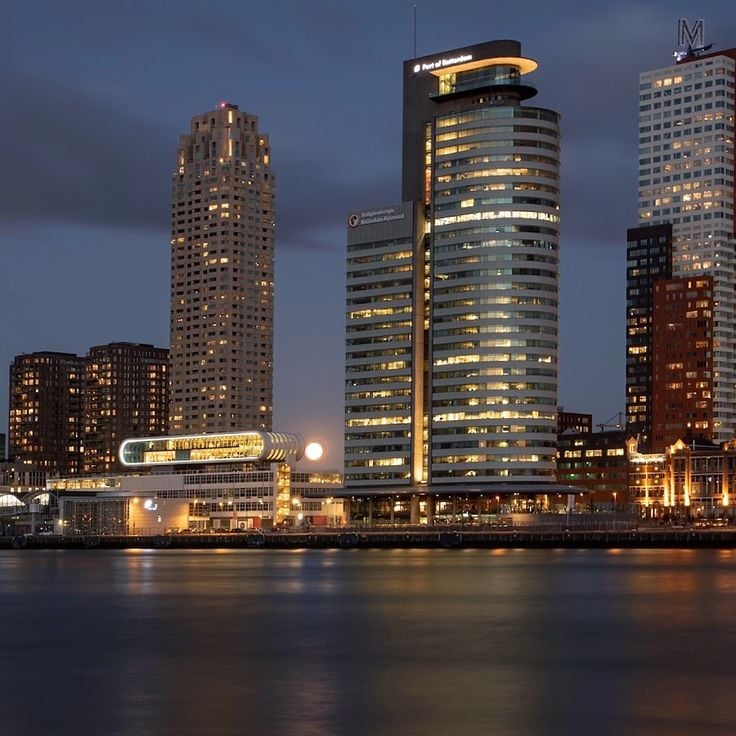
The World Port Center is a 124-meter office tower with 32 floors, completed in 2000. Designed by Norman Foster, this building serves as the headquarters for Rotterdam's port administration and defines the city's skyline with its contemporary architecture. The tower combines functional office spaces with a distinctive glass and steel facade design.
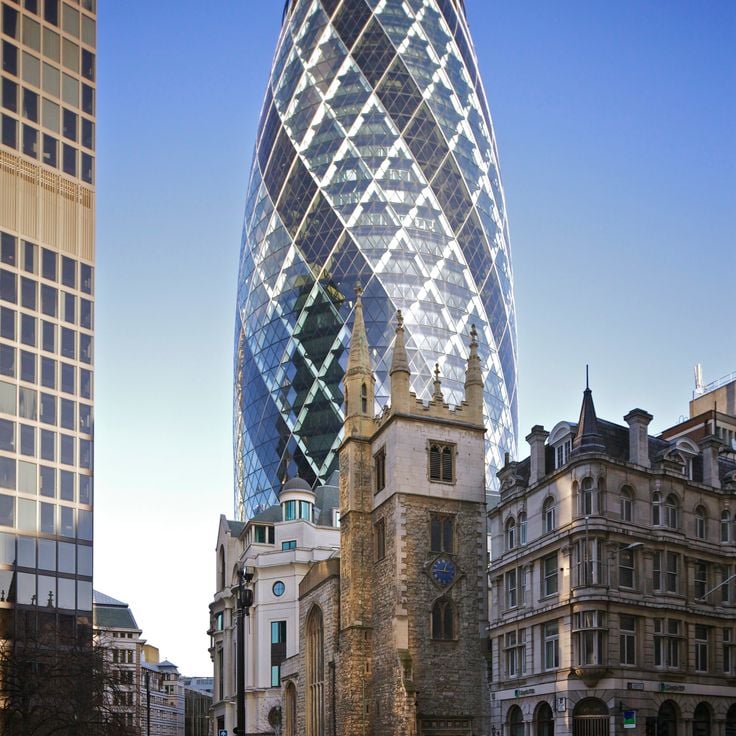
30 St Mary Axe is a 180-meter office tower located in London's financial district. Designed by Norman Foster and completed in 2003, the building features a rounded form with a green glass facade. The structure tapers toward the top and contains 41 floors of office space. The building incorporates an energy-efficient ventilation system and natural lighting solutions. Its diagonal grid structure on the exterior allows maximum daylight penetration into the interior spaces.
The Reichstag Dome was designed by Norman Foster and completed in 1999. This glass construction features a transparent cupola with two spiral ramps that wind around a central mirrored cone. Visitors can walk up the ramps while looking down through the glass floor directly into the plenary chamber of the German Bundestag. The dome simultaneously serves as a functional element of the building's infrastructure, providing natural ventilation and lighting for the parliamentary building.
The Millennium Bridge is a steel footbridge that connects Tate Modern on the south bank of the Thames to St. Paul's Cathedral on the north bank. Norman Foster designed it with a flat, open structure that keeps the sightlines to the river clear. Part of Foster's work in London, the bridge gives pedestrians a direct path between two of the city's most visited cultural sites, with open views of the water and the buildings along the riverbanks on either side.
The Great Court of the British Museum spans 6000 square meters and is covered by a roof structure of geometric glass panels designed by Norman Foster. At the center of this space stands the cylindrical Reading Room, originally used as a library. The glass construction comprises more than 3000 individual panes, no two of which are identical. The Great Court serves as the central distribution space for the museum's various galleries and provides visitors with access to exhibition rooms, cafés, and the museum shop.
Apple Park serves as the headquarters of Apple Inc. in Cupertino, California. Completed in 2017, this Norman Foster designed complex features a circular building with a diameter of 461 meters. The structure provides workspace for 12000 employees and is surrounded by green spaces, orchards, and a visitor center. The campus operates on renewable energy and includes one of the largest solar roof installations in North America.
The HSBC Main Building was completed in 1985 and represents one of Norman Foster's major works. The 179-meter skyscraper features an exposed steel structure and modular construction system. The design consists of eight steel towers divided into three vertical modules that support the building's load. The facade eliminates load-bearing internal walls, creating flexible floor plans. At ground level, a public plaza extends underneath the building.
The Hearst Tower rises 182 meters above Midtown Manhattan, combining the preserved 1920s stone facade with a modern glass tower. The 2006 construction employs a triangular steel frame system known as a diagrid, which requires approximately 20 percent less steel than conventional skyscrapers. The building serves as headquarters for Hearst Corporation and was the first office tower in New York to receive LEED Gold certification.
Wembley Stadium opened in 2007 as the home of England's national football team. Designed by Norman Foster, it seats 90,000 people and is defined by a steel arch that rises to 433 feet (133 meters) above the pitch. The stadium hosts FA Cup finals, major concerts and other sporting events. The arch acts as a landmark visible from across London.
The City Hall is a glass building with an asymmetrical form located on the south bank of the Thames. The curved structure was designed by Norman Foster and completed in 2002. The building houses the administration of Greater London, including the office of the Mayor and the London Assembly. The helical ramp inside connects the ten floors of the building.
Spaceport America is the world's first purpose-built commercial spaceport. Designed by Foster + Partners, this facility in the New Mexico desert combines terminal, hangar and control center under a curved roof. The structure uses geothermal energy for climate control and maximizes natural daylight. The building's facade integrates with the surrounding desert landscape.
The Willis Building is an office tower located in the heart of the City of London. Constructed between 2005 and 2007, the building rises 125 meters across 28 floors. The facade combines glass and steel in a distinctive design. The tower provides modern office space and contributes to the contemporary architecture of London's financial district.
Bloomberg London comprises two office buildings connected by a bridge. The facades feature bronze and sandstone materials. The complex is located in the financial district of the British capital and serves as the European headquarters for the media company. The architecture combines contemporary elements with traditional materials and integrates into the urban environment.
The Bow rises 236 meters above Calgary, forming one of the tallest buildings in Canada outside Toronto. The tower was constructed between 2009 and 2012 following designs by Norman Foster. The curved glass facade follows the path of the Bow River that flows through the city. The building primarily houses offices for energy companies and contains 58 floors. The structure uses a diagonal steel skeleton that supports the characteristic arched form.
The Carré d'Art is an art museum designed by Norman Foster and completed in 1993. It stands directly across from the Roman temple Maison Carrée, which dates back to the 1st century, and the contrast is hard to miss: glass and steel facing ancient stone. The building spans nine floors, housing exhibition spaces and a media library. From the rooftop terrace, visitors get a clear view over the old town of Nîmes.
The Index is a 326-meter skyscraper in Dubai designed by British architect Norman Foster. Completed in 2010, the tower comprises four separate vertical elements connected by horizontal floor plates. These offset levels create a distinctive architectural form and allow for different uses within the building. The Index houses office spaces, residential apartments, and retail shops. The innovative structure contributes to Dubai's contemporary skyline and demonstrates Foster's approach to high-rise architecture in hot climates.
The Khan Shatyr Entertainment Center rises 150 meters above the Kazakh capital. Designed by Norman Foster, the construction consists of a steel framework covered with transparent ETFE foil. Inside, visitors find shops, restaurants, cinemas, and recreational facilities. The structure creates a climate-controlled microclimate that maintains comfortable temperatures throughout the year.
The World Port Center is a 124-meter office tower with 32 floors, completed in 2000. Designed by Norman Foster, this building serves as the headquarters for Rotterdam's port administration and defines the city's skyline with its contemporary architecture. The tower combines functional office spaces with a distinctive glass and steel facade design.
30 St Mary Axe is a 180-meter office tower located in London's financial district. Designed by Norman Foster and completed in 2003, the building features a rounded form with a green glass facade. The structure tapers toward the top and contains 41 floors of office space. The building incorporates an energy-efficient ventilation system and natural lighting solutions. Its diagonal grid structure on the exterior allows maximum daylight penetration into the interior spaces.
The Reichstag Dome was designed by Norman Foster and completed in 1999. This glass construction features a transparent cupola with two spiral ramps that wind around a central mirrored cone. Visitors can walk up the ramps while looking down through the glass floor directly into the plenary chamber of the German Bundestag. The dome simultaneously serves as a functional element of the building's infrastructure, providing natural ventilation and lighting for the parliamentary building.
The Millennium Bridge is a steel footbridge that connects Tate Modern on the south bank of the Thames to St. Paul's Cathedral on the north bank. Norman Foster designed it with a flat, open structure that keeps the sightlines to the river clear. Part of Foster's work in London, the bridge gives pedestrians a direct path between two of the city's most visited cultural sites, with open views of the water and the buildings along the riverbanks on either side.
The Great Court of the British Museum spans 6000 square meters and is covered by a roof structure of geometric glass panels designed by Norman Foster. At the center of this space stands the cylindrical Reading Room, originally used as a library. The glass construction comprises more than 3000 individual panes, no two of which are identical. The Great Court serves as the central distribution space for the museum's various galleries and provides visitors with access to exhibition rooms, cafés, and the museum shop.
Apple Park serves as the headquarters of Apple Inc. in Cupertino, California. Completed in 2017, this Norman Foster designed complex features a circular building with a diameter of 461 meters. The structure provides workspace for 12000 employees and is surrounded by green spaces, orchards, and a visitor center. The campus operates on renewable energy and includes one of the largest solar roof installations in North America.
The HSBC Main Building was completed in 1985 and represents one of Norman Foster's major works. The 179-meter skyscraper features an exposed steel structure and modular construction system. The design consists of eight steel towers divided into three vertical modules that support the building's load. The facade eliminates load-bearing internal walls, creating flexible floor plans. At ground level, a public plaza extends underneath the building.
The Hearst Tower rises 182 meters above Midtown Manhattan, combining the preserved 1920s stone facade with a modern glass tower. The 2006 construction employs a triangular steel frame system known as a diagrid, which requires approximately 20 percent less steel than conventional skyscrapers. The building serves as headquarters for Hearst Corporation and was the first office tower in New York to receive LEED Gold certification.
Wembley Stadium opened in 2007 as the home of England's national football team. Designed by Norman Foster, it seats 90,000 people and is defined by a steel arch that rises to 433 feet (133 meters) above the pitch. The stadium hosts FA Cup finals, major concerts and other sporting events. The arch acts as a landmark visible from across London.
The City Hall is a glass building with an asymmetrical form located on the south bank of the Thames. The curved structure was designed by Norman Foster and completed in 2002. The building houses the administration of Greater London, including the office of the Mayor and the London Assembly. The helical ramp inside connects the ten floors of the building.
Spaceport America is the world's first purpose-built commercial spaceport. Designed by Foster + Partners, this facility in the New Mexico desert combines terminal, hangar and control center under a curved roof. The structure uses geothermal energy for climate control and maximizes natural daylight. The building's facade integrates with the surrounding desert landscape.
The Willis Building is an office tower located in the heart of the City of London. Constructed between 2005 and 2007, the building rises 125 meters across 28 floors. The facade combines glass and steel in a distinctive design. The tower provides modern office space and contributes to the contemporary architecture of London's financial district.
Bloomberg London comprises two office buildings connected by a bridge. The facades feature bronze and sandstone materials. The complex is located in the financial district of the British capital and serves as the European headquarters for the media company. The architecture combines contemporary elements with traditional materials and integrates into the urban environment.
The Bow rises 236 meters above Calgary, forming one of the tallest buildings in Canada outside Toronto. The tower was constructed between 2009 and 2012 following designs by Norman Foster. The curved glass facade follows the path of the Bow River that flows through the city. The building primarily houses offices for energy companies and contains 58 floors. The structure uses a diagonal steel skeleton that supports the characteristic arched form.
The Carré d'Art is an art museum designed by Norman Foster and completed in 1993. It stands directly across from the Roman temple Maison Carrée, which dates back to the 1st century, and the contrast is hard to miss: glass and steel facing ancient stone. The building spans nine floors, housing exhibition spaces and a media library. From the rooftop terrace, visitors get a clear view over the old town of Nîmes.
The Index is a 326-meter skyscraper in Dubai designed by British architect Norman Foster. Completed in 2010, the tower comprises four separate vertical elements connected by horizontal floor plates. These offset levels create a distinctive architectural form and allow for different uses within the building. The Index houses office spaces, residential apartments, and retail shops. The innovative structure contributes to Dubai's contemporary skyline and demonstrates Foster's approach to high-rise architecture in hot climates.
The Khan Shatyr Entertainment Center rises 150 meters above the Kazakh capital. Designed by Norman Foster, the construction consists of a steel framework covered with transparent ETFE foil. Inside, visitors find shops, restaurants, cinemas, and recreational facilities. The structure creates a climate-controlled microclimate that maintains comfortable temperatures throughout the year.
The World Port Center is a 124-meter office tower with 32 floors, completed in 2000. Designed by Norman Foster, this building serves as the headquarters for Rotterdam's port administration and defines the city's skyline with its contemporary architecture. The tower combines functional office spaces with a distinctive glass and steel facade design.
30 St Mary Axe is a 180-meter office tower located in London's financial district. Designed by Norman Foster and completed in 2003, the building features a rounded form with a green glass facade. The structure tapers toward the top and contains 41 floors of office space. The building incorporates an energy-efficient ventilation system and natural lighting solutions. Its diagonal grid structure on the exterior allows maximum daylight penetration into the interior spaces.
Norman Foster has changed how we build by focusing on honesty in design. His buildings show their inner workings: glass lets you see the structure, steel frames stand exposed, and systems for heating and cooling are part of the design itself. In Berlin, the Reichstag dome invites visitors to walk a spiral ramp and look out over the city through transparent walls. In California, Apple Park curves in a perfect circle, with every part serving a purpose. Walk through a Foster building and you notice how light moves through it, how the spaces flow from one to another, how nothing hides what holds it up.
London carries Foster's fingerprints across its skyline. The Gherkin, with its bulging diamond pattern, sits among old banking buildings like something from the future. The Millennium Bridge stretches thin and elegant between two worlds: the modern Tate Museum on one side, the ancient cathedral on the other. His work spans the globe, from airports where thousands pass through daily to museums and offices that shape how cities grow. Each building tells the same story: structure and purpose should be beautiful, not hidden.
To truly appreciate Foster's work, visit these buildings at different times of day and watch how light changes them. Morning sun through the Reichstag dome feels different from evening light. The Gherkin looks sharp and clean in daylight but glows softly at night. Bring binoculars if you visit the Millennium Bridge, because the views from the middle point in both directions reward the careful observer. Stand directly below his towers and look up, not just across.