Philadelphia City Hall, Municipal building in Center City, United States.
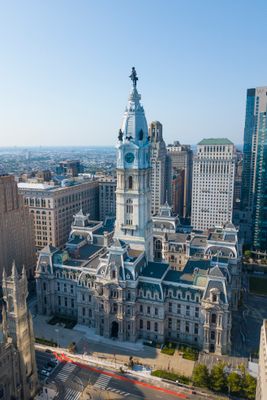
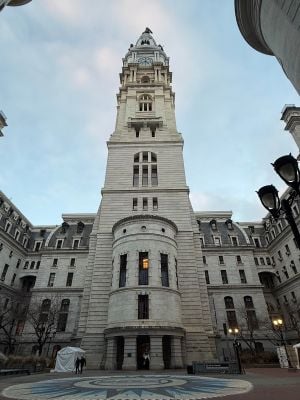
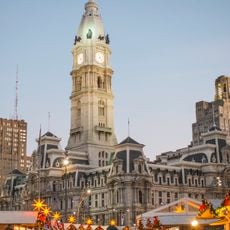
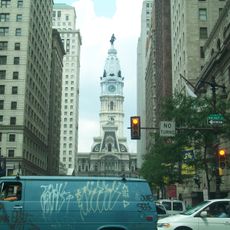
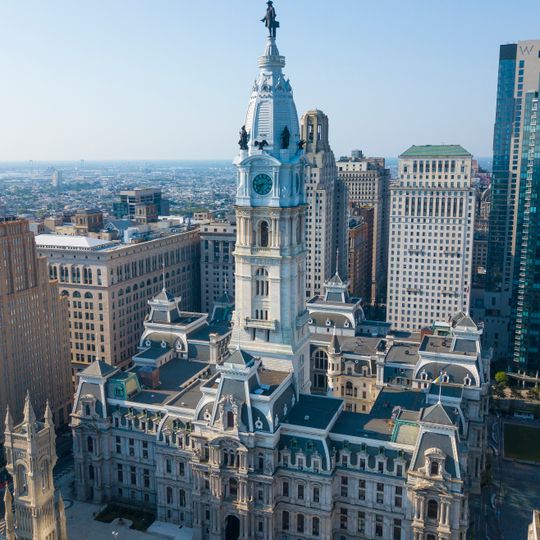
Philadelphia City Hall is a municipal building in Center City that rises 167 meters and features walls made of marble and brick. Its facade and interior display more than 250 sculptures and decorative elements in Second Empire style.
Construction began in 1871 and continued for three decades until completion in 1901. After opening, the structure held the title of tallest occupied building in the world until 1908.
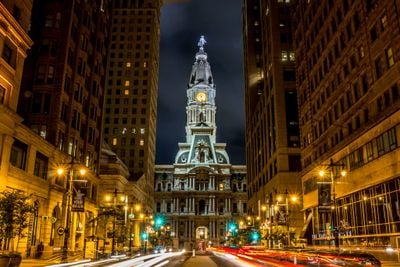
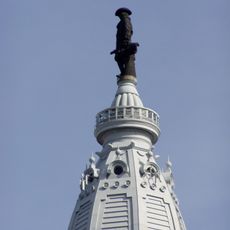
The white tower with a gilded figure of William Penn at the summit serves as a traditional reference point for residents and visitors navigating the center. The interior spaces display detailed stonework, carved panels, and decorative wall treatments that remain accessible during guided visits.
Guided visits through the interior and access to the tower take place on weekdays and require advance booking. The observation platform visit offers views over the city and takes about one hour including the ascent.
The four clock faces on the tower measure 8 meters in diameter each, exceeding the size of the clocks at Westminster Palace. Each face weighs several tons and requires regular maintenance by specialized clockmakers.
Location: Philadelphia
Inception: 1901
Architects: John McArthur, Jr.
Official opening: 1901
Architectural style: Second Empire style
Floors above the ground: 9
Height: 167 m
Made from material: marble, brick
Website: https://phila.gov/virtualch
GPS coordinates: 39.95225,-75.16389
Latest update: December 4, 2025 19:03
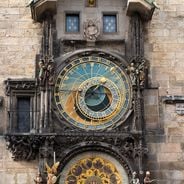
Clock towers combine technical precision with architectural styles from different periods and cultures. These highly visible structures stand in city centers, university campuses and historic squares, where they structure public life. The collection includes varied examples: the 315 foot (96 meter) neo-Gothic bell tower at Westminster Palace in London, the 1,970 foot (601 meter) Royal Clock Tower in Mecca, the Spasskaya Tower on Red Square in Moscow, the 279 foot (85 meter) neo-Gothic Rajabai Tower in Mumbai, the medieval astronomical clock at Old Town Hall in Prague, the 13th century Zytglogge in Bern, the Giralda in Seville (originally an Almohad minaret), the 548 foot (167 meter) Philadelphia City Hall tower, the Peace Tower on Parliament Hill in Ottawa, the 308 foot (94 meter) Sather Tower at the University of California Berkeley, the Zimmer Tower in Lier, the Custom House Tower in Boston, the Mughal era Ghanta Ghar in Lahore, the Union Station clock tower in Waterbury, the Renaissance clock tower on St. Mark's Square in Venice, the Jam Gadang in Bukittinggi and the Jaffa Clock Tower in Tel Aviv. Many of these towers serve as urban landmarks and connect historic architecture with practical function. They frequently offer elevated viewpoints and display remarkable mechanical achievements in timekeeping.
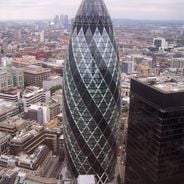
Norman Foster has shaped contemporary architecture through technical innovation and design clarity. His buildings feature extensive glass facades, exposed steel structures and energy systems. The Reichstag dome in Berlin with its spiral ramp and the circular Apple Park in Cupertino demonstrate his approach to combining function with geometric form. In London, Foster created several landmarks that define the city's modern skyline. The tower at 30 St Mary Axe, known as the "Gherkin" for its distinctive shape, rises above the financial district. The Millennium Bridge connects the Tate Modern to St Paul's Cathedral as a slender pedestrian crossing. His portfolio includes airport terminals, office towers and cultural buildings across multiple countries, documenting his influence on international construction.
Some buildings have caused waves of criticism when they were built. Their unusual shape, large size, or high cost led to strong reactions. The Louvre pyramid in Paris, with its glass structure in the middle of a classical palace, surprised Parisians in the 1980s. The Guggenheim Museum in New York, with its white concrete spiral, was compared to a washing machine when it opened in 1959. The Montparnasse Tower, which has overlooked the Parisian neighborhood since 1973, even led to a law banning tall buildings in the city. These structures show how modern design can challenge local views and change how a city is seen. Other buildings still cause debate. In Mumbai, the Antilia tower rises 27 floors to hold one family. It shows wealth in a city with many crowded areas. In Pyongyang, the Ryugyong Hotel has stayed unfinished for decades. It’s a empty pyramid with 105 floors, showing big ambitions. In London, the Fenchurch Street skyscraper, called the “Walkie-Talkie” because of its shape, reflects the sunlight so strongly it can melt car parts. Places like these show how some projects raise questions about their purpose beyond looks. They involve space use, money, and how they affect daily life. (Translation in 'es', 'it', 'nl', 'pl', 'pt' fields would be provided similarly based on this pattern, but are left blank here for brevity.)
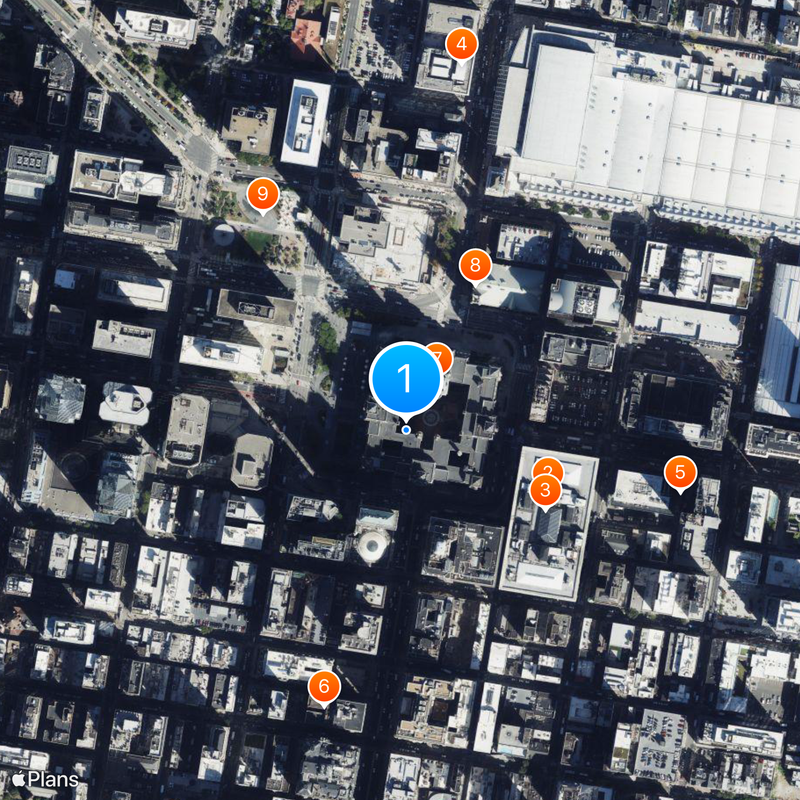
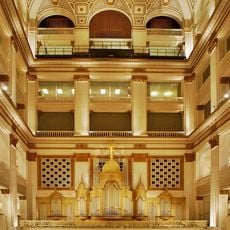
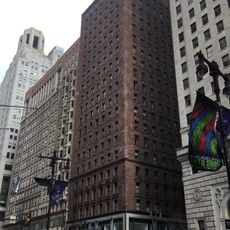
Wanamaker’s
161 m
Wanamaker Organ
167 m
Pennsylvania Academy of the Fine Arts
387 m
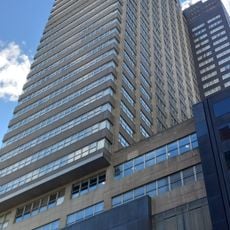
Loews Philadelphia Hotel
292 m
NASDAQ OMX Phlx
300 m
William Penn
62 m
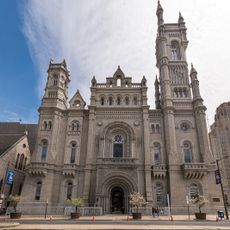
Masonic Temple
118 m
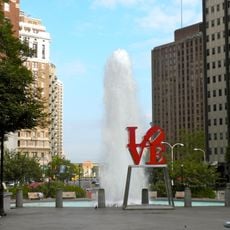
LOVE Park
271 m
Ritz-Carlton Philadelphia
26 m
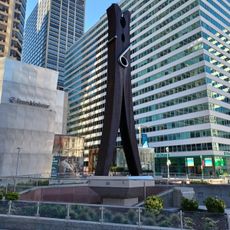
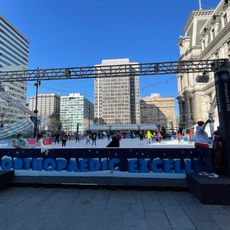
Dilworth Park
126 m
The Residences at The Ritz-Carlton
119 m
The Christmas Village in Philadelphia
266 m
One South Broad
99 m
Centre Square
192 m
Wells Fargo Building
316 m
Five Penn Center
314 m
PNC Bank Building
292 m
Broad Street Historic District
163 m
Witherspoon Building
316 m
North American Building
217 m
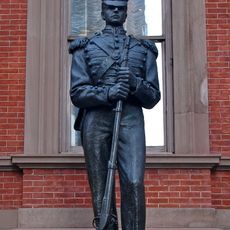
Washington Grays Monument
247 m
A.J. Holman and Company building
319 m
Church of The Epiphany
227 m
American Baptist Publication Society building
201 m
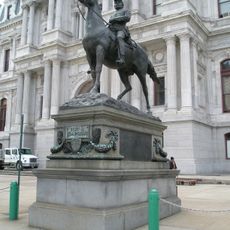
General George B. McClellan
115 m
1st Regiment Infantry National Guard of Philadelphia
271 m
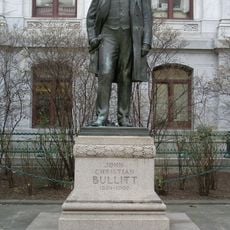
John Christian Bullitt
116 m
Land Title Building
194 mReviews
Visited this place? Tap the stars to rate it and share your experience / photos with the community! Try now! You can cancel it anytime.
Discover hidden gems everywhere you go!
From secret cafés to breathtaking viewpoints, skip the crowded tourist spots and find places that match your style. Our app makes it easy with voice search, smart filtering, route optimization, and insider tips from travelers worldwide. Download now for the complete mobile experience.
A unique approach to discovering new places❞
— Le Figaro
All the places worth exploring❞
— France Info
A tailor-made excursion in just a few clicks❞
— 20 Minutes