Green spaces and burial sites: how Europe turned cemeteries into places for remembrance and walking.
Many European cemeteries function as more than burial grounds. They represent significant architectural and cultural sites that developed from the 18th through the 20th centuries, reflecting evolving burial traditions and social changes across this period. These spaces contain monumental sculptures, elaborate tombs and mausoleums created by leading artists and architects of their eras. Many also provide expansive green spaces suitable for walking and contemplation.
This collection includes Vienna's Zentralfriedhof, final resting place of numerous composers, and Paris's Père Lachaise, where writers, artists and historical figures are buried. London's Highgate Cemetery features Victorian architecture and winding pathways. In Genoa, the Staglieno Monumental Cemetery spreads across multiple terraces with notable marble work. Zagreb's Mirogoj combines Austro-Hungarian design with Mediterranean elements, while Warsaw's Jewish Cemetery on Okopowa Street stands as an important record of Polish Jewish history.
Additional sites include Gothenburg's Western Cemetery, Prague's Vyšehrad Cemetery housing Czech cultural figures, and Budapest's Kerepesi Cemetery serving as a national memorial. The collection also features Moscow's Novodevichy Cemetery, Copenhagen's Assistens Cemetery, and Barcelona's Montjuïc Cemetery. Notable mentions include Hamburg's Ohlsdorf Cemetery, one of the world's largest park cemeteries, and Romania's Merry Cemetery in Săpânța, recognized for its colorfully painted wooden crosses.
Green spaces and burial sites: how Europe turned cemeteries into places for remembrance and walking.
Many European cemeteries function as more than burial grounds. They represent significant architectural and cultural sites that developed from the 18th through the 20th centuries, reflecting evolving burial traditions and social changes across this period. These spaces contain monumental sculptures, elaborate tombs and mausoleums created by leading artists and architects of their eras. Many also provide expansive green spaces suitable for walking and contemplation.
This collection includes Vienna's Zentralfriedhof, final resting place of numerous composers, and Paris's Père Lachaise, where writers, artists and historical figures are buried. London's Highgate Cemetery features Victorian architecture and winding pathways. In Genoa, the Staglieno Monumental Cemetery spreads across multiple terraces with notable marble work. Zagreb's Mirogoj combines Austro-Hungarian design with Mediterranean elements, while Warsaw's Jewish Cemetery on Okopowa Street stands as an important record of Polish Jewish history.
Additional sites include Gothenburg's Western Cemetery, Prague's Vyšehrad Cemetery housing Czech cultural figures, and Budapest's Kerepesi Cemetery serving as a national memorial. The collection also features Moscow's Novodevichy Cemetery, Copenhagen's Assistens Cemetery, and Barcelona's Montjuïc Cemetery. Notable mentions include Hamburg's Ohlsdorf Cemetery, one of the world's largest park cemeteries, and Romania's Merry Cemetery in Săpânța, recognized for its colorfully painted wooden crosses.
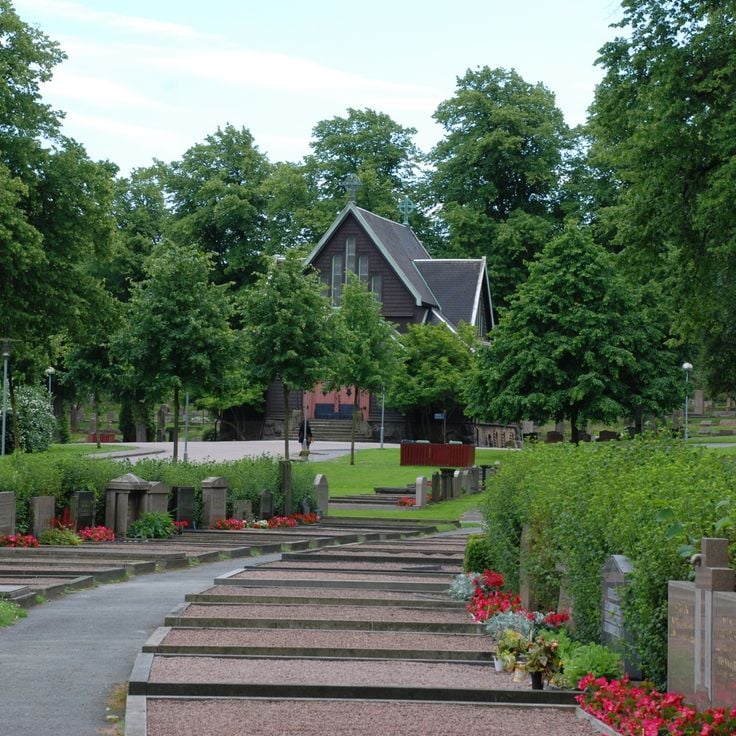
This cemetery was established in the 19th century and combines Nordic and continental garden architecture. The site served the growing urban population of Gothenburg as a burial ground and reflects Swedish bourgeois funeral traditions. Grave monuments from different periods document craft and artistic developments from Classicism through Modernism. The cemetery contains graves of notable figures from commerce, culture and politics. The design follows the park cemetery principle with curving paths, tree groupings and representative burial sections.
The Vyšehrad Cemetery sits within a medieval fortress complex on a hill above the Vltava River and was established in 1869 as a burial ground for prominent Czech cultural figures. Over 600 graves mark the resting places of composers including Antonín Dvořák and Bedřich Smetana, writers such as Karel Čapek, and painters and sculptors who shaped Czech arts. The Slavín memorial, a neoclassical arcade structure built in 1890, houses the graves of the most celebrated figures. The monuments trace the development of sculptural art from the late 19th century through to the present day and document national burial traditions during the period of Bohemian cultural revival.
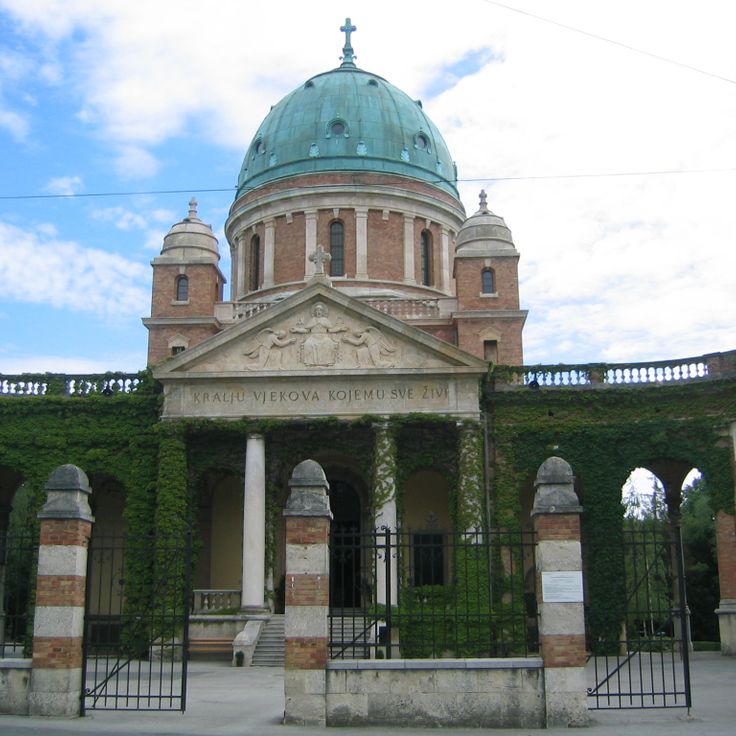
The Mirogoj Cemetery in Zagreb was established in 1876 following designs by architect Hermann Bollé and displays an extensive layout in the Neo-Renaissance style. Long arcaded galleries with characteristic domes extend along the main paths, creating covered walkways that house burial sites of various confessions. The monumental entrance gates and regularly spaced pavilions demonstrate the importance Zagreb attached to this site. Notable Croatian figures from politics, culture and science are buried here, making the cemetery a significant record of Croatian history.
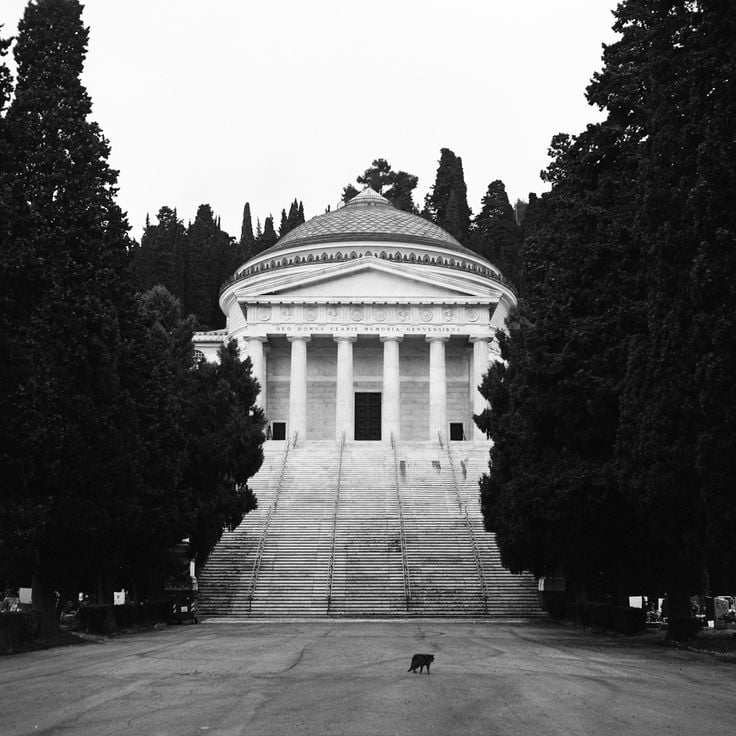
The Monumental Cemetery of Staglieno opened in 1851 and covers 100 hectares (250 acres) on the hills east of Genoa. The grounds contain more than 300,000 graves and over 500 marble sculptures from the 19th century. Italian figures such as Giuseppe Mazzini rest here alongside international artists and writers. The arcaded walkways and monumental burial chapels display Italian Classicism and Realism in their design.
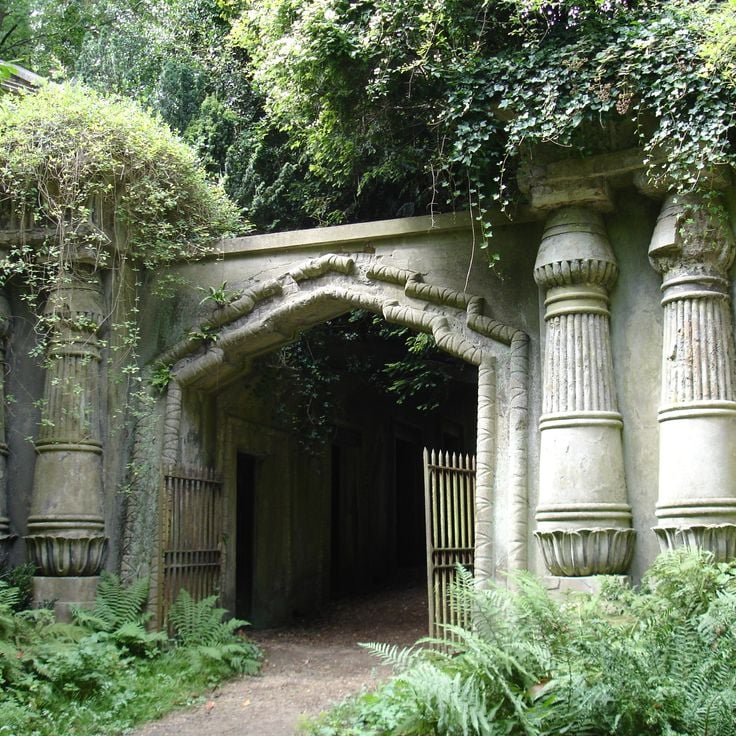
Highgate Cemetery was established in 1839 and displays Victorian architecture with vaults, headstones and an avenue lined with Lebanese cedars. The site documents 19th-century British burial culture and contains graves of notable figures including Karl Marx and George Eliot. The western section with its Gothic Revival catacombs and Egyptian Avenue is protected and accessible only through guided tours.
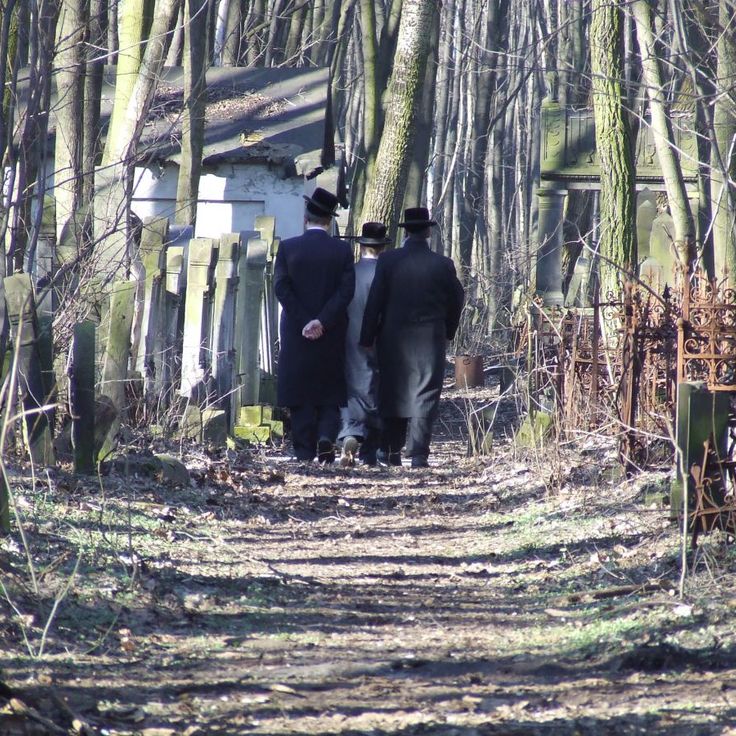
The Jewish cemetery on Okopowa Street was established in 1806 and covers 82 acres (33 hectares) with more than 200,000 marked graves. Inscriptions on the monuments appear in Hebrew and Polish, documenting the history of Warsaw's Jewish community from the 19th century to the present. The cemetery ranks among the largest Jewish burial grounds in Europe and contains the graves of prominent rabbis, writers and business leaders.
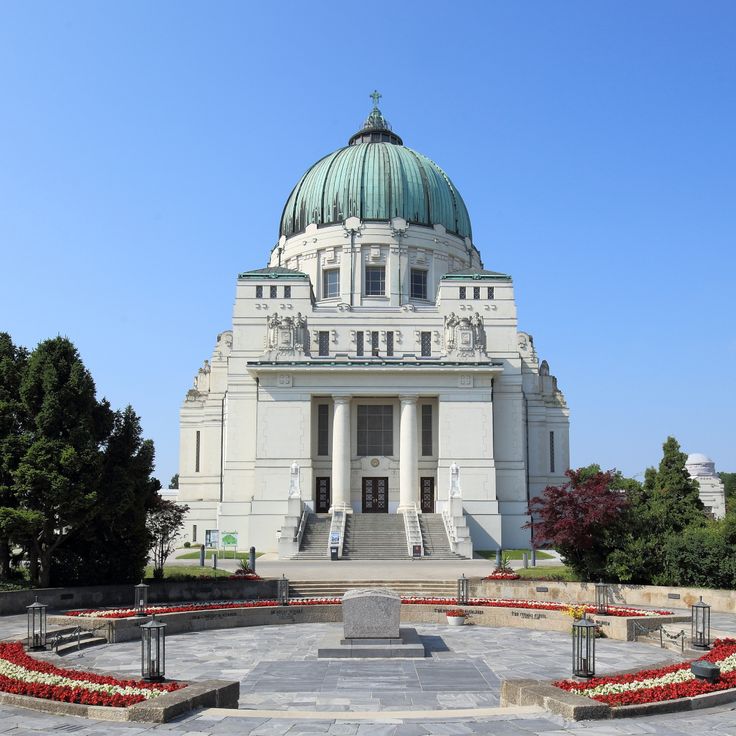
Zentralfriedhof spans roughly one square mile (2.5 square kilometers) and serves as the burial site for over 3.3 million people. The cemetery holds the graves of major composers including Ludwig van Beethoven, Johannes Brahms, Franz Schubert and Johann Strauss, along with numerous monumental tombs that document Viennese burial traditions from the 19th century to the present day.
Kerepesi Cemetery opened in 1847 and contains around 3,000 works of art along with the graves of numerous Hungarian statesmen, artists and scientists. The grounds document the evolution of burial culture in Hungary from the 19th through the 20th century and display various architectural styles from neoclassicism to Art Nouveau. Notable figures include politicians, writers and composers whose graves feature elaborate sculptures and mausoleums.
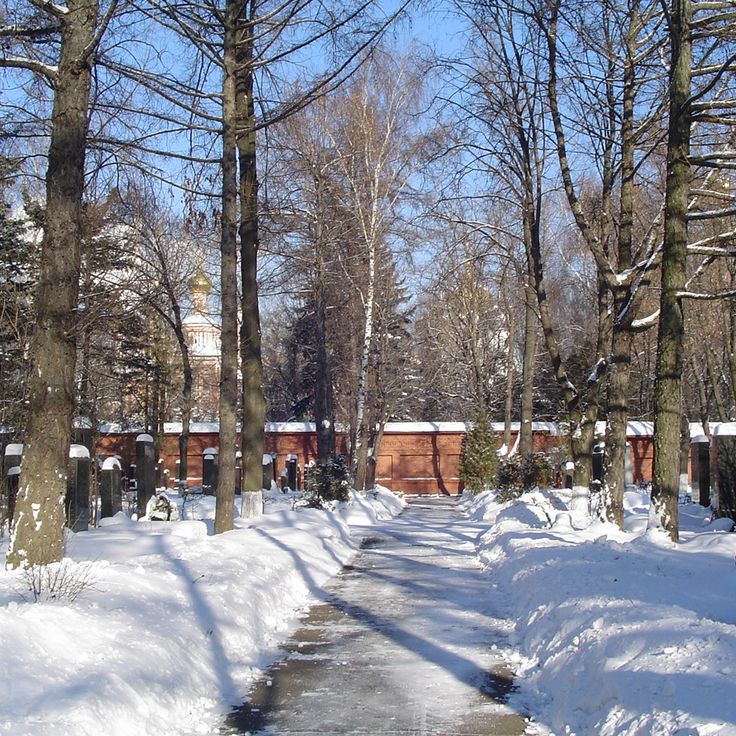
The Novodevichy Cemetery covers 67 acres (27 hectares) in southwest Moscow and has served since 1898 as the burial site for prominent Russian figures from culture, politics and science. Located beside the monastery of the same name, the grounds combine historic funerary architecture with maintained green spaces. Visitors encounter elaborate gravestones, sculptures and monuments that document Russian burial traditions from the late 19th through the 20th century.
The Passy Cemetery covers about 11,000 square meters in the 16th district and opened in 1820. It is the resting place of composers Claude Debussy and Gabriel Fauré, as well as painter Édouard Manet. The cemetery sits on a hillside overlooking the Seine and shows examples of French funeral art from the 19th and early 20th centuries.
This coastal cemetery contains a memorial field for fallen soldiers and the burial sites of Finnish presidents. Established in 1829, the grounds serve as the final resting place for significant figures in Finnish history. The site combines military commemoration with national heritage, documenting the evolution of Finnish burial traditions across nearly two centuries. The quiet location near the Baltic Sea reinforces the solemn character of the place.
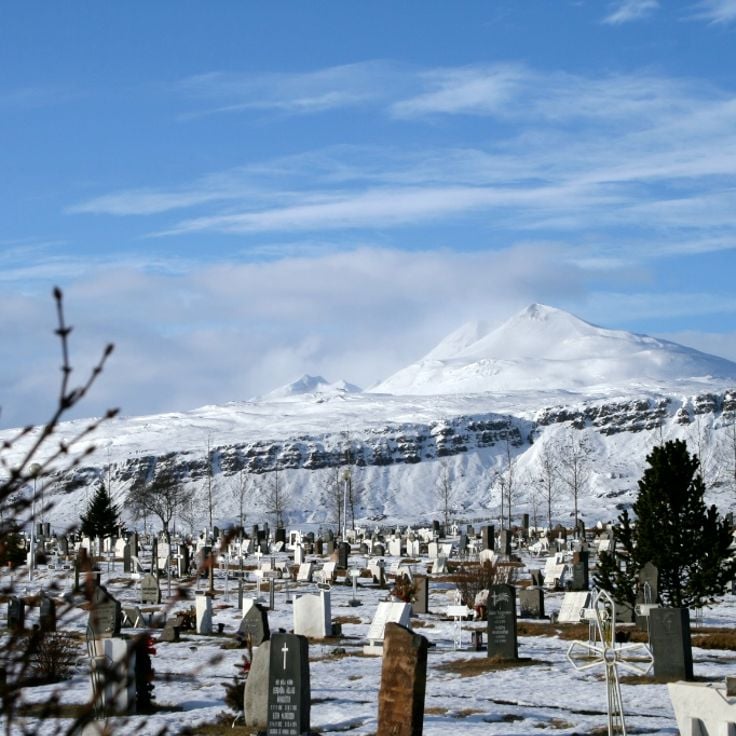
The Akureyri Cemetery occupies a hillside site above the Eyjafjörður fjord, with views extending across the surrounding mountains of northern Iceland. The grounds integrate traditional Icelandic grave design with the natural topography of the region, documenting local burial practices from the 19th century onward. Stone monuments and wooden crosses mark the graves of local figures and families who contributed to the development of Akureyri.
Assistens Cemetery opened in 1760 and became a major burial ground in the Danish capital. Among its many trees and plants lie the graves of writer Hans Christian Andersen, philosopher Søren Kierkegaard and physicist Niels Bohr. The site combines parkland character with historical monuments from three centuries, illustrating the evolution of burial customs in Northern Europe.
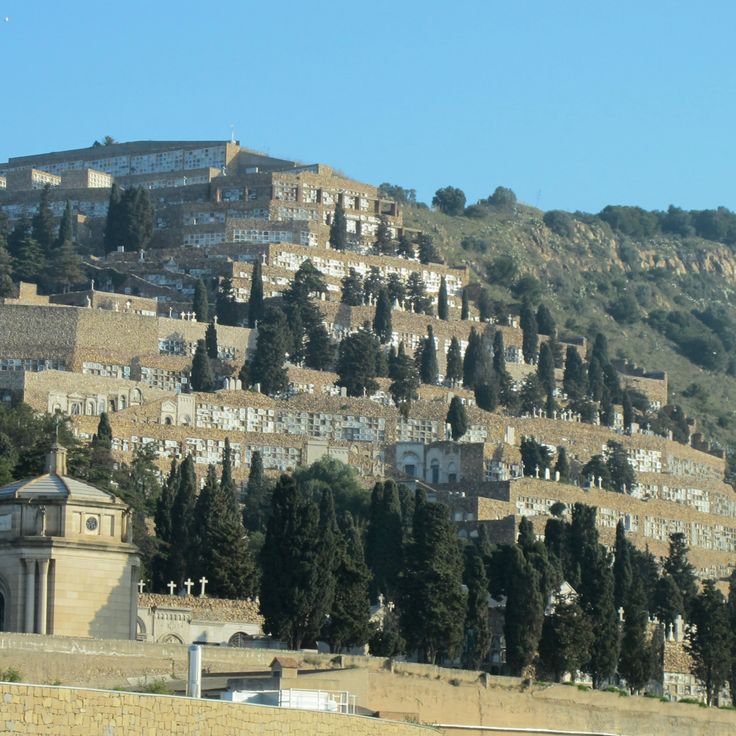
The Montjuïc Cemetery occupies terraced slopes on the mountain of the same name above Barcelona and documents the evolution of Catalan funerary art since its opening in 1883. The terraced sections contain graves featuring Art Nouveau elements from the period between the 1890s and early 1920s, including sculptural work by Catalan sculptors and stonemasons. The cemetery holds burial sites of industrialists, artists and political figures from Catalan society of the nineteenth and twentieth centuries and illustrates the development of regional burial traditions over more than a century.
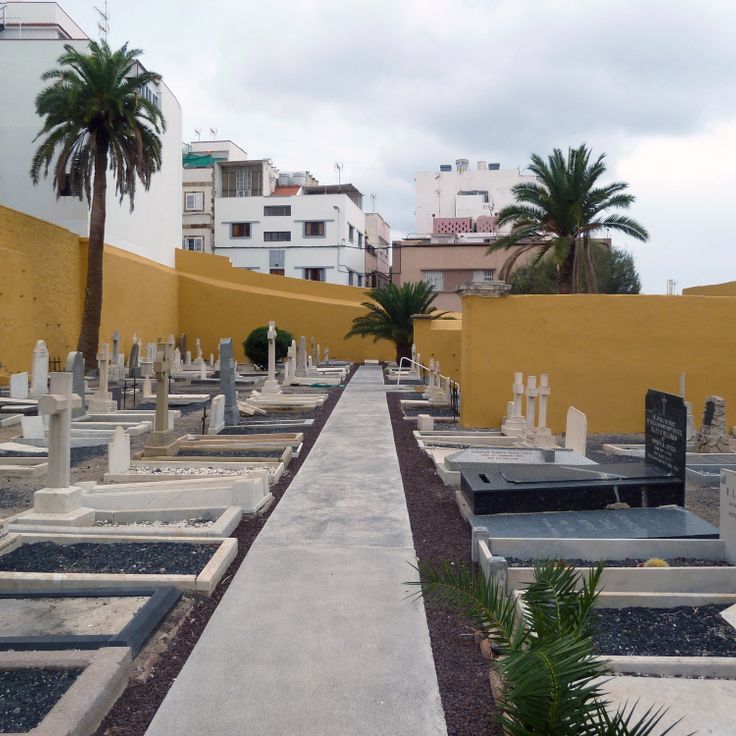
This cemetery sits on a hillside above the Atlantic and contains graves of sailors from different nations. The site documents the maritime history of Las Palmas from the 19th century to the present day, with burials of German, British, Scandinavian and Spanish seafarers. The graves tell stories of shipwrecks, harbor workers and captains who were laid to rest here during the height of transatlantic trade. Stone anchors, ship propellers and nautical symbols mark many burial sites, reflecting the city's connection to maritime commerce.
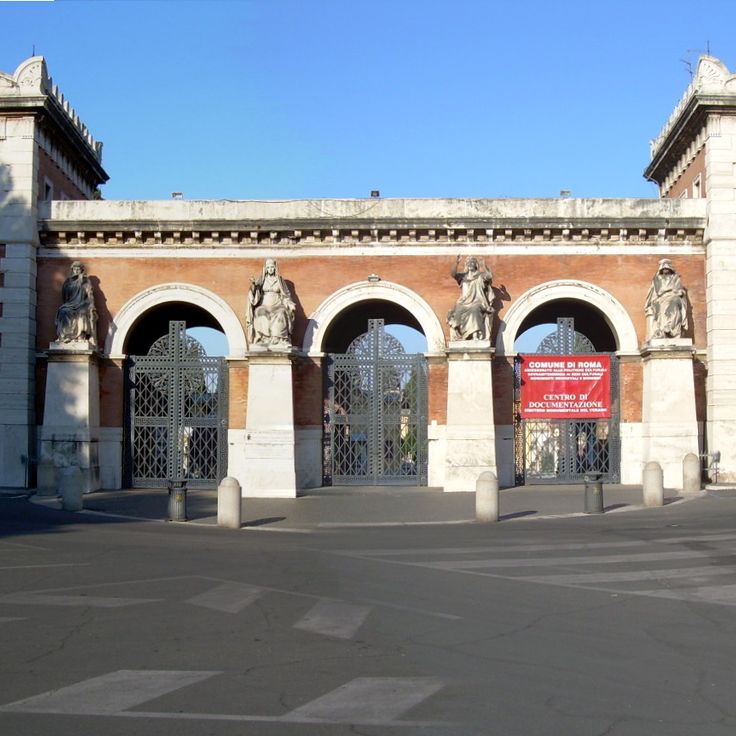
The Cimitero del Verano in Rome is the city's largest cemetery and contains significant funerary monuments and sculptures from the 19th and 20th centuries across its 205 acres (83 hectares). Founded in 1807, this necropolis combines neoclassical architecture with monumental tombs of Italian artists, politicians and intellectuals, documenting the evolution of Roman burial traditions over two centuries.
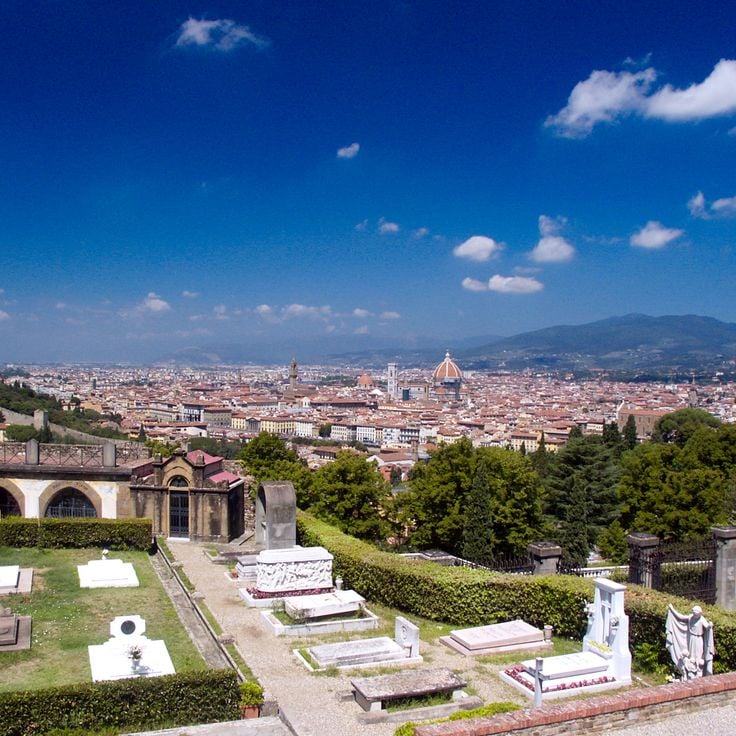
This cemetery occupies a hillside above Florence and holds the graves of prominent Tuscan artists, writers and politicians from the 19th and early 20th centuries. The site was established after 1848 as an extension of the Basilica of San Miniato al Monte and combines neoclassical funerary monuments with the architecture of the Renaissance church.
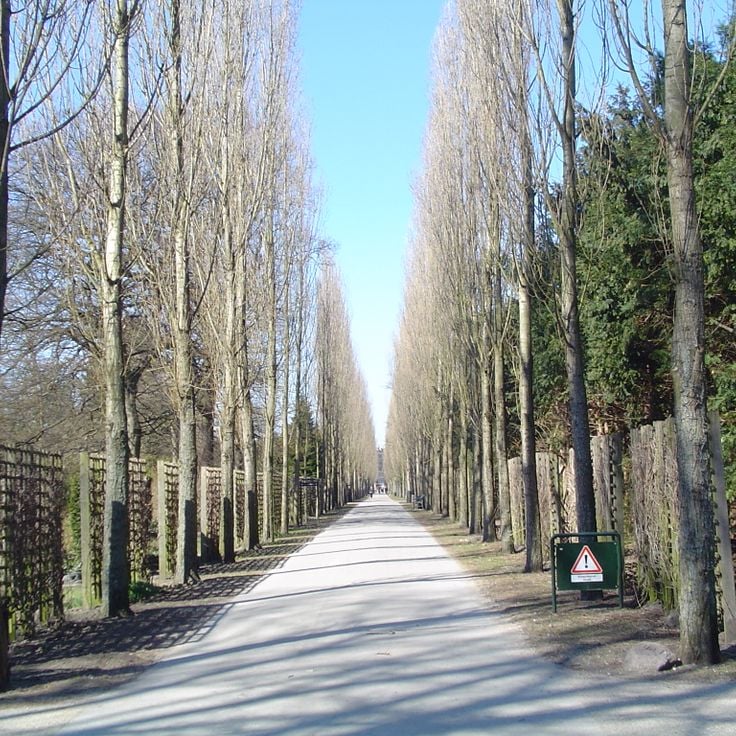
The Ohlsdorf Cemetery in Hamburg covers 963 acres (389 hectares) and serves both as a burial ground and a public park. Since opening in 1877, more than 1.5 million burials have taken place here. The grounds feature an extensive network of paths, ponds, chapels and monuments from different periods. Numerous graves of notable figures from science, culture and politics are located throughout the site. The cemetery architecture reflects the evolution of burial practices from the late 19th century to the present day. Visitors regularly use the grounds for walking and recreation.
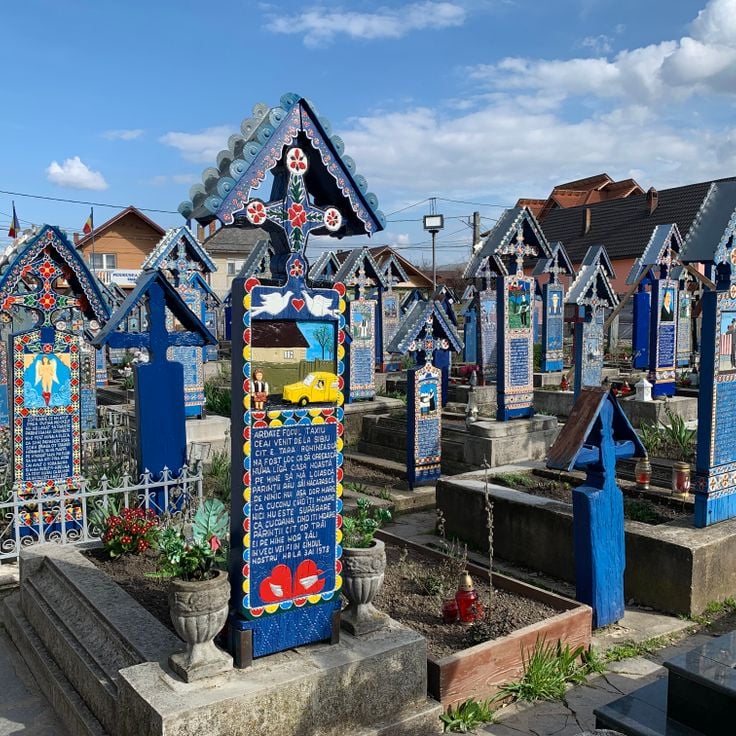
This cemetery in Maramureș is known for its bright blue wooden crosses decorated with colorful carvings and ironic inscriptions. The graves date from the 1930s onward and depict the lives of the deceased in humorous verses and naive paintings. The tradition was established by local woodcarver Ioan Stan Pătraș, who portrayed the departed with their professions, habits and sometimes their weaknesses. The crosses show scenes from village life, from fieldwork to everyday moments. The cemetery documents a regional burial culture that connects death and memory with an unusual approach. The site is located in historic Maramureș and represents one of the documented examples of folk sepulchral art in Romania.
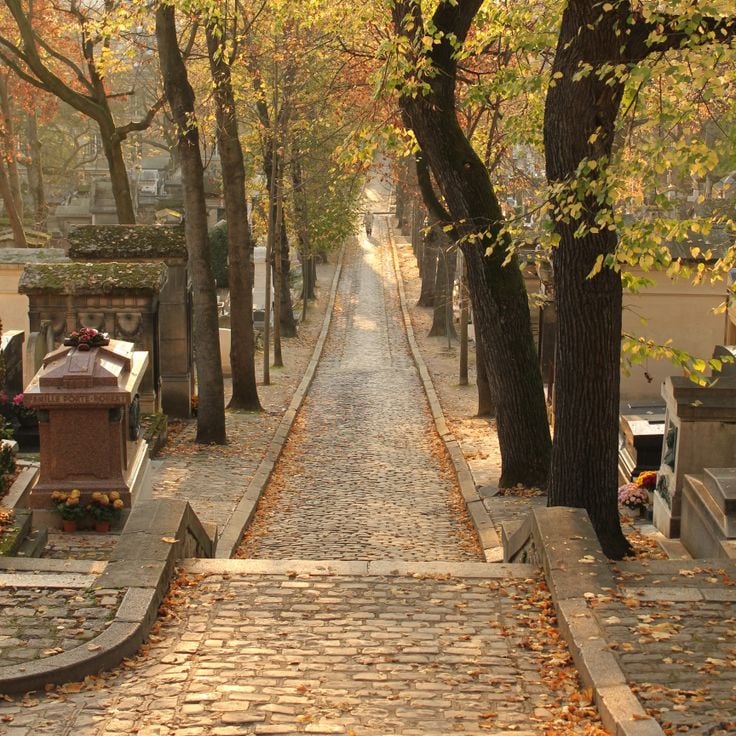
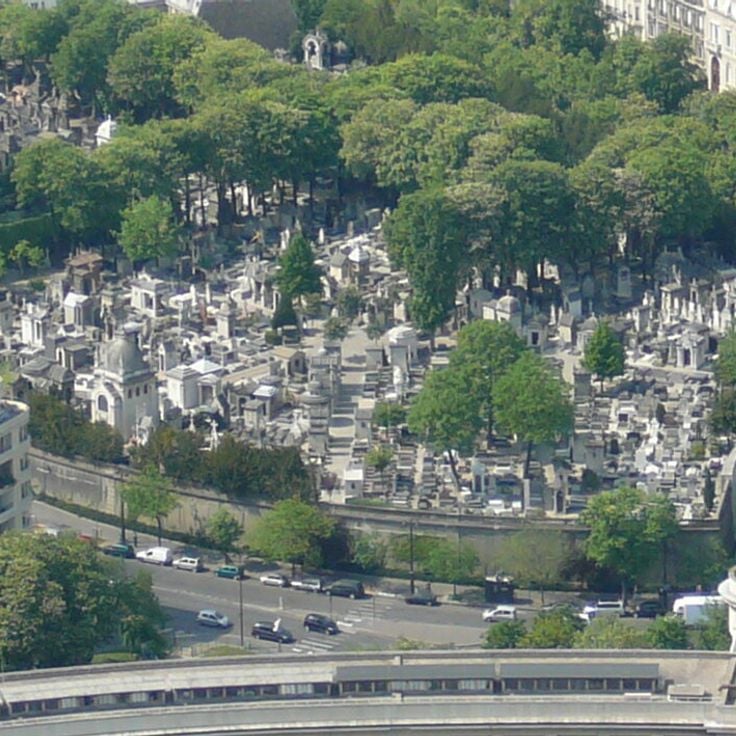
The Cimetière du Père Lachaise opened in 1804 and has become one of the most important cemeteries in Paris. Spread across 109 acres (44 hectares), it holds the graves of figures including Frédéric Chopin, Oscar Wilde, Édith Piaf and Jim Morrison. The site displays varied funerary architecture from neoclassical to art deco styles, documenting two centuries of French burial traditions. Visitors will find administrative buildings from the founding period, shaded tree-lined paths and numerous ivy-covered tombs that reflect the architectural and historical heritage of Europe.
This cemetery was established in the 19th century and combines Nordic and continental garden architecture. The site served the growing urban population of Gothenburg as a burial ground and reflects Swedish bourgeois funeral traditions. Grave monuments from different periods document craft and artistic developments from Classicism through Modernism. The cemetery contains graves of notable figures from commerce, culture and politics. The design follows the park cemetery principle with curving paths, tree groupings and representative burial sections.
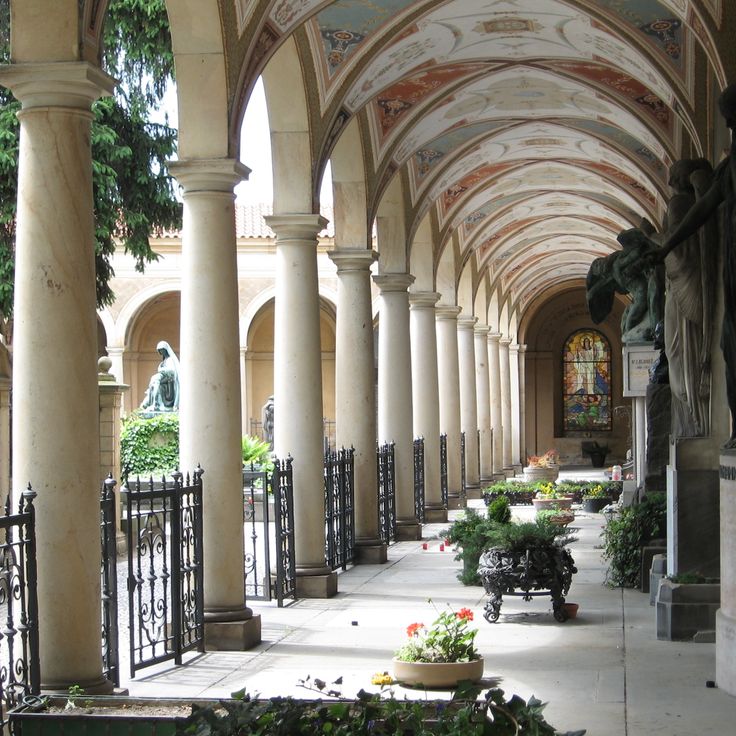
The Vyšehrad Cemetery sits within a medieval fortress complex on a hill above the Vltava River and was established in 1869 as a burial ground for prominent Czech cultural figures. Over 600 graves mark the resting places of composers including Antonín Dvořák and Bedřich Smetana, writers such as Karel Čapek, and painters and sculptors who shaped Czech arts. The Slavín memorial, a neoclassical arcade structure built in 1890, houses the graves of the most celebrated figures. The monuments trace the development of sculptural art from the late 19th century through to the present day and document national burial traditions during the period of Bohemian cultural revival.
The Mirogoj Cemetery in Zagreb was established in 1876 following designs by architect Hermann Bollé and displays an extensive layout in the Neo-Renaissance style. Long arcaded galleries with characteristic domes extend along the main paths, creating covered walkways that house burial sites of various confessions. The monumental entrance gates and regularly spaced pavilions demonstrate the importance Zagreb attached to this site. Notable Croatian figures from politics, culture and science are buried here, making the cemetery a significant record of Croatian history.
The Monumental Cemetery of Staglieno opened in 1851 and covers 100 hectares (250 acres) on the hills east of Genoa. The grounds contain more than 300,000 graves and over 500 marble sculptures from the 19th century. Italian figures such as Giuseppe Mazzini rest here alongside international artists and writers. The arcaded walkways and monumental burial chapels display Italian Classicism and Realism in their design.
Highgate Cemetery was established in 1839 and displays Victorian architecture with vaults, headstones and an avenue lined with Lebanese cedars. The site documents 19th-century British burial culture and contains graves of notable figures including Karl Marx and George Eliot. The western section with its Gothic Revival catacombs and Egyptian Avenue is protected and accessible only through guided tours.
The Jewish cemetery on Okopowa Street was established in 1806 and covers 82 acres (33 hectares) with more than 200,000 marked graves. Inscriptions on the monuments appear in Hebrew and Polish, documenting the history of Warsaw's Jewish community from the 19th century to the present. The cemetery ranks among the largest Jewish burial grounds in Europe and contains the graves of prominent rabbis, writers and business leaders.
Zentralfriedhof spans roughly one square mile (2.5 square kilometers) and serves as the burial site for over 3.3 million people. The cemetery holds the graves of major composers including Ludwig van Beethoven, Johannes Brahms, Franz Schubert and Johann Strauss, along with numerous monumental tombs that document Viennese burial traditions from the 19th century to the present day.
Kerepesi Cemetery opened in 1847 and contains around 3,000 works of art along with the graves of numerous Hungarian statesmen, artists and scientists. The grounds document the evolution of burial culture in Hungary from the 19th through the 20th century and display various architectural styles from neoclassicism to Art Nouveau. Notable figures include politicians, writers and composers whose graves feature elaborate sculptures and mausoleums.
The Novodevichy Cemetery covers 67 acres (27 hectares) in southwest Moscow and has served since 1898 as the burial site for prominent Russian figures from culture, politics and science. Located beside the monastery of the same name, the grounds combine historic funerary architecture with maintained green spaces. Visitors encounter elaborate gravestones, sculptures and monuments that document Russian burial traditions from the late 19th through the 20th century.
The Passy Cemetery covers about 11,000 square meters in the 16th district and opened in 1820. It is the resting place of composers Claude Debussy and Gabriel Fauré, as well as painter Édouard Manet. The cemetery sits on a hillside overlooking the Seine and shows examples of French funeral art from the 19th and early 20th centuries.
This coastal cemetery contains a memorial field for fallen soldiers and the burial sites of Finnish presidents. Established in 1829, the grounds serve as the final resting place for significant figures in Finnish history. The site combines military commemoration with national heritage, documenting the evolution of Finnish burial traditions across nearly two centuries. The quiet location near the Baltic Sea reinforces the solemn character of the place.
The Akureyri Cemetery occupies a hillside site above the Eyjafjörður fjord, with views extending across the surrounding mountains of northern Iceland. The grounds integrate traditional Icelandic grave design with the natural topography of the region, documenting local burial practices from the 19th century onward. Stone monuments and wooden crosses mark the graves of local figures and families who contributed to the development of Akureyri.
Assistens Cemetery opened in 1760 and became a major burial ground in the Danish capital. Among its many trees and plants lie the graves of writer Hans Christian Andersen, philosopher Søren Kierkegaard and physicist Niels Bohr. The site combines parkland character with historical monuments from three centuries, illustrating the evolution of burial customs in Northern Europe.
The Montjuïc Cemetery occupies terraced slopes on the mountain of the same name above Barcelona and documents the evolution of Catalan funerary art since its opening in 1883. The terraced sections contain graves featuring Art Nouveau elements from the period between the 1890s and early 1920s, including sculptural work by Catalan sculptors and stonemasons. The cemetery holds burial sites of industrialists, artists and political figures from Catalan society of the nineteenth and twentieth centuries and illustrates the development of regional burial traditions over more than a century.
This cemetery sits on a hillside above the Atlantic and contains graves of sailors from different nations. The site documents the maritime history of Las Palmas from the 19th century to the present day, with burials of German, British, Scandinavian and Spanish seafarers. The graves tell stories of shipwrecks, harbor workers and captains who were laid to rest here during the height of transatlantic trade. Stone anchors, ship propellers and nautical symbols mark many burial sites, reflecting the city's connection to maritime commerce.
The Cimitero del Verano in Rome is the city's largest cemetery and contains significant funerary monuments and sculptures from the 19th and 20th centuries across its 205 acres (83 hectares). Founded in 1807, this necropolis combines neoclassical architecture with monumental tombs of Italian artists, politicians and intellectuals, documenting the evolution of Roman burial traditions over two centuries.
This cemetery occupies a hillside above Florence and holds the graves of prominent Tuscan artists, writers and politicians from the 19th and early 20th centuries. The site was established after 1848 as an extension of the Basilica of San Miniato al Monte and combines neoclassical funerary monuments with the architecture of the Renaissance church.
The Ohlsdorf Cemetery in Hamburg covers 963 acres (389 hectares) and serves both as a burial ground and a public park. Since opening in 1877, more than 1.5 million burials have taken place here. The grounds feature an extensive network of paths, ponds, chapels and monuments from different periods. Numerous graves of notable figures from science, culture and politics are located throughout the site. The cemetery architecture reflects the evolution of burial practices from the late 19th century to the present day. Visitors regularly use the grounds for walking and recreation.
This cemetery in Maramureș is known for its bright blue wooden crosses decorated with colorful carvings and ironic inscriptions. The graves date from the 1930s onward and depict the lives of the deceased in humorous verses and naive paintings. The tradition was established by local woodcarver Ioan Stan Pătraș, who portrayed the departed with their professions, habits and sometimes their weaknesses. The crosses show scenes from village life, from fieldwork to everyday moments. The cemetery documents a regional burial culture that connects death and memory with an unusual approach. The site is located in historic Maramureș and represents one of the documented examples of folk sepulchral art in Romania.
The Cimetière du Père Lachaise opened in 1804 and has become one of the most important cemeteries in Paris. Spread across 109 acres (44 hectares), it holds the graves of figures including Frédéric Chopin, Oscar Wilde, Édith Piaf and Jim Morrison. The site displays varied funerary architecture from neoclassical to art deco styles, documenting two centuries of French burial traditions. Visitors will find administrative buildings from the founding period, shaded tree-lined paths and numerous ivy-covered tombs that reflect the architectural and historical heritage of Europe.
This cemetery was established in the 19th century and combines Nordic and continental garden architecture. The site served the growing urban population of Gothenburg as a burial ground and reflects Swedish bourgeois funeral traditions. Grave monuments from different periods document craft and artistic developments from Classicism through Modernism. The cemetery contains graves of notable figures from commerce, culture and politics. The design follows the park cemetery principle with curving paths, tree groupings and representative burial sections.
The Vyšehrad Cemetery sits within a medieval fortress complex on a hill above the Vltava River and was established in 1869 as a burial ground for prominent Czech cultural figures. Over 600 graves mark the resting places of composers including Antonín Dvořák and Bedřich Smetana, writers such as Karel Čapek, and painters and sculptors who shaped Czech arts. The Slavín memorial, a neoclassical arcade structure built in 1890, houses the graves of the most celebrated figures. The monuments trace the development of sculptural art from the late 19th century through to the present day and document national burial traditions during the period of Bohemian cultural revival.
The Mirogoj Cemetery in Zagreb was established in 1876 following designs by architect Hermann Bollé and displays an extensive layout in the Neo-Renaissance style. Long arcaded galleries with characteristic domes extend along the main paths, creating covered walkways that house burial sites of various confessions. The monumental entrance gates and regularly spaced pavilions demonstrate the importance Zagreb attached to this site. Notable Croatian figures from politics, culture and science are buried here, making the cemetery a significant record of Croatian history.
The Monumental Cemetery of Staglieno opened in 1851 and covers 100 hectares (250 acres) on the hills east of Genoa. The grounds contain more than 300,000 graves and over 500 marble sculptures from the 19th century. Italian figures such as Giuseppe Mazzini rest here alongside international artists and writers. The arcaded walkways and monumental burial chapels display Italian Classicism and Realism in their design.
Highgate Cemetery was established in 1839 and displays Victorian architecture with vaults, headstones and an avenue lined with Lebanese cedars. The site documents 19th-century British burial culture and contains graves of notable figures including Karl Marx and George Eliot. The western section with its Gothic Revival catacombs and Egyptian Avenue is protected and accessible only through guided tours.
The Jewish cemetery on Okopowa Street was established in 1806 and covers 82 acres (33 hectares) with more than 200,000 marked graves. Inscriptions on the monuments appear in Hebrew and Polish, documenting the history of Warsaw's Jewish community from the 19th century to the present. The cemetery ranks among the largest Jewish burial grounds in Europe and contains the graves of prominent rabbis, writers and business leaders.
Zentralfriedhof spans roughly one square mile (2.5 square kilometers) and serves as the burial site for over 3.3 million people. The cemetery holds the graves of major composers including Ludwig van Beethoven, Johannes Brahms, Franz Schubert and Johann Strauss, along with numerous monumental tombs that document Viennese burial traditions from the 19th century to the present day.
Kerepesi Cemetery opened in 1847 and contains around 3,000 works of art along with the graves of numerous Hungarian statesmen, artists and scientists. The grounds document the evolution of burial culture in Hungary from the 19th through the 20th century and display various architectural styles from neoclassicism to Art Nouveau. Notable figures include politicians, writers and composers whose graves feature elaborate sculptures and mausoleums.
The Novodevichy Cemetery covers 67 acres (27 hectares) in southwest Moscow and has served since 1898 as the burial site for prominent Russian figures from culture, politics and science. Located beside the monastery of the same name, the grounds combine historic funerary architecture with maintained green spaces. Visitors encounter elaborate gravestones, sculptures and monuments that document Russian burial traditions from the late 19th through the 20th century.
The Passy Cemetery covers about 11,000 square meters in the 16th district and opened in 1820. It is the resting place of composers Claude Debussy and Gabriel Fauré, as well as painter Édouard Manet. The cemetery sits on a hillside overlooking the Seine and shows examples of French funeral art from the 19th and early 20th centuries.
This coastal cemetery contains a memorial field for fallen soldiers and the burial sites of Finnish presidents. Established in 1829, the grounds serve as the final resting place for significant figures in Finnish history. The site combines military commemoration with national heritage, documenting the evolution of Finnish burial traditions across nearly two centuries. The quiet location near the Baltic Sea reinforces the solemn character of the place.
The Akureyri Cemetery occupies a hillside site above the Eyjafjörður fjord, with views extending across the surrounding mountains of northern Iceland. The grounds integrate traditional Icelandic grave design with the natural topography of the region, documenting local burial practices from the 19th century onward. Stone monuments and wooden crosses mark the graves of local figures and families who contributed to the development of Akureyri.
Assistens Cemetery opened in 1760 and became a major burial ground in the Danish capital. Among its many trees and plants lie the graves of writer Hans Christian Andersen, philosopher Søren Kierkegaard and physicist Niels Bohr. The site combines parkland character with historical monuments from three centuries, illustrating the evolution of burial customs in Northern Europe.
The Montjuïc Cemetery occupies terraced slopes on the mountain of the same name above Barcelona and documents the evolution of Catalan funerary art since its opening in 1883. The terraced sections contain graves featuring Art Nouveau elements from the period between the 1890s and early 1920s, including sculptural work by Catalan sculptors and stonemasons. The cemetery holds burial sites of industrialists, artists and political figures from Catalan society of the nineteenth and twentieth centuries and illustrates the development of regional burial traditions over more than a century.
This cemetery sits on a hillside above the Atlantic and contains graves of sailors from different nations. The site documents the maritime history of Las Palmas from the 19th century to the present day, with burials of German, British, Scandinavian and Spanish seafarers. The graves tell stories of shipwrecks, harbor workers and captains who were laid to rest here during the height of transatlantic trade. Stone anchors, ship propellers and nautical symbols mark many burial sites, reflecting the city's connection to maritime commerce.
The Cimitero del Verano in Rome is the city's largest cemetery and contains significant funerary monuments and sculptures from the 19th and 20th centuries across its 205 acres (83 hectares). Founded in 1807, this necropolis combines neoclassical architecture with monumental tombs of Italian artists, politicians and intellectuals, documenting the evolution of Roman burial traditions over two centuries.
This cemetery occupies a hillside above Florence and holds the graves of prominent Tuscan artists, writers and politicians from the 19th and early 20th centuries. The site was established after 1848 as an extension of the Basilica of San Miniato al Monte and combines neoclassical funerary monuments with the architecture of the Renaissance church.
The Ohlsdorf Cemetery in Hamburg covers 963 acres (389 hectares) and serves both as a burial ground and a public park. Since opening in 1877, more than 1.5 million burials have taken place here. The grounds feature an extensive network of paths, ponds, chapels and monuments from different periods. Numerous graves of notable figures from science, culture and politics are located throughout the site. The cemetery architecture reflects the evolution of burial practices from the late 19th century to the present day. Visitors regularly use the grounds for walking and recreation.
This cemetery in Maramureș is known for its bright blue wooden crosses decorated with colorful carvings and ironic inscriptions. The graves date from the 1930s onward and depict the lives of the deceased in humorous verses and naive paintings. The tradition was established by local woodcarver Ioan Stan Pătraș, who portrayed the departed with their professions, habits and sometimes their weaknesses. The crosses show scenes from village life, from fieldwork to everyday moments. The cemetery documents a regional burial culture that connects death and memory with an unusual approach. The site is located in historic Maramureș and represents one of the documented examples of folk sepulchral art in Romania.
The Cimetière du Père Lachaise opened in 1804 and has become one of the most important cemeteries in Paris. Spread across 109 acres (44 hectares), it holds the graves of figures including Frédéric Chopin, Oscar Wilde, Édith Piaf and Jim Morrison. The site displays varied funerary architecture from neoclassical to art deco styles, documenting two centuries of French burial traditions. Visitors will find administrative buildings from the founding period, shaded tree-lined paths and numerous ivy-covered tombs that reflect the architectural and historical heritage of Europe.
Walking through these cemeteries means crossing centuries of feelings frozen in time. The real way to enjoy them is to forget about fear or discomfort and enter with curiosity. You will see interesting sculptures, different regional styles, and stories engraved on each stone. A suggestion: explore them by theme rather than at random. Look for the graves of composers in Vienna, writers in Paris, and national heroes in Budapest.