Vyšehrad cemetery, National cemetery in Vyšehrad, Prague, Czech Republic
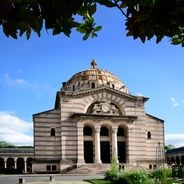
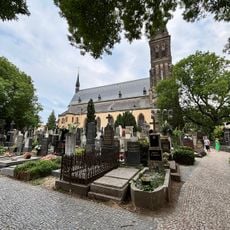
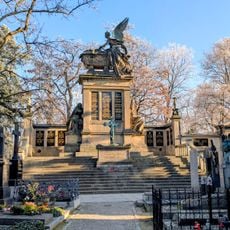
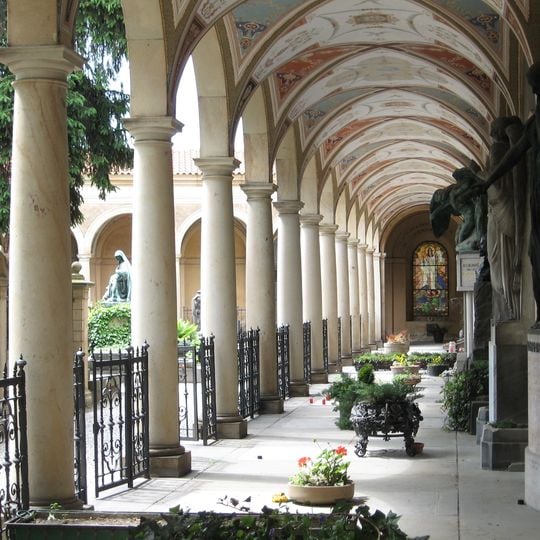
Vyšehrad cemetery is a burial ground on the Vyšehrad castle grounds in Prague, beside the Church of Sts Peter and Paul. A neo-Renaissance arcade with painted panels runs around most of its perimeter, enclosing about 1,200 grave sites and more than 100 tombs. A bronze sculptural group stands near the open wrought-iron gate.
Burials on the Vyšehrad site go back to the 11th or 12th century, and the cemetery wall is first documented in 1660. In 1785 a special decree allowed burials to continue here while other churchyards inside Prague were closed. The Svatobor association had Václav Hanka's grave built in 1863, and in 1869 the cemetery became the national burial ground, promoted by František Ladislav Rieger and Václav Štulc.
The name Slavín means place of glory and the memorial hall became a symbol of Czech cultural memory. The inscription above the entrance reminds visitors that those buried here served their people through their work and creativity.
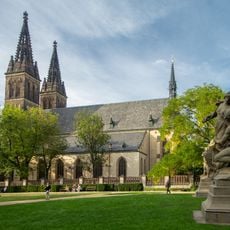
The cemetery sits directly next to the Basilica of Saints Peter and Paul and opens daily at 8 AM. Closing time varies by season between 5 PM and 7 PM.
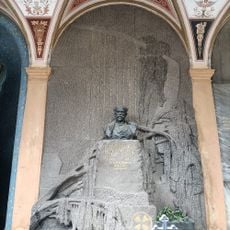
About 550 notable people are buried here, 56 of them in the Slavín tomb. The grave of Milada Horáková, executed at Pankrác in 1950, is symbolic, as is that of Josef Čapek, who died in Bergen-Belsen in 1945.
The community of curious travelers
AroundUs brings together thousands of curated places, local tips, and hidden gems, enriched daily by 92,185 contributors worldwide.