Prague is known for its historic landmarks, but beyond the usual tourist routes lie numerous lesser-visited sites that offer deeper insight into the city's history and contemporary life. This collection takes you to neighborhoods, gardens and buildings often overlooked, revealing the layered past of Prague and its active cultural scene.
Among the sites are the hilltop fortress of Vyšehrad with its historic cemetery, the baroque Vrtba Garden in Malá Strana, and Strahov Monastery with its impressive library. Kampa Park on Kampa Island offers quiet walks along the Čertovka Canal, while Speculum Alchemiae presents underground Renaissance-era laboratories. Troja Palace in the northern part of the city features baroque architecture and terraced gardens, and the Convent of St. Agnes houses medieval art collections.
Other stops include Wallenstein Garden with its Renaissance arcades, the Letná beer garden overlooking the rooftops, and the former factory site of MeetFactory in Smíchov, now a cultural center. The National Technical Library in Dejvice and the rotating Kafka head sculpture on Národní třída represent contemporary Prague. From the Invalidovna fortress complex in Karlín to the Royal Game Reserve in Bubeneč, this collection provides varied perspectives on the Czech capital.
Prague is known for its historic landmarks, but beyond the usual tourist routes lie numerous lesser-visited sites that offer deeper insight into the city's history and contemporary life. This collection takes you to neighborhoods, gardens and buildings often overlooked, revealing the layered past of Prague and its active cultural scene.
Among the sites are the hilltop fortress of Vyšehrad with its historic cemetery, the baroque Vrtba Garden in Malá Strana, and Strahov Monastery with its impressive library. Kampa Park on Kampa Island offers quiet walks along the Čertovka Canal, while Speculum Alchemiae presents underground Renaissance-era laboratories. Troja Palace in the northern part of the city features baroque architecture and terraced gardens, and the Convent of St. Agnes houses medieval art collections.
Other stops include Wallenstein Garden with its Renaissance arcades, the Letná beer garden overlooking the rooftops, and the former factory site of MeetFactory in Smíchov, now a cultural center. The National Technical Library in Dejvice and the rotating Kafka head sculpture on Národní třída represent contemporary Prague. From the Invalidovna fortress complex in Karlín to the Royal Game Reserve in Bubeneč, this collection provides varied perspectives on the Czech capital.
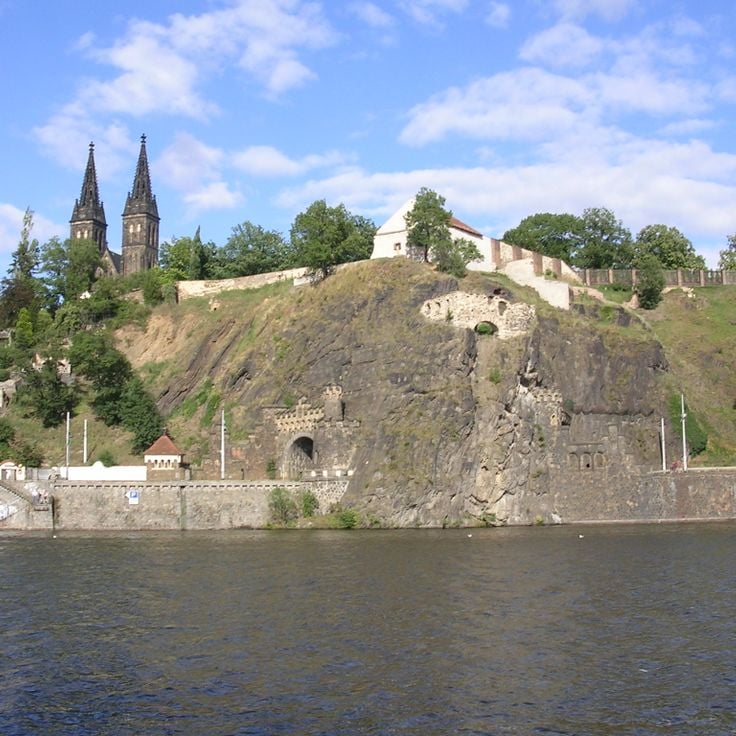
This 10th-century fortress sits on a hill above the Vltava River and contains a basilica, a cemetery and defensive walls. It offers visitors a chance to explore a quieter part of Prague, away from the heavily trafficked tourist routes in the city center. The complex speaks to early Bohemian history and houses the final resting place of notable Czech figures in arts and culture. From the walls, you can look out over the city and the river.
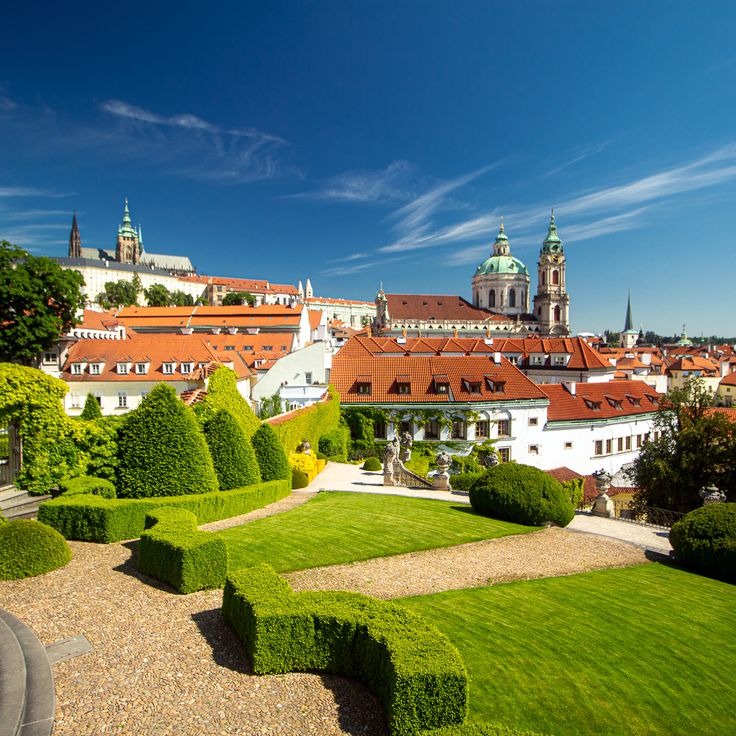
This Baroque garden extends across multiple terraces with stone sculptures, columns and vases ascending the hillside. The geometrically arranged levels provide different perspectives on Prague's rooftops and towers. The architecture dates from the early 18th century and demonstrates the characteristic elements of Baroque garden design with formal beds and mythological figures.
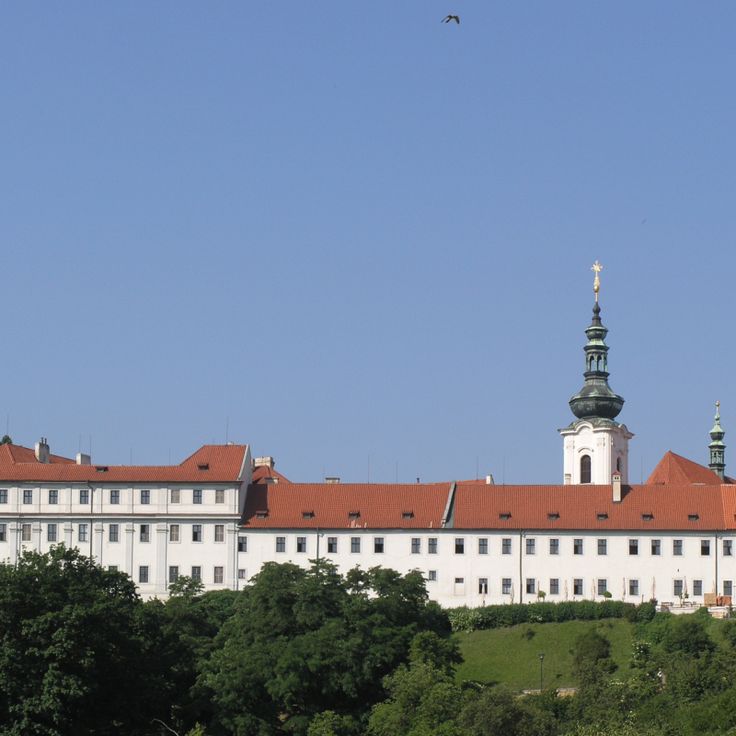
This 12th-century monastery sits on a hill west of Prague's city center and houses two ornate Baroque library halls containing approximately 200,000 volumes. The Theological Hall dates from the 1670s, while the Philosophical Hall was completed in the 1790s and features ceiling frescoes depicting human knowledge. Visitors view the libraries through glass doors to preserve the historic collections, and the monastery grounds offer views across the city to Prague Castle.
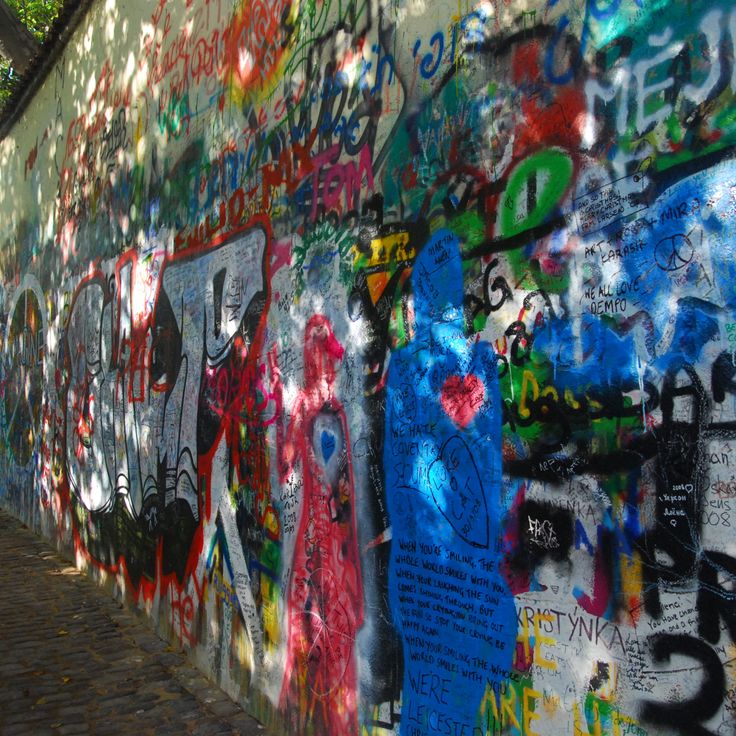
This historic wall became a symbol of freedom after 1980, displaying peace messages and graffiti inspired by John Lennon's lyrics and pacifist ideals. The mural changes constantly as visitors add new messages, forming a stark contrast to the city's communist past when such expression was forbidden.
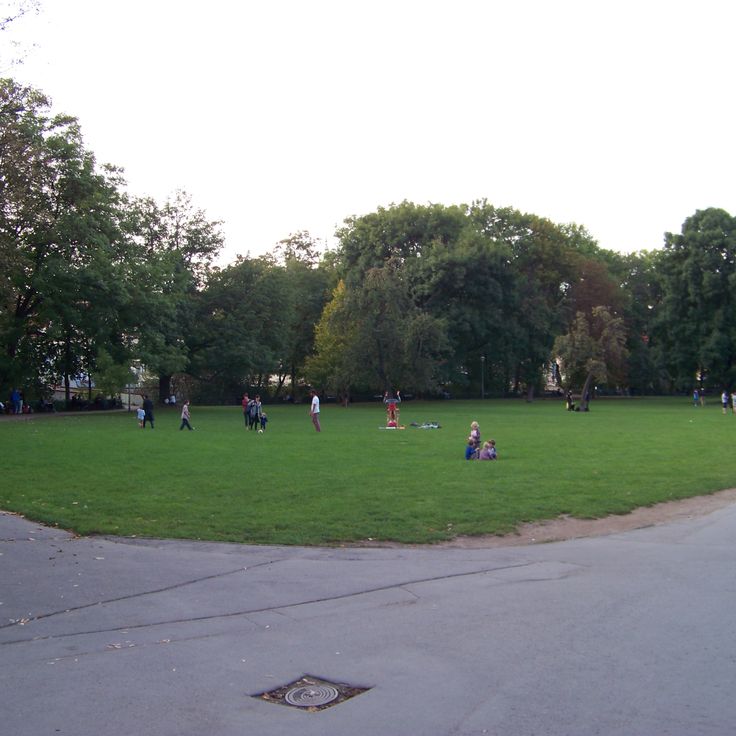
This park between the Vltava and Čertovka canal features outdoor modern sculptures and shaded paths that provide a quiet alternative to the busy tourist routes in Prague's historic center. The green space combines natural rest areas with contemporary art, creating a place to linger away from the crowds on Charles Bridge.
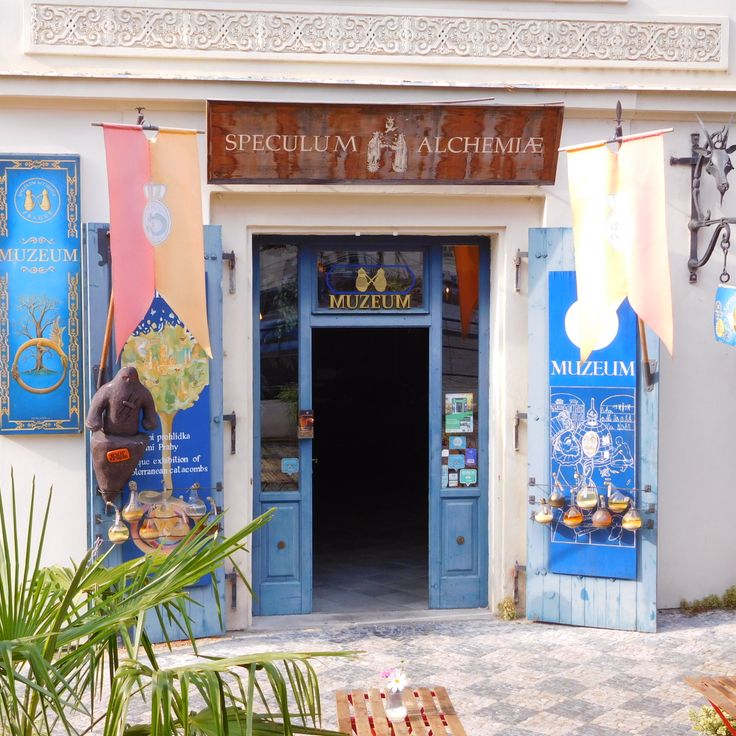
This 16th century underground laboratory preserves original equipment where alchemists conducted experiments under the protection of Emperor Rudolf II. The subterranean chambers were discovered by chance in 2002 and offer an authentic look at the working conditions of court scholars who analyzed chemical substances and searched for the philosopher's stone. Speculum Alchemiae displays preserved distillation apparatus, furnaces and tools in their original setting near the Old Town.
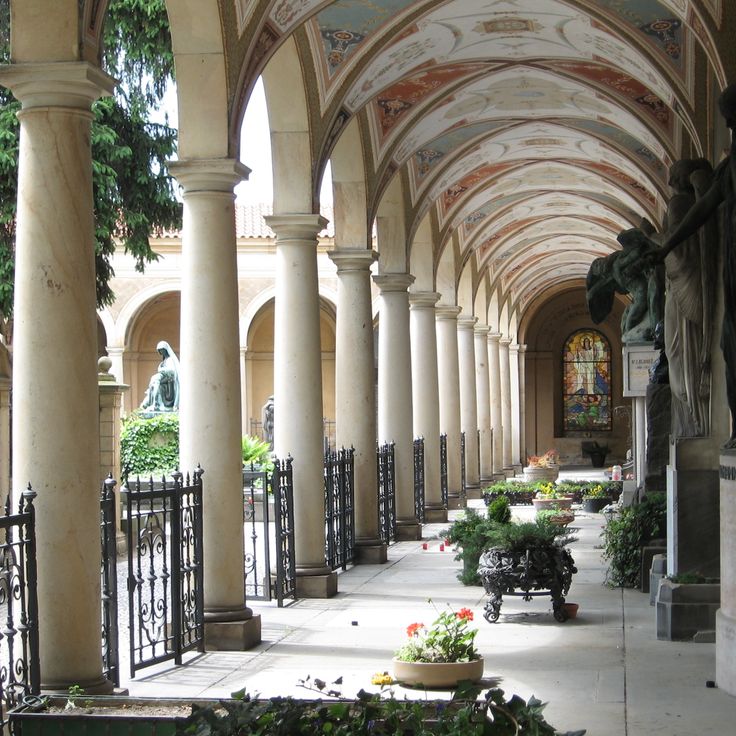
This historic cemetery established in 1869 gathers the graves of prominent Czech composers, writers, artists and public figures in a site that serves as a national pantheon of Czech culture. The burial grounds range from simple markers to elaborate monuments, including the graves of Antonín Dvořák, Bedřich Smetana and Alfons Mucha. The cemetery spans several acres on the southern edge of the Vyšehrad fortress and offers visitors insight into Czech cultural history.
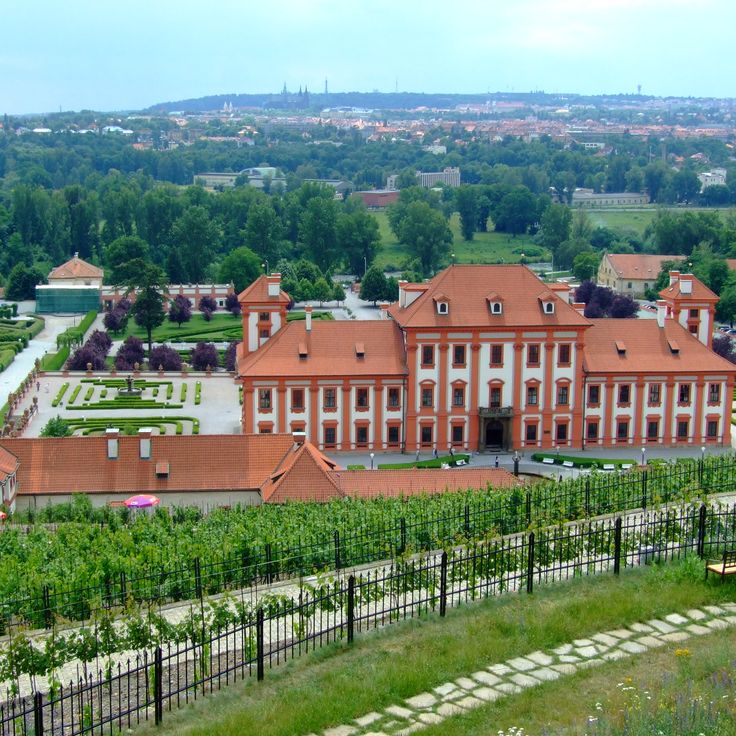
This seventeenth-century Baroque palace stands on the northern edge of the city, presenting large-scale ceiling frescoes that depict Habsburg victories and mythological scenes. The symmetrically designed gardens, with their terraced steps, sculptures and restored vineyards, extend across several acres and offer a contrast to the urban density of the center. The palace now houses part of the National Gallery, focusing on nineteenth-century painting, and remains a functioning example of Baroque garden architecture beyond the usual tourist routes.
This 17th-century Baroque garden within the Wallenstein Palace complex displays bronze sculptures, fountains and a carp pond. The garden covers approximately 4 acres (1.7 hectares) and offers a quiet refuge away from the busy main tourist routes, with arcaded walkways, peacocks and an Italian-style sala terrena.
This outdoor beer garden in Letná Park accommodates 800 guests and sits above the Vltava River with open views across the Old Town. The establishment serves Czech draft beer and dishes from the Bohemian kitchen, including grilled meats and traditional sides. Operations run from spring through fall, drawing both locals and travelers seeking a break from the crowded Old Town lanes. Tables are arranged under trees and on open grounds, providing shade during warm weather. Access is via paths through the park, which occupies a plateau above the river embankment.
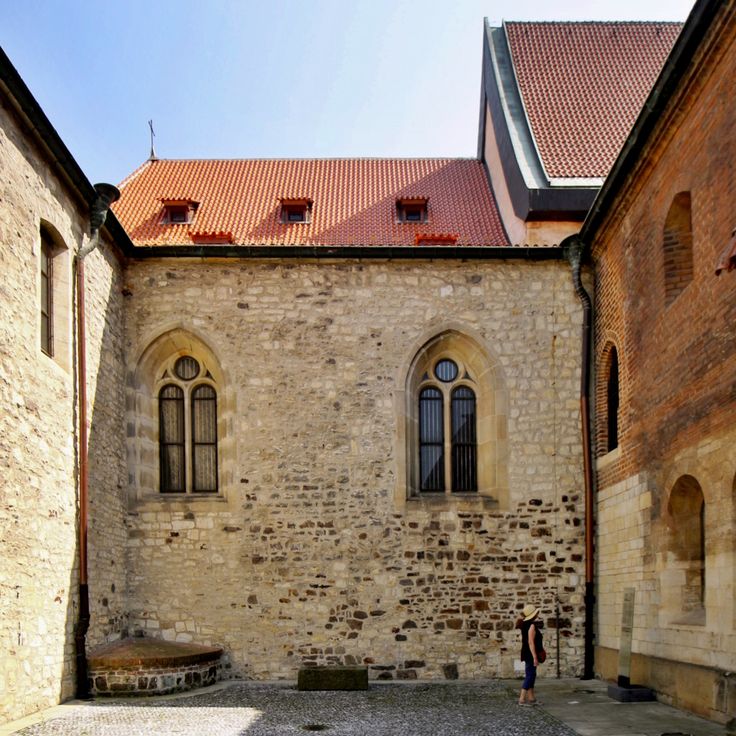
This former 13th-century monastery now houses a major collection of medieval religious art from the National Gallery. Saint Agnes Convent was founded in 1231 and stands as one of the first Gothic buildings in Bohemia. The exhibition includes Bohemian and Central European paintings and sculptures from the 13th through 16th centuries, featuring works from the Bohemian School and late Gothic altarpieces. The restored monastery buildings, with their cloisters and chapels, provide insight into medieval monastic life and Gothic architecture.
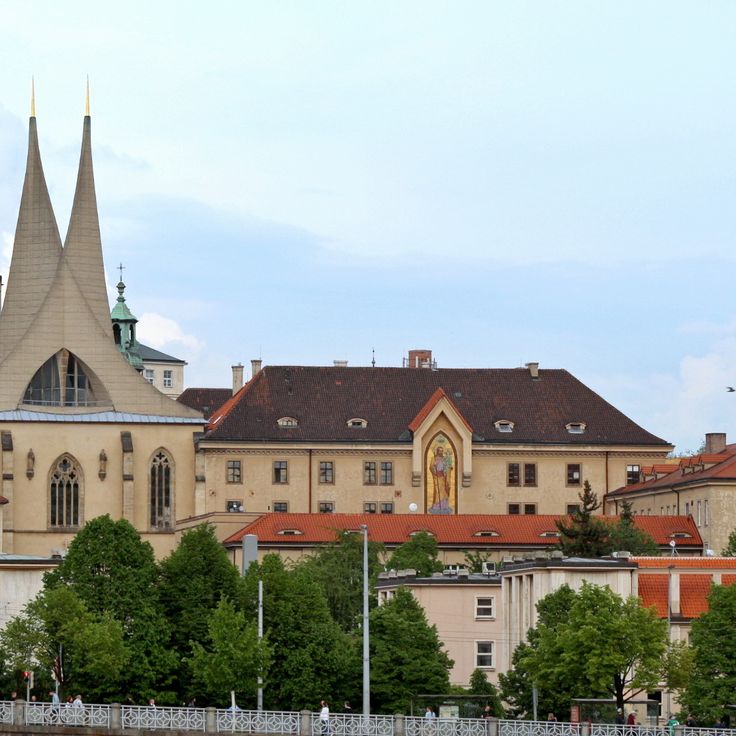
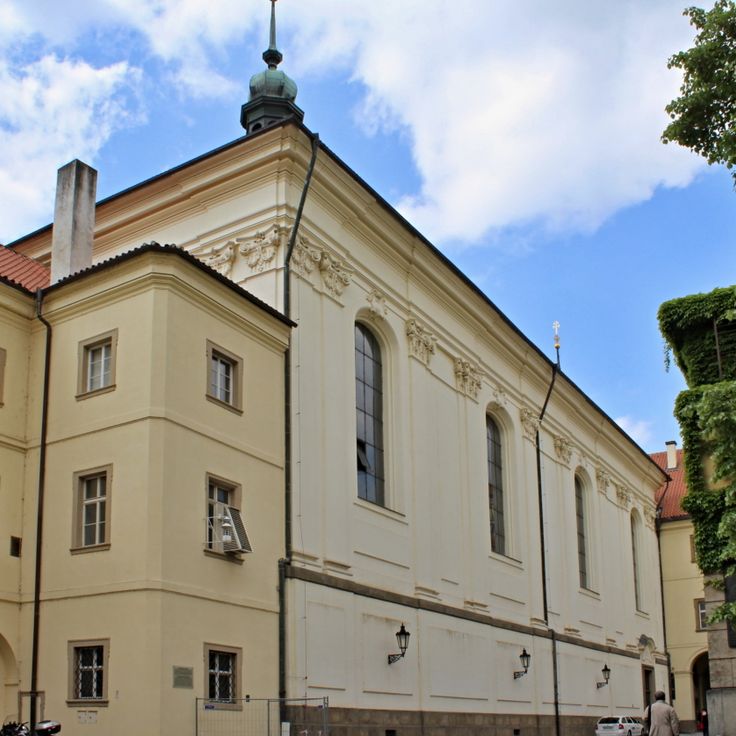
This fourteenth-century Benedictine monastery in Prague's New Town was founded under Emperor Charles IV and preserves important wall paintings from the Carolingian period. The Gothic church structure was rebuilt after 1945 bombing damage, while the original medieval frescoes in the cloister remain intact. The Emmaus Monastery served for centuries as an important religious and cultural center and today houses an active Benedictine community and a refuge for Slavic liturgical traditions.
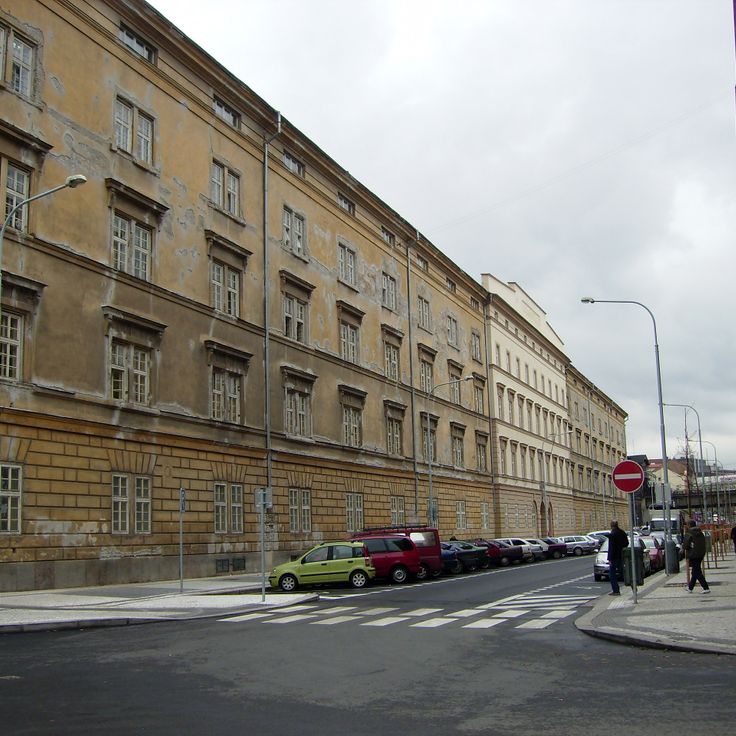
This former 19th-century military barracks has been converted into a cultural center that houses art galleries, a café, a cinema and spaces dedicated to cultural programs. Located in the Karlín district, the complex offers insight into Prague's industrial past while serving as a meeting point for contemporary art and cultural events in a setting that preserves its historic architecture.
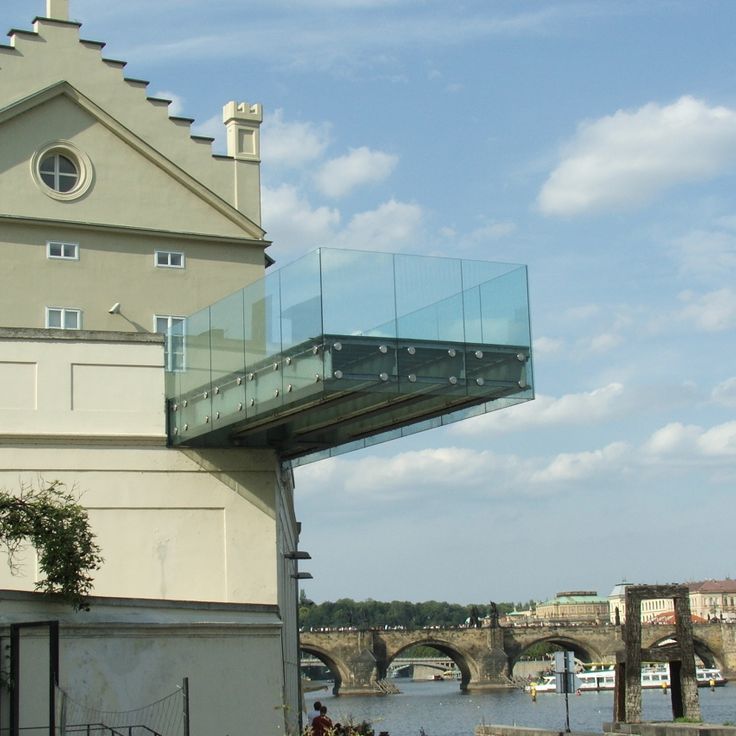
This museum occupies a former mill on the banks of the Vltava and presents a collection of Czech and European art from the twentieth century. Musée Kampa ranks among Prague's less visited cultural institutions and provides insight into the region's modern art history. The exhibition spaces include works by František Kupka and other significant artists who shaped the artistic output of Central Europe.
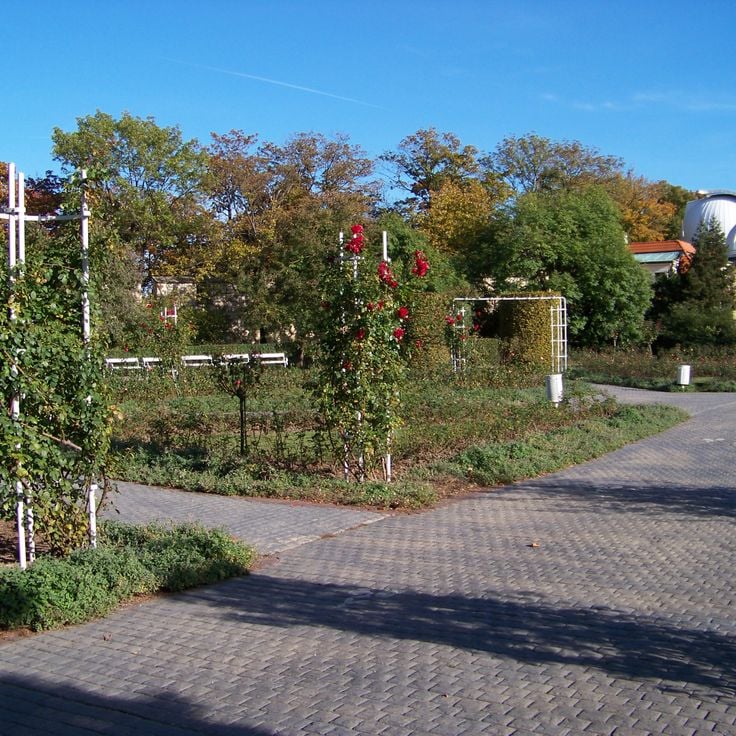
This 318-foot (97-meter) elevation provides a quiet retreat from Prague's crowded city center. The slopes hold an expansive park with rose gardens and fruit orchards, plus a 197-foot (60-meter) observation tower offering comprehensive views across the city. Footpaths wind throughout the grounds, linking different garden sections with historic structures dating from the late 19th century.
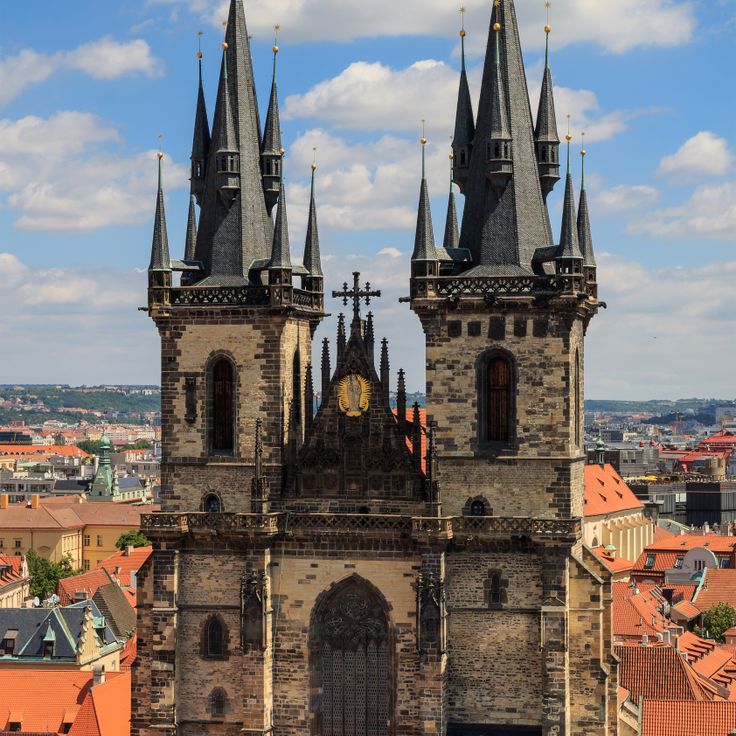
This 14th century Gothic church dominates Prague's Old Town with its twin 262 foot (80 meter) towers rising above Old Town Square. The interior holds the tombstone of astronomer Tycho Brahe and a baroque high altar. Originally built to serve the German merchant community, the church later became the main center of the Hussite movement.
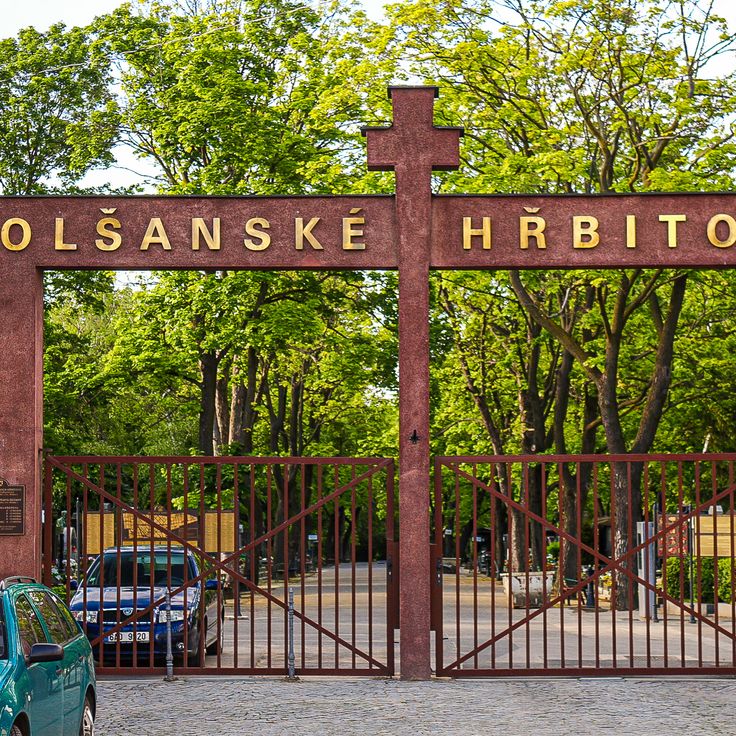
This 125-acre cemetery spans several city blocks and holds burial sites from the 18th century through the present day, including the final resting place of Franz Kafka. The sprawling grounds showcase various architectural styles in their funerary monuments and mausoleums, from neo-Gothic chapels to modernist headstones. Visitors will find graves of notable Czech figures from the arts, politics and sciences, as well as several military burial sections from different periods.
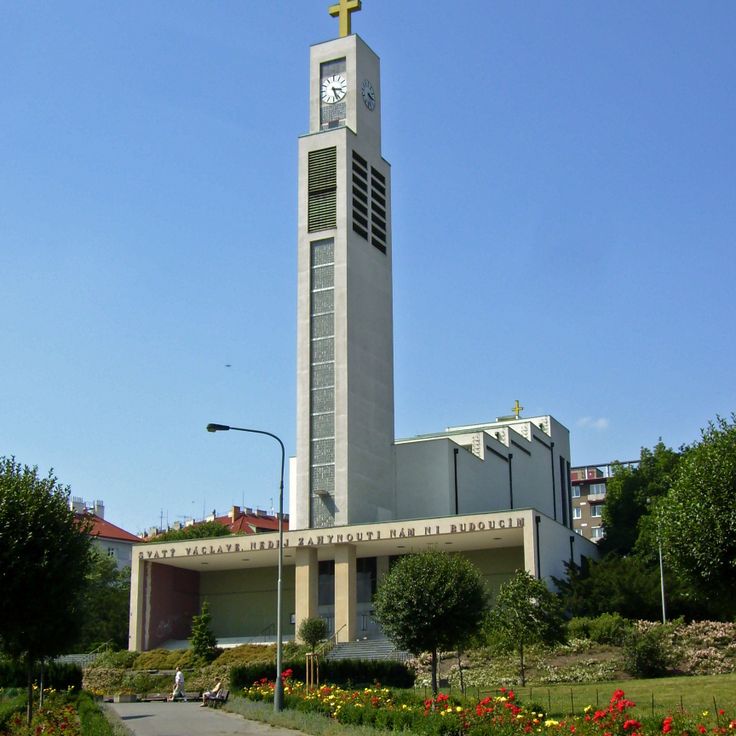
This modernist church from the early 20th century stands in the residential district of Vršovice and displays geometric forms with a triangular bell tower and colored glass windows. Architect Josef Gočár designed the building in a cubist-expressionist style rarely found in Prague. The interior spaces combine clean lines with liturgical functions and provide an example of architectural renewal after World War I.
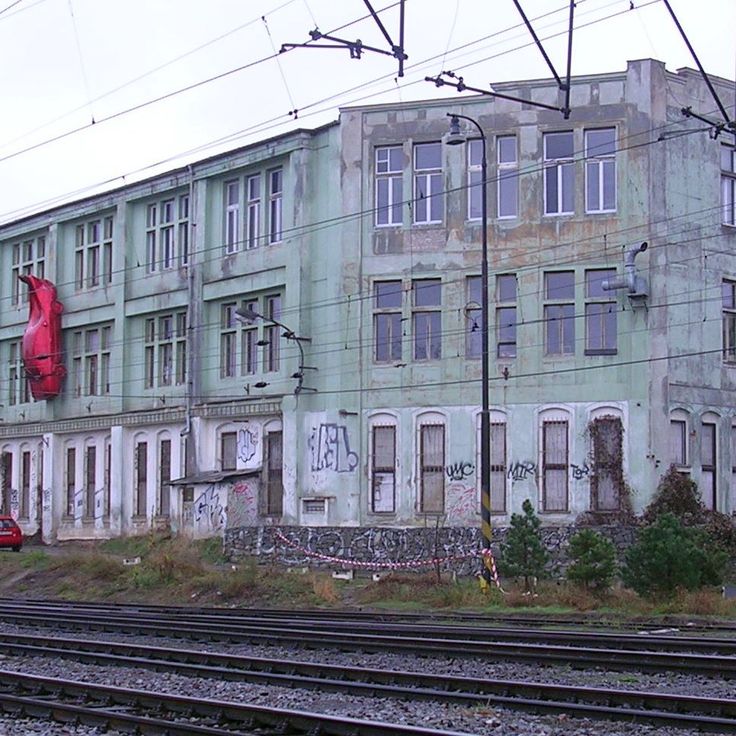
This art center in a former factory presents international contemporary art exhibitions and hosts regular concerts, theater performances and artist workshops. MeetFactory was founded as an alternative cultural project and provides space for experimental work in painting, sculpture, performance and music. The facilities include several gallery spaces, a theater, a music club and artist studios where creatives from different countries work. Located in the Smíchov district, the center has established itself as an important venue for the city's contemporary art scene and continues to attract both local and international artists and audiences.
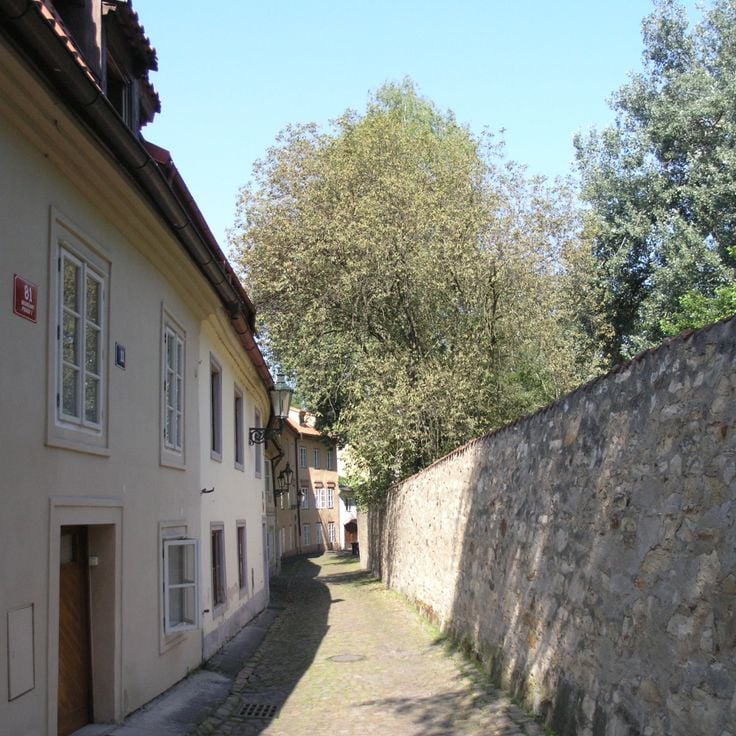
This cobbled lane lined with 16th-century houses sits among the quieter corners of the castle district. The low facades and small windows reflect a time when craftsmen and castle servants lived here. Galleries and studios now occupy the narrow street, which remains removed from the crowds on the main tourist routes.
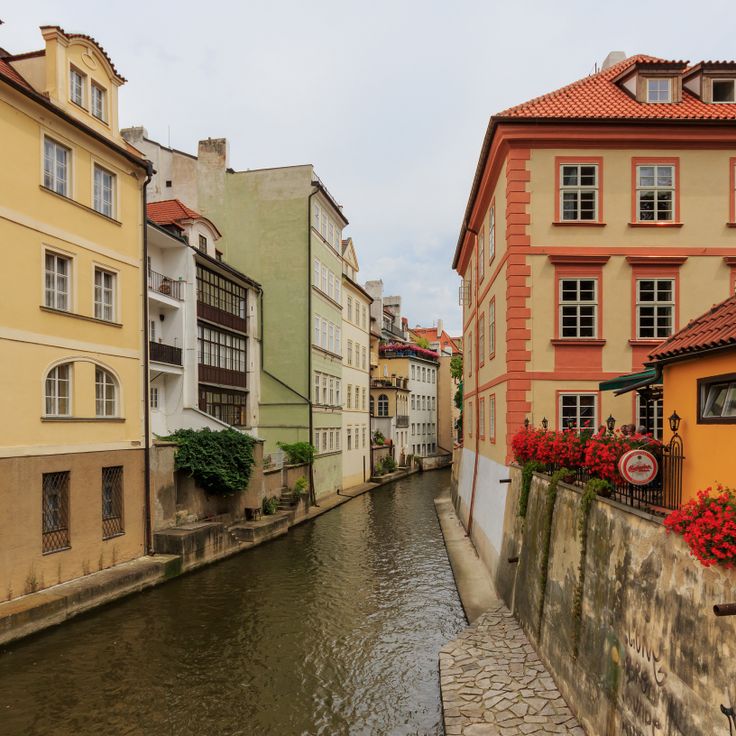
This narrow canal between Kampa Island and the Malá Strana district powered water mills during the Middle Ages and now provides a quiet contrast to the busy tourist routes in Prague's historic center.
This baroque church from the eighteenth century stands in the heart of the Old Town, representing Prague's religious heritage beyond the well-traveled routes. The ceiling paintings and sculptures inside document the artistic tradition of the baroque period, while the main altar with its decorative elements emphasizes the liturgical importance of the building. The church offers visitors an opportunity to explore the city's sacred architecture in a quieter setting.
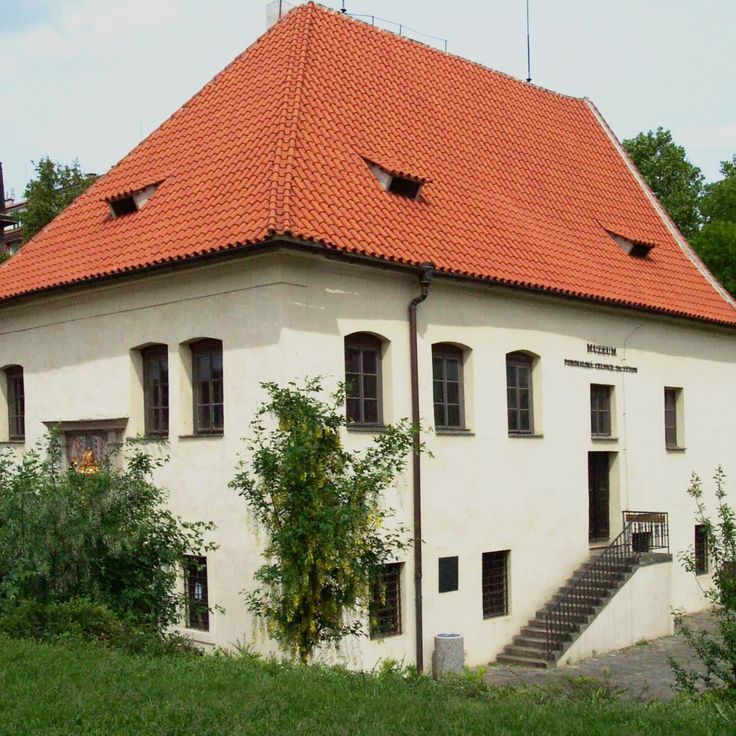
This historic building in Výtoň documents centuries of timber transport along the Vltava River. The exhibition displays tools and equipment used by raftsmen who once floated logs from Bohemian forests to the capital. The customs house recalls the economic importance of river trade for Prague and provides insights into the working lives of river navigators. The collection includes nautical instruments, historical photographs and models of the rafts used for transporting timber downstream.
This Gothic building from the 14th century stands on the eastern side of Old Town Square and presents rotating exhibitions of contemporary art in its historic rooms. The House at the Stone Bell was opened to the public after extensive restoration work in the 1980s uncovered its medieval stone facade. The upper floors house gallery spaces, while the ground floor occasionally hosts cultural events.
These gardens spread across the hillside below Prague Castle, featuring lawns, groves and walking paths away from the main tourist flows. Created in the early 19th century as one of the first public parks in Prague, the site retains its original terraced design with mature trees that provide a quiet retreat within steps of the castle district.
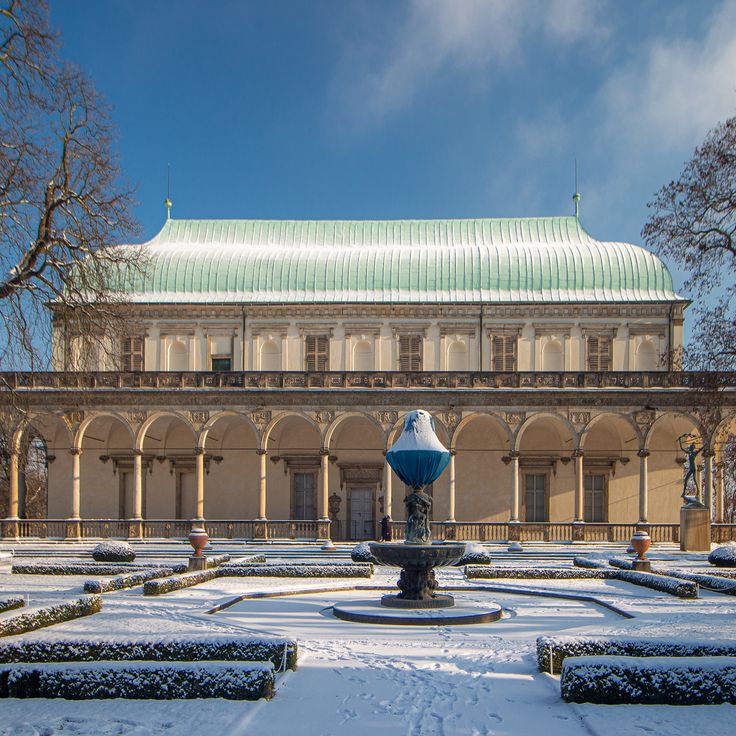
This pavilion was built starting in 1538 as a summer residence for Queen Anne and combines Italian Renaissance elements with Bohemian craftsmanship. The two-story structure features an open arcade gallery on the ground floor with 36 columns, their capitals decorated with mythological scenes. Located in the gardens of Prague Castle, the building served for royal receptions and private retreats. The precise stonework on the facades documents the technical skills of craftsmen from that era. The structure survived several fires and was restored in the 18th century, with the original framework largely preserved.
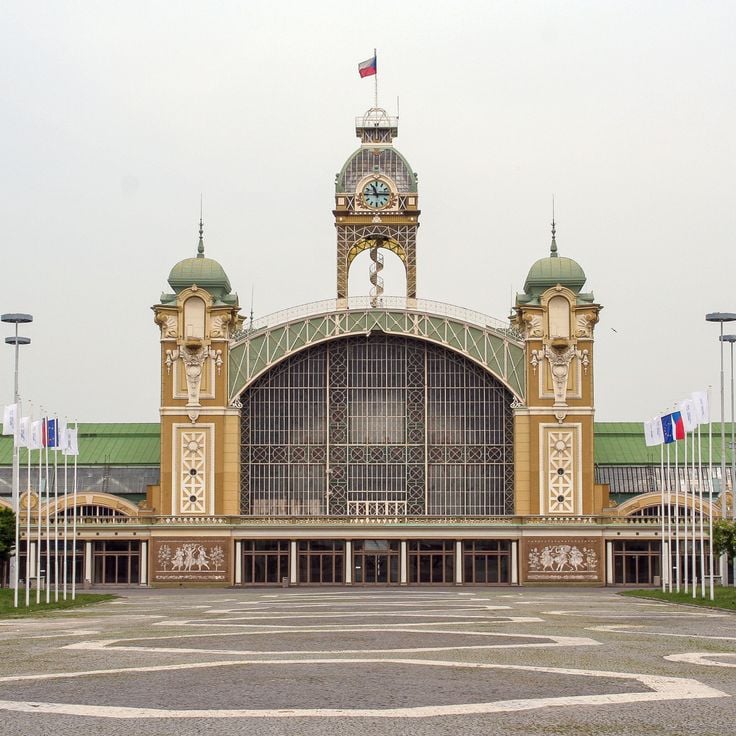
This exhibition hall opened in 1891 as a monumental iron structure for the Jubilee Exhibition and evolved into the city's primary trade fair venue. The 780-foot long and 180-foot wide (238 by 54 meter) hall hosts commercial fairs, art exhibitions and cultural events that connect Prague's industrial heritage with contemporary use.
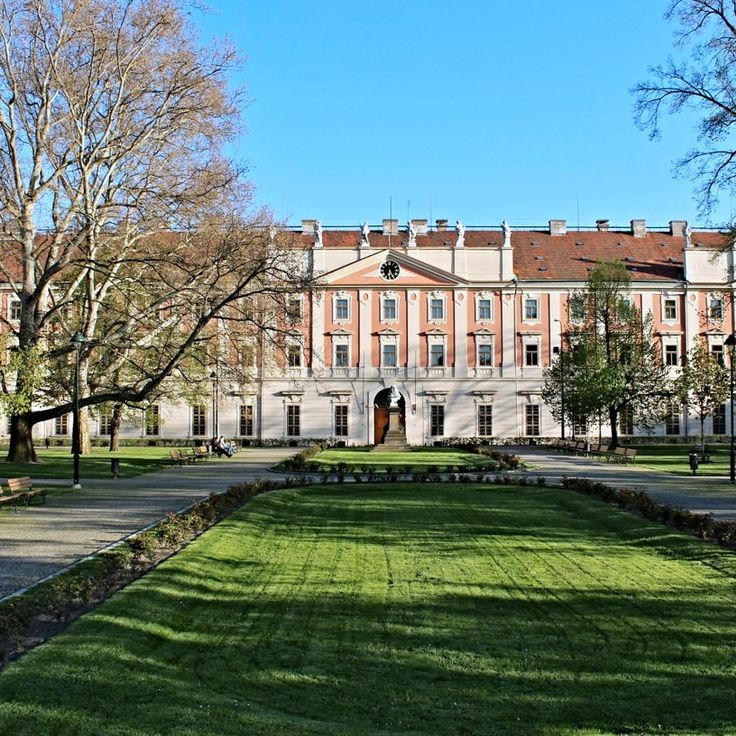
This baroque complex in Karlín was built in the 18th century as a military hospital and residence for wounded soldiers. Modeled after the Hôtel des Invalides in Paris, the building features a spacious interior courtyard surrounded by symmetrical wings. The facility now houses the Military History Institute and opens its historic halls to visitors during occasional public events and exhibitions.
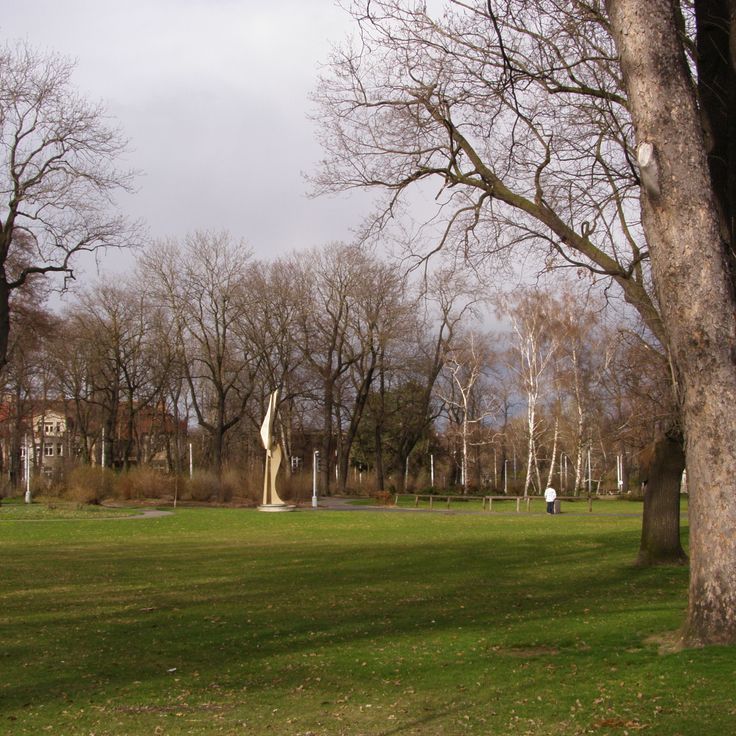
This historic hunting reserve spans 95 hectares (about 235 acres) with centuries-old oaks, walking trails and an established population of red deer. Once reserved for royal hunters, the grounds now offer a quiet retreat from Prague's busy attractions, preserving the natural landscape and architectural heritage from the Habsburg era.
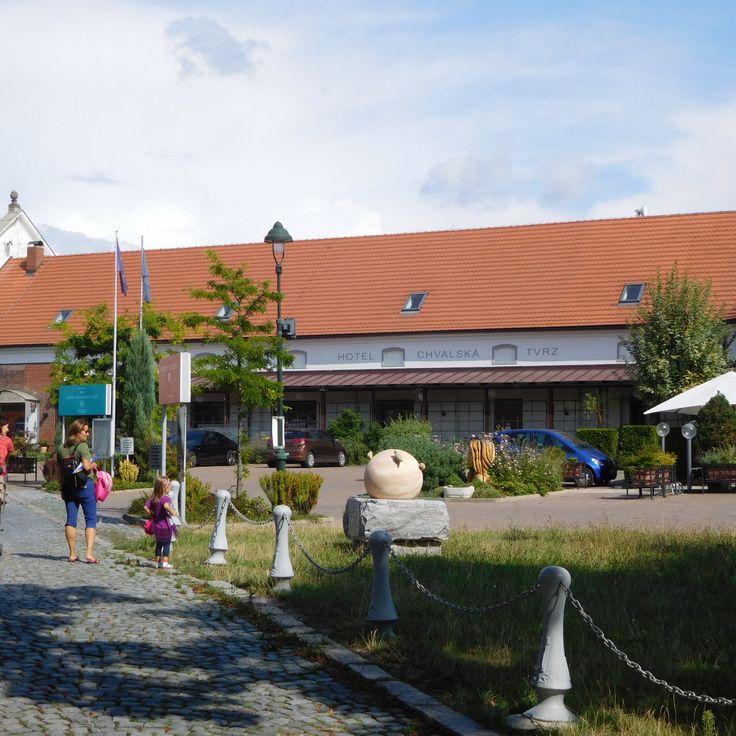
Chvalský Castle, a restored 14th-century complex, hosts art exhibitions and concerts. Located in Horní Počernice on the northeastern outskirts, the estate offers guided tours through its historical halls, providing insight into Bohemian medieval architecture. The grounds display various building styles accumulated over centuries, and the venue now functions as a cultural center away from the usual tourist circuits in the city center.
This baroque garden from the 18th century sits in Smíchov and surrounds a historic villa. The grounds preserve original stone ornaments and include a small fountain. The garden provides a quiet retreat from the city center and displays elements of baroque landscape design typical of historic Prague. The villa and its outdoor spaces document the lifestyle of wealthy Prague families during the baroque period and offer visitors insight into the urban garden culture of that era.
These expansive gardens climb a steep hillside between Smíchov and Petřín, offering a quiet network of winding paths through terraced lawns and wooded sections. The 19th-century grounds include several sculptures and a wooden church, along with the Ethnographic Museum, which documents Czech folk art and rural traditions. Upper terraces provide views across the city rooftops toward the Vltava River.
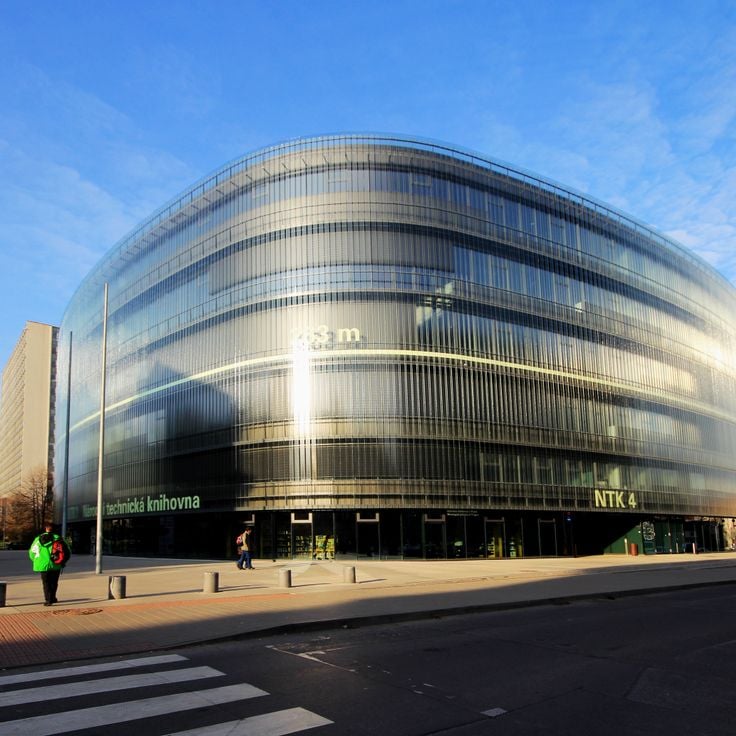
This technical library opened in 2009 and spans nine floors with study areas, automated lending systems and contemporary architecture that departs from traditional Prague library spaces. The institution combines technical resources with modern design, providing access to extensive collections for students and researchers focusing on engineering and related fields.
The Žižkov Television Tower rises 709 feet (216 meters) above the city and offers sweeping views of Prague from its observation platform. Completed in 1992, the structure serves as a broadcasting tower and features remarkable crawling baby sculptures by artist David Černý on its exterior, added in 2000. These distinctive figures add an artistic dimension to the functional structure, making the tower one of the city's most unusual landmarks, combining modern infrastructure with contemporary art.
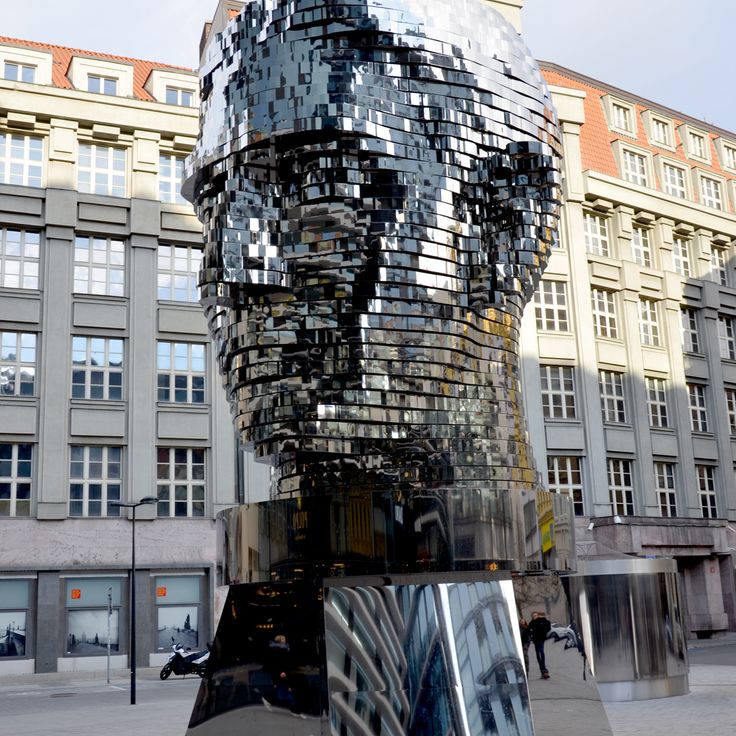
This mechanical statue of writer Franz Kafka consists of 42 movable metal layers that rotate independently, continuously reshaping the face. Czech sculptor David Černý created the work in 2014 as part of his series of provocative installations throughout Prague. Standing over 33 feet (10 meters) tall in front of a shopping center, the head has become one of the city's most unusual artworks, drawing visitors seeking contemporary pieces beyond the traditional landmarks.
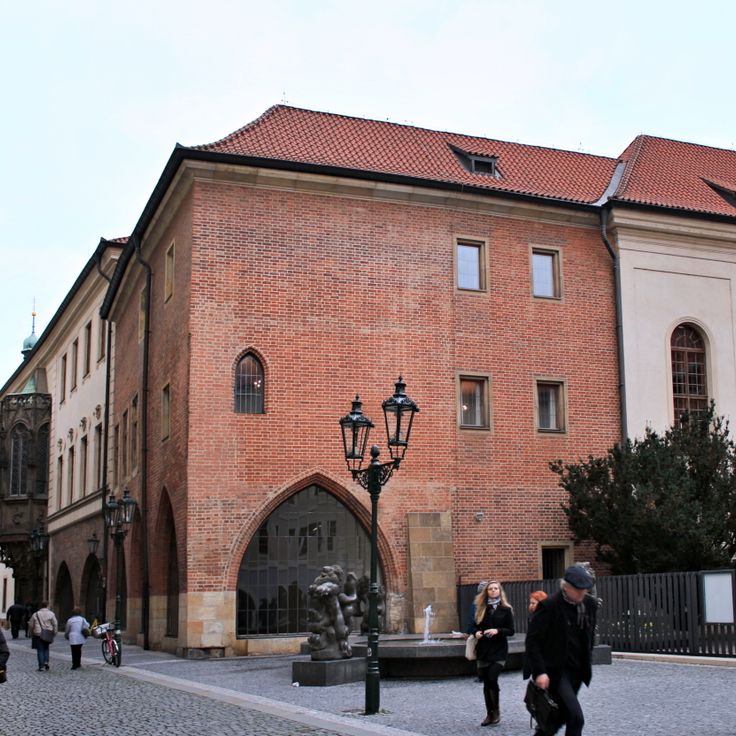
The Karolinum is a 14th-century Gothic university building featuring carved stone decorations and interior vaulted ceilings with fresco paintings. It has served as an academic center since its founding and has undergone multiple renovations over the centuries while preserving its medieval elements. The architectural complex combines different building styles and reflects the long history of Charles University, one of the oldest in Europe. Visitors can tour the historic rooms and examine the preserved Gothic details alongside later architectural additions.
This 10th-century fortress sits on a hill above the Vltava River and contains a basilica, a cemetery and defensive walls. It offers visitors a chance to explore a quieter part of Prague, away from the heavily trafficked tourist routes in the city center. The complex speaks to early Bohemian history and houses the final resting place of notable Czech figures in arts and culture. From the walls, you can look out over the city and the river.
This Baroque garden extends across multiple terraces with stone sculptures, columns and vases ascending the hillside. The geometrically arranged levels provide different perspectives on Prague's rooftops and towers. The architecture dates from the early 18th century and demonstrates the characteristic elements of Baroque garden design with formal beds and mythological figures.
This 12th-century monastery sits on a hill west of Prague's city center and houses two ornate Baroque library halls containing approximately 200,000 volumes. The Theological Hall dates from the 1670s, while the Philosophical Hall was completed in the 1790s and features ceiling frescoes depicting human knowledge. Visitors view the libraries through glass doors to preserve the historic collections, and the monastery grounds offer views across the city to Prague Castle.
This historic wall became a symbol of freedom after 1980, displaying peace messages and graffiti inspired by John Lennon's lyrics and pacifist ideals. The mural changes constantly as visitors add new messages, forming a stark contrast to the city's communist past when such expression was forbidden.
This park between the Vltava and Čertovka canal features outdoor modern sculptures and shaded paths that provide a quiet alternative to the busy tourist routes in Prague's historic center. The green space combines natural rest areas with contemporary art, creating a place to linger away from the crowds on Charles Bridge.
This 16th century underground laboratory preserves original equipment where alchemists conducted experiments under the protection of Emperor Rudolf II. The subterranean chambers were discovered by chance in 2002 and offer an authentic look at the working conditions of court scholars who analyzed chemical substances and searched for the philosopher's stone. Speculum Alchemiae displays preserved distillation apparatus, furnaces and tools in their original setting near the Old Town.
This historic cemetery established in 1869 gathers the graves of prominent Czech composers, writers, artists and public figures in a site that serves as a national pantheon of Czech culture. The burial grounds range from simple markers to elaborate monuments, including the graves of Antonín Dvořák, Bedřich Smetana and Alfons Mucha. The cemetery spans several acres on the southern edge of the Vyšehrad fortress and offers visitors insight into Czech cultural history.
This seventeenth-century Baroque palace stands on the northern edge of the city, presenting large-scale ceiling frescoes that depict Habsburg victories and mythological scenes. The symmetrically designed gardens, with their terraced steps, sculptures and restored vineyards, extend across several acres and offer a contrast to the urban density of the center. The palace now houses part of the National Gallery, focusing on nineteenth-century painting, and remains a functioning example of Baroque garden architecture beyond the usual tourist routes.
This 17th-century Baroque garden within the Wallenstein Palace complex displays bronze sculptures, fountains and a carp pond. The garden covers approximately 4 acres (1.7 hectares) and offers a quiet refuge away from the busy main tourist routes, with arcaded walkways, peacocks and an Italian-style sala terrena.
This outdoor beer garden in Letná Park accommodates 800 guests and sits above the Vltava River with open views across the Old Town. The establishment serves Czech draft beer and dishes from the Bohemian kitchen, including grilled meats and traditional sides. Operations run from spring through fall, drawing both locals and travelers seeking a break from the crowded Old Town lanes. Tables are arranged under trees and on open grounds, providing shade during warm weather. Access is via paths through the park, which occupies a plateau above the river embankment.
This former 13th-century monastery now houses a major collection of medieval religious art from the National Gallery. Saint Agnes Convent was founded in 1231 and stands as one of the first Gothic buildings in Bohemia. The exhibition includes Bohemian and Central European paintings and sculptures from the 13th through 16th centuries, featuring works from the Bohemian School and late Gothic altarpieces. The restored monastery buildings, with their cloisters and chapels, provide insight into medieval monastic life and Gothic architecture.
This fourteenth-century Benedictine monastery in Prague's New Town was founded under Emperor Charles IV and preserves important wall paintings from the Carolingian period. The Gothic church structure was rebuilt after 1945 bombing damage, while the original medieval frescoes in the cloister remain intact. The Emmaus Monastery served for centuries as an important religious and cultural center and today houses an active Benedictine community and a refuge for Slavic liturgical traditions.
This former 19th-century military barracks has been converted into a cultural center that houses art galleries, a café, a cinema and spaces dedicated to cultural programs. Located in the Karlín district, the complex offers insight into Prague's industrial past while serving as a meeting point for contemporary art and cultural events in a setting that preserves its historic architecture.
This museum occupies a former mill on the banks of the Vltava and presents a collection of Czech and European art from the twentieth century. Musée Kampa ranks among Prague's less visited cultural institutions and provides insight into the region's modern art history. The exhibition spaces include works by František Kupka and other significant artists who shaped the artistic output of Central Europe.
This 318-foot (97-meter) elevation provides a quiet retreat from Prague's crowded city center. The slopes hold an expansive park with rose gardens and fruit orchards, plus a 197-foot (60-meter) observation tower offering comprehensive views across the city. Footpaths wind throughout the grounds, linking different garden sections with historic structures dating from the late 19th century.
This 14th century Gothic church dominates Prague's Old Town with its twin 262 foot (80 meter) towers rising above Old Town Square. The interior holds the tombstone of astronomer Tycho Brahe and a baroque high altar. Originally built to serve the German merchant community, the church later became the main center of the Hussite movement.
This 125-acre cemetery spans several city blocks and holds burial sites from the 18th century through the present day, including the final resting place of Franz Kafka. The sprawling grounds showcase various architectural styles in their funerary monuments and mausoleums, from neo-Gothic chapels to modernist headstones. Visitors will find graves of notable Czech figures from the arts, politics and sciences, as well as several military burial sections from different periods.
This modernist church from the early 20th century stands in the residential district of Vršovice and displays geometric forms with a triangular bell tower and colored glass windows. Architect Josef Gočár designed the building in a cubist-expressionist style rarely found in Prague. The interior spaces combine clean lines with liturgical functions and provide an example of architectural renewal after World War I.
This art center in a former factory presents international contemporary art exhibitions and hosts regular concerts, theater performances and artist workshops. MeetFactory was founded as an alternative cultural project and provides space for experimental work in painting, sculpture, performance and music. The facilities include several gallery spaces, a theater, a music club and artist studios where creatives from different countries work. Located in the Smíchov district, the center has established itself as an important venue for the city's contemporary art scene and continues to attract both local and international artists and audiences.
This cobbled lane lined with 16th-century houses sits among the quieter corners of the castle district. The low facades and small windows reflect a time when craftsmen and castle servants lived here. Galleries and studios now occupy the narrow street, which remains removed from the crowds on the main tourist routes.
This narrow canal between Kampa Island and the Malá Strana district powered water mills during the Middle Ages and now provides a quiet contrast to the busy tourist routes in Prague's historic center.
This baroque church from the eighteenth century stands in the heart of the Old Town, representing Prague's religious heritage beyond the well-traveled routes. The ceiling paintings and sculptures inside document the artistic tradition of the baroque period, while the main altar with its decorative elements emphasizes the liturgical importance of the building. The church offers visitors an opportunity to explore the city's sacred architecture in a quieter setting.
This historic building in Výtoň documents centuries of timber transport along the Vltava River. The exhibition displays tools and equipment used by raftsmen who once floated logs from Bohemian forests to the capital. The customs house recalls the economic importance of river trade for Prague and provides insights into the working lives of river navigators. The collection includes nautical instruments, historical photographs and models of the rafts used for transporting timber downstream.
This Gothic building from the 14th century stands on the eastern side of Old Town Square and presents rotating exhibitions of contemporary art in its historic rooms. The House at the Stone Bell was opened to the public after extensive restoration work in the 1980s uncovered its medieval stone facade. The upper floors house gallery spaces, while the ground floor occasionally hosts cultural events.
These gardens spread across the hillside below Prague Castle, featuring lawns, groves and walking paths away from the main tourist flows. Created in the early 19th century as one of the first public parks in Prague, the site retains its original terraced design with mature trees that provide a quiet retreat within steps of the castle district.
This pavilion was built starting in 1538 as a summer residence for Queen Anne and combines Italian Renaissance elements with Bohemian craftsmanship. The two-story structure features an open arcade gallery on the ground floor with 36 columns, their capitals decorated with mythological scenes. Located in the gardens of Prague Castle, the building served for royal receptions and private retreats. The precise stonework on the facades documents the technical skills of craftsmen from that era. The structure survived several fires and was restored in the 18th century, with the original framework largely preserved.
This exhibition hall opened in 1891 as a monumental iron structure for the Jubilee Exhibition and evolved into the city's primary trade fair venue. The 780-foot long and 180-foot wide (238 by 54 meter) hall hosts commercial fairs, art exhibitions and cultural events that connect Prague's industrial heritage with contemporary use.
This baroque complex in Karlín was built in the 18th century as a military hospital and residence for wounded soldiers. Modeled after the Hôtel des Invalides in Paris, the building features a spacious interior courtyard surrounded by symmetrical wings. The facility now houses the Military History Institute and opens its historic halls to visitors during occasional public events and exhibitions.
This historic hunting reserve spans 95 hectares (about 235 acres) with centuries-old oaks, walking trails and an established population of red deer. Once reserved for royal hunters, the grounds now offer a quiet retreat from Prague's busy attractions, preserving the natural landscape and architectural heritage from the Habsburg era.
Chvalský Castle, a restored 14th-century complex, hosts art exhibitions and concerts. Located in Horní Počernice on the northeastern outskirts, the estate offers guided tours through its historical halls, providing insight into Bohemian medieval architecture. The grounds display various building styles accumulated over centuries, and the venue now functions as a cultural center away from the usual tourist circuits in the city center.
This baroque garden from the 18th century sits in Smíchov and surrounds a historic villa. The grounds preserve original stone ornaments and include a small fountain. The garden provides a quiet retreat from the city center and displays elements of baroque landscape design typical of historic Prague. The villa and its outdoor spaces document the lifestyle of wealthy Prague families during the baroque period and offer visitors insight into the urban garden culture of that era.
These expansive gardens climb a steep hillside between Smíchov and Petřín, offering a quiet network of winding paths through terraced lawns and wooded sections. The 19th-century grounds include several sculptures and a wooden church, along with the Ethnographic Museum, which documents Czech folk art and rural traditions. Upper terraces provide views across the city rooftops toward the Vltava River.
This technical library opened in 2009 and spans nine floors with study areas, automated lending systems and contemporary architecture that departs from traditional Prague library spaces. The institution combines technical resources with modern design, providing access to extensive collections for students and researchers focusing on engineering and related fields.
The Žižkov Television Tower rises 709 feet (216 meters) above the city and offers sweeping views of Prague from its observation platform. Completed in 1992, the structure serves as a broadcasting tower and features remarkable crawling baby sculptures by artist David Černý on its exterior, added in 2000. These distinctive figures add an artistic dimension to the functional structure, making the tower one of the city's most unusual landmarks, combining modern infrastructure with contemporary art.
This mechanical statue of writer Franz Kafka consists of 42 movable metal layers that rotate independently, continuously reshaping the face. Czech sculptor David Černý created the work in 2014 as part of his series of provocative installations throughout Prague. Standing over 33 feet (10 meters) tall in front of a shopping center, the head has become one of the city's most unusual artworks, drawing visitors seeking contemporary pieces beyond the traditional landmarks.
The Karolinum is a 14th-century Gothic university building featuring carved stone decorations and interior vaulted ceilings with fresco paintings. It has served as an academic center since its founding and has undergone multiple renovations over the centuries while preserving its medieval elements. The architectural complex combines different building styles and reflects the long history of Charles University, one of the oldest in Europe. Visitors can tour the historic rooms and examine the preserved Gothic details alongside later architectural additions.
This 10th-century fortress sits on a hill above the Vltava River and contains a basilica, a cemetery and defensive walls. It offers visitors a chance to explore a quieter part of Prague, away from the heavily trafficked tourist routes in the city center. The complex speaks to early Bohemian history and houses the final resting place of notable Czech figures in arts and culture. From the walls, you can look out over the city and the river.
This Baroque garden extends across multiple terraces with stone sculptures, columns and vases ascending the hillside. The geometrically arranged levels provide different perspectives on Prague's rooftops and towers. The architecture dates from the early 18th century and demonstrates the characteristic elements of Baroque garden design with formal beds and mythological figures.
This 12th-century monastery sits on a hill west of Prague's city center and houses two ornate Baroque library halls containing approximately 200,000 volumes. The Theological Hall dates from the 1670s, while the Philosophical Hall was completed in the 1790s and features ceiling frescoes depicting human knowledge. Visitors view the libraries through glass doors to preserve the historic collections, and the monastery grounds offer views across the city to Prague Castle.
This historic wall became a symbol of freedom after 1980, displaying peace messages and graffiti inspired by John Lennon's lyrics and pacifist ideals. The mural changes constantly as visitors add new messages, forming a stark contrast to the city's communist past when such expression was forbidden.
This park between the Vltava and Čertovka canal features outdoor modern sculptures and shaded paths that provide a quiet alternative to the busy tourist routes in Prague's historic center. The green space combines natural rest areas with contemporary art, creating a place to linger away from the crowds on Charles Bridge.
This 16th century underground laboratory preserves original equipment where alchemists conducted experiments under the protection of Emperor Rudolf II. The subterranean chambers were discovered by chance in 2002 and offer an authentic look at the working conditions of court scholars who analyzed chemical substances and searched for the philosopher's stone. Speculum Alchemiae displays preserved distillation apparatus, furnaces and tools in their original setting near the Old Town.
This historic cemetery established in 1869 gathers the graves of prominent Czech composers, writers, artists and public figures in a site that serves as a national pantheon of Czech culture. The burial grounds range from simple markers to elaborate monuments, including the graves of Antonín Dvořák, Bedřich Smetana and Alfons Mucha. The cemetery spans several acres on the southern edge of the Vyšehrad fortress and offers visitors insight into Czech cultural history.
This seventeenth-century Baroque palace stands on the northern edge of the city, presenting large-scale ceiling frescoes that depict Habsburg victories and mythological scenes. The symmetrically designed gardens, with their terraced steps, sculptures and restored vineyards, extend across several acres and offer a contrast to the urban density of the center. The palace now houses part of the National Gallery, focusing on nineteenth-century painting, and remains a functioning example of Baroque garden architecture beyond the usual tourist routes.
This 17th-century Baroque garden within the Wallenstein Palace complex displays bronze sculptures, fountains and a carp pond. The garden covers approximately 4 acres (1.7 hectares) and offers a quiet refuge away from the busy main tourist routes, with arcaded walkways, peacocks and an Italian-style sala terrena.
This outdoor beer garden in Letná Park accommodates 800 guests and sits above the Vltava River with open views across the Old Town. The establishment serves Czech draft beer and dishes from the Bohemian kitchen, including grilled meats and traditional sides. Operations run from spring through fall, drawing both locals and travelers seeking a break from the crowded Old Town lanes. Tables are arranged under trees and on open grounds, providing shade during warm weather. Access is via paths through the park, which occupies a plateau above the river embankment.
This former 13th-century monastery now houses a major collection of medieval religious art from the National Gallery. Saint Agnes Convent was founded in 1231 and stands as one of the first Gothic buildings in Bohemia. The exhibition includes Bohemian and Central European paintings and sculptures from the 13th through 16th centuries, featuring works from the Bohemian School and late Gothic altarpieces. The restored monastery buildings, with their cloisters and chapels, provide insight into medieval monastic life and Gothic architecture.
This fourteenth-century Benedictine monastery in Prague's New Town was founded under Emperor Charles IV and preserves important wall paintings from the Carolingian period. The Gothic church structure was rebuilt after 1945 bombing damage, while the original medieval frescoes in the cloister remain intact. The Emmaus Monastery served for centuries as an important religious and cultural center and today houses an active Benedictine community and a refuge for Slavic liturgical traditions.
This former 19th-century military barracks has been converted into a cultural center that houses art galleries, a café, a cinema and spaces dedicated to cultural programs. Located in the Karlín district, the complex offers insight into Prague's industrial past while serving as a meeting point for contemporary art and cultural events in a setting that preserves its historic architecture.
This museum occupies a former mill on the banks of the Vltava and presents a collection of Czech and European art from the twentieth century. Musée Kampa ranks among Prague's less visited cultural institutions and provides insight into the region's modern art history. The exhibition spaces include works by František Kupka and other significant artists who shaped the artistic output of Central Europe.
This 318-foot (97-meter) elevation provides a quiet retreat from Prague's crowded city center. The slopes hold an expansive park with rose gardens and fruit orchards, plus a 197-foot (60-meter) observation tower offering comprehensive views across the city. Footpaths wind throughout the grounds, linking different garden sections with historic structures dating from the late 19th century.
This 14th century Gothic church dominates Prague's Old Town with its twin 262 foot (80 meter) towers rising above Old Town Square. The interior holds the tombstone of astronomer Tycho Brahe and a baroque high altar. Originally built to serve the German merchant community, the church later became the main center of the Hussite movement.
This 125-acre cemetery spans several city blocks and holds burial sites from the 18th century through the present day, including the final resting place of Franz Kafka. The sprawling grounds showcase various architectural styles in their funerary monuments and mausoleums, from neo-Gothic chapels to modernist headstones. Visitors will find graves of notable Czech figures from the arts, politics and sciences, as well as several military burial sections from different periods.
This modernist church from the early 20th century stands in the residential district of Vršovice and displays geometric forms with a triangular bell tower and colored glass windows. Architect Josef Gočár designed the building in a cubist-expressionist style rarely found in Prague. The interior spaces combine clean lines with liturgical functions and provide an example of architectural renewal after World War I.
This art center in a former factory presents international contemporary art exhibitions and hosts regular concerts, theater performances and artist workshops. MeetFactory was founded as an alternative cultural project and provides space for experimental work in painting, sculpture, performance and music. The facilities include several gallery spaces, a theater, a music club and artist studios where creatives from different countries work. Located in the Smíchov district, the center has established itself as an important venue for the city's contemporary art scene and continues to attract both local and international artists and audiences.
This cobbled lane lined with 16th-century houses sits among the quieter corners of the castle district. The low facades and small windows reflect a time when craftsmen and castle servants lived here. Galleries and studios now occupy the narrow street, which remains removed from the crowds on the main tourist routes.
This narrow canal between Kampa Island and the Malá Strana district powered water mills during the Middle Ages and now provides a quiet contrast to the busy tourist routes in Prague's historic center.
This baroque church from the eighteenth century stands in the heart of the Old Town, representing Prague's religious heritage beyond the well-traveled routes. The ceiling paintings and sculptures inside document the artistic tradition of the baroque period, while the main altar with its decorative elements emphasizes the liturgical importance of the building. The church offers visitors an opportunity to explore the city's sacred architecture in a quieter setting.
This historic building in Výtoň documents centuries of timber transport along the Vltava River. The exhibition displays tools and equipment used by raftsmen who once floated logs from Bohemian forests to the capital. The customs house recalls the economic importance of river trade for Prague and provides insights into the working lives of river navigators. The collection includes nautical instruments, historical photographs and models of the rafts used for transporting timber downstream.
This Gothic building from the 14th century stands on the eastern side of Old Town Square and presents rotating exhibitions of contemporary art in its historic rooms. The House at the Stone Bell was opened to the public after extensive restoration work in the 1980s uncovered its medieval stone facade. The upper floors house gallery spaces, while the ground floor occasionally hosts cultural events.
These gardens spread across the hillside below Prague Castle, featuring lawns, groves and walking paths away from the main tourist flows. Created in the early 19th century as one of the first public parks in Prague, the site retains its original terraced design with mature trees that provide a quiet retreat within steps of the castle district.
This pavilion was built starting in 1538 as a summer residence for Queen Anne and combines Italian Renaissance elements with Bohemian craftsmanship. The two-story structure features an open arcade gallery on the ground floor with 36 columns, their capitals decorated with mythological scenes. Located in the gardens of Prague Castle, the building served for royal receptions and private retreats. The precise stonework on the facades documents the technical skills of craftsmen from that era. The structure survived several fires and was restored in the 18th century, with the original framework largely preserved.
This exhibition hall opened in 1891 as a monumental iron structure for the Jubilee Exhibition and evolved into the city's primary trade fair venue. The 780-foot long and 180-foot wide (238 by 54 meter) hall hosts commercial fairs, art exhibitions and cultural events that connect Prague's industrial heritage with contemporary use.
This baroque complex in Karlín was built in the 18th century as a military hospital and residence for wounded soldiers. Modeled after the Hôtel des Invalides in Paris, the building features a spacious interior courtyard surrounded by symmetrical wings. The facility now houses the Military History Institute and opens its historic halls to visitors during occasional public events and exhibitions.
This historic hunting reserve spans 95 hectares (about 235 acres) with centuries-old oaks, walking trails and an established population of red deer. Once reserved for royal hunters, the grounds now offer a quiet retreat from Prague's busy attractions, preserving the natural landscape and architectural heritage from the Habsburg era.
Chvalský Castle, a restored 14th-century complex, hosts art exhibitions and concerts. Located in Horní Počernice on the northeastern outskirts, the estate offers guided tours through its historical halls, providing insight into Bohemian medieval architecture. The grounds display various building styles accumulated over centuries, and the venue now functions as a cultural center away from the usual tourist circuits in the city center.
This baroque garden from the 18th century sits in Smíchov and surrounds a historic villa. The grounds preserve original stone ornaments and include a small fountain. The garden provides a quiet retreat from the city center and displays elements of baroque landscape design typical of historic Prague. The villa and its outdoor spaces document the lifestyle of wealthy Prague families during the baroque period and offer visitors insight into the urban garden culture of that era.
These expansive gardens climb a steep hillside between Smíchov and Petřín, offering a quiet network of winding paths through terraced lawns and wooded sections. The 19th-century grounds include several sculptures and a wooden church, along with the Ethnographic Museum, which documents Czech folk art and rural traditions. Upper terraces provide views across the city rooftops toward the Vltava River.
This technical library opened in 2009 and spans nine floors with study areas, automated lending systems and contemporary architecture that departs from traditional Prague library spaces. The institution combines technical resources with modern design, providing access to extensive collections for students and researchers focusing on engineering and related fields.
The Žižkov Television Tower rises 709 feet (216 meters) above the city and offers sweeping views of Prague from its observation platform. Completed in 1992, the structure serves as a broadcasting tower and features remarkable crawling baby sculptures by artist David Černý on its exterior, added in 2000. These distinctive figures add an artistic dimension to the functional structure, making the tower one of the city's most unusual landmarks, combining modern infrastructure with contemporary art.
This mechanical statue of writer Franz Kafka consists of 42 movable metal layers that rotate independently, continuously reshaping the face. Czech sculptor David Černý created the work in 2014 as part of his series of provocative installations throughout Prague. Standing over 33 feet (10 meters) tall in front of a shopping center, the head has become one of the city's most unusual artworks, drawing visitors seeking contemporary pieces beyond the traditional landmarks.
The Karolinum is a 14th-century Gothic university building featuring carved stone decorations and interior vaulted ceilings with fresco paintings. It has served as an academic center since its founding and has undergone multiple renovations over the centuries while preserving its medieval elements. The architectural complex combines different building styles and reflects the long history of Charles University, one of the oldest in Europe. Visitors can tour the historic rooms and examine the preserved Gothic details alongside later architectural additions.