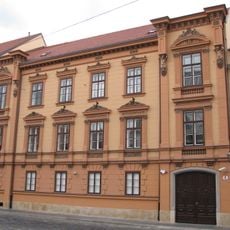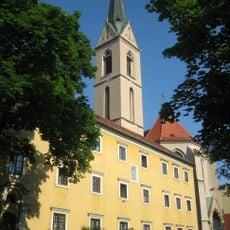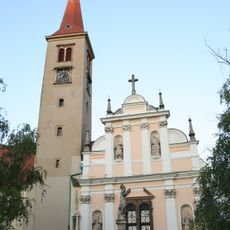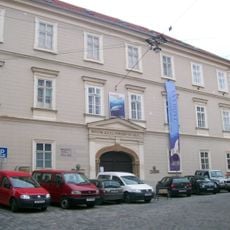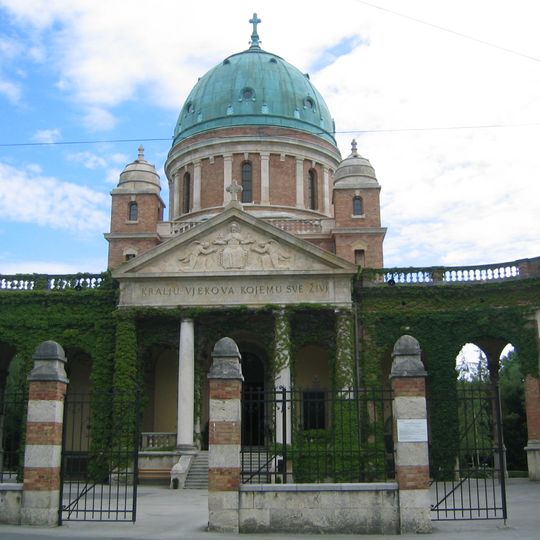
Mirogoj Cemetery

Log in to your account

AroundUs is a community-driven map of interesting places, built by curious explorers like you. It grows with every review, story, and photo you share.
Connect to save your favorite spots, contribute locations, and create personalized routes.
By continuing, you accept our Terms and Conditions and our Privacy Policy
Add to collection
Map
Suggest a change
Share

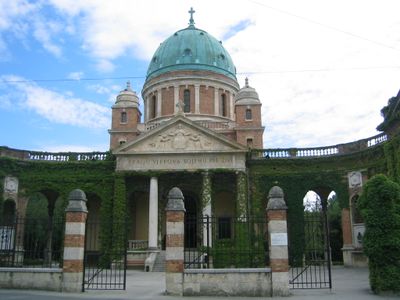
Mirogoj Cemetery, Public cemetery in Zagreb, Croatia

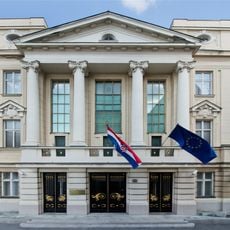
The monumental cemetery complex features long arcades with cupolas extending over 500 meters along the main entrance section of the grounds.

The city purchased the land from linguist Ljudevit Gaj in 1872, leading to the cemetery's official inauguration on November 6, 1876.

The cemetery provides dedicated burial sections for Catholic, Orthodox, Muslim, Jewish, and Protestant communities, reflecting Zagreb's multicultural heritage.

Public transportation to Mirogoj operates through ZET bus line 106, connecting the cemetery with Kaptol terminal every 20 minutes during opening hours.

The 2020 Zagreb earthquake caused structural damage to the cemetery's arcades, leading to its inclusion among Europe's seven most endangered heritage sites.

Location: Gornji Grad–Medveščak

Inception: November 6, 1876

Architects: Hermann Bollé

Official opening: November 6, 1876

Architectural style: historicist architecture

Phone: +38514696723

Website: https://gradskagroblja.hr/mirogoj-430/430

GPS coordinates: 45.83569,15.98444

Latest update: May 10, 2025 22:02

Historic cemeteries in Europe

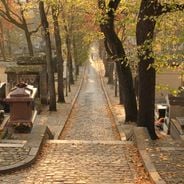
Many European cemeteries function as more than burial grounds. They represent significant architectural and cultural sites that developed from the 18th through the 20th centuries, reflecting evolving burial traditions and social changes across this period. These spaces contain monumental sculptures, elaborate tombs and mausoleums created by leading artists and architects of their eras. Many also provide expansive green spaces suitable for walking and contemplation. This collection includes Vienna's Zentralfriedhof, final resting place of numerous composers, and Paris's Père Lachaise, where writers, artists and historical figures are buried. London's Highgate Cemetery features Victorian architecture and winding pathways. In Genoa, the Staglieno Monumental Cemetery spreads across multiple terraces with notable marble work. Zagreb's Mirogoj combines Austro-Hungarian design with Mediterranean elements, while Warsaw's Jewish Cemetery on Okopowa Street stands as an important record of Polish Jewish history. Additional sites include Gothenburg's Western Cemetery, Prague's Vyšehrad Cemetery housing Czech cultural figures, and Budapest's Kerepesi Cemetery serving as a national memorial. The collection also features Moscow's Novodevichy Cemetery, Copenhagen's Assistens Cemetery, and Barcelona's Montjuïc Cemetery. Notable mentions include Hamburg's Ohlsdorf Cemetery, one of the world's largest park cemeteries, and Romania's Merry Cemetery in Săpânța, recognized for its colorfully painted wooden crosses.

What to see in Zagreb: medieval churches, museums, historic parks

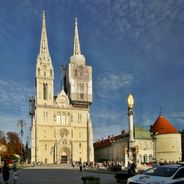
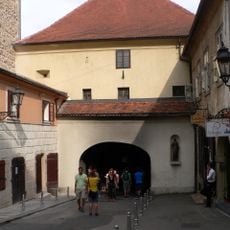
Zagreb features an architectural heritage spanning from the Middle Ages to modern times. The Zagreb Cathedral dominates the city with its two neo-Gothic towers measuring 108 meters, while St. Mark's Church displays the city's historic coats of arms on its roof. The Stone Gate, a remnant of 13th-century fortifications, houses a chapel dedicated to the Virgin and Child. The Lotrščak Tower, an old medieval watchtower, still fires a daily cannon at noon. The city organizes its cultural offerings around several institutions: the Broken Relationships Museum exhibits an international collection of objects related to breakups, the Art Pavilion is housed in a building from 1898 dedicated to contemporary art, and the Grič Tunnel, a 350-meter-long shelter built during World War II, now serves as an exhibition space. Maksimir Park extends over 316 hectares with five lakes and a zoo, while the Botanical Garden has collected over 5,000 plant species over 4.7 hectares since 1889. Mirogoj Cemetery, designed by Hermann Bollé in 1876, combines neo-Renaissance arcades with funerary architecture.

Reviews

Visited this place? Tap the stars to rate it and share your experience / photos with the community! Try now! You can cancel it anytime.

« Mirogoj Cemetery: Public cemetery in Zagreb, Croatia » is provided by Around Us (aroundus.com). Images and texts are derived from Wikimedia project under a Creative Commons license. You are allowed to copy, distribute, and modify copies of this page, under the conditions set by the license, as long as this note is clearly visible.

Discover hidden gems everywhere you go!

From secret cafés to breathtaking viewpoints, skip the crowded tourist spots and find places that match your style. Our app makes it easy with voice search, smart filtering, route optimization, and insider tips from travelers worldwide. Download now for the complete mobile experience.
Around Us App Screenshot

A unique approach to discovering new places

Le Figaro

All the places worth exploring

France Info

A tailor-made excursion in just a few clicks

20 Minutes