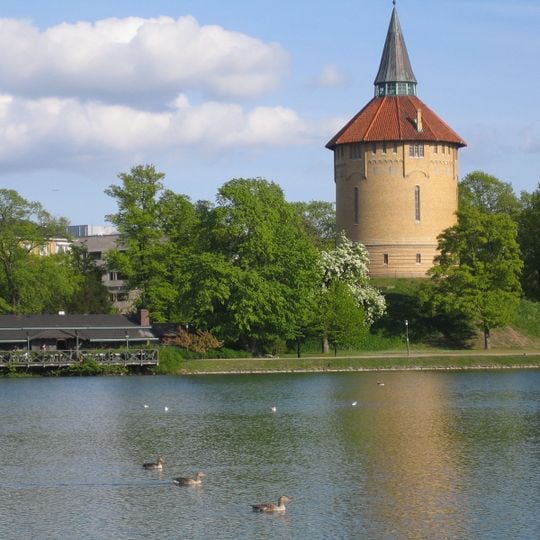
Pildammsparken, Urban park in Malmö, Sweden.
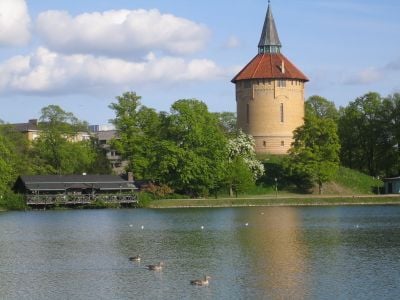
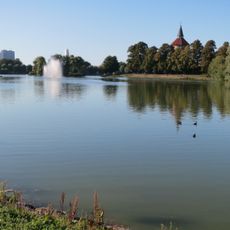
Pildammsparken is a 45-hectare park in Malmö, designed in a neoclassical style, with two dams that predate it as the city's old water reservoir. In its eastern section stands Pildammstornet, a cylindrical red-brick water tower with a red-tiled conical roof, a lantern with small vertical windows, and a steep dark pyramidal spire.
The park was created in 1914 as the venue for the Baltic Exhibition, which showcased industrial and cultural achievements from countries around the Baltic Sea. This event established its foundation as a public gathering place.
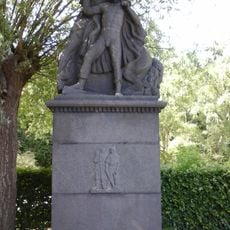
The park's name comes from the pildammar, the willow dams whose embankments were planted with willows; water was drawn from public pumps at Stortorget. The Margaretapaviljongen and Blomstergatan flower street survive from the 1914 Baltic Exhibition, and the granite fountain and fire station also remain. Sculptures include Galathea by Nils Möllerberg and Strykjärn by Hiroshi Koyama.
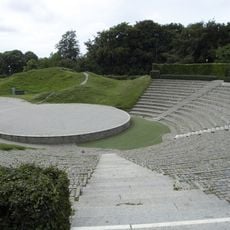
The park is divided into four sections: the eastern part holds the central dam and Pildammstornet, the southern part Margaretapaviljongen and Blomstergatan, the western part the woodland and Tallriken, the northern part Galatheas hage and the smaller dam. Two outdoor gyms stand near the old water tower and in the southeastern woodland, and there are two themed playgrounds, Spindellekplatsen and Teaterlekplatsen.
The park's two dams lose about 170 million litres of water a year, roughly the yearly use of 3,300 people, so Malmö refills them with drinking water. In 2024 the city used interferometric sonar and georadar to map the pond bed and find the leaks.
The community of curious travelers
AroundUs brings together thousands of curated places, local tips, and hidden gems, enriched daily by 94,362 contributors worldwide.