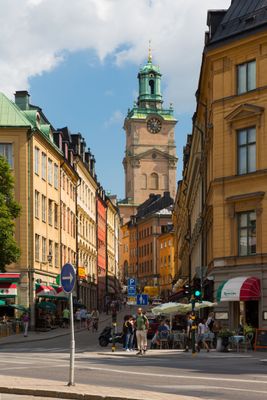
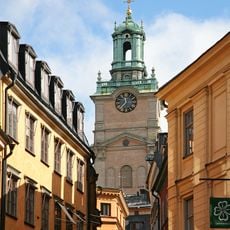
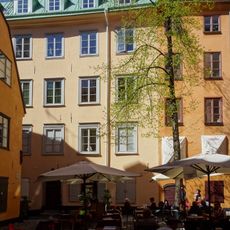
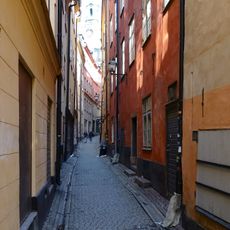
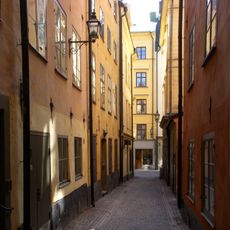
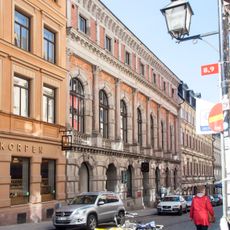
Storkyrkobrinken, Pedestrian street in Gamla Stan, Sweden
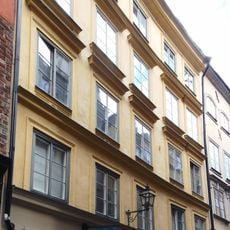
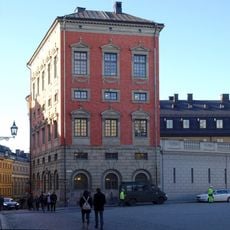
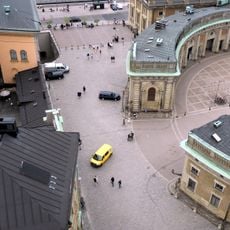
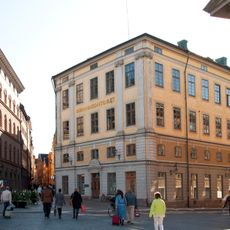
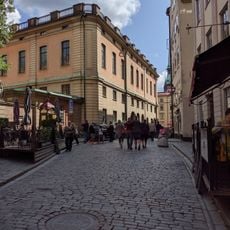
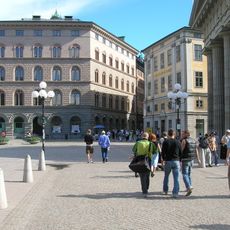
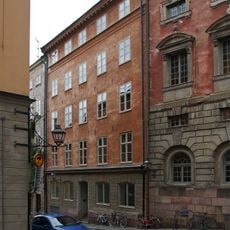
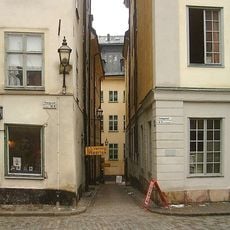
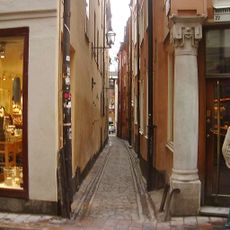
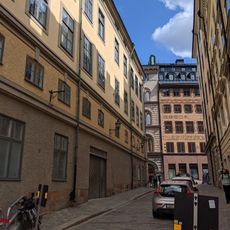
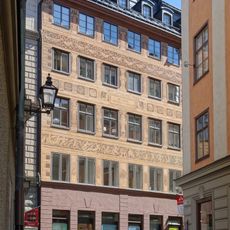
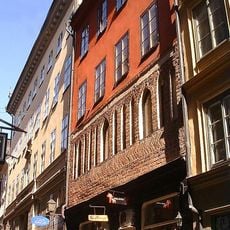
Storkyrkobrinken is a street in Gamla stan that runs from Högvaktsterrassen near the Royal Palace down to Myntgatan and Riddarhustorget. It is crossed by Trångsund, Prästgatan and Västerlånggatan, and forms a parallel street to Salviigränd and Stora Gråmunkegränd. The street is lined with buildings including the Oxenstiernska palatset at number 2 and the Beijerska huset at number 4.
In the Middle Ages Storkyrkobrinken was the main slope up to the village church on Stadsholmen, and in 1422 it was recorded as sancte nicolauese port, the gate of Saint Nicholas through which one entered the city from the north. The section west of Västerlånggatan was called S:t Laurentii gränd in 1436, and from 1431 a skolstuga (school cottage) in the street gave names such as Scolestue backen in 1520 and skolstuffue grenden in 1571. In 1637 it appears as Slottsgatan, and the present form Storkyrko Brinken is recorded in 1771.
The name Storkyrkobrinken refers to the slope by the cathedral, but the street was long known for its school: a skolstuga built in 1431 gave names such as Scolestue backen (1520) and Skolstugegränd (1571). A statue of Saint Nicholas, patron of merchants and seamen, once stood here and received offerings before shipping expeditions.
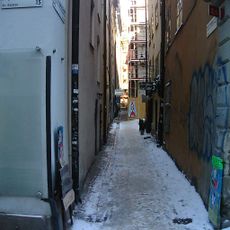
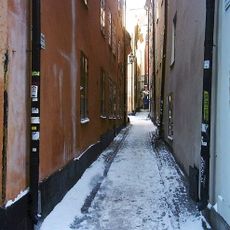
The zone is completely accessible to pedestrians without worrying about vehicle traffic or stepping aside for cars. The sloped surface can become slippery during winter months, so appropriate footwear is advisable when visiting the area.
During the Swedish Empire era in 1637, the street temporarily carried the name Slottsgatan before receiving its present designation. This name change reflects the political shifts and administrative changes that reshaped the city during that era.
The community of curious travelers
AroundUs brings together thousands of curated places, local tips, and hidden gems, enriched daily by 93,994 contributors worldwide.