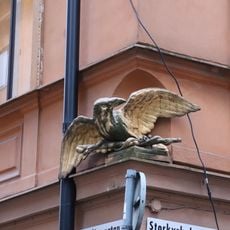
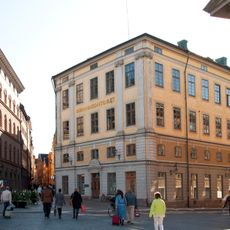
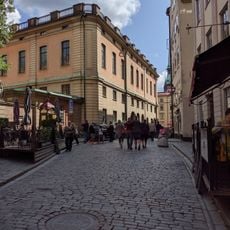
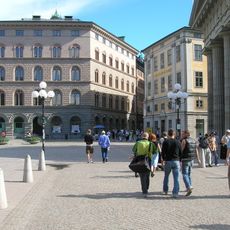
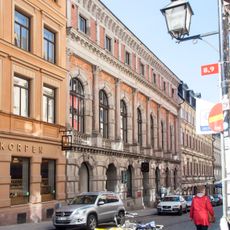
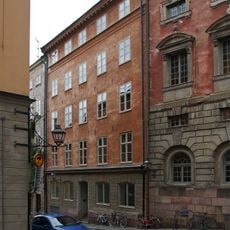
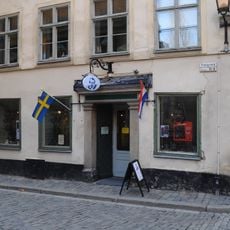
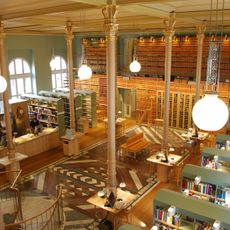
Högvaktsterrassen, Pedestrian zone near Royal Palace in Stockholm, Sweden
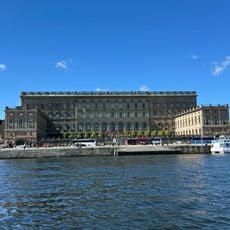
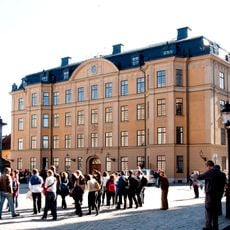
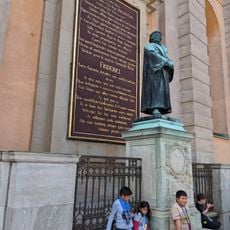
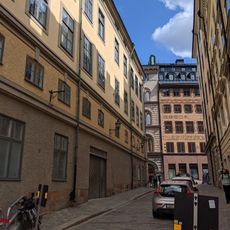
Högvaktsterrassen is a pedestrian area adjoining the Royal Palace in central Stockholm. The terrace functions as an open platform where visitors move between nearby attractions while being surrounded by historic royal buildings and architecture.
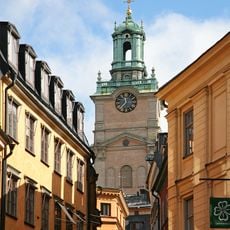
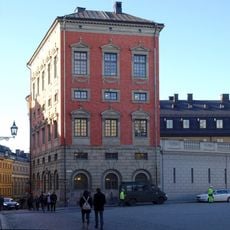
The area north of the cathedral and west of the medieval Tre Kronor castle, which burned in 1697, was called Helvetet ("Hell"). In the 1430s it housed the city school and the royal mint, and from 1491 to 1528 the city executioner lived here. Chancellor Axel Oxenstierna began his palace on the south-western corner in 1653, designed by Jean de la Vallée; the Main Guard wings replaced older buildings in the 1740s.
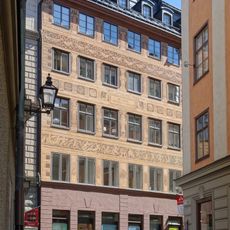
The name Högvaktsterrassen, "Main Guard Terrace", refers to the terrace where the main guard was once posted. The street was given its present name after the linguist Adolf Noreen suggested it, following a 1921 proposal to name it after Christina Gyllenstierna. The nearby Oxenstierna Palace, designed by Jean de la Vallée, has housed offices since its completion, including the Bank of Sweden at the end of the 17th century.
The site is easily accessible by foot from several central subway and bus stops near the Old Town. Plan your visit with awareness that viewing spots can become crowded during the guard ceremony times.
The name Helvetet ("Hell") was used for this area north of the cathedral before the palace wings rose here; scholars link it to Norse belief that the land of the dead lay to the north. In 1921 a proposal to call the street Kristina Gyllenstiernas skans, after the defender of the palace in 1520, was dropped in favour of the name suggested by linguist Adolf Noreen.
The community of curious travelers
AroundUs brings together thousands of curated places, local tips, and hidden gems, enriched daily by 93,336 contributors worldwide.