Fåfängan, Scenic viewpoint in Södermalm, Sweden
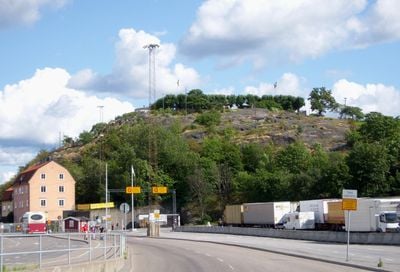
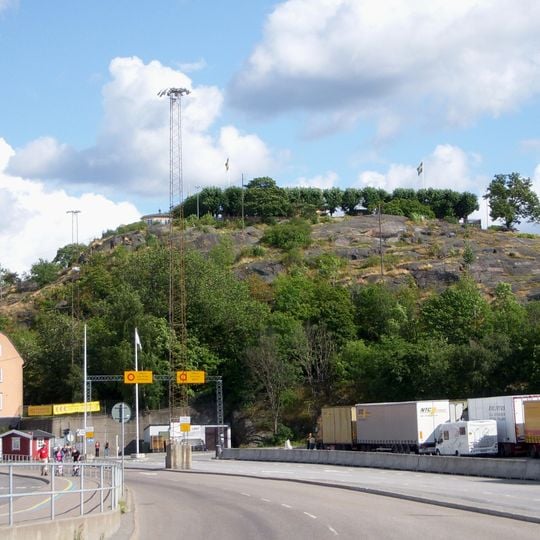
Fåfängan is a viewpoint and restaurant on a hill at the eastern end of Södermalm, reached by Klockstapelsbacken. Its summit is framed by a roughly square planting of heavily pruned linden trees, visible from afar. The hilltop holds Fredrik Lundin's 1770s pleasure house, built on the bastion foundations of Danviks skans, and terraced by walls of stone from the fortification.
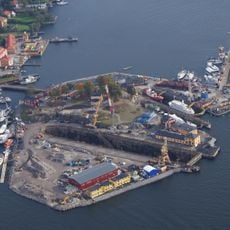
A fortification, Danviks skans, was built on the hill in the mid-17th century to guard Stockholm's inlet together with Djurgården's redoubt. In 1774 merchant Fredrik Lundin bought the site and built his pleasure house on the bastion's foundation, naming it Fåfängan; he went bankrupt in 1780 and fled. Scottish shipowner James Paton acquired the whole estate in 1839.
The name Fåfängan means "vanity" and comes from merchant Fredrik Lundin's pleasure house, built in the 1770s. Stieg Trenter's novel Farlig fåfänga is set around the hill. The painter Karl Nordström depicted Fåfängan in several works, including the 1891 oil painting Fåfängan, Stockholm.
The climb follows Klockstapelsbacken, the street branching north from Folkungagatan at the eastern end of Södermalm. The upper paths cross rocky ground, so sturdy shoes help. The four flags on the summit are raised only when the restaurant is open.
A seasonal café operates when flags are raised, signaling the arrival of warmer months and the reopening of the outdoor space. This simple tradition ties the site to the rhythm of the seasons and gives visitors a reason to return at different times of year.
The community of curious travelers
AroundUs brings together thousands of curated places, local tips, and hidden gems, enriched daily by 94,330 contributors worldwide.