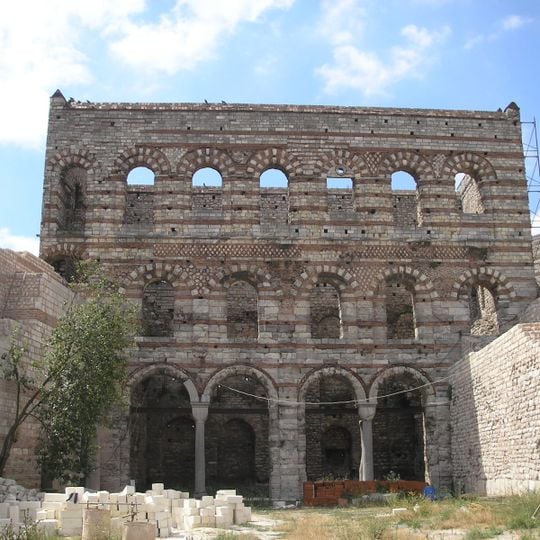
Palace of the Porphyrogenitus, Byzantine palace in Blachernae district, Istanbul, Turkey
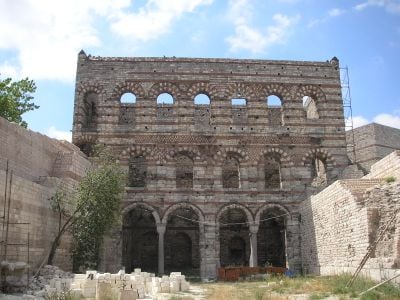
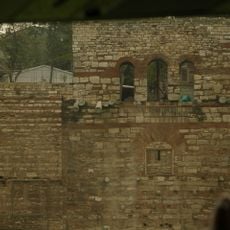
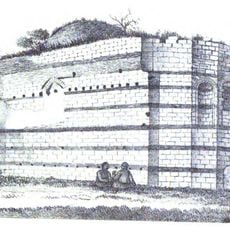
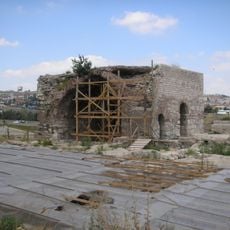
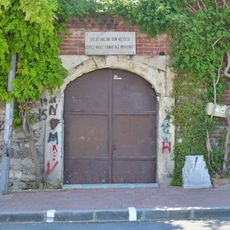
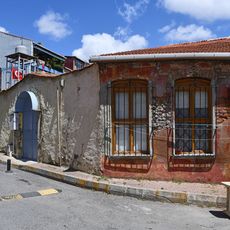
The Palace of the Porphyrogenitus is a three-story Byzantine building in the Blachernae district of Istanbul, forming part of the old city walls of Constantinople. The facade shows brick arches, limestone ornaments, and narrow windows distributed across the three levels.
Between 1261 and 1291, this palace was built as a residence for Constantine, son of Emperor Michael VIII, after the Byzantines recaptured Constantinople. From 1719 onward, the rooms were used as a ceramics workshop until the building was later recognized again as a historical monument.
During the 18th century, craftsmen produced tiles here that combined Ottoman techniques with Western European motifs. Visitors can still see remnants of this ceramic production, which marks the shift from imperial residence to workshop.
The museum is open daily and displays collections of ceramics and pottery exhibited in the former workshop rooms. Visitors can reach the three floors via an internal staircase, though some areas have narrow passageways.
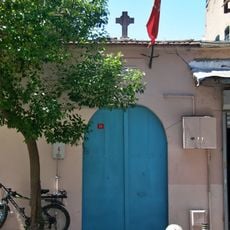
A small chapel in the northern wall was designed for solitary prayer, with space for only one person at a time. This arrangement shows how Byzantine rulers maintained their private religious rituals even during periods of political turmoil.
The community of curious travelers
AroundUs brings together thousands of curated places, local tips, and hidden gems, enriched daily by 91,664 contributors worldwide.