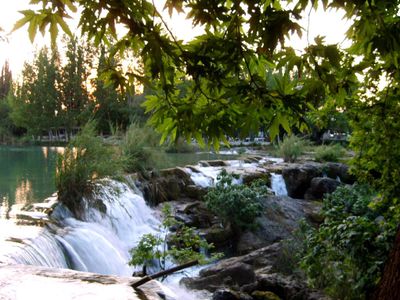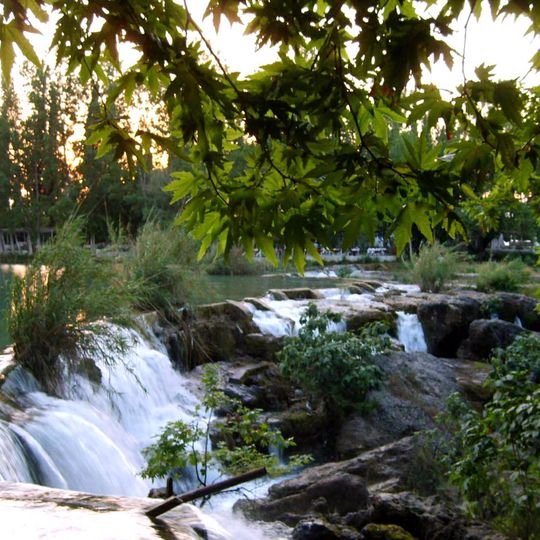
Tarsus Waterfall, Natural cascade formation on Berdan River in Tarsus, Turkey
Tarsus Waterfall is a natural cascade on the Berdan River that flows over rocks containing ancient tombs, creating multiple water streams falling from different heights. The water drops in stages down the rock face, forming a dynamic display of flowing water and stone.
In the 6th century, Byzantine Emperor Justinian redirected the Berdan River eastward to protect Tarsus from flooding, creating the current waterfall over former burial grounds. This diversion was a major engineering effort to manage water flow in the city.
The name Berdan comes from Arabic 'El Berridan', a term used by Abbasid rulers to describe the cold mountain water flowing through this area. Local people connect the waterfall to centuries of water management practices that shaped their region.
The waterfall sits about one kilometer from Tarsus center and can be reached easily on foot. Nearby restaurants and picnic areas make it convenient for visitors to spend time and enjoy a meal.
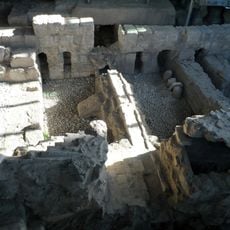
As water levels drop in autumn, ancient tombs carved into the rock face beneath the waterfall become visible to visitors. These exposed burial sites offer a rare glimpse into the area's ancient past.
The community of curious travelers
AroundUs brings together thousands of curated places, local tips, and hidden gems, enriched daily by 91,382 contributors worldwide.