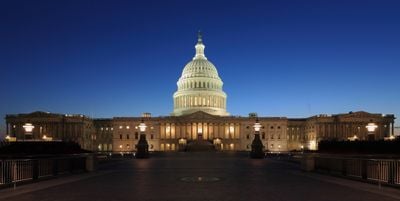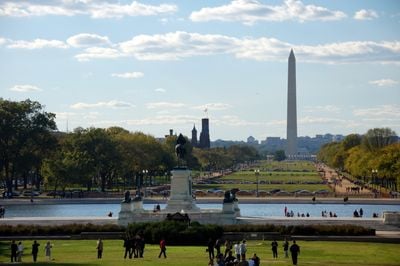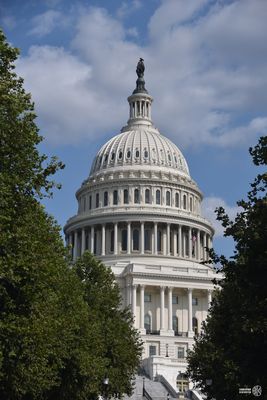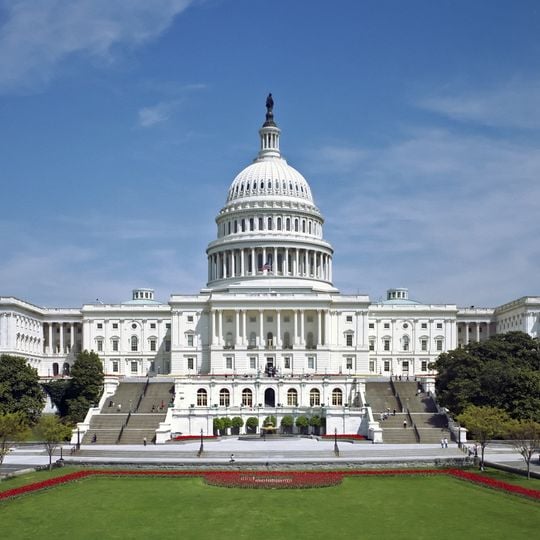
United States Capitol, Neoclassical legislative building at Capitol Hill, Washington DC, United States
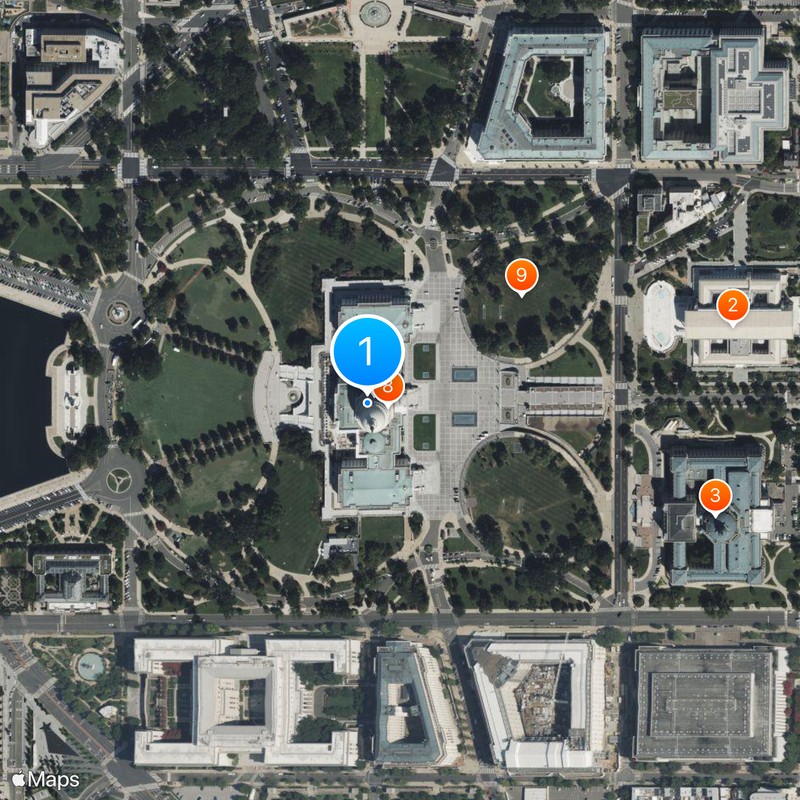
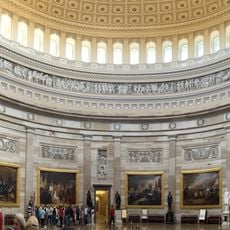
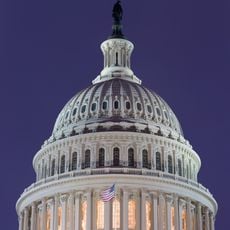
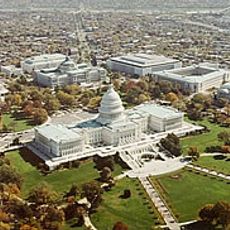
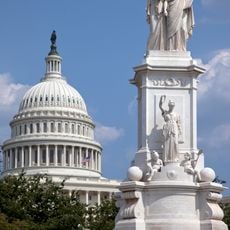
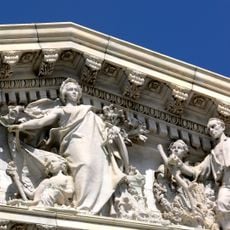
The Capitol features a central dome rising 288 feet (88 meters) high, flanked by north and south wings that house the Senate and House of Representatives. The exterior facade displays Corinthian columns and sandstone cladding, while inside, elaborate frescoes adorn the vaulted ceilings. The Rotunda forms the central space beneath the dome, connecting both chambers through a series of corridors and staircases.
Construction began in 1793 under George Washington's supervision, with architect William Thornton designing the original structure following European neoclassical principles. British troops set fire to the building in 1814 during the War of 1812, requiring extensive reconstruction efforts. Later expansions between 1850 and 1863 added the current chambers and the cast-iron dome, completed during the Civil War to symbolize the Union's endurance.
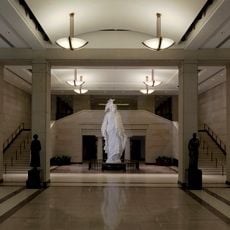
The National Statuary Hall Collection displays statues of notable figures, with each state contributing two representations. This collection functions as a three-dimensional history book of the nation, allowing states to honor their most important historical contributions. The building itself operates as both a working legislative space and a public monument, where laws affecting millions of people are debated every day.
Visitors can access free guided tours through the underground Visitor Center on the east side, including views of the Rotunda and Statuary Hall. Tours must be reserved online in advance, especially during peak seasons in spring and fall. The nearest Metro station is Capitol South on the Orange, Blue, and Silver lines. Security screening requires extra time at entry, and large bags are prohibited.
The Capitol Metro System, established in 1909, maintains three underground rail lines connecting the main building to House and Senate office structures. These electric trains allow legislators to commute between offices and voting chambers within minutes. The system transports thousands of trips annually and remains a practical solution for navigating the sprawling Capitol complex, though it is not accessible to the public.
Location: Washington, D.C.
Inception: September 18, 1793
Architects: William Thornton, Étienne Sulpice Hallet, Benjamin Henry Latrobe, Charles Bulfinch, Thomas Ustick Walter, August Schoenborn, James Hoban, George Hadfield, Robert Mills, Montgomery C. Meigs, Edward Clark, Elliott Woods, David Lynn, J. George Stewart, George M. White, Alan Hantman, Stephen T. Ayers, Brett Blanton
Architectural style: Neoclassical architecture
Floors above the ground: 5
Height: 88 m
Length: 500 m
Width: 400 m
Accessibility: Wheelchair accessible
Made from material: brick, marble, glass brick, cast iron
Part of: United States Capitol Complex
Address: First St SE, Washington, DC 20004
Opening Hours: Monday-Saturday 08:30-16:30
Phone: +12022268000
Website: https://capitol.gov
GPS coordinates: 38.88972,-77.00917
Latest update: December 2, 2025 21:21
This collection brings together notable domes and cupolas from all continents, signs of diverse architectural traditions extending from the Vatican to Australia, Russia to the United Arab Emirates. From the famous dome of St. Peter's Basilica in Rome to the colorful domes of the Church of the Savior on Spilled Blood in Saint Petersburg, the Renaissance dome of Florence Cathedral, to the cast-iron dome of the US Capitol in Washington, each structure tells a particular story and reflects the ambitions of its era. These buildings span several centuries of architectural innovation and serve various functions: religious structures like the Sheikh Zayed Grand Mosque or the Basilica of Our Lady of Peace in Côte d'Ivoire, civil buildings such as Oxford's Radcliffe Camera or the Australian Exhibition Palace, and even thermal spas like Budapest’s Széchenyi Baths. Each dome illustrates construction techniques and aesthetic decisions specific to its culture, offering insight into skills that enabled the creation of these monumental coverings.
Washington DC, the capital of the United States, houses the three branches of federal government and the nation's most significant political institutions. The White House serves as the presidential residence, while the Capitol building hosts Congress and the Supreme Court represents the judicial branch. The National Mall extends 2 miles (3 kilometers) and connects historic monuments such as the Lincoln Memorial, Jefferson Memorial, and Washington Monument, which commemorate the nation's founders. The city holds an exceptional concentration of museums, many belonging to the Smithsonian Institution and offering free admission. The National Air and Space Museum displays the history of aviation and space exploration, while the National Gallery of Art presents an extensive collection of European and American art. The Library of Congress preserves over 170 million items and ranks as the largest library in the world. Memorials such as the Vietnam Veterans Memorial and the Martin Luther King Jr. Memorial honor significant events and figures in American history. Historic districts like Georgetown and Embassy Row, along with green spaces such as the Tidal Basin and Theodore Roosevelt Island Park, complement the capital's cultural and natural offerings.
This collection presents neogothic architecture from the 19th and early 20th centuries, when architects across Europe, the Americas, Asia and Oceania revived medieval building forms. The movement began in Britain and spread worldwide, employing pointed arches, flying buttresses, ribbed vaults and stone spires. This architectural language was used for churches, universities, government buildings and railway stations. The collection includes religious structures like Cologne Cathedral and Notre-Dame Basilica in Montreal, government buildings such as the Parliament Complex in Ottawa and the Palace of Westminster in London, educational institutions like the University of Glasgow Main Building, and transport hubs including St. Pancras Station in London and Victoria Terminus in Mumbai. These structures demonstrate how architects adapted medieval techniques to modern building materials and functions.
Washington D.C is more than just the White House and the presidency of the United States. The city contains a collection of iconic monuments, national museums, and government buildings that represent American history and culture. Here, we suggest stepping off the beaten path and discovering the city from another perspective, away from the noise of American politics.
United States Supreme Court Building
414 m
Library of Congress
405 m
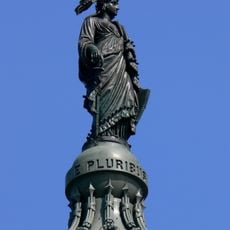
Statue of Freedom
16 m
United States Capitol rotunda
12 m
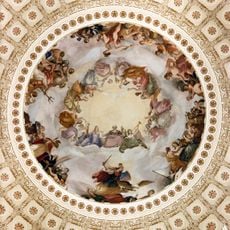
The Apotheosis of Washington
23 m
United States Capitol dome
34 m
National Statuary Hall Collection
23 m
United States Capitol Complex
208 m
United States Capitol Crypt
39 m
Washington's Tomb
25 m
Rayburn House Office Building
345 m
Ulysses S. Grant Memorial
325 m
United States Capitol Visitor Center
72 m
United States Botanic Garden
383 m
Peace Monument
293 m
United States Senate Vice Presidential Bust Collection
208 m
The Rescue
82 m
James A. Garfield Monument
280 m
Discovery of America
49 m
Apotheosis of Democracy
89 m
Robert A. Taft Memorial
372 m
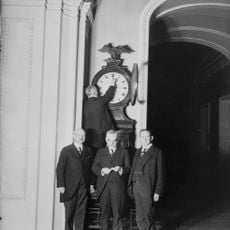
Ohio Clock
79 m
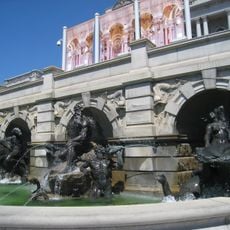
Court of Neptune Fountain
319 m
Bust of Sojourner Truth (U.S. Capitol)
129 m
Butler Building
276 m
Bartholdi Park
383 m
Richards Building
336 m
Longworth House Office Building
330 mReviews
Visited this place? Tap the stars to rate it and share your experience / photos with the community! Try now! You can cancel it anytime.
Discover hidden gems everywhere you go!
From secret cafés to breathtaking viewpoints, skip the crowded tourist spots and find places that match your style. Our app makes it easy with voice search, smart filtering, route optimization, and insider tips from travelers worldwide. Download now for the complete mobile experience.
A unique approach to discovering new places❞
— Le Figaro
All the places worth exploring❞
— France Info
A tailor-made excursion in just a few clicks❞
— 20 Minutes