Michigan Avenue Bridge, Double-deck bascule bridge in downtown Chicago, United States
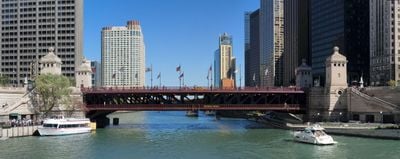
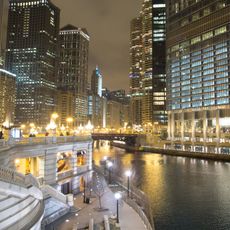
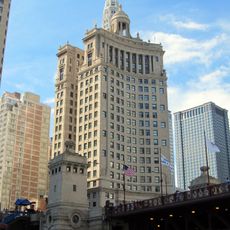
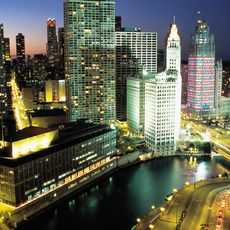
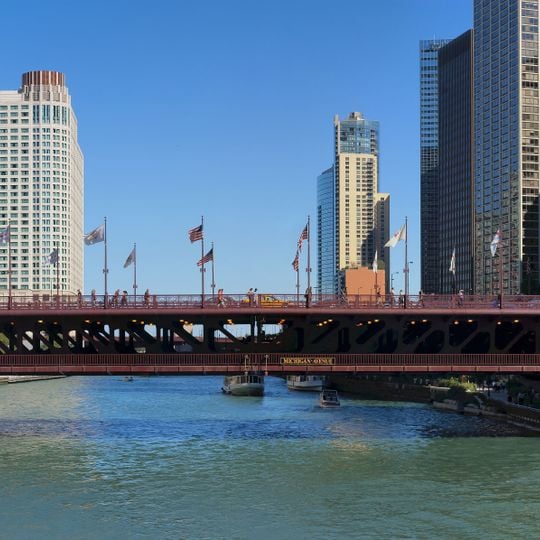
The Michigan Avenue Bridge is a double-deck bascule bridge spanning the Chicago River in downtown, with two levels for vehicles and foot traffic. The structure features massive steel trusses and four limestone bridgehouses at its corners.
The bridge opened in 1920 as part of a major plan to connect Chicago's north and south sides with a grand boulevard. This project was a key piece of the city's transformation in the early 1900s.
Four limestone bridgehouses display carved reliefs showing scenes from Chicago's early days, from explorers to settlers who shaped the city. These artworks tell the story through images of the people and moments that mattered to this place.
The bridge lifts about 40 times yearly for boats passing through, giving visitors a chance to watch the mechanical movement in action. The nearby McCormick Bridgehouse Museum explains the history and machinery behind this engineering.
A 108-horsepower motor operates the 4,100-ton bridge leaf by using the weight of counterbalances, making this an efficient feat of early engineering. The system shows how clever mechanical design could do heavy work with surprisingly modest power.
The community of curious travelers
AroundUs brings together thousands of curated places, local tips, and hidden gems, enriched daily by 91,135 contributors worldwide.