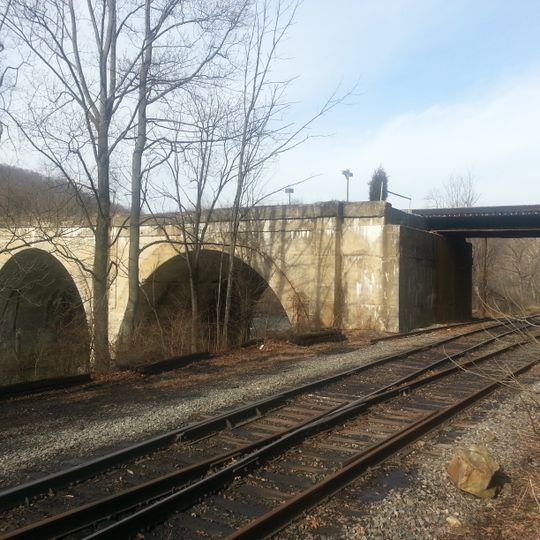
Bloomington Viaduct, stone arch railroad bridge spanning the Northern Branch of the Potomac River
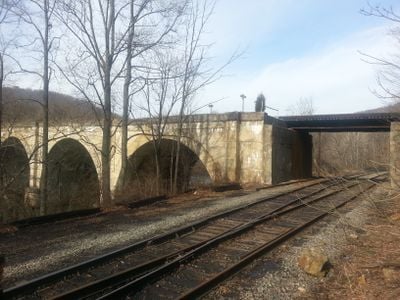
The Bloomington Viaduct is a railway bridge with a deck arch design that spans the Northern Branch of the Potomac River between West Virginia and Maryland. The structure features three main stone arches, each spanning about 56 feet, with concrete additions made to accommodate additional tracks.
Built in 1851 as part of the Baltimore and Ohio Railroad, the viaduct was crucial for transporting coal and timber from mining regions to wider markets. In 1916, it was widened to carry four tracks instead of two, and it survived a Civil War attack in 1864 despite the regional conflict.
The name comes from the nearby town of Bloomington and reflects the railroad's role in linking two states and communities. For generations, locals watched trains cross here, making the bridge a visible symbol of the region's commitment to transportation and economic development.
The viaduct is not open to public foot traffic but can be viewed from nearby walking trails and the river area at a safe distance. Visitors should stay in designated viewing areas and be aware that active freight trains still use this line today.
The viaduct is possibly the only bridge of its type in Garrett County and demonstrates an innovative arch design from the 1850s. The blend of original sandstone and later-added concrete shows how the structure was adapted to meet modern demands while preserving its historical form.
The community of curious travelers
AroundUs brings together thousands of curated places, local tips, and hidden gems, enriched daily by 91,360 contributors worldwide.