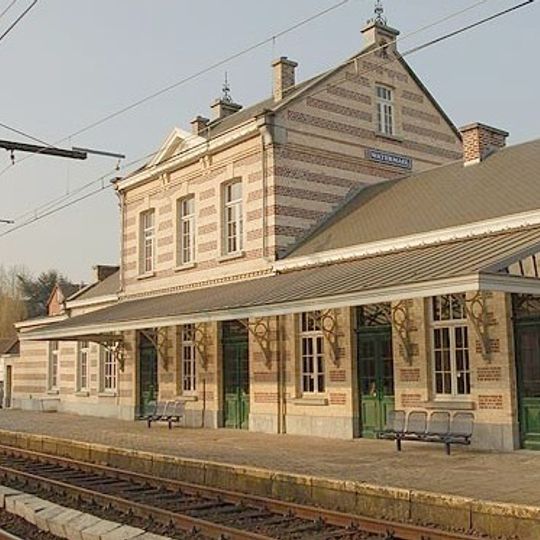
Watermael railway station, railway station in Belgium
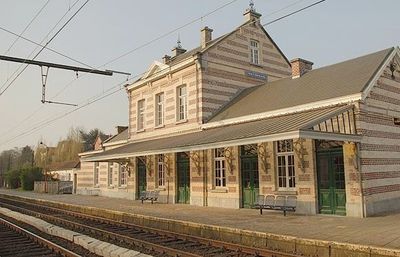
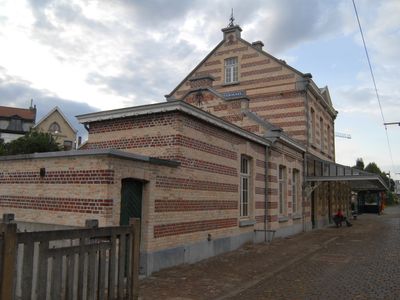
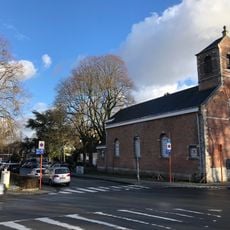
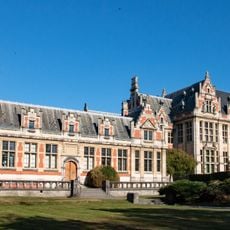
Watermael railway station is a small station in the Watermael-Boitsfort area of Brussels with eclectic architecture and red bricks with white stripes. The building features two platforms and four tracks, preserving its original character from the late 1800s with an iron awning and vintage black lamps.
The station was built in 1860 and was part of Belgium's railway network development to connect Watermael-Boitsfort with Brussels and other cities. Architect Émile Robert designed the building with its characteristic eclectic style, making the station a landmark in the country's railway history.
The station bears the name of the Watermael-Boitsfort neighborhood and appears in several paintings by Belgian artist Paul Delvaux. He depicted its red bricks, black lamps, and iron awning to capture the quiet mood of the place, making this station a recognized subject in art history.
The station is small and easy to navigate, with automated ticket machines and no staffed ticket office on site. A nearby bus stop connects you with local buses, and the quiet area with adjacent green spaces offers relaxed access to public transport.
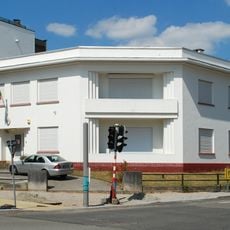
The station originally housed a private residence for the stationmaster, built directly next to the station building. This arrangement allowed the person in charge to live right beside their workplace and be constantly available.
The community of curious travelers
AroundUs brings together thousands of curated places, local tips, and hidden gems, enriched daily by 92,287 contributors worldwide.