Santa Cueva de Covadonga, Sacred cave in Covadonga, Spain
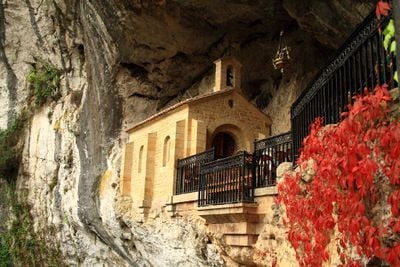
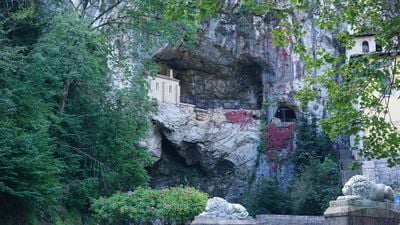
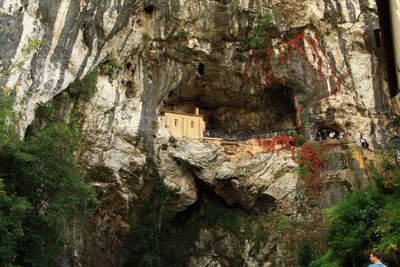
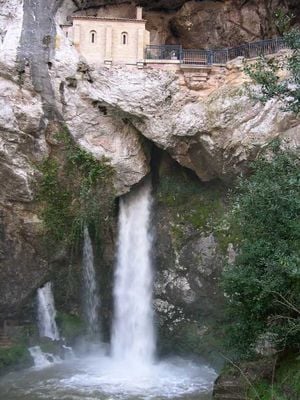
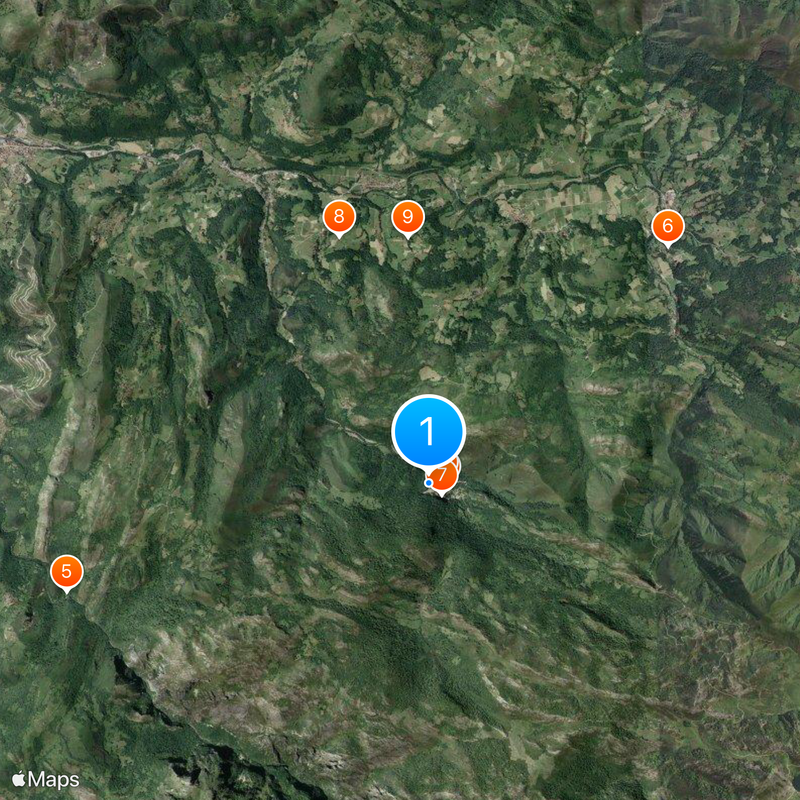
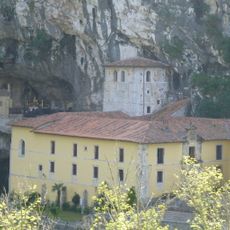
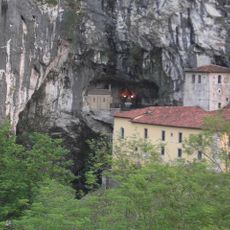
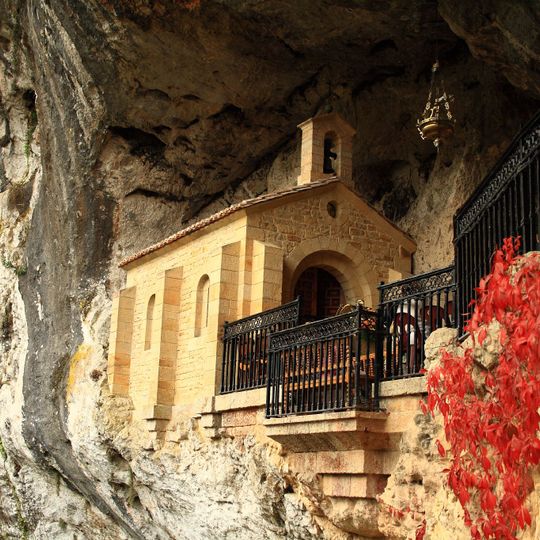
Santa Cueva de Covadonga is a cave set within Mount Auseva, where a chapel has been carved into natural rock faces with water streaming down the stone entrance. Inside, a small altar stands against damp stone walls, and a narrow chamber allows daylight to mingle with the glow of votive candles.
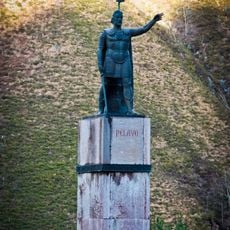
In 722, Pelayo gathered Christian forces in this grotto and launched a defense that repelled advancing Muslim troops, an event remembered as the beginning of the Reconquista. The cave later became a royal burial site where Pelayo himself and his successor Alfonso I were laid to rest.
Pilgrims light candles before a carved wooden figure of the Virgin known as La Santina, often leaving small offerings in the stone niches. The grotto draws steady streams of visitors who pause in quiet prayer near the statue, especially during feast days dedicated to the patron saint of Asturias.
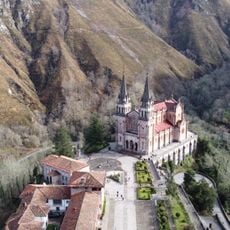
A long flight of stone steps leads up from the esplanade to the grotto, so sturdy footwear helps on the uneven surfaces and damp rock. Access remains free and open daily, but the space grows crowded during peak hours, making an early morning or late afternoon visit quieter.
Two stone sarcophagi sit in a side chamber of the grotto, holding the remains of Pelayo and his successor Alfonso I. This arrangement makes the cave one of the few chapels in Spain that also serves as a royal crypt.
The community of curious travelers
AroundUs brings together thousands of curated places, local tips, and hidden gems, enriched daily by 91,439 contributors worldwide.