La Pedrera

Log in to your account

AroundUs is a community-driven map of interesting places, built by curious explorers like you. It grows with every review, story, and photo you share.
Connect to save your favorite spots, contribute locations, and create personalized routes.
By continuing, you accept our Terms and Conditions and our Privacy Policy
Add to collection
Map
Suggest a change
Share

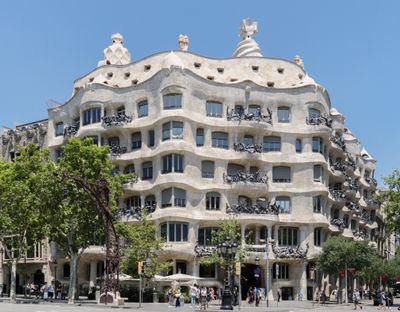
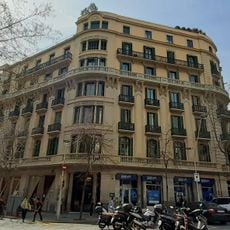
La Pedrera, Modernist residential building in Eixample district, Barcelona, Spain

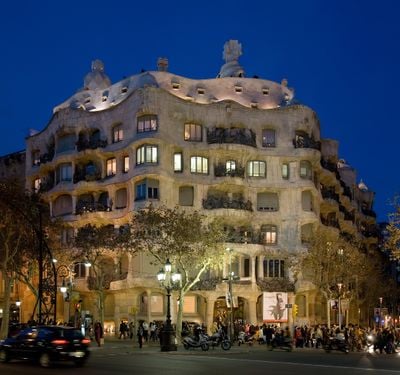
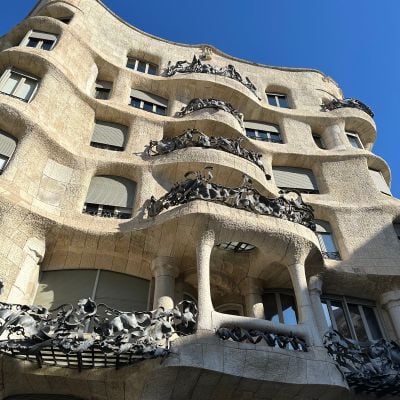
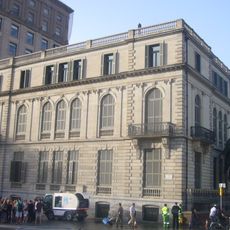
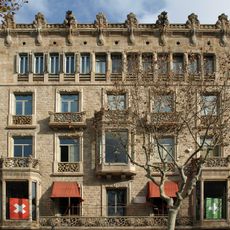
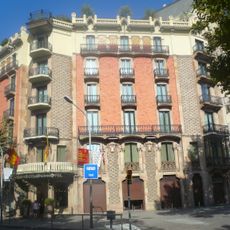
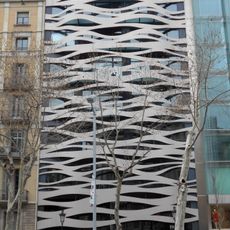
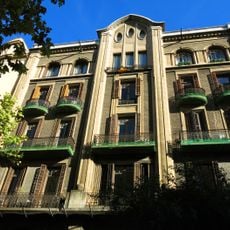
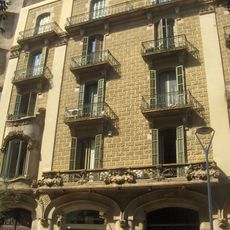
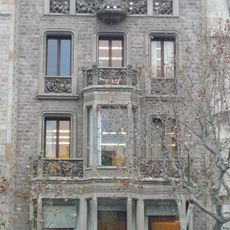
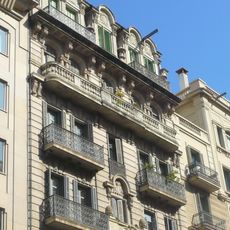
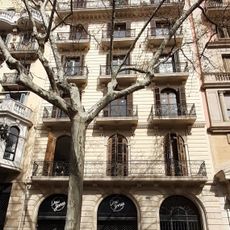
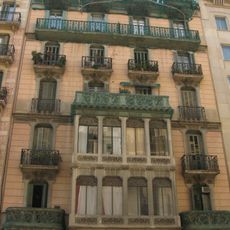
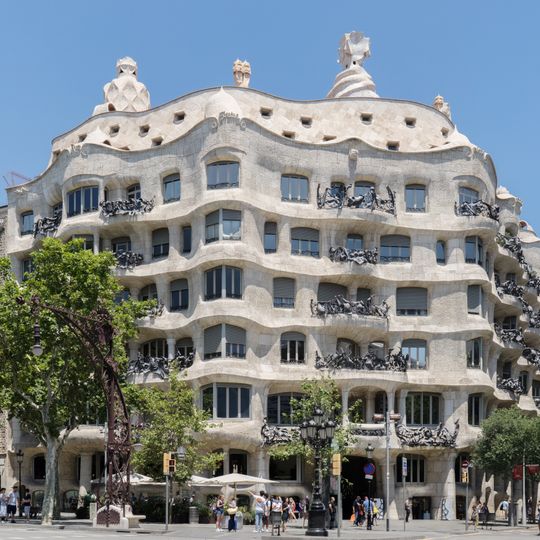
The eight-story Casa Milà features a natural stone facade with curved walls, wrought iron balconies, and two interior courtyards for natural light distribution.

The residential complex, completed in 1912, emerged from businessman Pere Milà's commission to Antoni Gaudí for creating apartments on Passeig de Gràcia avenue.

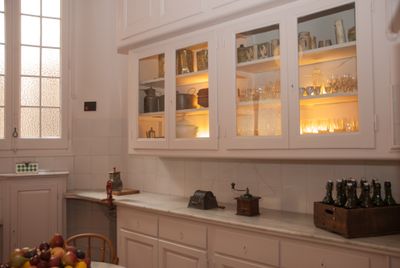
The building contains multiple exhibition spaces displaying the evolution of early 20th-century Barcelona architecture through documents, models, and original furniture pieces.

Visitors can access La Pedrera daily, with extended evening hours from March through November and shorter winter hours from November through February.

The rooftop terrace contains thirty chimneys transformed into sculptural elements, resembling medieval knights and incorporating natural ventilation systems.

Location: Dreta de l'Eixample

Inception: 1906

Architects: Antoni Gaudí

Architectural style: Catalan modernism

Floors above the ground: 8

Accessibility: Wheelchair accessible

Made from material: stone, brick, ceramic, wrought iron

Part of: Iconic Houses Network, Works of Antoni Gaudí

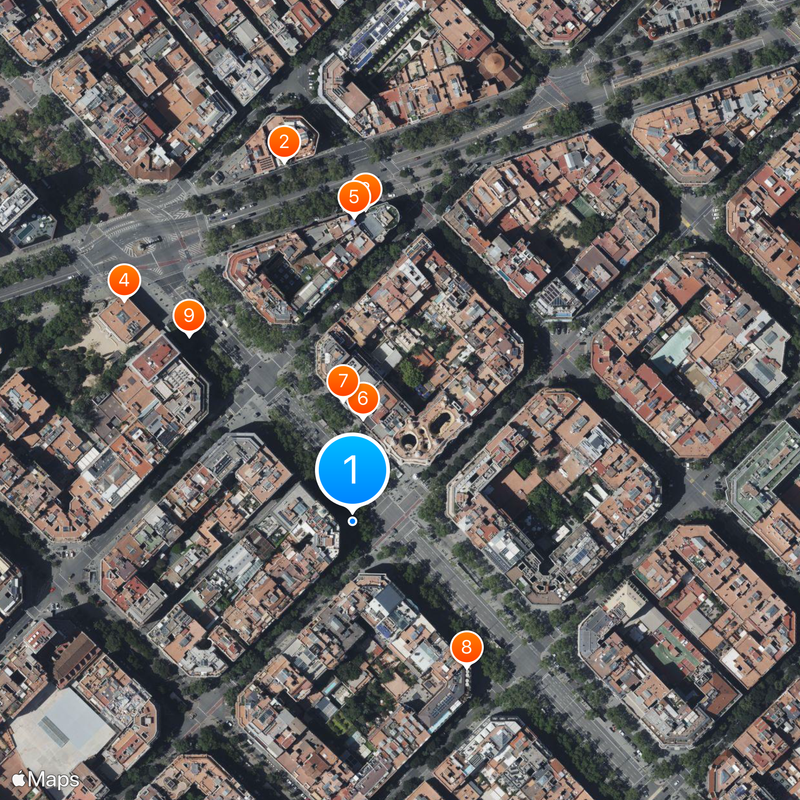
Address: 261-265 Pg. Gràcia, 92 i Provença, 261-265 08008 Barcelona

Opening Hours: March 01-November 04: 09:00-20:30,21:00-23:00; November 05-February 28: 09:00-18:30,19:00-21:00

Phone: +34932142576

Website: https://lapedrera.com/ca

GPS coordinates: 41.39480,2.16128

Latest update: June 10, 2025 18:26

Modern 21st-century architecture: skyscrapers, museums, and landmark buildings

20th and 21st-century architecture has transformed city centers with structures that push engineering boundaries. Observation towers like the Seattle Space Needle and experimental residential complexes like Habitat 67 in Montreal demonstrate the evolution of construction techniques. Architects have explored new forms using materials such as steel, glass, and concrete, creating structures that meet the growing demands of metropolitan areas. This collection includes buildings that marked their time with innovative design. In Barcelona, Antoni Gaudí's Casa Milà features a wavy facade that breaks traditional norms, while in London, 30 St Mary Axe incorporates energy-saving technologies into its 180-meter structure. From Bilbao's Guggenheim Museum clad in titanium to artificial islands shaped in the Persian Gulf in Dubai, these projects illustrate the diversity of architectural approaches worldwide. Each building reflects its urban context while offering solutions to technical and functional challenges of its era.

Architecture: famous buildings, modern and historical structures

This collection presents significant architectural works from different periods and continents. From medieval cathedrals to contemporary skyscrapers, the selection documents the technical and aesthetic development of building design. The listed buildings were created by influential architects and have shaped the evolution of modern architecture. The list includes religious structures such as Gothic churches and monasteries, public facilities like museums and concert halls, and residential buildings that established new construction standards. Each building demonstrates particular structural solutions or stylistic features that contribute to understanding architectural history. The selection offers insights into various building styles, materials and construction methods.

Art Nouveau architecture: the 50 buildings to see absolutely

Between 1890 and 1910, Art Nouveau spread across Europe, producing buildings that combined craft traditions with industrial techniques through organic forms, natural motifs, and detailed ornamental work. Architects including Victor Horta in Brussels, Antoni Gaudí in Barcelona, and Otto Wagner in Vienna designed structures that departed from historical revival styles, instead emphasizing curved lines, wrought iron elements, and colored glass. The movement encompassed concert halls and railway stations as well as private homes and commercial facades, creating a body of work that remains central to the architectural identity of several European cities. Visitors can trace this development through multiple locations. Brussels offers the Victor Horta Museum, Tassel House, and Hôtel van Eetvelde as prime examples of the Belgian variant. Barcelona showcases Gaudí's Casa Batlló and Bellesguard alongside the Palau de la Musica Catalana with its elaborate tilework. Paris preserves Hector Guimard's Métropolitain entrances and the Lavirotte Building, while Prague presents the Municipal House and the Bedřich Smetana Museum. Nancy serves as a center of French Art Nouveau with the School Museum and Villa Majorelle, and Budapest displays the style through Gresham Palace and the Liszt Academy of Music. From Riga to Turin, Vienna to Belgrade, these buildings document a brief but influential period when architects reshaped urban environments across the continent.

Antoni Gaudi architecture in Barcelona

Antoni Gaudí shaped Barcelona's cityscape with his modernist buildings that combine organic forms, natural motifs and structural innovations. His work spans more than four decades and includes residential buildings, parks, churches and experimental structures. The Sagrada Família, his monumental basilica under construction since 1882, demonstrates his understanding of geometry and light. Casa Batlló and Casa Milà show his ability to transform facades into sculptural surfaces, while Park Güell implements his vision of architecture within nature. Beyond Barcelona, projects like El Capricho in Comillas and the crypt at Colònia Güell in Santa Coloma de Cervelló demonstrate Gaudí's influence across Catalonia. His early works, including Casa Vicens and Palau Güell, document his evolution from traditional historicism to his characteristic style. The Gaudí House Museum in Park Güell provides insight into his life and working methods. These buildings are distributed throughout the city and mostly accessible to visitors, though some remain residential or operational.

Must-see sites in Barcelona

Barcelona offers a wide range of architectural and cultural sites that reflect centuries of Catalan history. The city combines Gothic churches and medieval streets with the organic forms of Antoni Gaudí's modernist buildings. From the Sagrada Família to Parc Güell, his designs shape the cityscape, while the Gothic Quarter and palaces such as Palau Güell represent earlier periods. Museums including the Picasso Museum and Joan Miró Foundation illustrate the city's artistic legacy. Markets like La Boqueria and Sant Antoni provide insight into Catalan daily life. The waterfront district of La Barceloneta, the Olympic Port, and Montjuïc with its cable car and fountain broaden the range. Other destinations include Casa Batlló, Casa Milà, the Hospital de Sant Pau, the National Art Museum of Catalonia, and the Aquarium.

Reviews

Real people, real opinions — but not verified.

Visited this place? Tap the stars to rate it and share your experience / photos with the community! Try now! You can cancel it anytime.

pierre.burgun
@pierre.burgun

Jun 10, 2025 18:26

stephren
@stephren

Apr 1, 2025 12:55

maria
@maria

Mar 31, 2025 11:59

« La Pedrera: Modernist residential building in Eixample district, Barcelona, Spain » is provided by Around Us (aroundus.com). Images and texts are derived from Wikimedia project under a Creative Commons license. You are allowed to copy, distribute, and modify copies of this page, under the conditions set by the license, as long as this note is clearly visible.

Discover hidden gems everywhere you go!

From secret cafés to breathtaking viewpoints, skip the crowded tourist spots and find places that match your style. Our app makes it easy with voice search, smart filtering, route optimization, and insider tips from travelers worldwide. Download now for the complete mobile experience.

Around Us App Screenshot

A unique approach to discovering new places

Le Figaro

All the places worth exploring

France Info

A tailor-made excursion in just a few clicks

20 Minutes