See the monuments around you in AROpen chests in the app
Around Us is built for your phone — point your camera at the streets and discover the monuments and places around you in augmented reality.Around Us is built for your phone — chests unlock when you walk, explore and capture nearby places.
Antoni Gaudí shaped Barcelona's cityscape with his modernist buildings that combine organic forms, natural motifs and structural innovations. His work spans more than four decades and includes residential buildings, parks, churches and experimental structures. The Sagrada Família, his monumental basilica under construction since 1882, demonstrates his understanding of geometry and light. Casa Batlló and Casa Milà show his ability to transform facades into sculptural surfaces, while Park Güell implements his vision of architecture within nature.
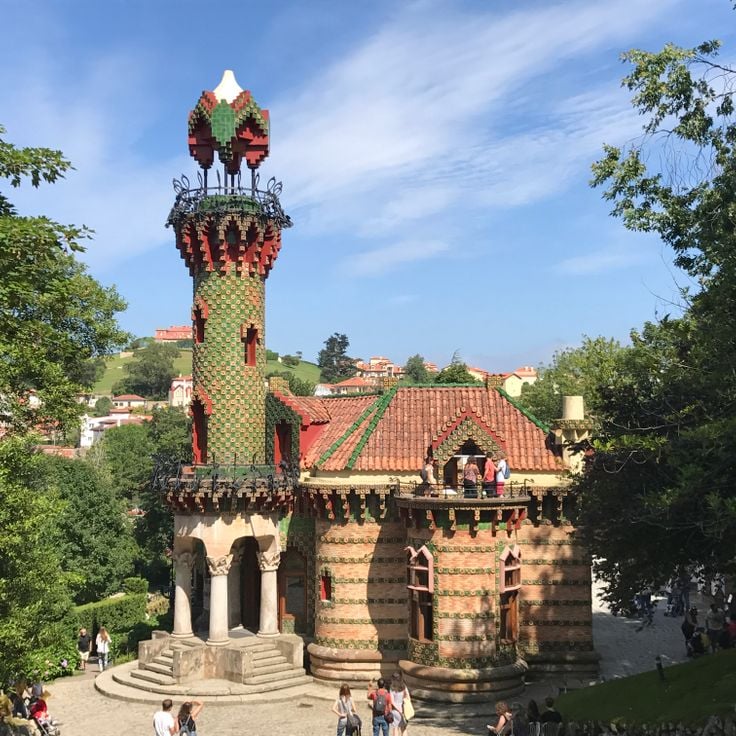
Beyond Barcelona, projects like El Capricho in Comillas and the crypt at Colònia Güell in Santa Coloma de Cervelló demonstrate Gaudí's influence across Catalonia. His early works, including Casa Vicens and Palau Güell, document his evolution from traditional historicism to his characteristic style. The Gaudí House Museum in Park Güell provides insight into his life and working methods. These buildings are distributed throughout the city and mostly accessible to visitors, though some remain residential or operational.
Antoni Gaudí shaped Barcelona's cityscape with his modernist buildings that combine organic forms, natural motifs and structural innovations. His work spans more than four decades and includes residential buildings, parks, churches and experimental structures. The Sagrada Família, his monumental basilica under construction since 1882, demonstrates his understanding of geometry and light. Casa Batlló and Casa Milà show his ability to transform facades into sculptural surfaces, while Park Güell implements his vision of architecture within nature.
Beyond Barcelona, projects like El Capricho in Comillas and the crypt at Colònia Güell in Santa Coloma de Cervelló demonstrate Gaudí's influence across Catalonia. His early works, including Casa Vicens and Palau Güell, document his evolution from traditional historicism to his characteristic style. The Gaudí House Museum in Park Güell provides insight into his life and working methods. These buildings are distributed throughout the city and mostly accessible to visitors, though some remain residential or operational.
This Roman Catholic basilica demonstrates Gaudí's reinterpretation of Gothic forms and organic patterns through 18 towers, intricate facades and a nature-inspired interior. The Sagrada Família combines structural innovation with biblical motifs and sculptural details that document the architect's modernist approach to sacred architecture.
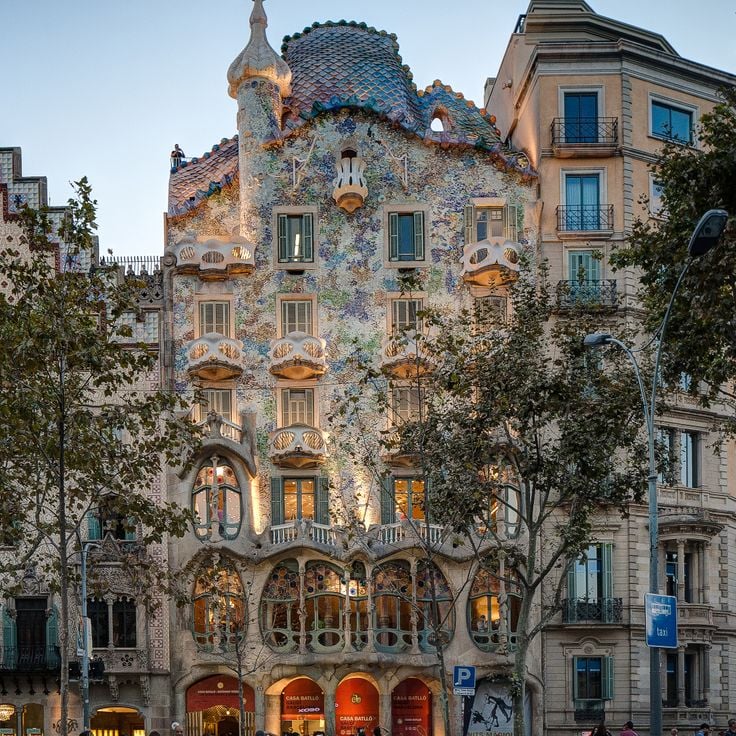
This residential building from 1877 was redesigned by Gaudí with colored mosaics and undulating forms. The wave-like facade displays organic lines, while the interior spaces feature natural light distribution and artisanal details. The building demonstrates Gaudí's approach to transforming traditional structures through modernist design principles.
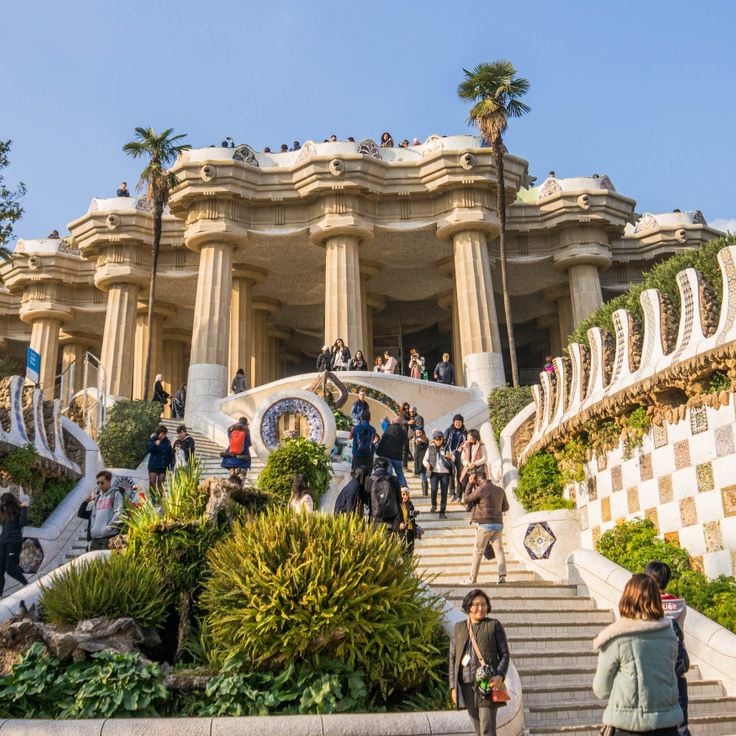
This park designed by Antoni Gaudí combines horticultural planning with architectural elements, including an undulating mosaic bench along the main terrace and a salamander sculpture covered in ceramic fragments at the stairway entrance. Developed between 1900 and 1914, the site demonstrates Gaudí's characteristic use of organic forms and his trencadís technique with broken ceramic pieces.
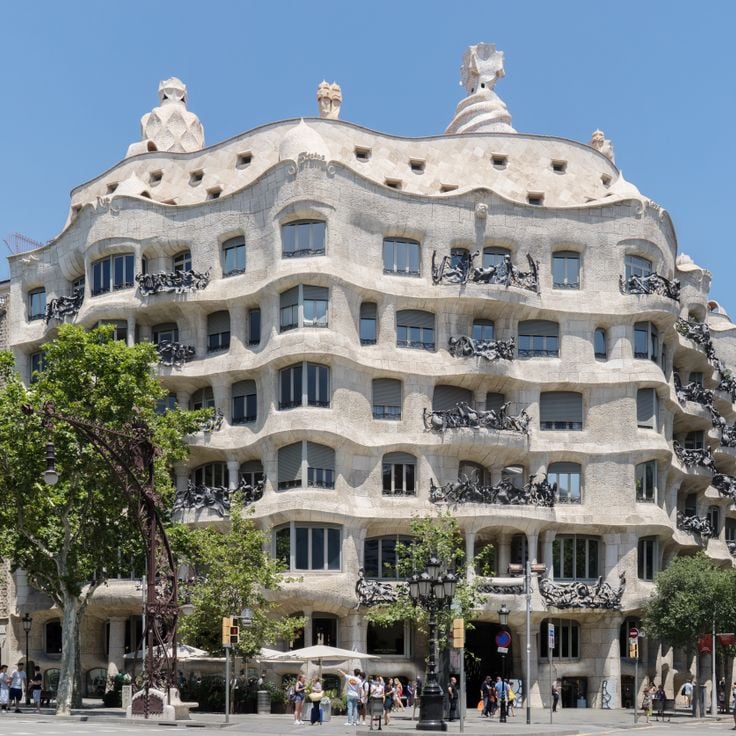
This residential building shows Gaudí's advanced work with curved stone forms and wrought iron balconies that mimic organic structures. The undulating facade eliminates load-bearing walls in favor of a self-supporting stone skeleton, while the rooftop presents sculptural chimneys and ventilation shafts shaped as sentinels. Completed in 1912, the building demonstrates Gaudí's approach to integrating natural forms into functional urban architecture.
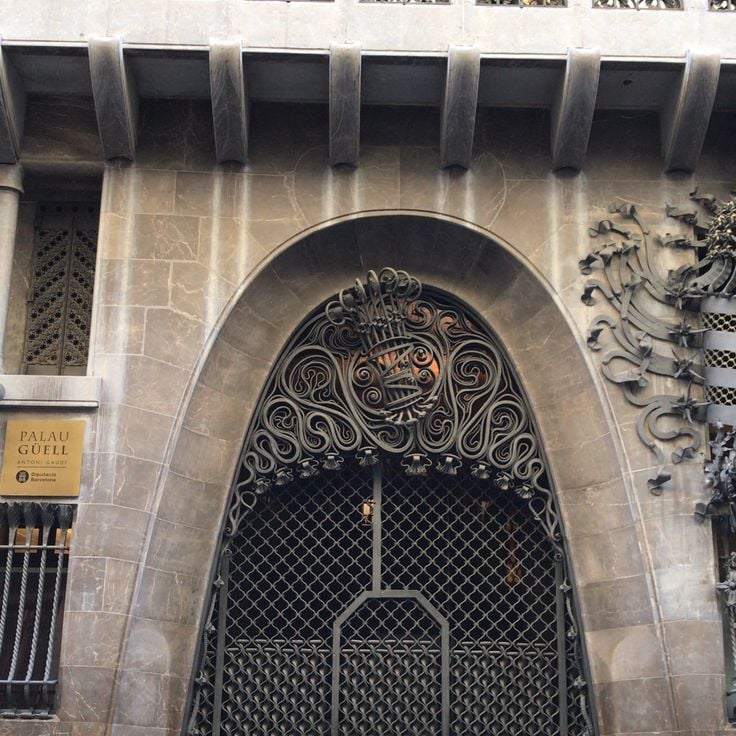
This 19th-century urban palace demonstrates Gaudí's early innovations in spatial design with its elaborate wrought iron details and experimental interior architecture. The building combines traditional Catalan craftsmanship with modern structural solutions, showcasing the architect's emerging vision before his later masterworks.
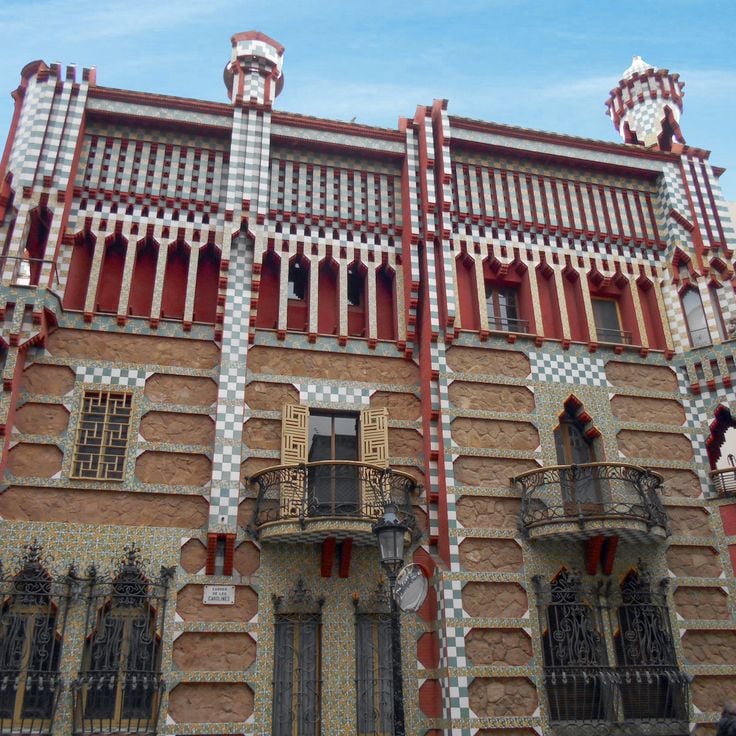
This residential building completed in 1885 marks Gaudí's first major work and displays Moorish influences through green and white ceramic tiles and wrought iron grilles. Casa Vicens combines traditional Catalan construction techniques with Oriental decorative elements that foreshadow Gaudí's later organic design approach. The building originally served as a summer residence for the Vicens family and opened to the public as a museum in 2017.
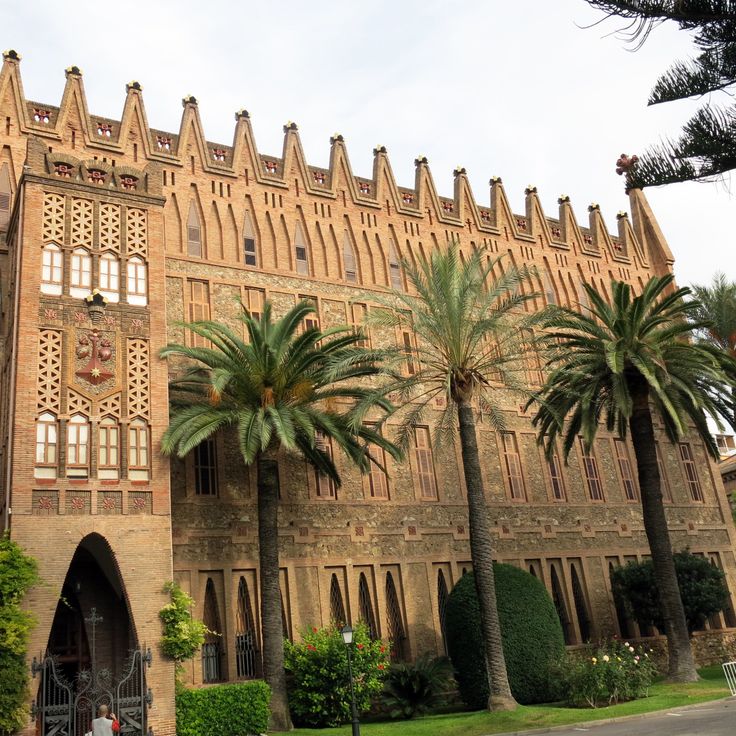
The Colegio Teresiano is an educational complex Antoni Gaudí built in 1889 for the Order of Saint Teresa. The brick facade displays geometric patterns and parabolic arches that demonstrate Gaudí's early architectural approach. The vertical lines and structural clarity distinguish this building from his later, more organic works. The Colegio continues to function as an educational institution and remains accessible to visitors interested in tracing Gaudí's development as an architect.
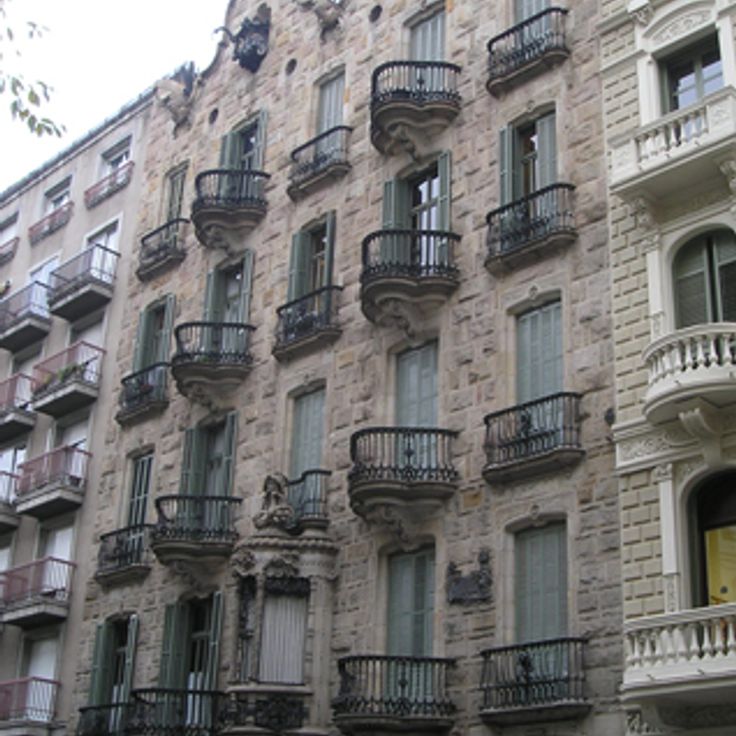
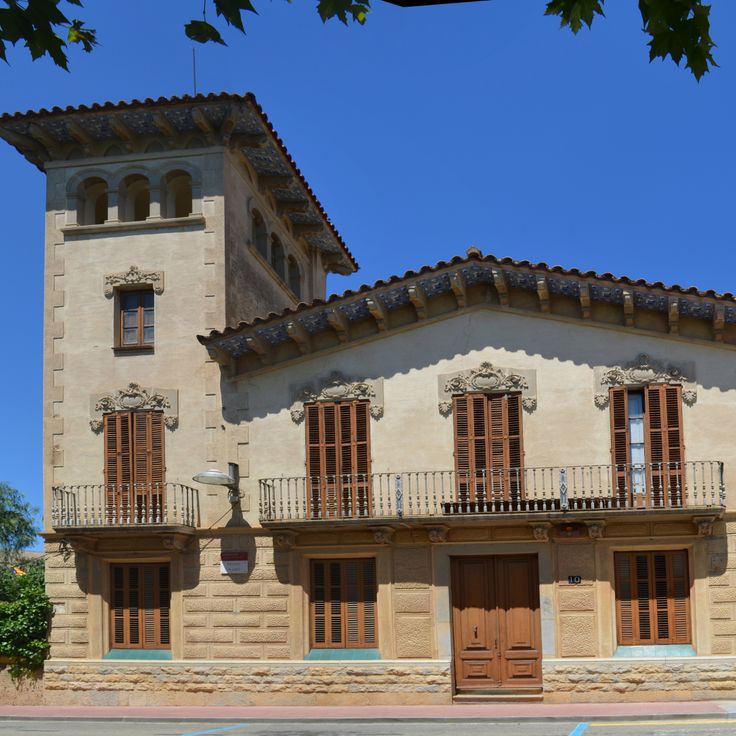
This 1899 building combines ground floor commercial spaces with upper level apartments. The sandstone facade follows classical design principles of Catalan urban architecture and marks Gaudí's early career before he moved toward his more experimental forms. The stairwell and entrance hall display artisan details in wrought iron and carved wood, while the symmetrical street front accommodated the conservative tastes of the property owner.
This building served as a glove factory until Gaudí transformed it into a confectionery shop. The facade features natural stone elements that incorporate Gaudí's characteristic approach to organic forms in his early renovation projects and document his development as an architect in modernist Barcelona.
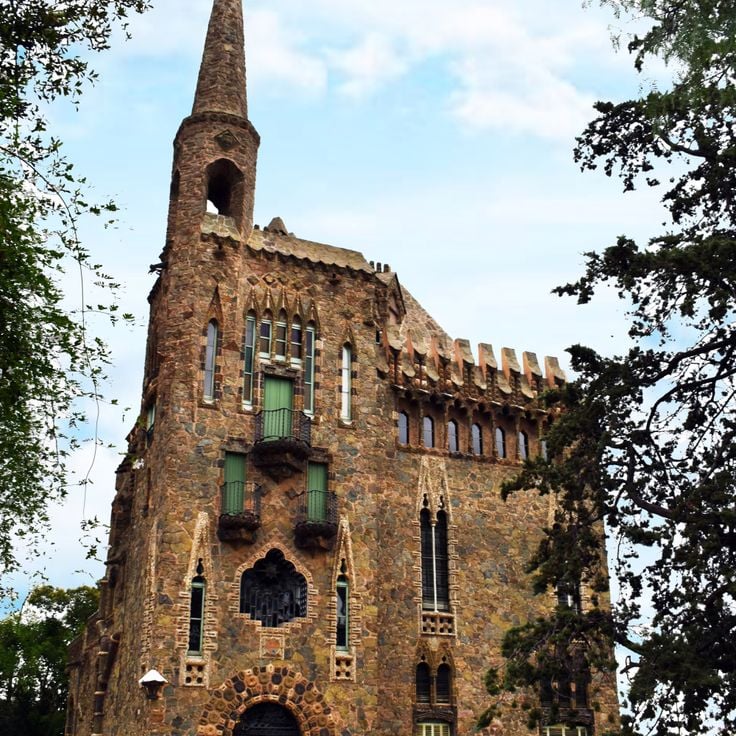
This 1909 mansion rises on the slopes of Tibidabo, combining Gothic tradition with Gaudí's organic principles. The structure features tall towers, geometric stone patterns and stained glass windows that filter natural light through the interior. The facade uses regional slate and distinctive battlements that reflect the medieval history of the site, while structural innovations demonstrate the architect's modernist methods.
This summer residence, designed by Gaudí in 1885 for a wealthy industrialist, shows oriental influences through its slender tower, ceramic tiles and decorative elements featuring sunflower motifs. The facade combines brick with glazed tiles to create a distinctive visual pattern. The building represents one of Gaudí's early works and already demonstrates his tendency toward organic forms and colorful surfaces that would define his later projects in Barcelona.
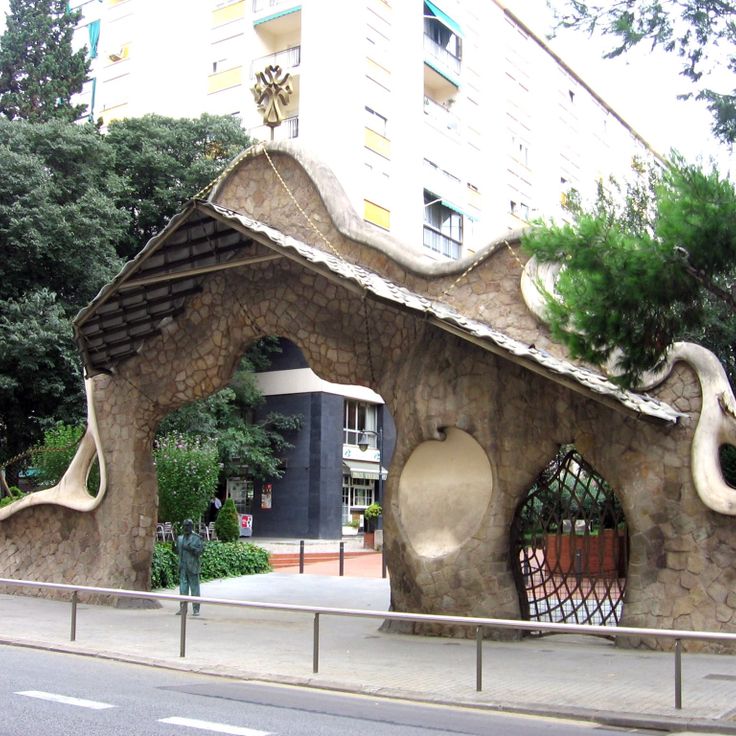
This entrance gate from 1901 displays Gaudí's characteristic ironwork with curved shapes and a stone wall, designed for client Hermenegild Miralles. The portal combines organic iron elements with crafted stonework, demonstrating Gaudí's early experiments with natural curves in architectural detail. The structure belongs to his smaller projects yet preserves the typical features of his modernist design vocabulary.
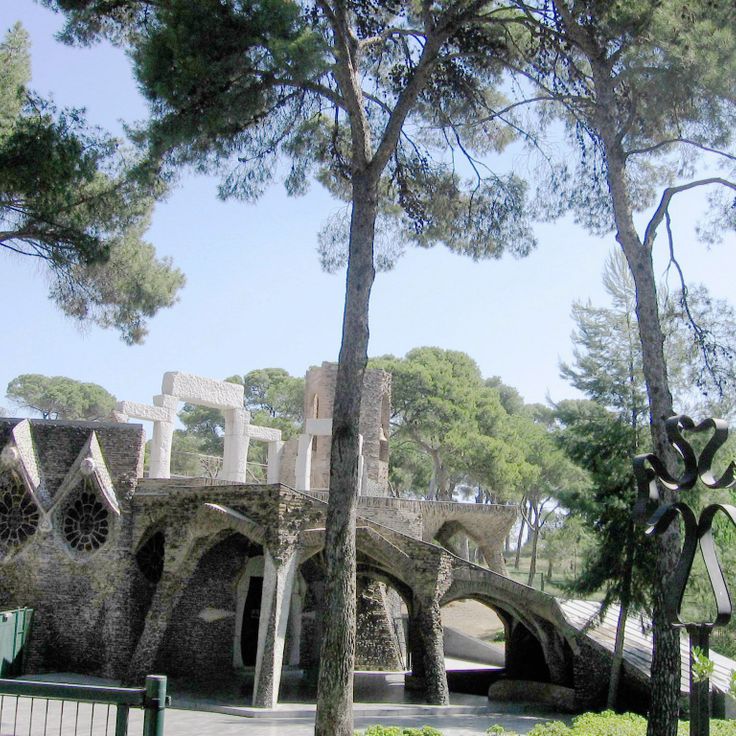
The Colònia Güell crypt is one of Gaudí's most experimental works. This lower church features tilted columns, parabolic arches and vaulted ceilings inspired by natural forms. Gaudí used hanging models to calculate structural forces and created a system of brick, stone and ceramic that anticipated the principles later applied to the Sagrada Familia.
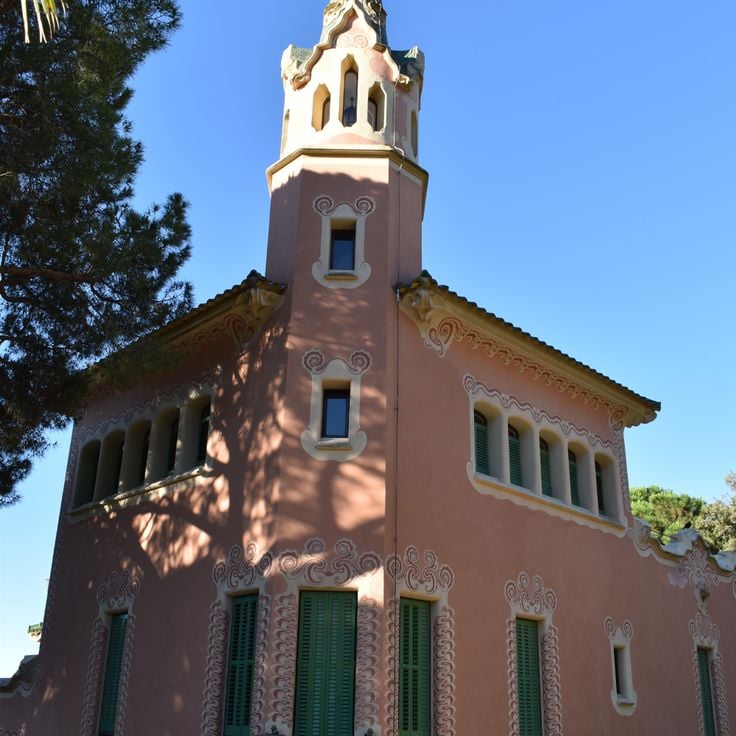
This pink building in Park Güell contains the architect's personal belongings and displays his living spaces from 1906 to 1926. The museum documents Gaudí's domestic life during his most productive years and exhibits furniture, drawings and photographs that provide insights into his working methods.
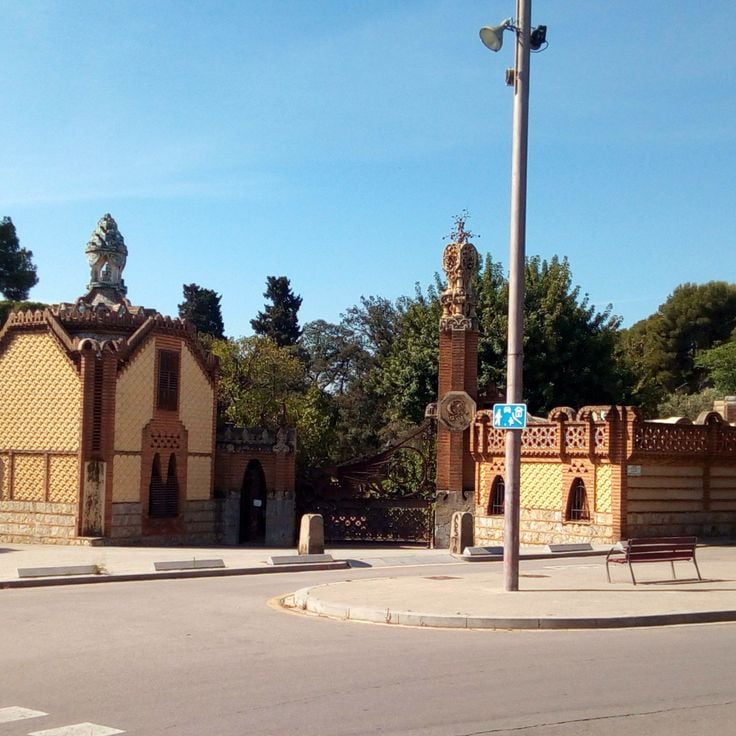
The Pavillons Güell were built between 1884 and 1887 as a gatehouse and stables for the Güell family estate. Gaudí designed the entrance gate with a wrought iron dragon inspired by Catalan mythology, along with three buildings in neo-Gothic style incorporating Mudéjar elements. The parabolic vaults in the stables demonstrate his early structural experiments. The geometric brick mosaics and the dome of the main pavilion showcase his development of ornamental techniques. The wrought iron gate represents one of his first major decorative works. The complex served as the entrance to the Güell Gardens.
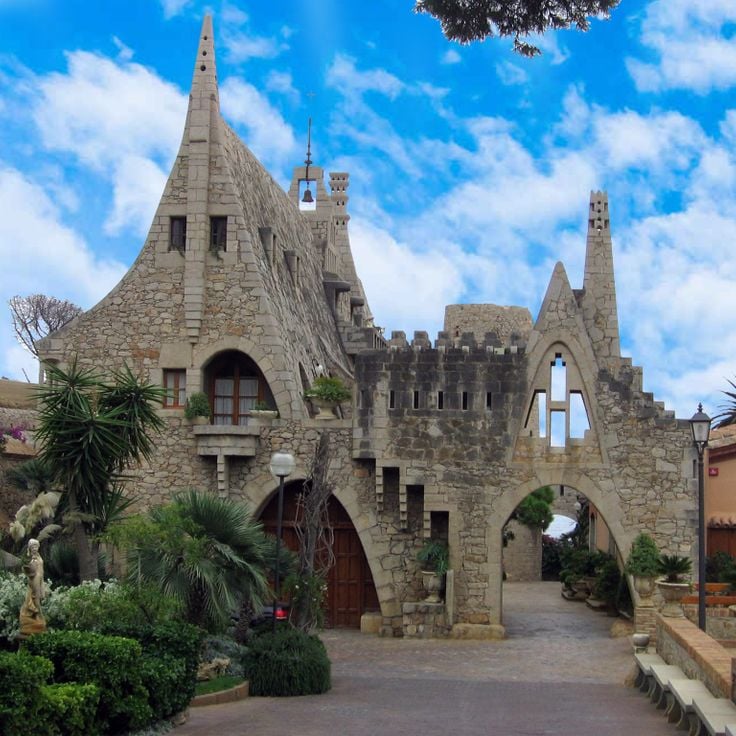
The Bodegas Güell winery combines stone walls with brick roofing and includes a chapel with parabolic arches that demonstrates Gaudí's preference for organic forms and structural experimentation. Built in the 1890s, this complex shows his early engagement with Catalan building techniques and religious elements, with the chapel's soaring interior and slender arches serving as a precursor to his later architectural innovations in Barcelona.
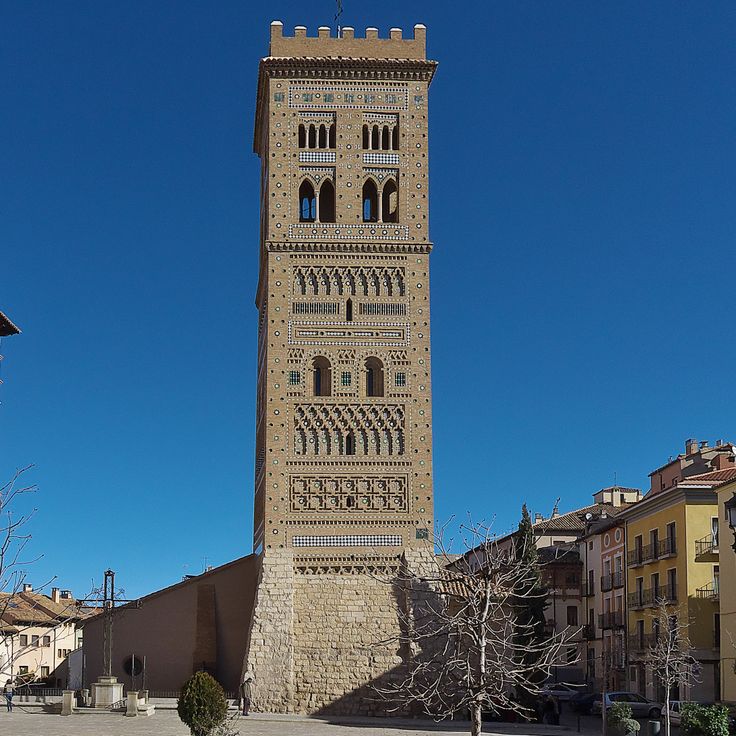
This tower combines Islamic and Christian architecture in Mudéjar style. Antoni Gaudí modified the structure, adding elements that anticipated his later work in Barcelona. The tower stands as an example of Gaudí's early engagement with historical building forms and their reinterpretation through his modernist vision.
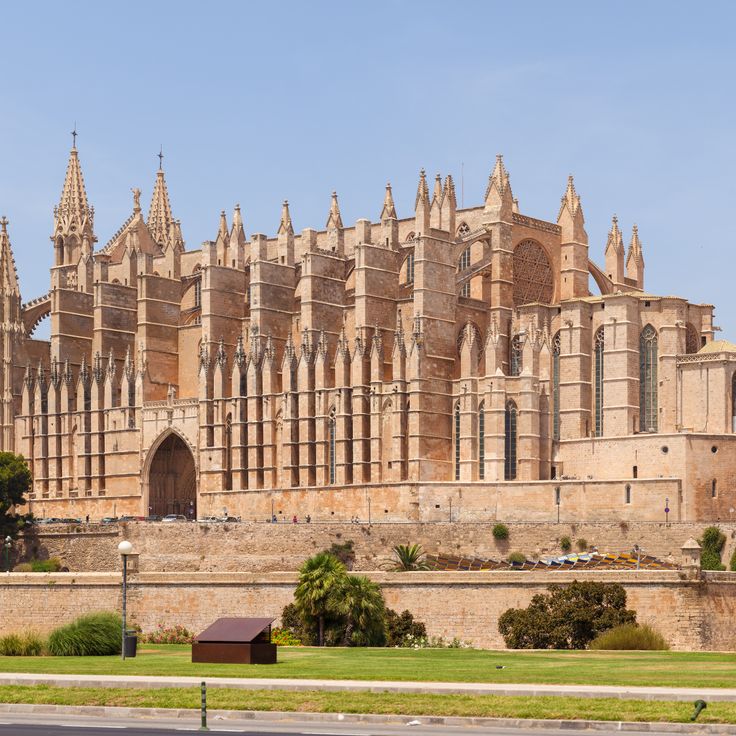
This Gothic cathedral received structural improvements in 1904 from Antoni Gaudí, who relocated the choir stalls and reorganized several chapels. The work demonstrates his respect for medieval architecture while enhancing spatial functionality.
This Roman Catholic basilica demonstrates Gaudí's reinterpretation of Gothic forms and organic patterns through 18 towers, intricate facades and a nature-inspired interior. The Sagrada Família combines structural innovation with biblical motifs and sculptural details that document the architect's modernist approach to sacred architecture.
This residential building from 1877 was redesigned by Gaudí with colored mosaics and undulating forms. The wave-like facade displays organic lines, while the interior spaces feature natural light distribution and artisanal details. The building demonstrates Gaudí's approach to transforming traditional structures through modernist design principles.
This park designed by Antoni Gaudí combines horticultural planning with architectural elements, including an undulating mosaic bench along the main terrace and a salamander sculpture covered in ceramic fragments at the stairway entrance. Developed between 1900 and 1914, the site demonstrates Gaudí's characteristic use of organic forms and his trencadís technique with broken ceramic pieces.
This residential building shows Gaudí's advanced work with curved stone forms and wrought iron balconies that mimic organic structures. The undulating facade eliminates load-bearing walls in favor of a self-supporting stone skeleton, while the rooftop presents sculptural chimneys and ventilation shafts shaped as sentinels. Completed in 1912, the building demonstrates Gaudí's approach to integrating natural forms into functional urban architecture.
This 19th-century urban palace demonstrates Gaudí's early innovations in spatial design with its elaborate wrought iron details and experimental interior architecture. The building combines traditional Catalan craftsmanship with modern structural solutions, showcasing the architect's emerging vision before his later masterworks.
This residential building completed in 1885 marks Gaudí's first major work and displays Moorish influences through green and white ceramic tiles and wrought iron grilles. Casa Vicens combines traditional Catalan construction techniques with Oriental decorative elements that foreshadow Gaudí's later organic design approach. The building originally served as a summer residence for the Vicens family and opened to the public as a museum in 2017.
The Colegio Teresiano is an educational complex Antoni Gaudí built in 1889 for the Order of Saint Teresa. The brick facade displays geometric patterns and parabolic arches that demonstrate Gaudí's early architectural approach. The vertical lines and structural clarity distinguish this building from his later, more organic works. The Colegio continues to function as an educational institution and remains accessible to visitors interested in tracing Gaudí's development as an architect.
This 1899 building combines ground floor commercial spaces with upper level apartments. The sandstone facade follows classical design principles of Catalan urban architecture and marks Gaudí's early career before he moved toward his more experimental forms. The stairwell and entrance hall display artisan details in wrought iron and carved wood, while the symmetrical street front accommodated the conservative tastes of the property owner.
This building served as a glove factory until Gaudí transformed it into a confectionery shop. The facade features natural stone elements that incorporate Gaudí's characteristic approach to organic forms in his early renovation projects and document his development as an architect in modernist Barcelona.
This 1909 mansion rises on the slopes of Tibidabo, combining Gothic tradition with Gaudí's organic principles. The structure features tall towers, geometric stone patterns and stained glass windows that filter natural light through the interior. The facade uses regional slate and distinctive battlements that reflect the medieval history of the site, while structural innovations demonstrate the architect's modernist methods.
This summer residence, designed by Gaudí in 1885 for a wealthy industrialist, shows oriental influences through its slender tower, ceramic tiles and decorative elements featuring sunflower motifs. The facade combines brick with glazed tiles to create a distinctive visual pattern. The building represents one of Gaudí's early works and already demonstrates his tendency toward organic forms and colorful surfaces that would define his later projects in Barcelona.
This entrance gate from 1901 displays Gaudí's characteristic ironwork with curved shapes and a stone wall, designed for client Hermenegild Miralles. The portal combines organic iron elements with crafted stonework, demonstrating Gaudí's early experiments with natural curves in architectural detail. The structure belongs to his smaller projects yet preserves the typical features of his modernist design vocabulary.
The Colònia Güell crypt is one of Gaudí's most experimental works. This lower church features tilted columns, parabolic arches and vaulted ceilings inspired by natural forms. Gaudí used hanging models to calculate structural forces and created a system of brick, stone and ceramic that anticipated the principles later applied to the Sagrada Familia.
This pink building in Park Güell contains the architect's personal belongings and displays his living spaces from 1906 to 1926. The museum documents Gaudí's domestic life during his most productive years and exhibits furniture, drawings and photographs that provide insights into his working methods.
The Pavillons Güell were built between 1884 and 1887 as a gatehouse and stables for the Güell family estate. Gaudí designed the entrance gate with a wrought iron dragon inspired by Catalan mythology, along with three buildings in neo-Gothic style incorporating Mudéjar elements. The parabolic vaults in the stables demonstrate his early structural experiments. The geometric brick mosaics and the dome of the main pavilion showcase his development of ornamental techniques. The wrought iron gate represents one of his first major decorative works. The complex served as the entrance to the Güell Gardens.
The Bodegas Güell winery combines stone walls with brick roofing and includes a chapel with parabolic arches that demonstrates Gaudí's preference for organic forms and structural experimentation. Built in the 1890s, this complex shows his early engagement with Catalan building techniques and religious elements, with the chapel's soaring interior and slender arches serving as a precursor to his later architectural innovations in Barcelona.
This tower combines Islamic and Christian architecture in Mudéjar style. Antoni Gaudí modified the structure, adding elements that anticipated his later work in Barcelona. The tower stands as an example of Gaudí's early engagement with historical building forms and their reinterpretation through his modernist vision.
This Gothic cathedral received structural improvements in 1904 from Antoni Gaudí, who relocated the choir stalls and reorganized several chapels. The work demonstrates his respect for medieval architecture while enhancing spatial functionality.
This Roman Catholic basilica demonstrates Gaudí's reinterpretation of Gothic forms and organic patterns through 18 towers, intricate facades and a nature-inspired interior. The Sagrada Família combines structural innovation with biblical motifs and sculptural details that document the architect's modernist approach to sacred architecture.
This residential building from 1877 was redesigned by Gaudí with colored mosaics and undulating forms. The wave-like facade displays organic lines, while the interior spaces feature natural light distribution and artisanal details. The building demonstrates Gaudí's approach to transforming traditional structures through modernist design principles.
This park designed by Antoni Gaudí combines horticultural planning with architectural elements, including an undulating mosaic bench along the main terrace and a salamander sculpture covered in ceramic fragments at the stairway entrance. Developed between 1900 and 1914, the site demonstrates Gaudí's characteristic use of organic forms and his trencadís technique with broken ceramic pieces.
This residential building shows Gaudí's advanced work with curved stone forms and wrought iron balconies that mimic organic structures. The undulating facade eliminates load-bearing walls in favor of a self-supporting stone skeleton, while the rooftop presents sculptural chimneys and ventilation shafts shaped as sentinels. Completed in 1912, the building demonstrates Gaudí's approach to integrating natural forms into functional urban architecture.
This 19th-century urban palace demonstrates Gaudí's early innovations in spatial design with its elaborate wrought iron details and experimental interior architecture. The building combines traditional Catalan craftsmanship with modern structural solutions, showcasing the architect's emerging vision before his later masterworks.
This residential building completed in 1885 marks Gaudí's first major work and displays Moorish influences through green and white ceramic tiles and wrought iron grilles. Casa Vicens combines traditional Catalan construction techniques with Oriental decorative elements that foreshadow Gaudí's later organic design approach. The building originally served as a summer residence for the Vicens family and opened to the public as a museum in 2017.
The Colegio Teresiano is an educational complex Antoni Gaudí built in 1889 for the Order of Saint Teresa. The brick facade displays geometric patterns and parabolic arches that demonstrate Gaudí's early architectural approach. The vertical lines and structural clarity distinguish this building from his later, more organic works. The Colegio continues to function as an educational institution and remains accessible to visitors interested in tracing Gaudí's development as an architect.
This 1899 building combines ground floor commercial spaces with upper level apartments. The sandstone facade follows classical design principles of Catalan urban architecture and marks Gaudí's early career before he moved toward his more experimental forms. The stairwell and entrance hall display artisan details in wrought iron and carved wood, while the symmetrical street front accommodated the conservative tastes of the property owner.
This building served as a glove factory until Gaudí transformed it into a confectionery shop. The facade features natural stone elements that incorporate Gaudí's characteristic approach to organic forms in his early renovation projects and document his development as an architect in modernist Barcelona.
This 1909 mansion rises on the slopes of Tibidabo, combining Gothic tradition with Gaudí's organic principles. The structure features tall towers, geometric stone patterns and stained glass windows that filter natural light through the interior. The facade uses regional slate and distinctive battlements that reflect the medieval history of the site, while structural innovations demonstrate the architect's modernist methods.
This summer residence, designed by Gaudí in 1885 for a wealthy industrialist, shows oriental influences through its slender tower, ceramic tiles and decorative elements featuring sunflower motifs. The facade combines brick with glazed tiles to create a distinctive visual pattern. The building represents one of Gaudí's early works and already demonstrates his tendency toward organic forms and colorful surfaces that would define his later projects in Barcelona.
This entrance gate from 1901 displays Gaudí's characteristic ironwork with curved shapes and a stone wall, designed for client Hermenegild Miralles. The portal combines organic iron elements with crafted stonework, demonstrating Gaudí's early experiments with natural curves in architectural detail. The structure belongs to his smaller projects yet preserves the typical features of his modernist design vocabulary.
The Colònia Güell crypt is one of Gaudí's most experimental works. This lower church features tilted columns, parabolic arches and vaulted ceilings inspired by natural forms. Gaudí used hanging models to calculate structural forces and created a system of brick, stone and ceramic that anticipated the principles later applied to the Sagrada Familia.
This pink building in Park Güell contains the architect's personal belongings and displays his living spaces from 1906 to 1926. The museum documents Gaudí's domestic life during his most productive years and exhibits furniture, drawings and photographs that provide insights into his working methods.
The Pavillons Güell were built between 1884 and 1887 as a gatehouse and stables for the Güell family estate. Gaudí designed the entrance gate with a wrought iron dragon inspired by Catalan mythology, along with three buildings in neo-Gothic style incorporating Mudéjar elements. The parabolic vaults in the stables demonstrate his early structural experiments. The geometric brick mosaics and the dome of the main pavilion showcase his development of ornamental techniques. The wrought iron gate represents one of his first major decorative works. The complex served as the entrance to the Güell Gardens.
The Bodegas Güell winery combines stone walls with brick roofing and includes a chapel with parabolic arches that demonstrates Gaudí's preference for organic forms and structural experimentation. Built in the 1890s, this complex shows his early engagement with Catalan building techniques and religious elements, with the chapel's soaring interior and slender arches serving as a precursor to his later architectural innovations in Barcelona.
This tower combines Islamic and Christian architecture in Mudéjar style. Antoni Gaudí modified the structure, adding elements that anticipated his later work in Barcelona. The tower stands as an example of Gaudí's early engagement with historical building forms and their reinterpretation through his modernist vision.
This Gothic cathedral received structural improvements in 1904 from Antoni Gaudí, who relocated the choir stalls and reorganized several chapels. The work demonstrates his respect for medieval architecture while enhancing spatial functionality.