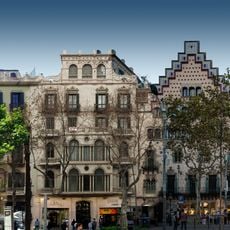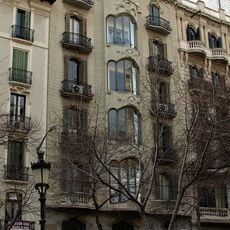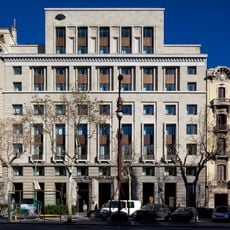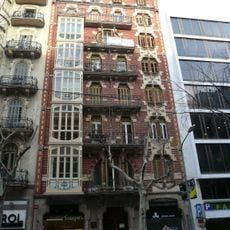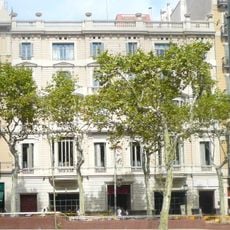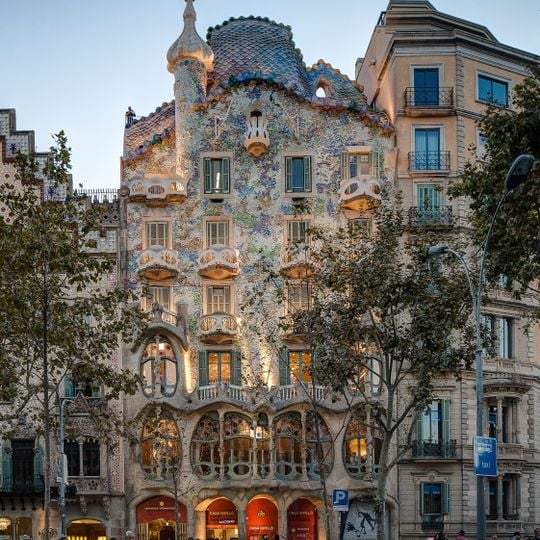
Casa Batlló, Art Nouveau residence in Passeig de Gràcia, Barcelona, Spain
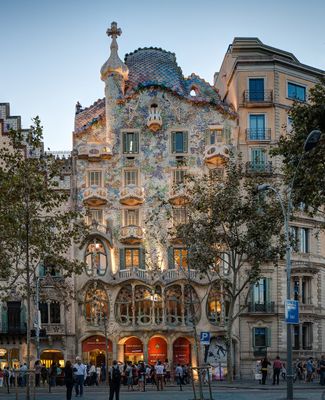
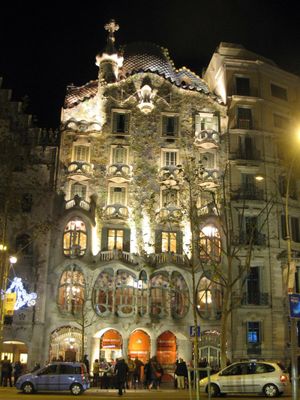
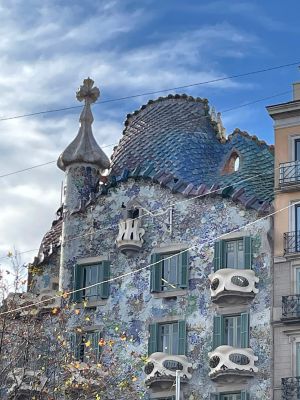
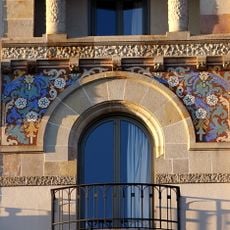
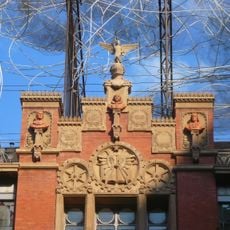
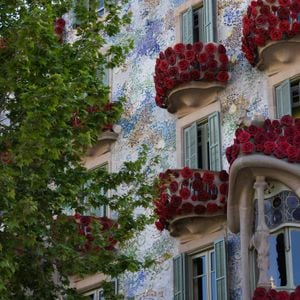
The building features organic shapes with curved stone walls, multicolored glass mosaics, and ceramic tiles that change from orange to blue tones on the facade.
Textile industrialist Josep Batlló purchased the classical building in 1903 and commissioned Antoni Gaudí to transform it between 1904 and 1906.
The structure incorporates natural forms throughout its design, with a roof resembling a dragon's back and columns shaped like bones along the windows.
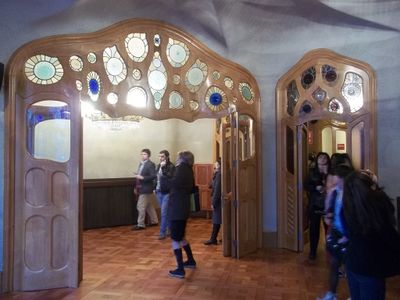
The noble floor functions as a museum space spanning 700 square meters, while the building maintains regular visiting hours from 9:00 AM to 9:00 PM daily.
The central facade contains rippling stone elements and balconies made from cast iron, creating an appearance that resembles an underwater landscape.
Location: Dreta de l'Eixample
Inception: 1877
Architects: Antoni Gaudí
Creator: A. Gaudí
Architectural style: Catalan modernism
Floors above the ground: 6
Elevation above the sea: 33 m
Made from material: brick, Montjuïc stone, ceramic glaze
Creator: A. Gaudí
Part of: Works of Antoni Gaudí
Address: 43 Pg. Gràcia, 43 08007 Barcelona
Opening Hours: Monday-Sunday 09:00-21:00
Phone: +34932160306
Email: info@casabatllo.cat
Website: https://casabatllo.cn
GPS coordinates: 41.39158,2.16492
Latest update: May 26, 2025 19:07
This collection presents significant architectural works from different periods and continents. From medieval cathedrals to contemporary skyscrapers, the selection documents the technical and aesthetic development of building design. The listed buildings were created by influential architects and have shaped the evolution of modern architecture. The list includes religious structures such as Gothic churches and monasteries, public facilities like museums and concert halls, and residential buildings that established new construction standards. Each building demonstrates particular structural solutions or stylistic features that contribute to understanding architectural history. The selection offers insights into various building styles, materials and construction methods.
Art Nouveau emerged between 1890 and 1910 as one of Europe's most influential architectural and decorative movements. Architects of this period broke from historical precedents to develop a new visual language characterized by curved lines, plant motifs and richly ornamented facades. The movement took different names across countries: Modernisme in Catalonia, Jugendstil in German-speaking regions, Secession in Austria and Liberty in Italy. This diversity led to regional interpretations that incorporated local craft traditions and cultural characteristics. This collection includes buildings across Barcelona, Paris, Budapest, Vienna, Prague, Brussels and other European cities. In Barcelona, works by Antoni Gaudí and his contemporaries shape entire streetscapes, including Casa Batlló with its undulating facade and the Sant Pau Recinte Modernista. Paris preserves the celebrated metro stations by Hector Guimard, while Budapest features the Gresham Palace, Museum of Applied Arts and Gellért Baths. Vienna presents characteristic examples of the Austrian variant with the Secession Building and Majolica House. The collection also includes less visited sites such as the Kőrössy Villa in Kecskemét, Horta Museum in Brussels and the railway station in Helsingør, Denmark.
Between 1890 and 1910, Art Nouveau spread across Europe, producing buildings that combined craft traditions with industrial techniques through organic forms, natural motifs, and detailed ornamental work. Architects including Victor Horta in Brussels, Antoni Gaudí in Barcelona, and Otto Wagner in Vienna designed structures that departed from historical revival styles, instead emphasizing curved lines, wrought iron elements, and colored glass. The movement encompassed concert halls and railway stations as well as private homes and commercial facades, creating a body of work that remains central to the architectural identity of several European cities. Visitors can trace this development through multiple locations. Brussels offers the Victor Horta Museum, Tassel House, and Hôtel van Eetvelde as prime examples of the Belgian variant. Barcelona showcases Gaudí's Casa Batlló and Bellesguard alongside the Palau de la Musica Catalana with its elaborate tilework. Paris preserves Hector Guimard's Métropolitain entrances and the Lavirotte Building, while Prague presents the Municipal House and the Bedřich Smetana Museum. Nancy serves as a center of French Art Nouveau with the School Museum and Villa Majorelle, and Budapest displays the style through Gresham Palace and the Liszt Academy of Music. From Riga to Turin, Vienna to Belgrade, these buildings document a brief but influential period when architects reshaped urban environments across the continent.
Antoni Gaudi shaped Barcelona's urban landscape with his modernist architecture. His buildings display organic forms, natural motifs, and structural innovations. The Sagrada Familia, Casa Batllo, and Park Güell exemplify his experimental construction methods that brought international recognition to Barcelona.
Barcelona offers a wide range of architectural and cultural sites that reflect centuries of Catalan history. The city combines Gothic churches and medieval streets with the organic forms of Antoni Gaudí's modernist buildings. From the Sagrada Família to Parc Güell, his designs shape the cityscape, while the Gothic Quarter and palaces such as Palau Güell represent earlier periods. Museums including the Picasso Museum and Joan Miró Foundation illustrate the city's artistic legacy. Markets like La Boqueria and Sant Antoni provide insight into Catalan daily life. The waterfront district of La Barceloneta, the Olympic Port, and Montjuïc with its cable car and fountain broaden the range. Other destinations include Casa Batlló, Casa Milà, the Hospital de Sant Pau, the National Art Museum of Catalonia, and the Aquarium.
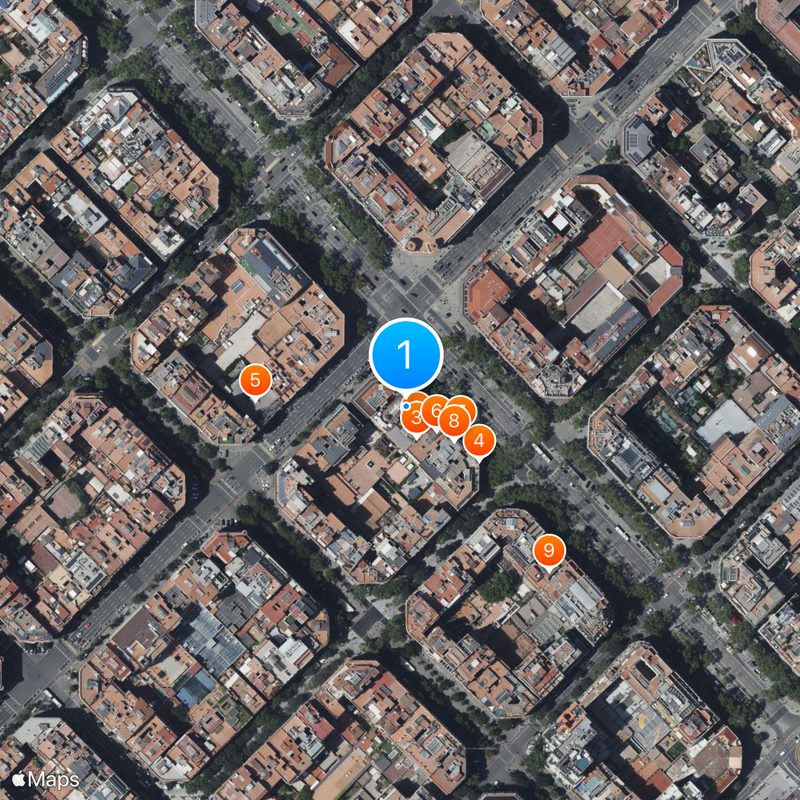
Passeig de Gràcia
188 m
Casa Amatller
16 m
Illa de la Discòrdia
22 m
Casa Lleó Morera
63 m
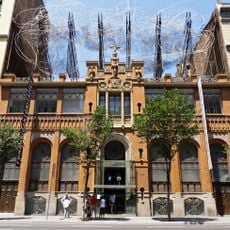
Fundació Antoni Tàpies
105 m
Casa Bonet
27 m
Casa Mulleras
41 m
Perfume Museum
41 m
Casa Malagrida
151 m
Mitjó
119 m
Building Montaner i Simón
110 m
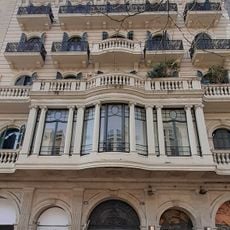
Casa Vídua Marfà
184 m
Galerías Layetanas
194 m
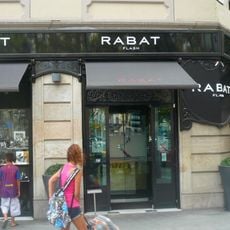
Casa Fargas
152 m
Hotel Mandarin Oriental
150 m
Casa Domènech i Estapà
214 m
Casa Olano
141 m
Casa Dolors Calm
104 m
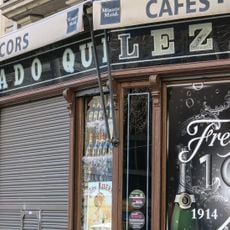
Colmado Quílez
164 m
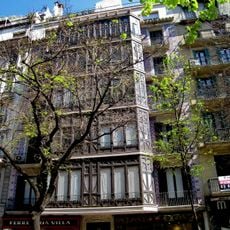
Edifici d'habitatges de Frederic Vallet III
144 m
Núvol i cadira
98 m
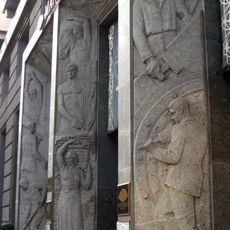
El Treball
151 m
Elcano
139 m
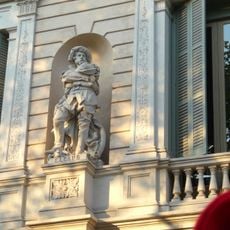
Cervantes, Dant i Milton
93 m
Antiga farmàcia Mirambell
172 m
Edifici de la Union des Assurances de Paris
101 m
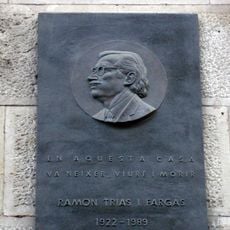
Ramon Trias Fargas
144 m
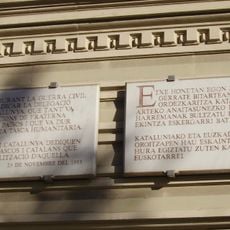
Al Govern Basc a Catalunya
134 mReviews
Real people, real opinions — but not verified.
Visited this place? Tap the stars to rate it and share your experience / photos with the community! Try now! You can cancel it anytime.
Majestic and very original building by Gaudi
Discover hidden gems everywhere you go!
From secret cafés to breathtaking viewpoints, skip the crowded tourist spots and find places that match your style. Our app makes it easy with voice search, smart filtering, route optimization, and insider tips from travelers worldwide. Download now for the complete mobile experience.
A unique approach to discovering new places❞
— Le Figaro
All the places worth exploring❞
— France Info
A tailor-made excursion in just a few clicks❞
— 20 Minutes