See the monuments around you in AROpen chests in the app
Around Us is built for your phone — point your camera at the streets and discover the monuments and places around you in augmented reality.Around Us is built for your phone — chests unlock when you walk, explore and capture nearby places.
Art Nouveau architecture: the 50 buildings to see absolutely
Between 1890 and 1910, Art Nouveau spread across Europe, producing buildings that combined craft traditions with industrial techniques through organic forms, natural motifs, and detailed ornamental work. Architects including Victor Horta in Brussels, Antoni Gaudí in Barcelona, and Otto Wagner in Vienna designed structures that departed from historical revival styles, instead emphasizing curved lines, wrought iron elements, and colored glass. The movement encompassed concert halls and railway stations as well as private homes and commercial facades, creating a body of work that remains central to the architectural identity of several European cities. Visitors can trace this development through multiple locations. Brussels offers the Victor Horta Museum, Tassel House, and Hôtel van Eetvelde as prime examples of the Belgian variant. Barcelona showcases Gaudí's Casa Batlló and Bellesguard alongside the Palau de la Musica Catalana with its elaborate tilework. Paris preserves Hector Guimard's Métropolitain entrances and the Lavirotte Building, while Prague presents the Municipal House and the Bedřich Smetana Museum. Nancy serves as a center of French Art Nouveau with the School Museum and Villa Majorelle, and Budapest displays the style through Gresham Palace and the Liszt Academy of Music. From Riga to Turin, Vienna to Belgrade, these buildings document a brief but influential period when architects reshaped urban environments across the continent.
Art Nouveau architecture: the 50 buildings to see absolutely
Between 1890 and 1910, Art Nouveau spread across Europe, producing buildings that combined craft traditions with industrial techniques through organic forms, natural motifs, and detailed ornamental work. Architects including Victor Horta in Brussels, Antoni Gaudí in Barcelona, and Otto Wagner in Vienna designed structures that departed from historical revival styles, instead emphasizing curved lines, wrought iron elements, and colored glass. The movement encompassed concert halls and railway stations as well as private homes and commercial facades, creating a body of work that remains central to the architectural identity of several European cities. Visitors can trace this development through multiple locations. Brussels offers the Victor Horta Museum, Tassel House, and Hôtel van Eetvelde as prime examples of the Belgian variant. Barcelona showcases Gaudí's Casa Batlló and Bellesguard alongside the Palau de la Musica Catalana with its elaborate tilework. Paris preserves Hector Guimard's Métropolitain entrances and the Lavirotte Building, while Prague presents the Municipal House and the Bedřich Smetana Museum. Nancy serves as a center of French Art Nouveau with the School Museum and Villa Majorelle, and Budapest displays the style through Gresham Palace and the Liszt Academy of Music. From Riga to Turin, Vienna to Belgrade, these buildings document a brief but influential period when architects reshaped urban environments across the continent.
The Victor Horta Museum occupies the former home and studio that Belgian architect Victor Horta designed for himself between 1898 and 1901. The interiors display his characteristic curved lines, ironwork and deliberate use of light through glass skylights and windows. The museum documents Horta's influence on European architecture around 1900 and presents furniture, drawings and architectural details from his projects. The rooms demonstrate his approach to combining function with ornament.
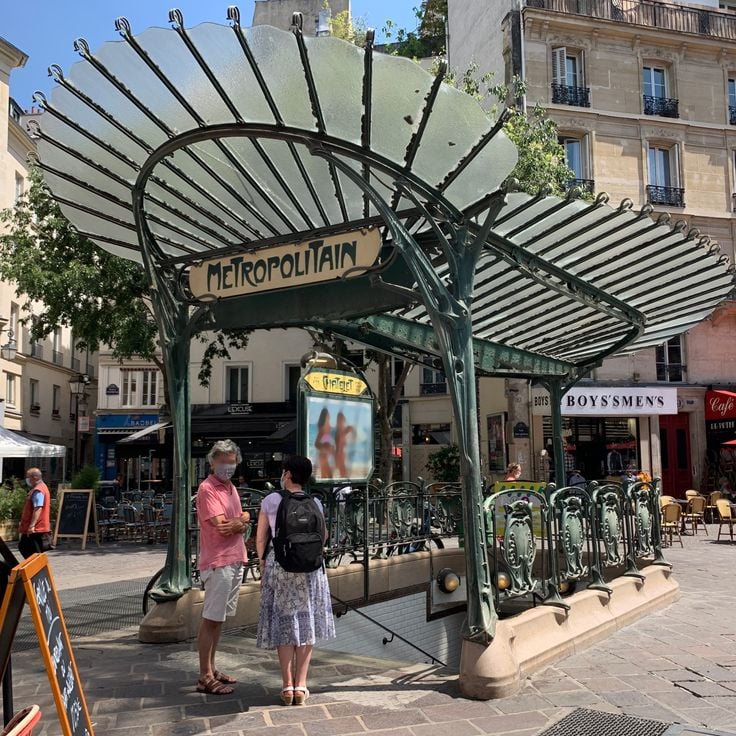
These Paris Métro entrances, designed by Hector Guimard between 1900 and 1912, represent a defining feature of Art Nouveau architecture in the French capital. The entrances feature wrought iron constructions with organic forms that evoke plant stems and tendrils. Guimard developed several variations, including simple balustrades with distinctive lanterns and more elaborate pavilions with glass canopies. The green painted metalwork displays the curved lines and asymmetric details characteristic of Art Nouveau design. Approximately 140 of these entrances were originally installed, with around 80 still present today in various states of preservation, documenting the connection between public infrastructure and decorative arts at the turn of the 20th century.
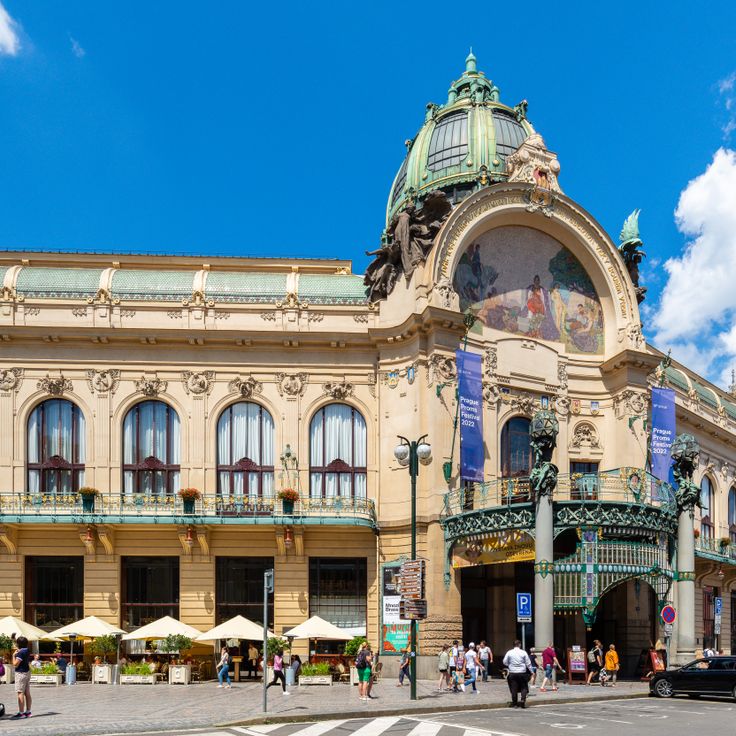
The Municipal House in Prague is an example of Czech Art Nouveau architecture from the early 20th century, displaying ornamental designs, curved lines and natural motifs. The facade combines craft traditions with industrial techniques, featuring decorative elements and glasswork characteristic of the period between 1890 and 1910. This building houses a concert hall and restaurant where the decorative interiors reflect Art Nouveau principles.
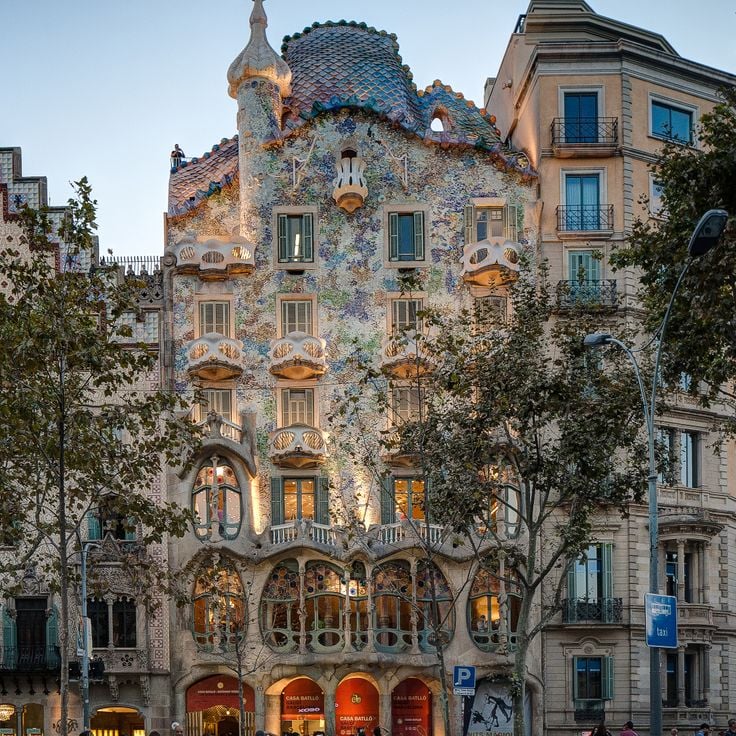
This building on Passeig de Gràcia demonstrates Antoni Gaudí's interpretation of Art Nouveau through its organic facade of ceramic elements and undulating wrought iron balconies. Casa Batlló was remodeled between 1904 and 1906, combining craft traditions with industrial techniques in its structure and decoration. The interiors follow flowing lines with stained glass windows and natural motifs characteristic of the movement from 1890 to 1910. The roof with its ceramic tiles and the central light well demonstrate Gaudí's technical approach to natural illumination and ventilation within the historic city block.
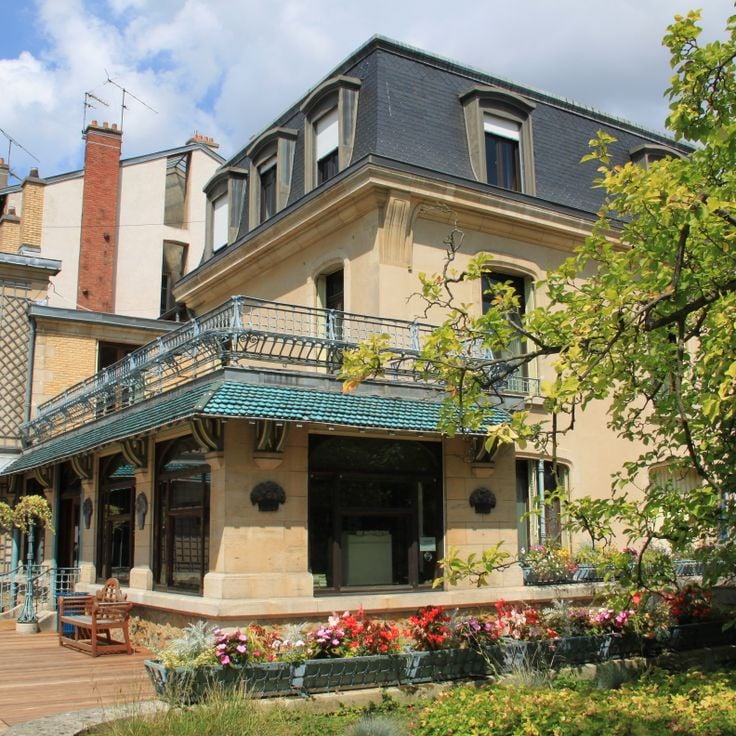
This museum documents the work of the École de Nancy, an artists' association that produced furniture, glass, and ceramics between 1890 and 1914. The collection includes more than 200 objects, among them display cases by Jacques Grüber, vases by Émile Gallé, and furniture by Louis Majorelle. Opened in 1964, the museum occupies an early 20th-century residence and demonstrates the connection between craft traditions and industrial production that characterized the Nancy movement.
The Hôtel Tassel in Brussels stands as the first authentic building of Art Nouveau architecture. Architect Victor Horta designed this residence in 1893 with a fully realized application of the new style. The facade displays curved lines and ironwork details, while the interior features an open spatial structure with wrought iron elements and floral motifs. The staircase at the center of the house connects the rooms through a skylight that brings natural light to all floors. The building demonstrates the principles of Art Nouveau through its integration of architecture, decoration and craftsmanship into a unified whole.
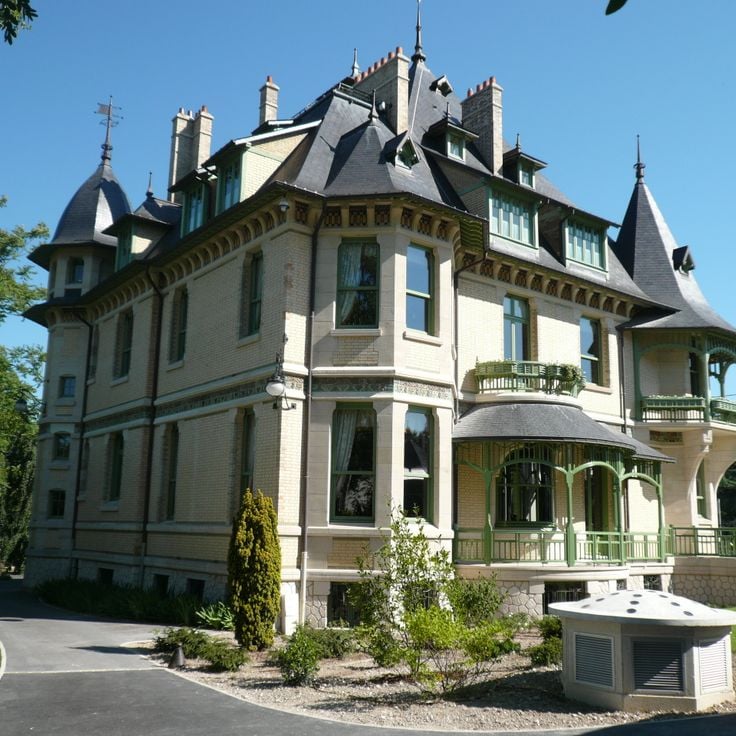
Villa Demoiselle in Reims combines Art Nouveau architecture with the history of champagne production and now serves as a museum. Designed by Louis Süe in 1908, the building displays curved lines, floral ornamentation, and colored glass windows. The interior spaces present original furniture, ceramics, and paintings from around 1900. The villa connects the industrial tradition of champagne making with the decorative elements of Art Nouveau and offers insights into the domestic culture of wealthy industrial families during this period.
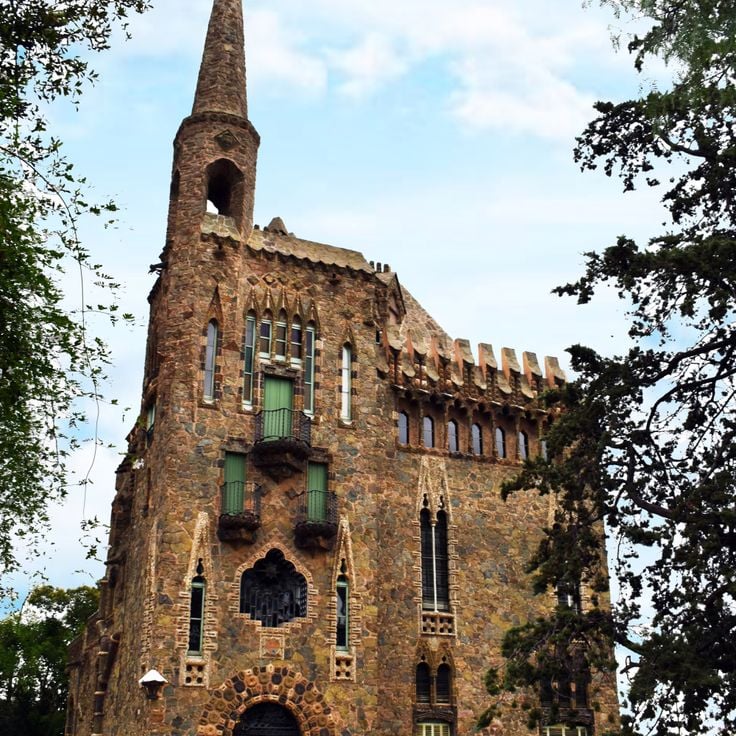
This Antoni Gaudí residential building from 1909 stands on a hill with historical significance in Catalan history. Bellesguard combines Gothic architecture with Art Nouveau elements, including a slender tower with ceramic cladding and Gaudí's characteristic parabolic arches. The facade displays stonework with geometric patterns, while the interiors feature handcrafted wrought iron work and stained glass windows that demonstrate the fusion of craft traditions with structural innovation.
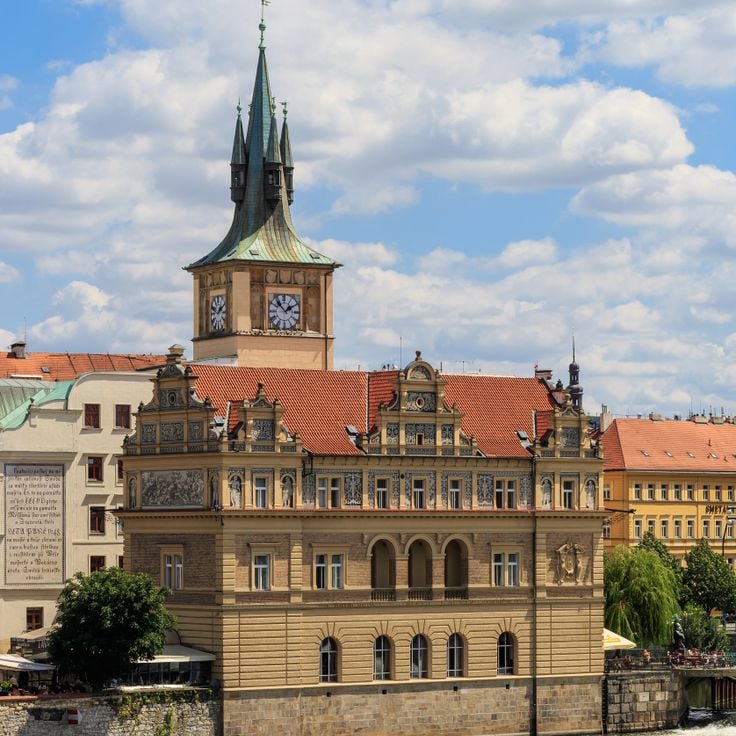
This museum presents manuscripts, scores and personal belongings of Bedřich Smetana in a restored building along the Vltava River. The collection documents the life of the Czech composer who lived from 1824 to 1884. The structure, a former waterworks from the late 19th century, was converted in the 1920s. Exhibits trace Smetana's role in Czech national music. Visitors find materials related to his major works, including the symphonic poem Vltava. The building features Art Nouveau elements typical of Prague architecture from the period, including decorative facades and wrought iron details that complement the displayed artifacts.
This residential building from 1908 represents the Hungarian branch of the Art Nouveau movement and displays the characteristic curved forms and organic motifs of the period. The Blue House features a curved facade with ceramic tiles and floral decorations that combine traditional Hungarian craftsmanship with Art Nouveau design principles. The ceramic work reflects the widespread interest in natural motifs and decorative surfaces during this era. The building stands as an example of how Art Nouveau architecture adapted to local aesthetic traditions in Hungary during the first decade of the 20th century.
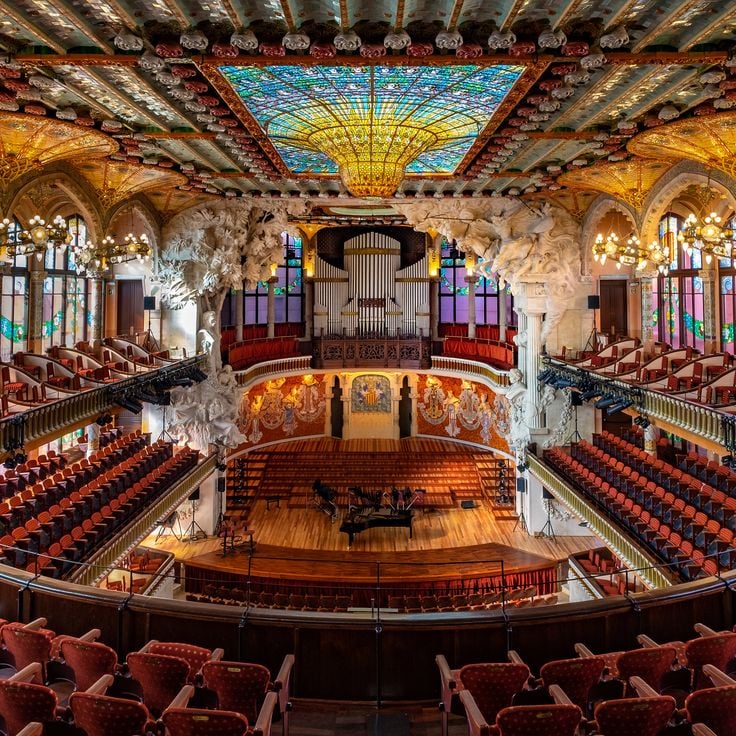
This concert hall was built in 1908 by Lluís Domènech i Montaner for the choral society Orfeó Català, combining wrought iron construction with richly decorated surfaces. The building displays characteristic features of Catalan Art Nouveau architecture through its glass roof that floods the main auditorium with natural light, along with mosaics and sculptures adorning the facades and interior spaces. The Palau de la Música Catalana represents the application of industrial construction techniques for ornamental purposes and remains an active concert venue in Barcelona.
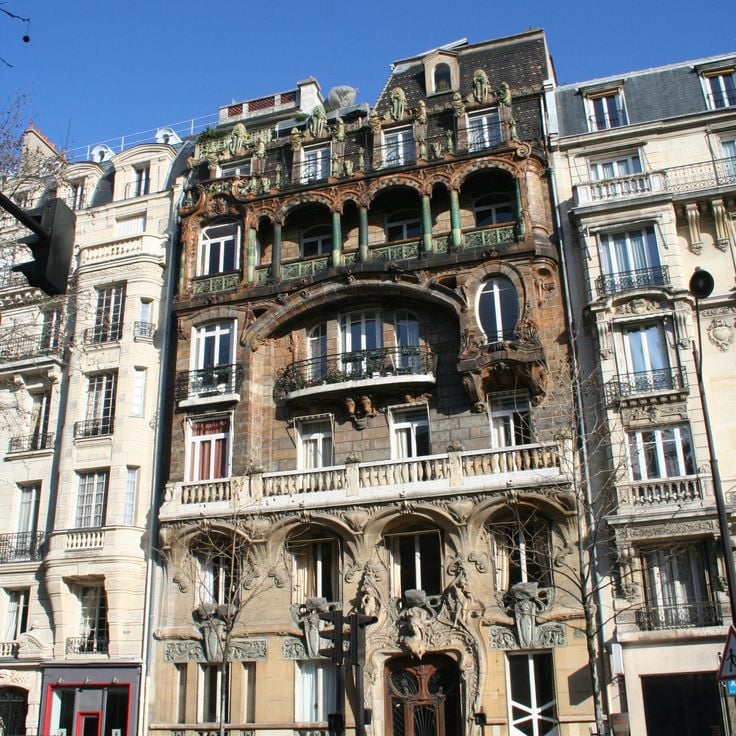
This building constructed in Paris in 1901 presents a facade of ceramics and stonework characteristic of the movement. Jules Lavirotte designed the residential structure with plant ornaments, figural reliefs, and organic forms that combine craft techniques with industrially produced materials. The facade displays curved lines, floral motifs, and decorative wrought iron elements typical of the period from 1890 to 1910. The Lavirotte Building represents those European Art Nouveau structures that merged traditional craftsmanship with modern manufacturing methods.
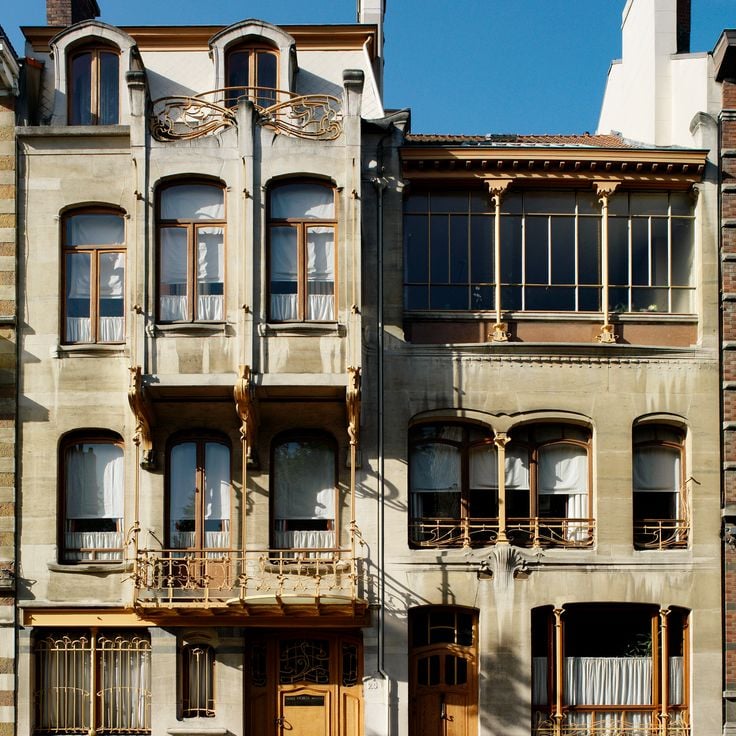
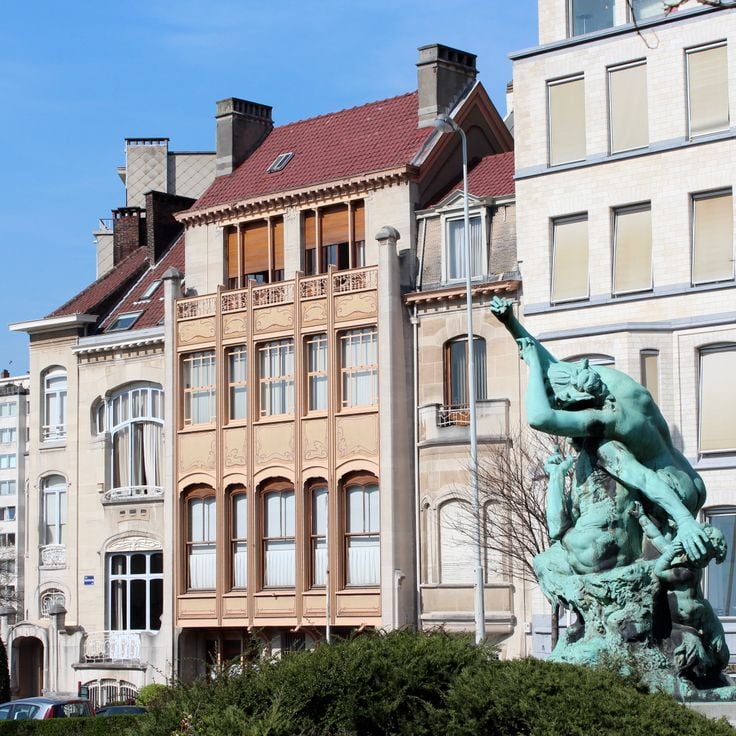
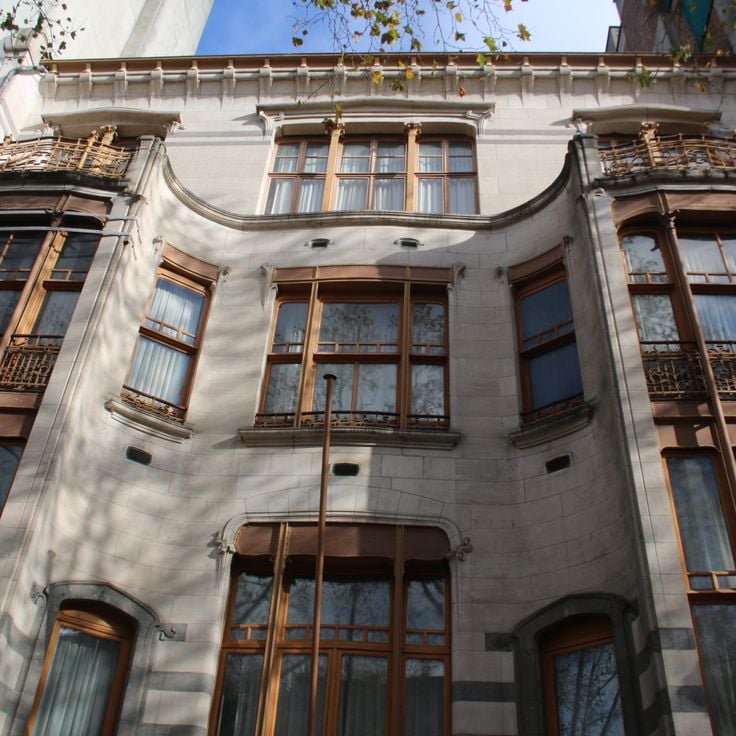
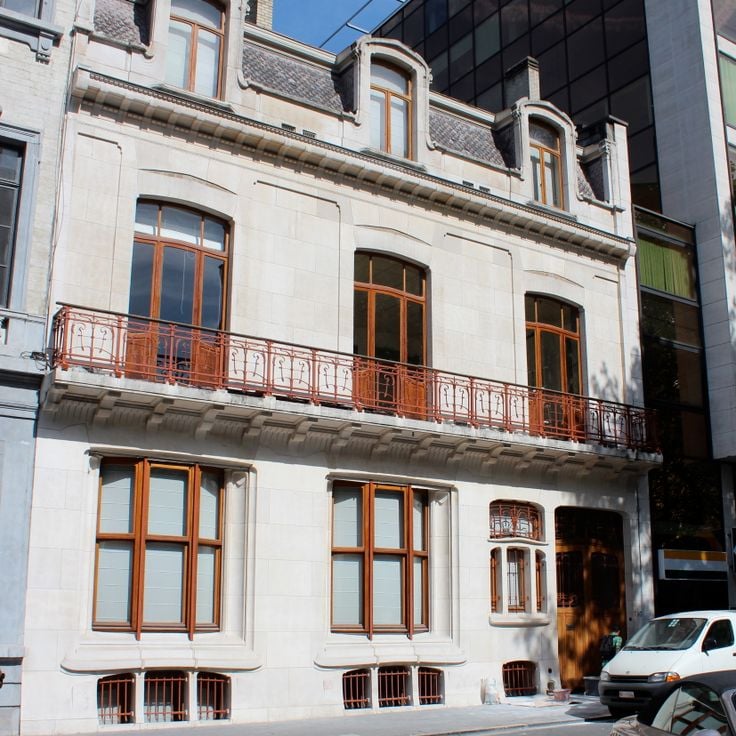
This private residence combines steel frameworks with large glass surfaces, demonstrating the application of industrial construction methods to domestic architecture around 1900. The Hôtel van Eetvelde exemplifies the use of metal structures and light transmitting materials characteristic of European architecture during this period. The organic lines and botanical elements of the facade integrate with the structural clarity of the load bearing framework, documenting the transition from traditional to modern building practices within the collection's timeframe.
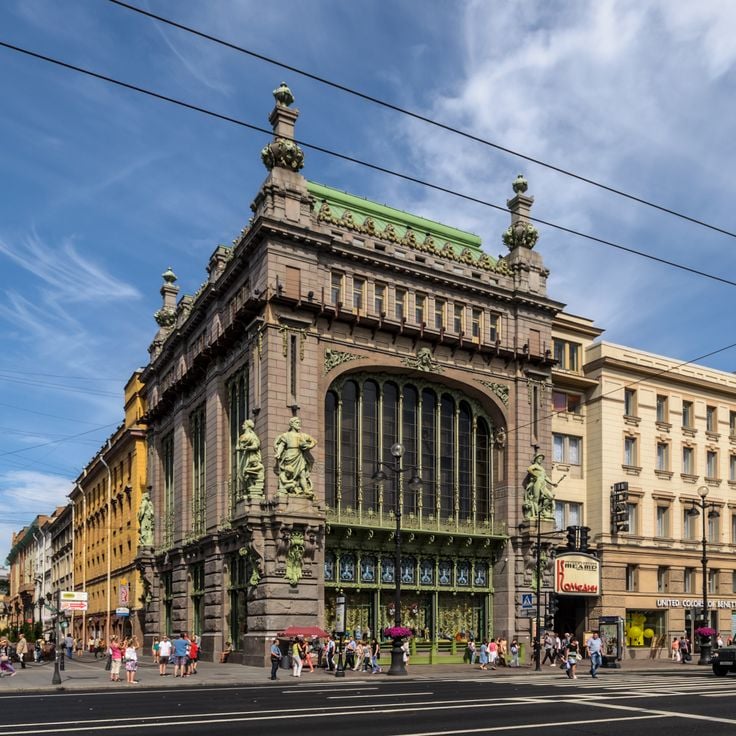
This 1902 department store displays gilded woodwork, cut glass and chandeliers throughout its interior, characteristic of the Art Nouveau period. The Eliseyev Emporium combines craft techniques with industrial production and represents one of the European examples of ornamental architecture from this era. The facade and interior fittings reflect the curved lines and decorative elements that emerged between 1890 and 1910.
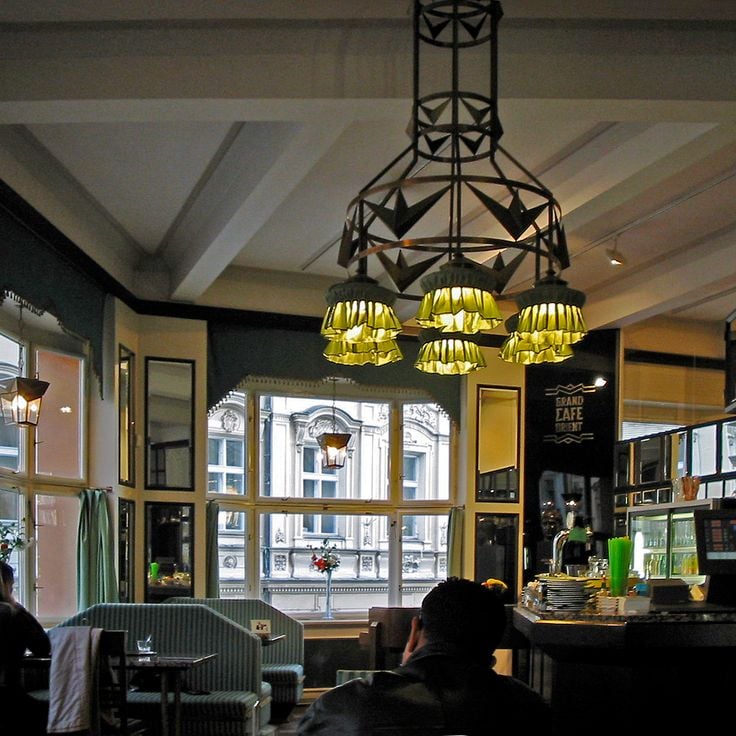
The Grand Café Orient in Prague is one of the few surviving examples of Cubist interior design from 1912 that extends the geometric principles of this movement into public spaces. The café displays angular forms in furniture, lighting fixtures, and wall treatments that break with the organic lines found in most Art Nouveau structures. This interior belongs to a small group of European spaces where Cubist aesthetics moved beyond painting into applied arts. The geometric compositions in chairs, tables, and lamps represent experimental directions in decorative arts during the 1910s.
This residential building in Brussels displays botanical ornaments and grain representations in stone and wrought iron that are characteristic of turn-of-the-century Art Nouveau architecture. The facade of the Wheat House combines detailed craft work with the industrial manufacturing techniques of the period and demonstrates the typical use of natural motifs in European architecture between 1890 and 1910.
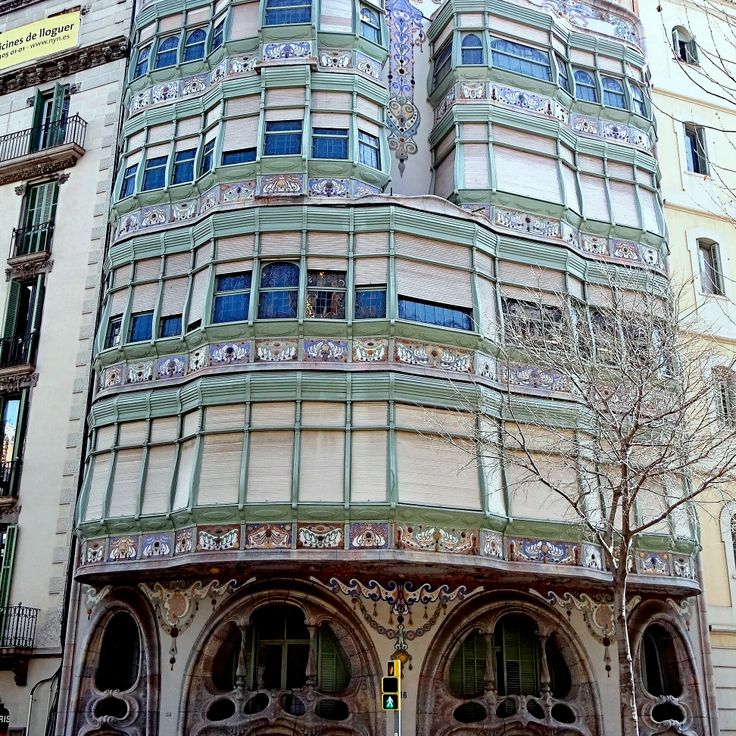
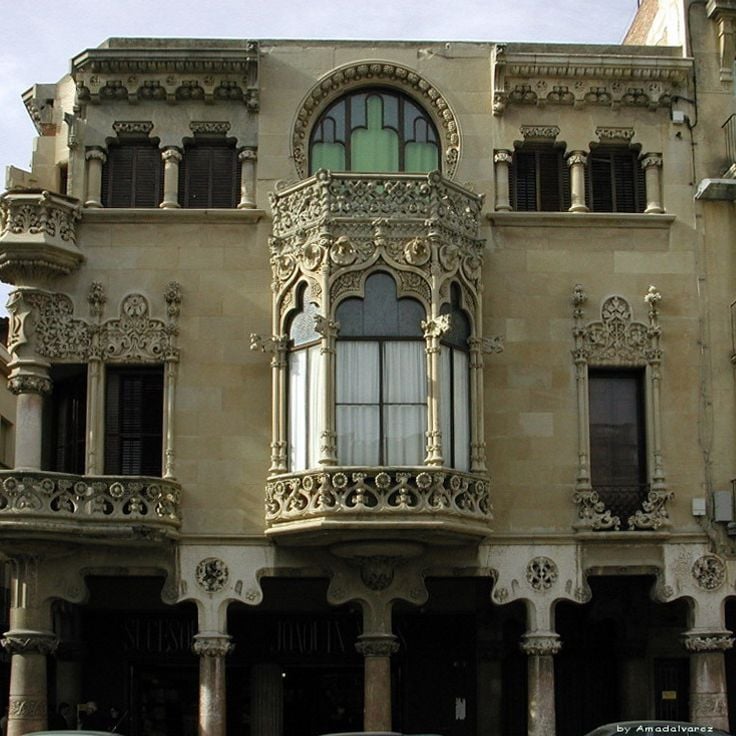
This residential building in Barcelona was completed in 1911 to designs by Salvador Valeri i Pupurull and displays curved forms and colored ceramic tiles on its facades. Casa Comalat combines craft tradition with the industrial capabilities of the period and belongs to the Art Nouveau structures built across Europe between 1890 and 1910. The architecture incorporates ornamental elements and natural motifs characteristic of the style. This building stands as an example of decorative facades and detailed work from the early 20th century.
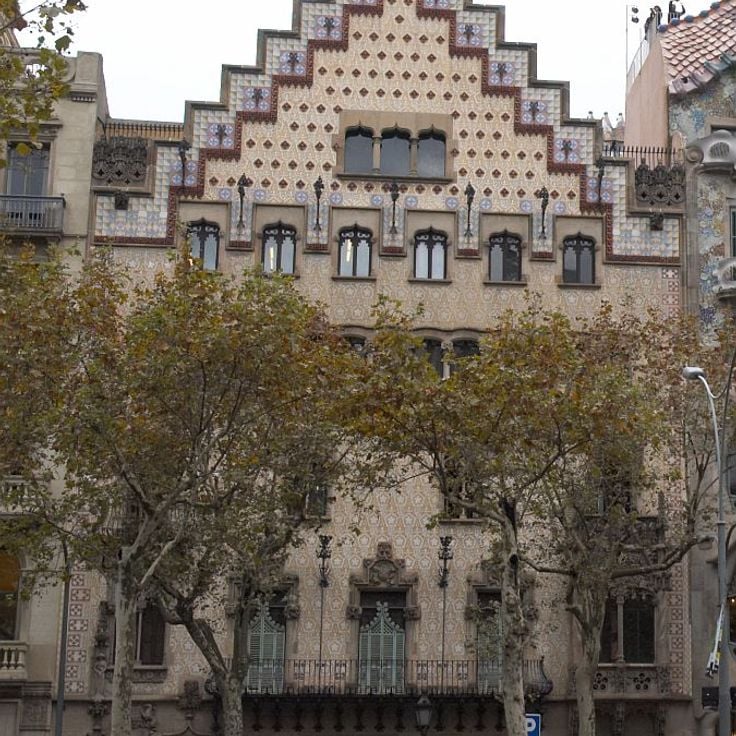
This Barcelona building was renovated in 1900 by Josep Puig i Cadafalch, combining Gothic elements with Art Nouveau ornamentation. The stone facade features floral motifs and sculptural details, while stained glass windows illuminate the interior spaces. The stepped gable references northern European architecture and stands out distinctly among neighboring houses along Passeig de Gràcia. Casa Amatller exemplifies the Catalan Modernisme movement, which merged craft traditions with industrial materials during the early twentieth century.
The Solvay House in Brussels was designed by Victor Horta in 1898 and stands as a significant example of Art Nouveau architecture in Europe. This townhouse features curved metalwork on its facade and intricate wood carvings that exemplify the movement's characteristics between 1890 and 1910. Horta combined craft traditions with industrial techniques, creating decorative elements that echo organic forms. The interior spaces employ wrought iron and various wood species to establish a cohesive design concept that reflects the approach of the period.
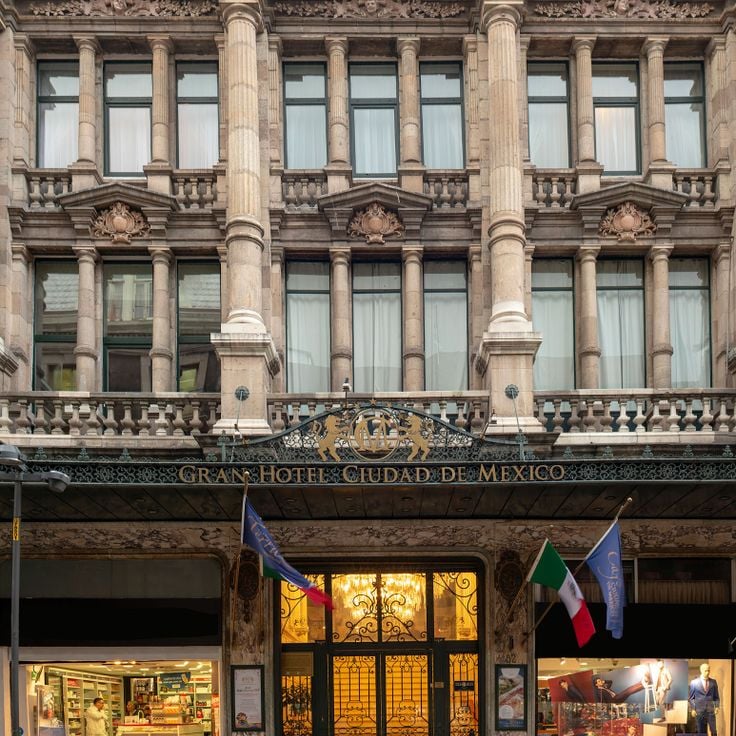
This hotel from 1899 features a Tiffany glass ceiling and metalwork in French Art Nouveau style. The Gran Hotel Ciudad de México combines European ornamental design with Mexican craft traditions and stands as one of the few examples of this architectural movement in Latin America. The curved lines, floral motifs and wrought iron detailing in the main stairwell follow design principles from the period between 1890 and 1910, while the construction incorporates local materials and techniques.
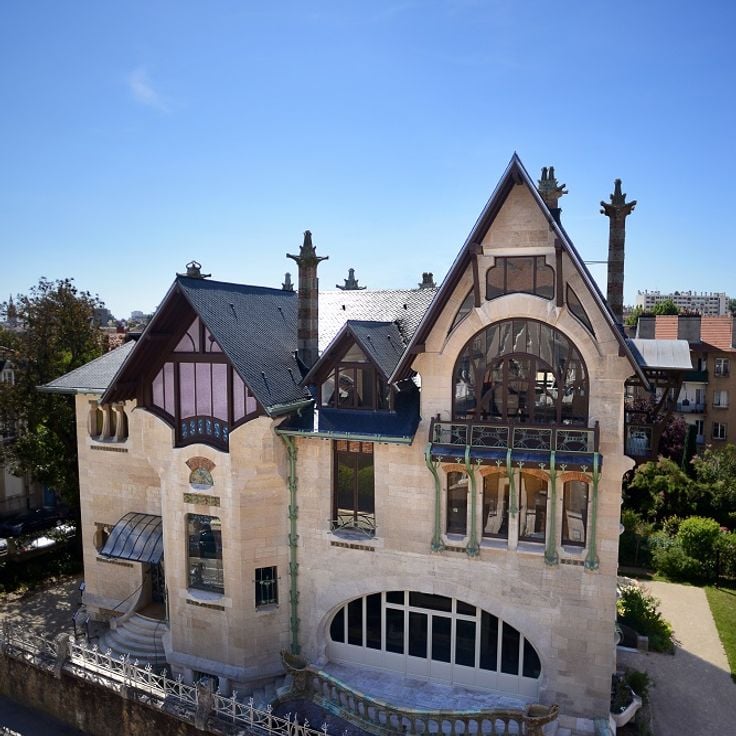
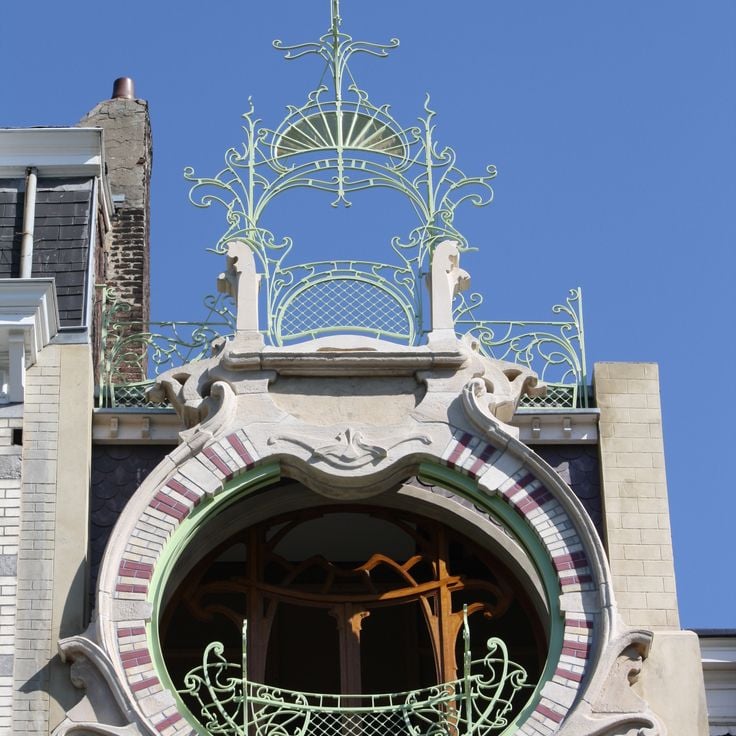
This 1901 residence demonstrates the connection between architecture and applied arts that defines Art Nouveau. Louis Majorelle designed the building as his personal home in Nancy and filled it with furniture from his own workshop. The facade displays floral motifs and curved lines, while the interior combines woodwork, glass windows and wrought iron elements. The house documents the integration of craft traditions and industrial production methods that Majorelle pursued in his work as a furniture designer and builder.
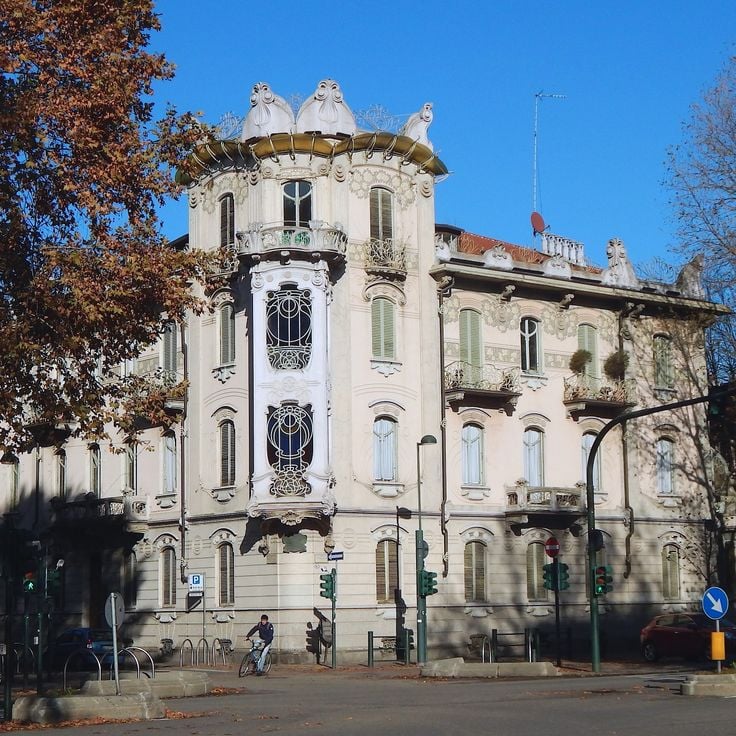
This 1902 residential building combines floral decorations with geometric patterns in its facades and interior design elements. Casa Fenoglio-Lafleur displays characteristic Art Nouveau features from the period between 1890 and 1910, with ornamental designs, curved lines, and natural motifs. The architecture merges craft traditions with industrial techniques of the era. Decorative facades, wrought iron details, and stained glass windows define this building's appearance in Turin.
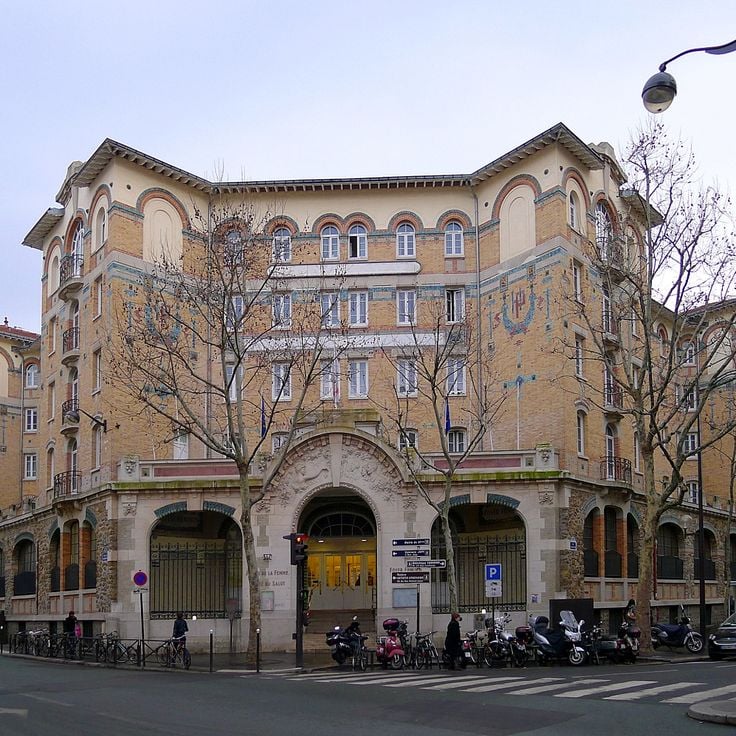
Palais de la Femme was built in 1903 in Paris as shelter and social facility for women in need. The ornate facade of this building displays curved metal and glass elements, stone carvings and decorative ironwork typical of Art Nouveau architecture in the early 1900s. The structure combines craft traditions with industrial manufacturing techniques and demonstrates the application of Art Nouveau design to functional urban buildings.
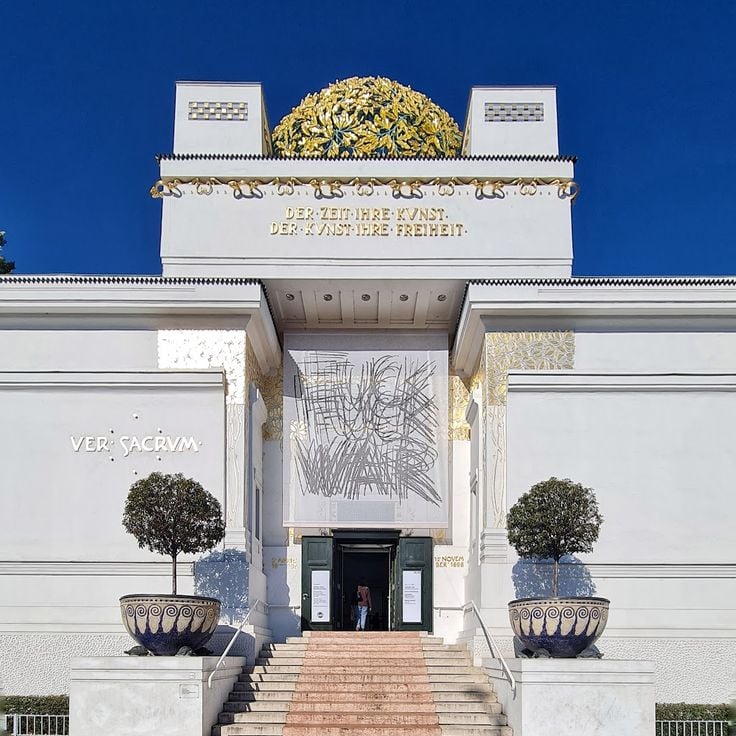
This exhibition hall completed in 1898 demonstrates the principles of European Art Nouveau architecture with its white cubic form and distinctive dome of gilded laurel leaves. The Secession Building incorporates the ornamental design and natural motifs characteristic of architecture from 1890 to 1910, combining traditional craft techniques with industrial production methods. The geometric clarity of the structure contrasts with the organic decoration of the cupola, reflecting the movement's integration of natural forms into modern architectural design. The building continues to serve its original function as a venue for contemporary art exhibitions.
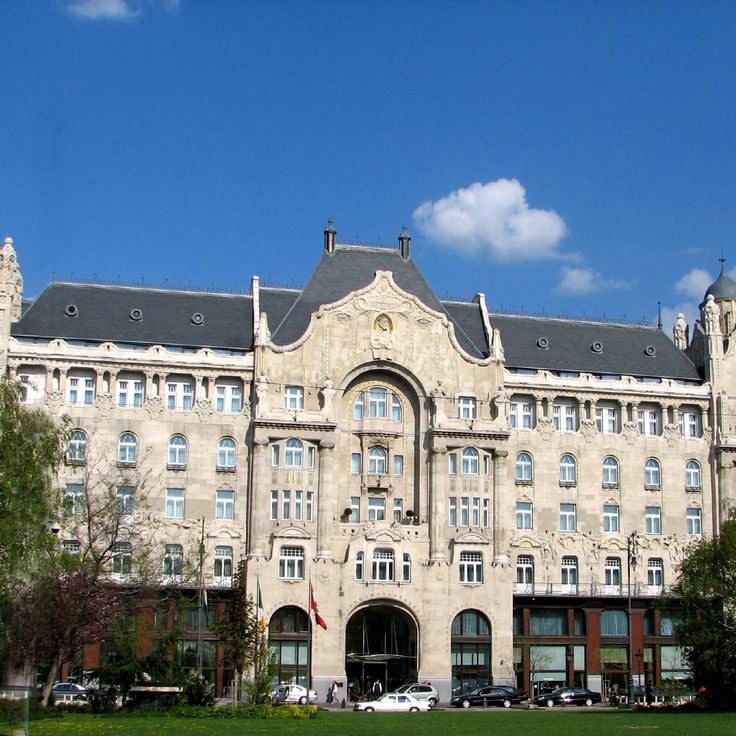
This palace was completed in 1907 as a luxury apartment building and represents the combination of craft traditions with industrial manufacturing techniques. The facade displays curved lines, wrought iron ornamental work, and glass mosaics. Now operating as a hotel, the Gresham Palace preserves decorative elements including stained glass windows by Miksa Róth and Zsolnay ceramics, typical of European Art Nouveau architecture from 1890 to 1910.
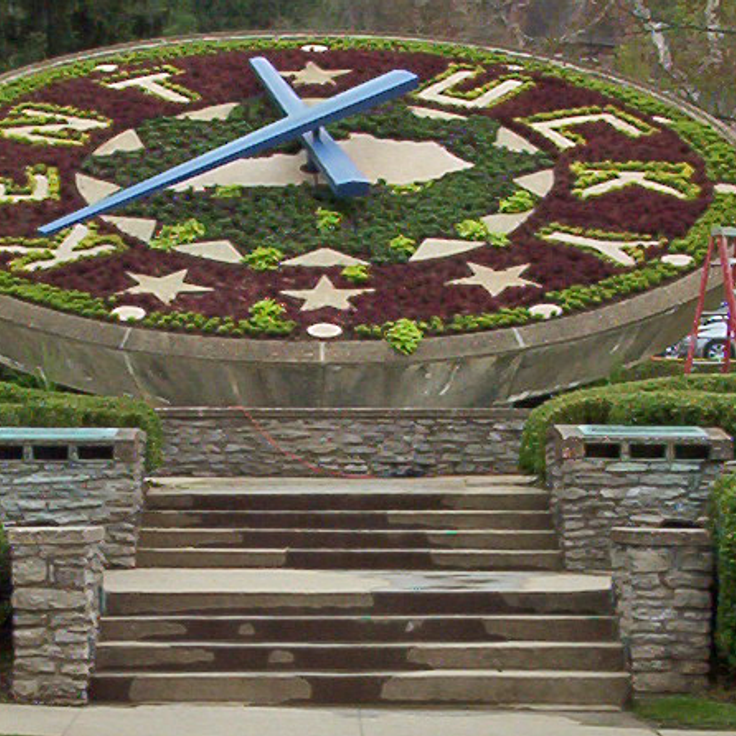
This floral clock in the heart of Nancy was created in the early 20th century, combining Art Nouveau ornamentation with functional timekeeping. The construction integrates plant motifs and decorative elements characteristic of the movement, demonstrating the application of the style to public urban furnishings. The monument reflects Nancy's role as one of the significant centers of Art Nouveau, where architects and craftspeople developed the style through various media and formats between 1890 and 1910.
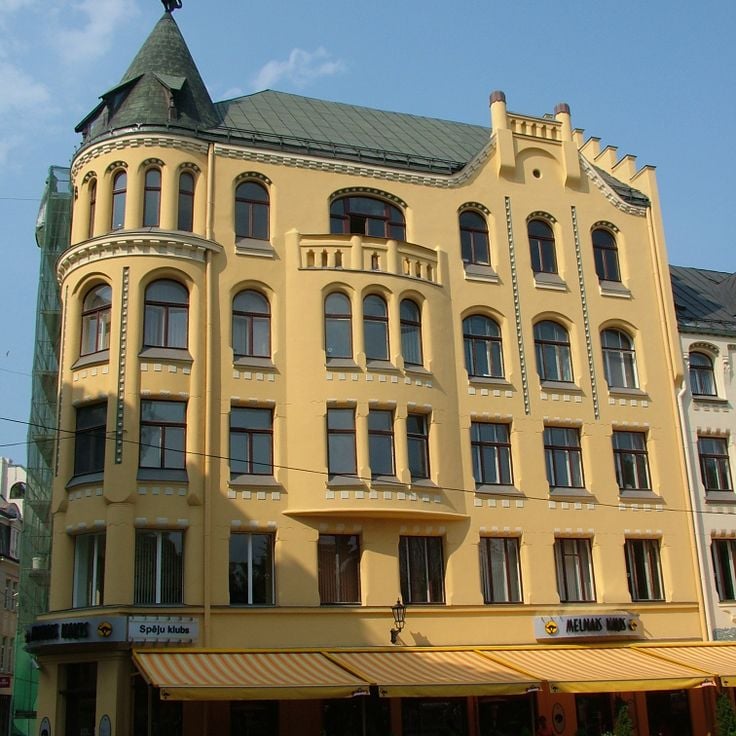
This Art Nouveau building in Riga's Old Town ranks among the city's most recognized structures and dates to 1909. The construction displays elaborate facade details, including sculptures of two black cats atop turrets that, according to legend, were originally positioned with their backs facing the neighboring Great Guild building. Architect Friedrich Scheffel designed the building for a wealthy Latvian merchant whose guild membership had been rejected. The yellow facade combines floral ornaments with geometric elements, while bay windows and wrought iron balconies demonstrate typical features of Baltic Art Nouveau. This structure forms part of the approximately 800 Art Nouveau buildings that define Riga's historic center.
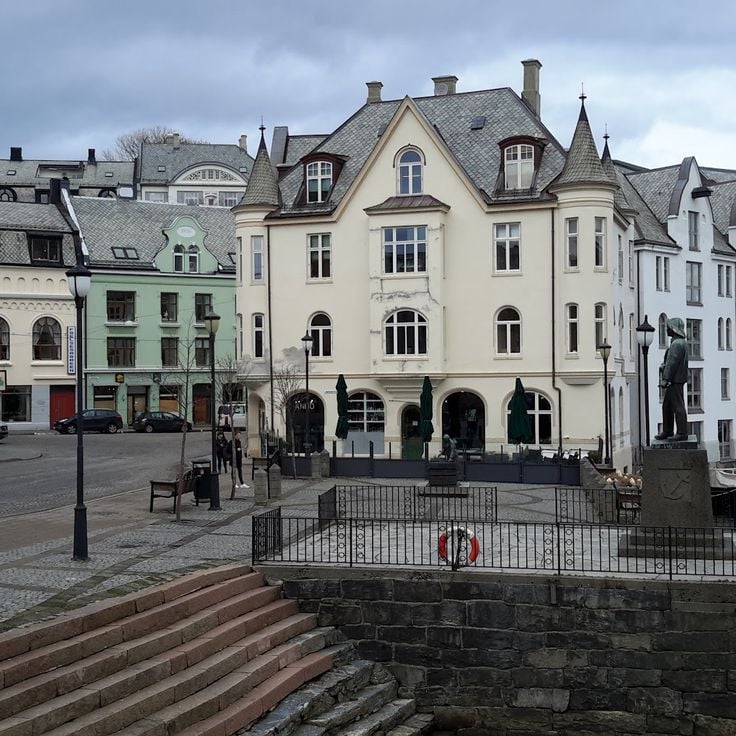
This former pharmacy building from 1907 now serves as a museum documenting Norwegian Art Nouveau and its role in Ålesund's reconstruction. After a devastating fire destroyed much of the city in 1904, Ålesund was rebuilt in the Art Nouveau style, with architects from across Europe contributing to the design. The Jugendstilsenteret preserves the original pharmacy interiors while presenting exhibitions on the decorative techniques, materials and craft traditions that shaped the city's reconstruction. The collection includes furniture, ceramics, textiles and architectural elements from the 1890 to 1910 period, illustrating the combination of traditional craftsmanship with industrial production methods that characterized Art Nouveau construction in Norway.
This city hall, designed in 1908 by Hungarian architects Marcell Komor and Dezső Jakab, demonstrates Art Nouveau principles through brick facades and ceramic roof tiles. The exterior features floral motifs and geometric patterns characteristic of the movement between 1890 and 1910. Decorative elements include majolica and colored ceramic details that merge craft traditions with industrial manufacturing capabilities of the period. The building represents the application of Art Nouveau design to municipal government architecture in Central Europe.
This residential building from 1900 demonstrates the defining characteristics of Art Nouveau architecture in Brussels through its facade adorned with floral motifs and the elaborate wrought iron elements on balconies and windows. The Green House combines traditional craft techniques with the design principles of the period, where organic forms and botanical ornaments integrate throughout the structure. The wrought iron work showcases the precision of Belgian metalworkers at the turn of the century, while the facade treatment reflects the era's prevailing emphasis on nature as a source of inspiration.
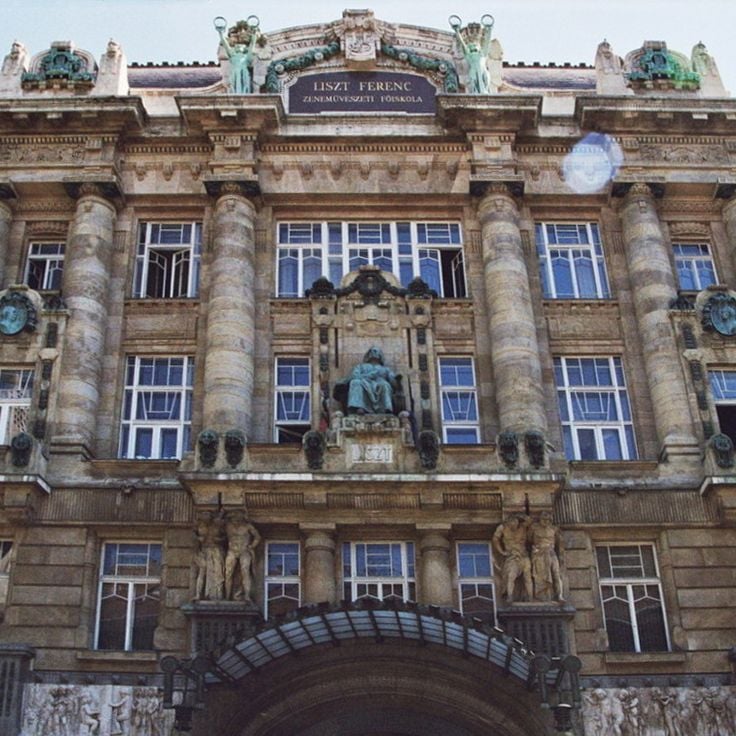
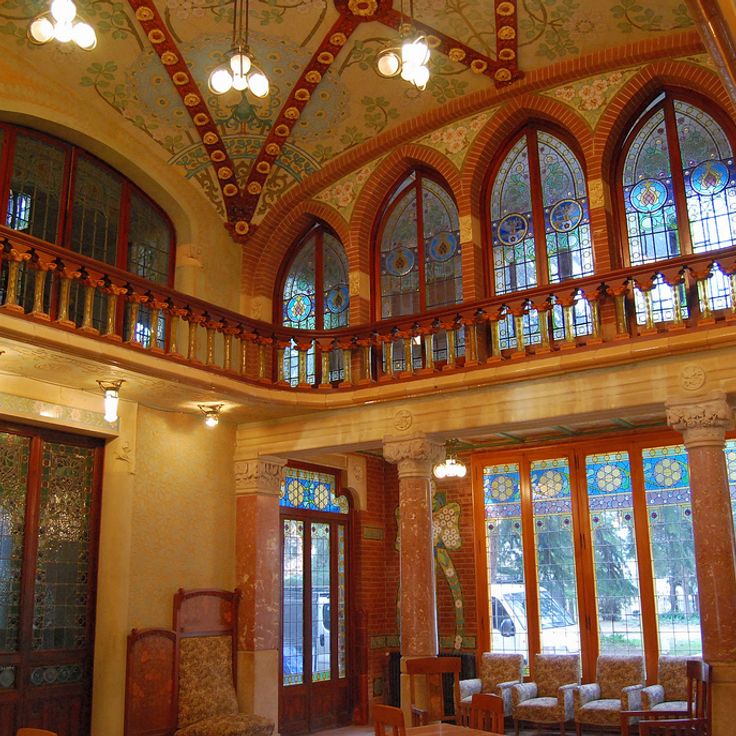
The Liszt Academy of Music combines the function of a concert hall with the characteristic design elements of Art Nouveau architecture from the period between 1890 and 1910. The main auditorium features stained glass windows, marble columns and gilded stucco ornamentation that demonstrate the meeting of craft traditions with industrial fabrication techniques. Completed in 1907, this Budapest building serves as both a training facility and performance venue for classical music.
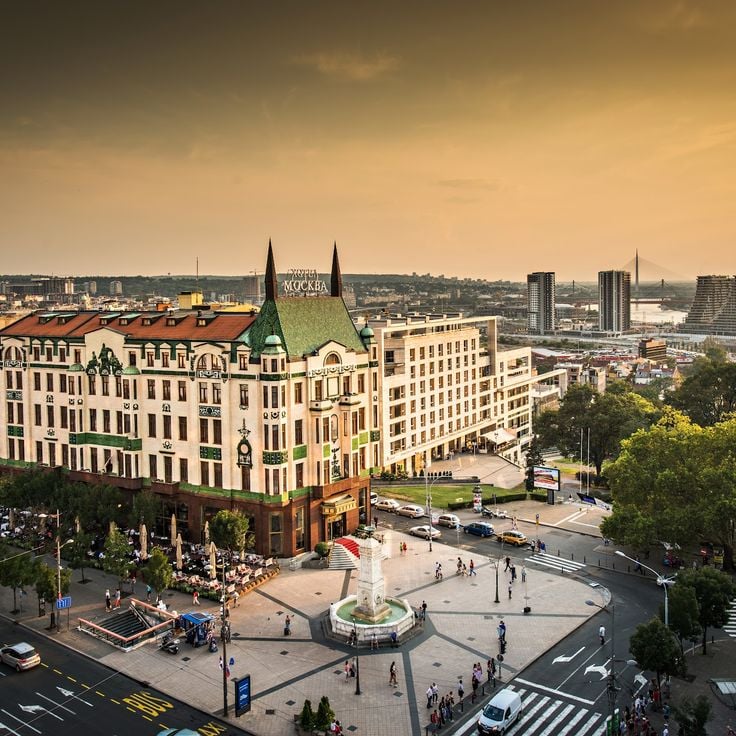
This hotel dates from 1906 and reflects Belgrade's expansion during the early twentieth century, combining Art Nouveau ornamentation with local architectural traditions. The green domes atop the corner pavilions create a recognizable silhouette in the cityscape, while geometric facade details demonstrate the era's characteristic formal vocabulary. Large glass windows on the ground floor establish transparency between interior and street, utilizing industrial production techniques of the period. The building stands at Terazije Square and documents Belgrade's architectural ambitions at the turn of the century.
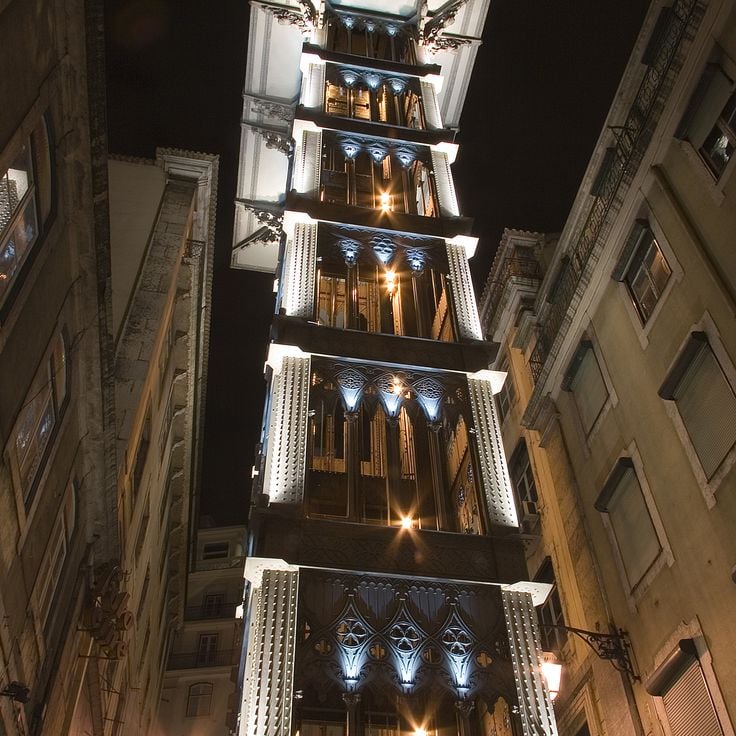
This neo-Gothic elevator built in 1902 connects Lisbon's lower town with the elevated Carmo district, representing the Portuguese variant of Art Nouveau architecture through its cast-iron lattice structure and geometric ornamental panels. Engineer Raoul Mesnier du Ponsard designed the 150-foot (45-meter) tower with two cabins that transport passengers through a vertical shaft and provide access to a viewing platform at the top level. The structure fits within the collection of European Art Nouveau buildings by combining industrial engineering with decorative wrought-iron elements, serving both as public transport and as an architectural landmark in the city.
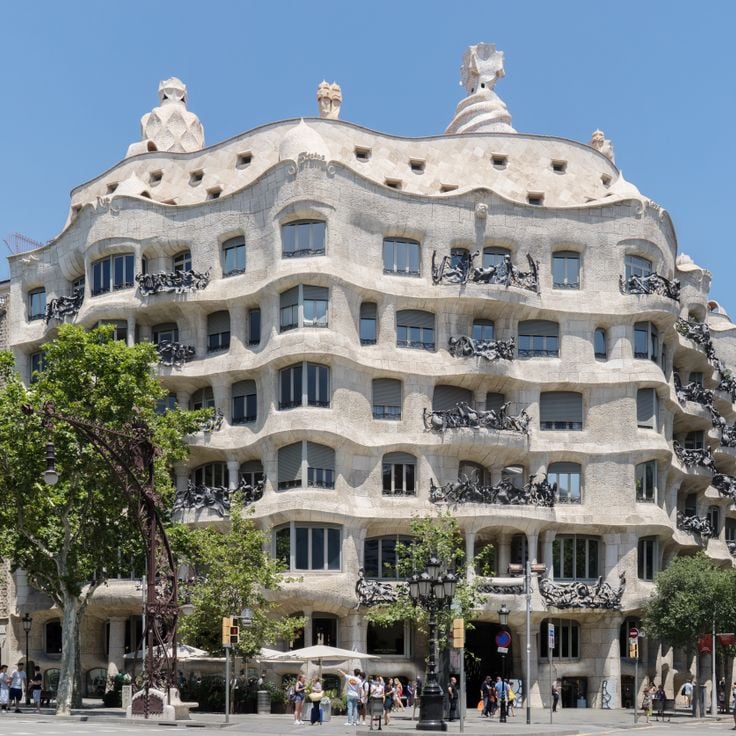
La Pedrera completes the survey of Art Nouveau development in Barcelona. This residential building in the Eixample district was constructed between 1906 and 1912 by Antoni Gaudí for Pere Milà and Roser Segimon. The undulating stone facade eliminates load-bearing walls in favor of a self-supporting structure with wrought iron balconies that reference organic forms. The roof level features sculptural chimneys and ventilation shafts, while interior courtyards channel natural light to the apartments. The building demonstrates Gaudí's departure from historical precedent through the integration of functionality and decorative elements into a cohesive whole.
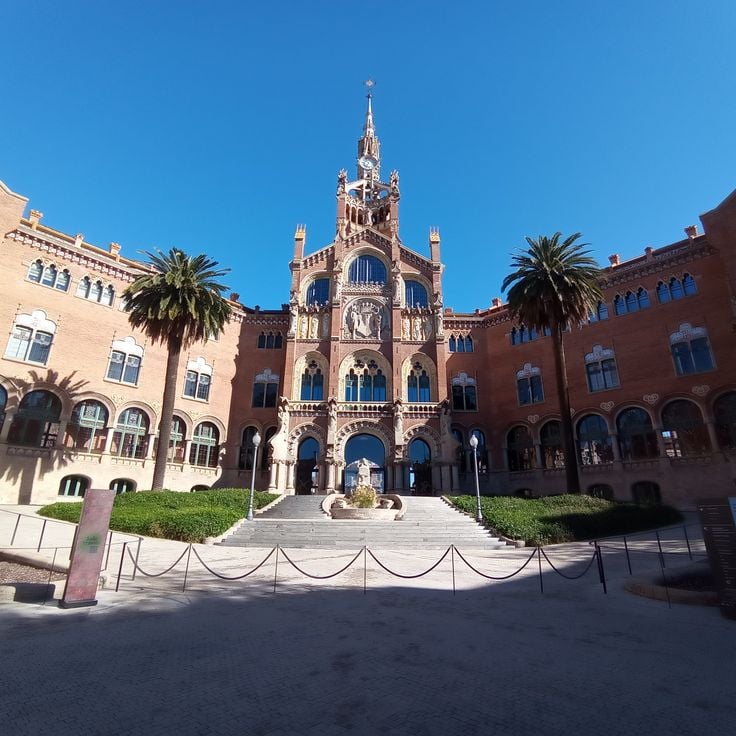
This hospital complex was built between 1902 and 1930 to designs by Lluís Domènech i Montaner as an expanded facility for the Hospital de la Santa Creu. The buildings display characteristic features of the Catalan Modernisme movement through colored ceramic work, ornamental brickwork, and sculptural details that incorporate organic forms drawn from nature. The Hospital de Sant Pau comprises more than a dozen pavilions connected by underground passages and arranged within a rectangular plan. The complex documents the application of Art Nouveau design principles to functional healthcare facilities in the early twentieth century and broadens the European range of this architectural approach to include a social building program. UNESCO inscribed the site on the World Heritage List in 1997. Visitors can tour the restored interiors, where mosaics, glass windows, and ironwork illustrate the design principles of the period.
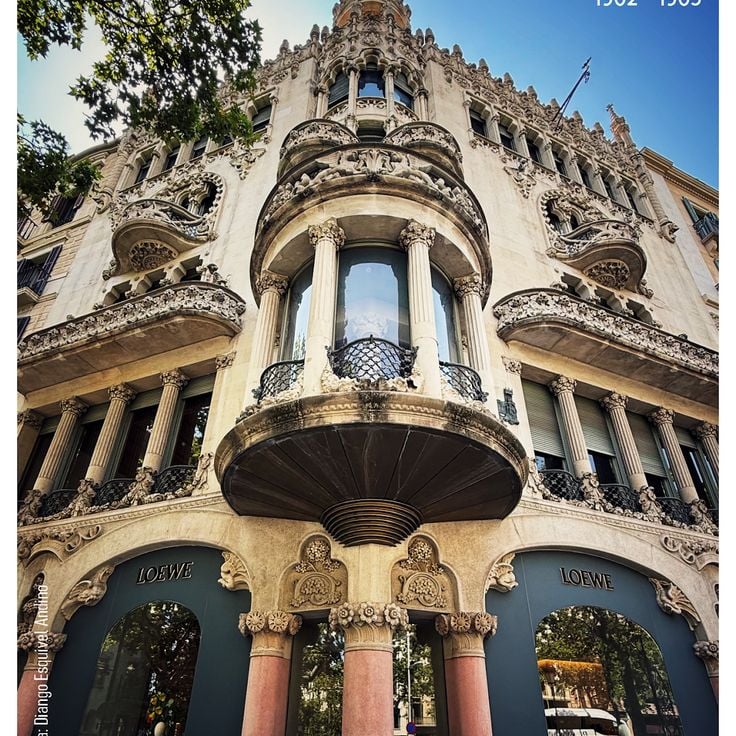
This residential building in Barcelona's Eixample district was remodeled between 1902 and 1906 to designs by Lluís Domènech i Montaner, representing the Catalan variant of Art Nouveau. The facade combines stonework with floral reliefs, colored ceramic tiles, and wrought iron balconies, while the ground floor accommodates commercial use. Casa Lleó Morera forms part of the concentration of modernist architecture along Passeig de Gràcia, together with Casa Batlló and Casa Amorós, documenting how architects in Barcelona merged craft traditions with new materials during this period of urban transformation across Europe.
This residence built between 1901 and 1908 illustrates the Catalan interpretation of Art Nouveau through its architect Lluís Domènech i Montaner, who combined mosaic facades, carved woodwork, and colored glass windows. Casa Navàs belongs to the broader European movement that merged craft traditions with industrial techniques, visible in the floral motifs extending throughout the interior and in the wrought iron elements and ceramic cladding of the exterior. The building demonstrates the departure from historical revival styles through organic lines and detailed ornamentation that reshaped urban landscapes across several European centers between 1890 and 1910.
This psychiatric hospital represents one of the most substantial Art Nouveau projects outside Barcelona. Lluís Domènech i Montaner designed the Institut Pere Mata between 1897 and 1919 as a pavilion complex connected by underground tunnels, reflecting contemporary approaches to mental health treatment. The campus demonstrates signature elements of the movement through polychrome ceramics, ironwork, patterned brickwork, and mosaic decoration. Several buildings carry sculptural ornamentation executed by Eusebi Arnau and other craftsmen. The institute stands as an example of how architects of the period developed functional structures that combined craft traditions with new spatial concepts, documenting the spread of Art Nouveau to Catalan cities beyond the capital.
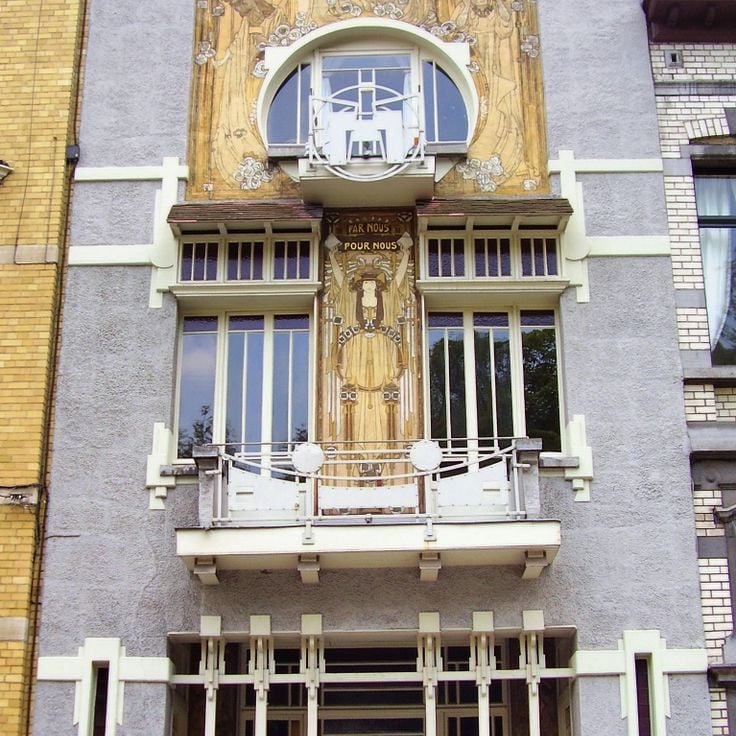
This house stands as a representative example of the Brussels Art Nouveau movement in Etterbeek, built in 1905 to designs by architect and painter Paul Cauchie. The facade displays large sgraffito decorations featuring floral motifs and stylized female figures that embody Cauchie's vision of the total artwork. The building combines residential and studio functions, documenting the connection between architecture and decorative arts characteristic of this collection of European Art Nouveau structures. Visitors today can tour the original interiors with their preserved furnishings and observe the integration of craft traditions and industrial techniques that architects including Victor Horta and Otto Wagner pursued across the continent between 1890 and 1910.
The Hôtel Max Hallet, designed by Victor Horta in 1903 for an industrialist on Avenue Louise, illustrates the evolution of his style through an asymmetric facade that combines stone cladding with wrought iron and curved lines. The principal staircase winds beneath a glass roof that channels natural light through several floors, while interior spaces feature mosaics, stained glass and custom furniture demonstrating Horta's approach to integrating structure and decoration. The building remains privately owned but represents the Belgian variant of the movement in a neighborhood that preserves several Art Nouveau townhouses from the same period.
This townhouse in Brussels' Squares Quarter represents Belgium's Art Nouveau heritage within the collection of European architecture from this movement. The de Saint-Cyr House was designed by Gustave Strauven in 1900 and presents wrought iron balconies, curved facade lines, and ornamental details that document the Belgian approach to combining craft techniques with the industrial capabilities available at the turn of the century. The narrow facade employs vertical elements and floral motifs characteristic of Strauven's work, demonstrating principles that architects such as Victor Horta developed in Brussels during the same period.
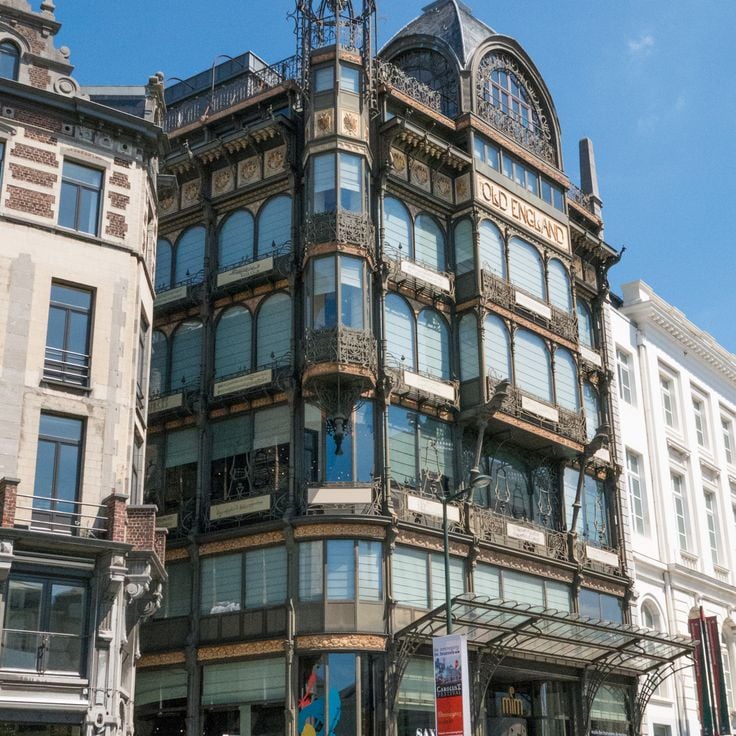
This museum houses more than 8,000 musical instruments spanning multiple eras and cultures, offering a collection that ranges from mechanical harpsichords to electronic synthesizer technology. The building from 1899 was designed by Paul Saintenoy and combines characteristic elements of Brussels Art Nouveau with functional exhibition spaces across several floors. The facade displays wrought iron grillwork and glass surfaces that reflect the design approach of the period. The Musical Instruments Museum complements the Brussels architecture of the movement, providing further context for the innovations that Victor Horta and his contemporaries developed during the same years.
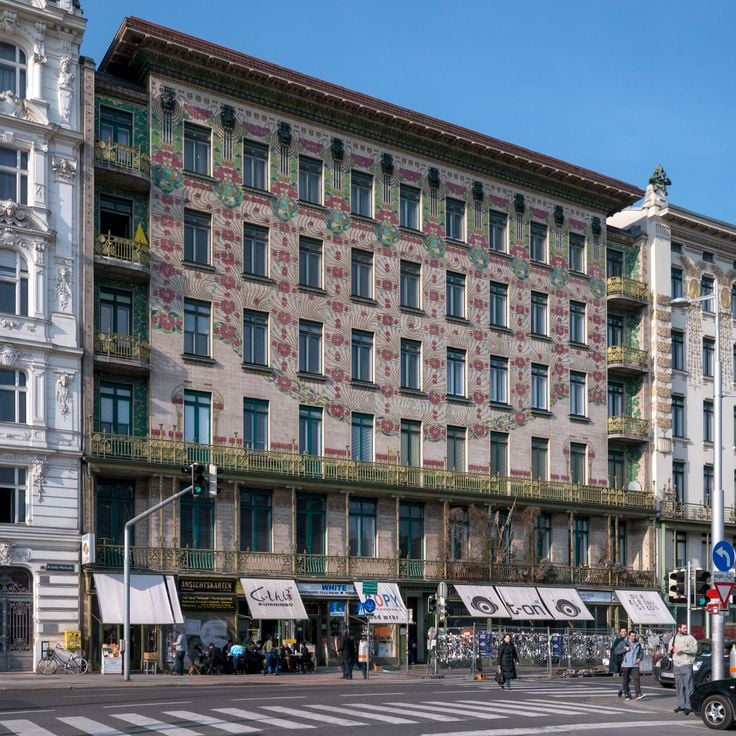
This residential building stands in Mariahilf and represents one of several Viennese structures documenting Otto Wagner's contribution to the architectural movement that spread across Europe between 1890 and 1910. The facade carries floral ceramic motifs that unite craft traditions with serial production methods. Wagner employed geometric clarity here and replaced stucco ornamentation with colored glazed tiles, marking a shift from historical revival styles toward modernism. The building complements the examples in this collection, which range from Horta's Brussels projects to Gaudí's Catalan work and the French and Hungarian variants, showing how the movement manifested in Vienna.
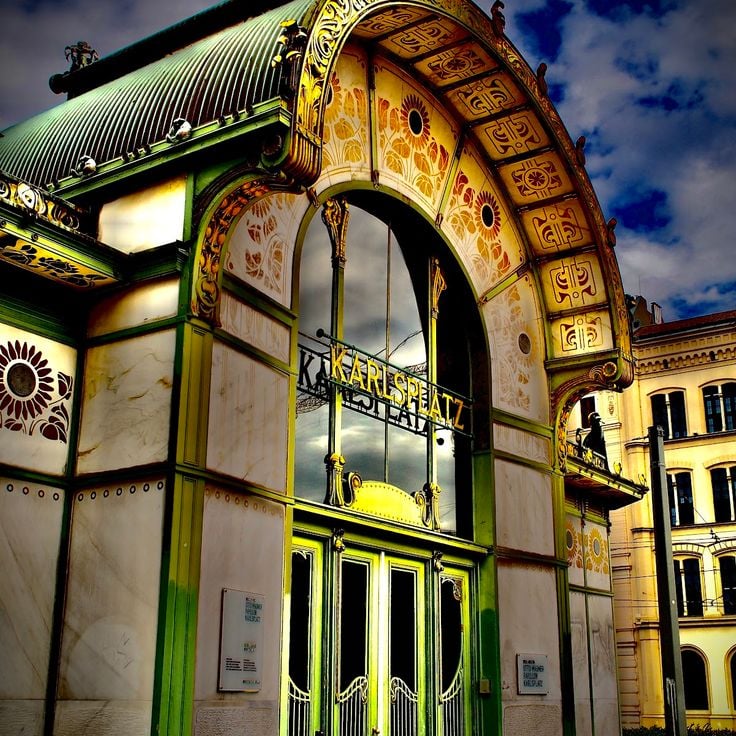
This station, completed by Otto Wagner in 1899, forms part of the collection of Art Nouveau architecture across Europe and demonstrates the Viennese variant of the style through its geometric forms and industrial materials. The building uses white marble panels held in place by gilded metal frames, with sunflower motifs incorporated into the facade. Wagner designed the station as part of his comprehensive plan for the Vienna Stadtbahn, combining technical function with ornamental detail. The station documents the shift from historical revival approaches to more modern building principles in turn-of-the-century Vienna.
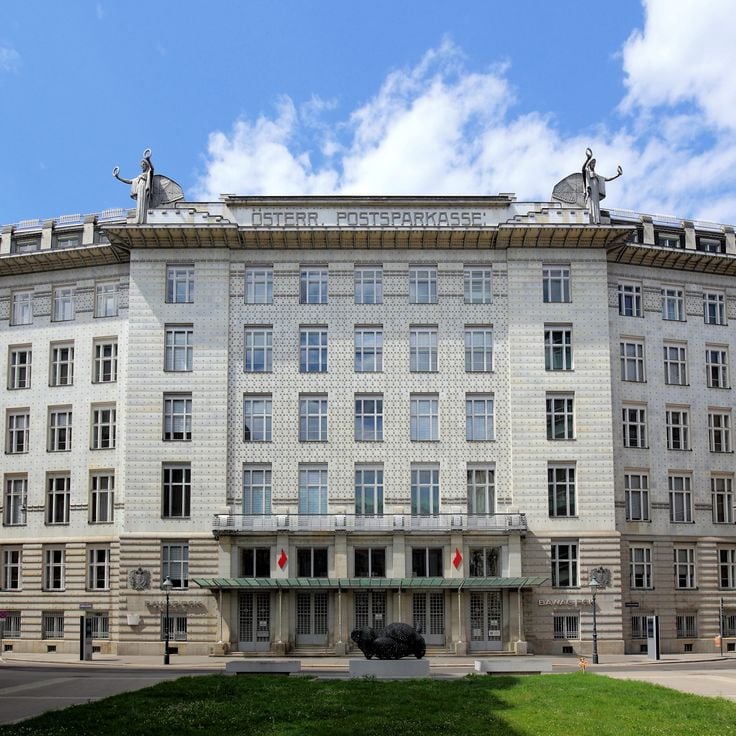
This savings bank embodies Otto Wagner's functional vision of Art Nouveau architecture in central Vienna. Built between 1904 and 1906, the structure combines steel construction with marble cladding and aluminum elements, using industrial materials to create a transparent, light-filled interior. The vaulted glass hall in the main banking room demonstrates Wagner's departure from historicist ornamentation toward structural clarity. The building illustrates how Art Nouveau architects merged commercial functions with new aesthetic principles and stands among Vienna's structures that document Wagner's influence on European modernism.
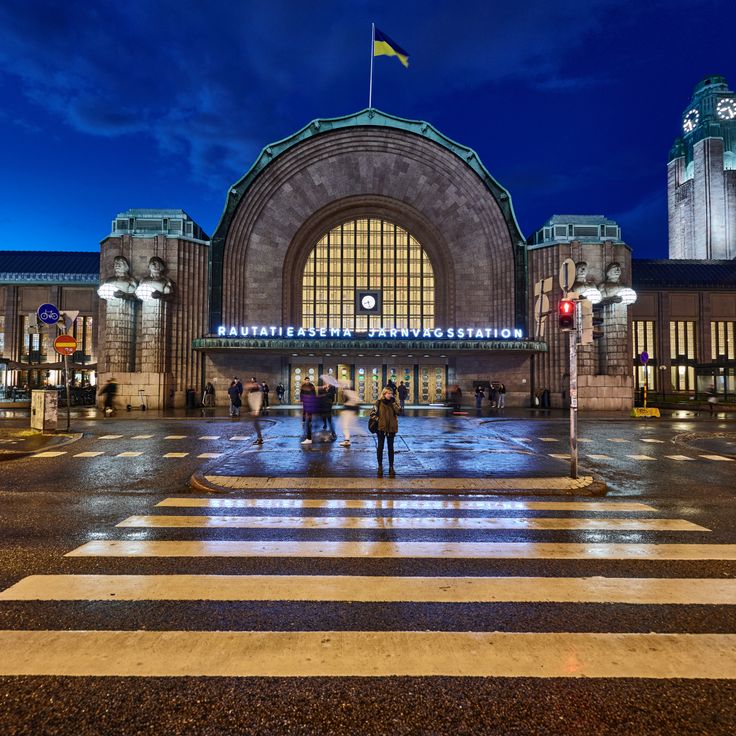
Helsinki Central Station, built between 1909 and 1919 to designs by Eliel Saarinen, represents a Nordic interpretation of Art Nouveau while marking a transition toward more functional architectural forms. The facade of Finnish granite is flanked by two pairs of monumental sculptures holding globe lamps, while the 160-foot (48-meter) clock tower dominates the cityscape. Inside, the waiting halls and platform areas combine traditional craftsmanship with industrial building materials such as steel and glass. This combination of massive stone architecture and organic decorative elements demonstrates how Finnish architects between 1890 and 1910 merged national building techniques with continental European currents, creating a structure that remains central to Helsinki's architectural identity.
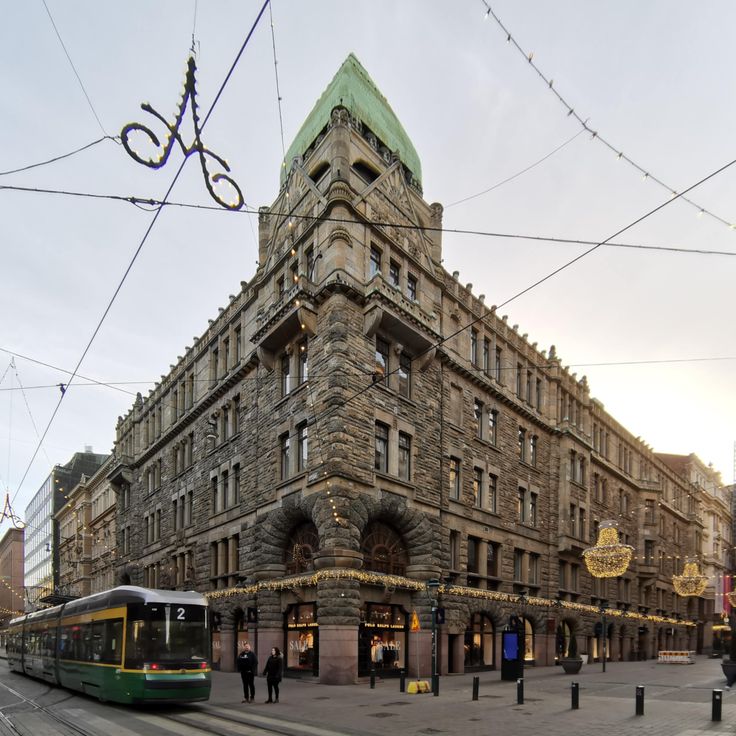
This office building in Helsinki's Kluuvi district was constructed between 1899 and 1901 by the architectural firm Gesellius, Lindgren and Saarinen as headquarters for the Pohjola Insurance Company. The facade combines Finnish granite with Art Nouveau ornamentation, including relief sculptures of bears and other Nordic motifs. The stonework displays geometric patterns alongside organic forms, while wrought iron elements at windows and entrances show the curved lines typical of the movement. As part of the National Romantic strand of Finnish architecture, the Pohjola building integrates local materials and symbolism into the broader European Art Nouveau development. The commission allowed the architects to develop a design vocabulary that would shape their subsequent work in Helsinki and internationally. The structure continues to serve as a commercial office today, documenting Helsinki's role in the European architectural transformation between 1890 and 1910.
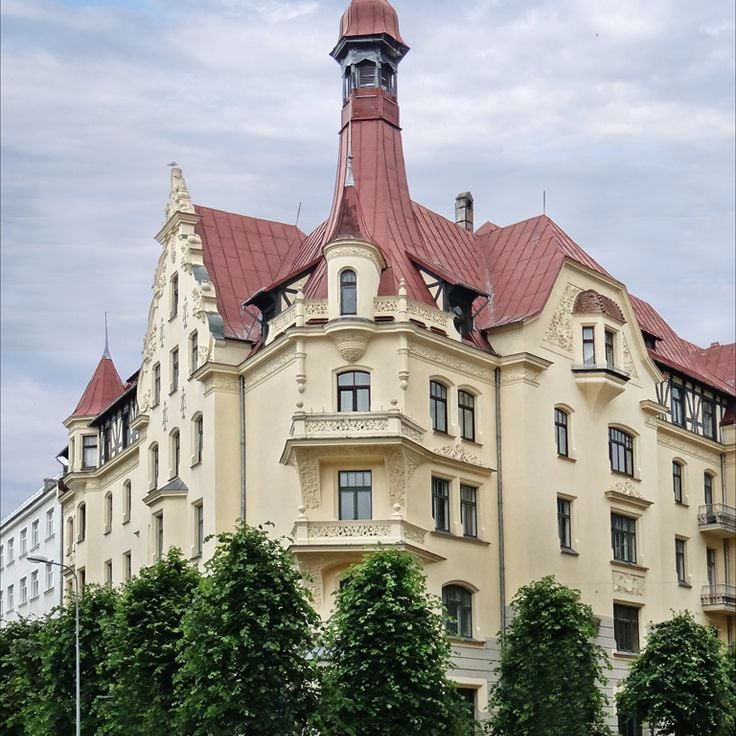
This Art Nouveau structure in Riga stands as a registered Latvian cultural monument and illustrates the movement's spread along the Baltic coast in the early twentieth century. The building embodies the facade work characteristic of Riga, with decorative ornament that places it within the architectural heritage that makes the Latvian capital one of the major centers of Art Nouveau in Northern Europe. Alberta iela 12 complements the collection of European Art Nouveau buildings by providing an example from a city where hundreds of such facades document the development of industrial construction techniques combined with detailed craft work.
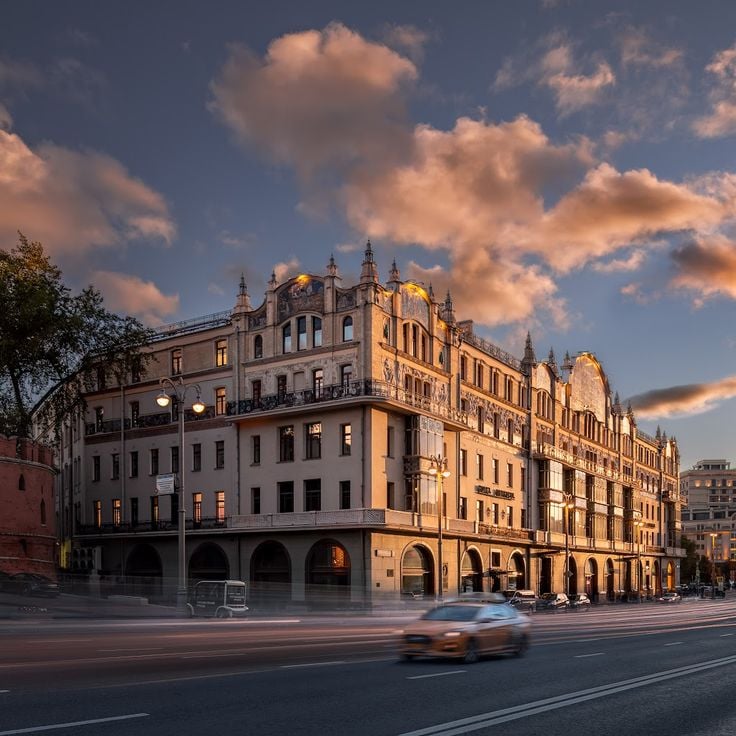
The Hotel Metropol was built between 1899 and 1905 in the Art Nouveau style and anchors central Moscow with its 46-meter (150-foot) ceramic facade. Designed by William Walcot, the building integrates traditional Russian mosaic work with Western European Art Nouveau elements in its ornamental details. The facade displays murals by Mikhail Vrubel and Alexander Golovin depicting mythological themes through glazed tiles. Inside, the hotel preserves its original wrought-iron railings, stained-glass windows and stucco work that document how the movement adapted to Moscow's architectural landscape.
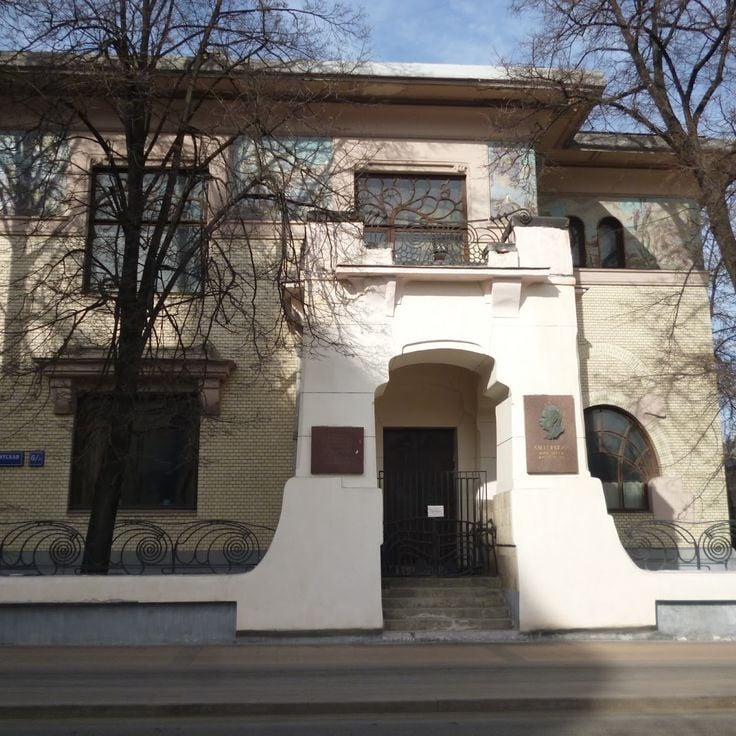
The Riabouchinski mansion demonstrates Russian Art Nouveau through its asymmetric facade, organic ornamentation and the curved marble staircase. Architect Fyodor Schechtel designed the building between 1900 and 1903 for banker Stepan Riabouchinski, integrating wrought iron work, stained glass windows and plant motifs throughout the interior and exterior spaces. The building documents the spread of Art Nouveau in pre-revolutionary Moscow and now serves as the Maxim Gorky Museum. The rooms preserve original wood paneling, ceramic tiles and decorative elements that illustrate the craftsmanship of this period between 1890 and 1910.
The Victor Horta Museum occupies the former home and studio that Belgian architect Victor Horta designed for himself between 1898 and 1901. The interiors display his characteristic curved lines, ironwork and deliberate use of light through glass skylights and windows. The museum documents Horta's influence on European architecture around 1900 and presents furniture, drawings and architectural details from his projects. The rooms demonstrate his approach to combining function with ornament.
These Paris Métro entrances, designed by Hector Guimard between 1900 and 1912, represent a defining feature of Art Nouveau architecture in the French capital. The entrances feature wrought iron constructions with organic forms that evoke plant stems and tendrils. Guimard developed several variations, including simple balustrades with distinctive lanterns and more elaborate pavilions with glass canopies. The green painted metalwork displays the curved lines and asymmetric details characteristic of Art Nouveau design. Approximately 140 of these entrances were originally installed, with around 80 still present today in various states of preservation, documenting the connection between public infrastructure and decorative arts at the turn of the 20th century.
The Municipal House in Prague is an example of Czech Art Nouveau architecture from the early 20th century, displaying ornamental designs, curved lines and natural motifs. The facade combines craft traditions with industrial techniques, featuring decorative elements and glasswork characteristic of the period between 1890 and 1910. This building houses a concert hall and restaurant where the decorative interiors reflect Art Nouveau principles.
This building on Passeig de Gràcia demonstrates Antoni Gaudí's interpretation of Art Nouveau through its organic facade of ceramic elements and undulating wrought iron balconies. Casa Batlló was remodeled between 1904 and 1906, combining craft traditions with industrial techniques in its structure and decoration. The interiors follow flowing lines with stained glass windows and natural motifs characteristic of the movement from 1890 to 1910. The roof with its ceramic tiles and the central light well demonstrate Gaudí's technical approach to natural illumination and ventilation within the historic city block.
This museum documents the work of the École de Nancy, an artists' association that produced furniture, glass, and ceramics between 1890 and 1914. The collection includes more than 200 objects, among them display cases by Jacques Grüber, vases by Émile Gallé, and furniture by Louis Majorelle. Opened in 1964, the museum occupies an early 20th-century residence and demonstrates the connection between craft traditions and industrial production that characterized the Nancy movement.
The Hôtel Tassel in Brussels stands as the first authentic building of Art Nouveau architecture. Architect Victor Horta designed this residence in 1893 with a fully realized application of the new style. The facade displays curved lines and ironwork details, while the interior features an open spatial structure with wrought iron elements and floral motifs. The staircase at the center of the house connects the rooms through a skylight that brings natural light to all floors. The building demonstrates the principles of Art Nouveau through its integration of architecture, decoration and craftsmanship into a unified whole.
Villa Demoiselle in Reims combines Art Nouveau architecture with the history of champagne production and now serves as a museum. Designed by Louis Süe in 1908, the building displays curved lines, floral ornamentation, and colored glass windows. The interior spaces present original furniture, ceramics, and paintings from around 1900. The villa connects the industrial tradition of champagne making with the decorative elements of Art Nouveau and offers insights into the domestic culture of wealthy industrial families during this period.
This Antoni Gaudí residential building from 1909 stands on a hill with historical significance in Catalan history. Bellesguard combines Gothic architecture with Art Nouveau elements, including a slender tower with ceramic cladding and Gaudí's characteristic parabolic arches. The facade displays stonework with geometric patterns, while the interiors feature handcrafted wrought iron work and stained glass windows that demonstrate the fusion of craft traditions with structural innovation.
This museum presents manuscripts, scores and personal belongings of Bedřich Smetana in a restored building along the Vltava River. The collection documents the life of the Czech composer who lived from 1824 to 1884. The structure, a former waterworks from the late 19th century, was converted in the 1920s. Exhibits trace Smetana's role in Czech national music. Visitors find materials related to his major works, including the symphonic poem Vltava. The building features Art Nouveau elements typical of Prague architecture from the period, including decorative facades and wrought iron details that complement the displayed artifacts.
This residential building from 1908 represents the Hungarian branch of the Art Nouveau movement and displays the characteristic curved forms and organic motifs of the period. The Blue House features a curved facade with ceramic tiles and floral decorations that combine traditional Hungarian craftsmanship with Art Nouveau design principles. The ceramic work reflects the widespread interest in natural motifs and decorative surfaces during this era. The building stands as an example of how Art Nouveau architecture adapted to local aesthetic traditions in Hungary during the first decade of the 20th century.
This concert hall was built in 1908 by Lluís Domènech i Montaner for the choral society Orfeó Català, combining wrought iron construction with richly decorated surfaces. The building displays characteristic features of Catalan Art Nouveau architecture through its glass roof that floods the main auditorium with natural light, along with mosaics and sculptures adorning the facades and interior spaces. The Palau de la Música Catalana represents the application of industrial construction techniques for ornamental purposes and remains an active concert venue in Barcelona.
This building constructed in Paris in 1901 presents a facade of ceramics and stonework characteristic of the movement. Jules Lavirotte designed the residential structure with plant ornaments, figural reliefs, and organic forms that combine craft techniques with industrially produced materials. The facade displays curved lines, floral motifs, and decorative wrought iron elements typical of the period from 1890 to 1910. The Lavirotte Building represents those European Art Nouveau structures that merged traditional craftsmanship with modern manufacturing methods.
This private residence combines steel frameworks with large glass surfaces, demonstrating the application of industrial construction methods to domestic architecture around 1900. The Hôtel van Eetvelde exemplifies the use of metal structures and light transmitting materials characteristic of European architecture during this period. The organic lines and botanical elements of the facade integrate with the structural clarity of the load bearing framework, documenting the transition from traditional to modern building practices within the collection's timeframe.
This 1902 department store displays gilded woodwork, cut glass and chandeliers throughout its interior, characteristic of the Art Nouveau period. The Eliseyev Emporium combines craft techniques with industrial production and represents one of the European examples of ornamental architecture from this era. The facade and interior fittings reflect the curved lines and decorative elements that emerged between 1890 and 1910.
The Grand Café Orient in Prague is one of the few surviving examples of Cubist interior design from 1912 that extends the geometric principles of this movement into public spaces. The café displays angular forms in furniture, lighting fixtures, and wall treatments that break with the organic lines found in most Art Nouveau structures. This interior belongs to a small group of European spaces where Cubist aesthetics moved beyond painting into applied arts. The geometric compositions in chairs, tables, and lamps represent experimental directions in decorative arts during the 1910s.
This residential building in Brussels displays botanical ornaments and grain representations in stone and wrought iron that are characteristic of turn-of-the-century Art Nouveau architecture. The facade of the Wheat House combines detailed craft work with the industrial manufacturing techniques of the period and demonstrates the typical use of natural motifs in European architecture between 1890 and 1910.
This residential building in Barcelona was completed in 1911 to designs by Salvador Valeri i Pupurull and displays curved forms and colored ceramic tiles on its facades. Casa Comalat combines craft tradition with the industrial capabilities of the period and belongs to the Art Nouveau structures built across Europe between 1890 and 1910. The architecture incorporates ornamental elements and natural motifs characteristic of the style. This building stands as an example of decorative facades and detailed work from the early 20th century.
This Barcelona building was renovated in 1900 by Josep Puig i Cadafalch, combining Gothic elements with Art Nouveau ornamentation. The stone facade features floral motifs and sculptural details, while stained glass windows illuminate the interior spaces. The stepped gable references northern European architecture and stands out distinctly among neighboring houses along Passeig de Gràcia. Casa Amatller exemplifies the Catalan Modernisme movement, which merged craft traditions with industrial materials during the early twentieth century.
The Solvay House in Brussels was designed by Victor Horta in 1898 and stands as a significant example of Art Nouveau architecture in Europe. This townhouse features curved metalwork on its facade and intricate wood carvings that exemplify the movement's characteristics between 1890 and 1910. Horta combined craft traditions with industrial techniques, creating decorative elements that echo organic forms. The interior spaces employ wrought iron and various wood species to establish a cohesive design concept that reflects the approach of the period.
This hotel from 1899 features a Tiffany glass ceiling and metalwork in French Art Nouveau style. The Gran Hotel Ciudad de México combines European ornamental design with Mexican craft traditions and stands as one of the few examples of this architectural movement in Latin America. The curved lines, floral motifs and wrought iron detailing in the main stairwell follow design principles from the period between 1890 and 1910, while the construction incorporates local materials and techniques.
This 1901 residence demonstrates the connection between architecture and applied arts that defines Art Nouveau. Louis Majorelle designed the building as his personal home in Nancy and filled it with furniture from his own workshop. The facade displays floral motifs and curved lines, while the interior combines woodwork, glass windows and wrought iron elements. The house documents the integration of craft traditions and industrial production methods that Majorelle pursued in his work as a furniture designer and builder.
This 1902 residential building combines floral decorations with geometric patterns in its facades and interior design elements. Casa Fenoglio-Lafleur displays characteristic Art Nouveau features from the period between 1890 and 1910, with ornamental designs, curved lines, and natural motifs. The architecture merges craft traditions with industrial techniques of the era. Decorative facades, wrought iron details, and stained glass windows define this building's appearance in Turin.
Palais de la Femme was built in 1903 in Paris as shelter and social facility for women in need. The ornate facade of this building displays curved metal and glass elements, stone carvings and decorative ironwork typical of Art Nouveau architecture in the early 1900s. The structure combines craft traditions with industrial manufacturing techniques and demonstrates the application of Art Nouveau design to functional urban buildings.
This exhibition hall completed in 1898 demonstrates the principles of European Art Nouveau architecture with its white cubic form and distinctive dome of gilded laurel leaves. The Secession Building incorporates the ornamental design and natural motifs characteristic of architecture from 1890 to 1910, combining traditional craft techniques with industrial production methods. The geometric clarity of the structure contrasts with the organic decoration of the cupola, reflecting the movement's integration of natural forms into modern architectural design. The building continues to serve its original function as a venue for contemporary art exhibitions.
This palace was completed in 1907 as a luxury apartment building and represents the combination of craft traditions with industrial manufacturing techniques. The facade displays curved lines, wrought iron ornamental work, and glass mosaics. Now operating as a hotel, the Gresham Palace preserves decorative elements including stained glass windows by Miksa Róth and Zsolnay ceramics, typical of European Art Nouveau architecture from 1890 to 1910.
This floral clock in the heart of Nancy was created in the early 20th century, combining Art Nouveau ornamentation with functional timekeeping. The construction integrates plant motifs and decorative elements characteristic of the movement, demonstrating the application of the style to public urban furnishings. The monument reflects Nancy's role as one of the significant centers of Art Nouveau, where architects and craftspeople developed the style through various media and formats between 1890 and 1910.
This Art Nouveau building in Riga's Old Town ranks among the city's most recognized structures and dates to 1909. The construction displays elaborate facade details, including sculptures of two black cats atop turrets that, according to legend, were originally positioned with their backs facing the neighboring Great Guild building. Architect Friedrich Scheffel designed the building for a wealthy Latvian merchant whose guild membership had been rejected. The yellow facade combines floral ornaments with geometric elements, while bay windows and wrought iron balconies demonstrate typical features of Baltic Art Nouveau. This structure forms part of the approximately 800 Art Nouveau buildings that define Riga's historic center.
This former pharmacy building from 1907 now serves as a museum documenting Norwegian Art Nouveau and its role in Ålesund's reconstruction. After a devastating fire destroyed much of the city in 1904, Ålesund was rebuilt in the Art Nouveau style, with architects from across Europe contributing to the design. The Jugendstilsenteret preserves the original pharmacy interiors while presenting exhibitions on the decorative techniques, materials and craft traditions that shaped the city's reconstruction. The collection includes furniture, ceramics, textiles and architectural elements from the 1890 to 1910 period, illustrating the combination of traditional craftsmanship with industrial production methods that characterized Art Nouveau construction in Norway.
This city hall, designed in 1908 by Hungarian architects Marcell Komor and Dezső Jakab, demonstrates Art Nouveau principles through brick facades and ceramic roof tiles. The exterior features floral motifs and geometric patterns characteristic of the movement between 1890 and 1910. Decorative elements include majolica and colored ceramic details that merge craft traditions with industrial manufacturing capabilities of the period. The building represents the application of Art Nouveau design to municipal government architecture in Central Europe.
This residential building from 1900 demonstrates the defining characteristics of Art Nouveau architecture in Brussels through its facade adorned with floral motifs and the elaborate wrought iron elements on balconies and windows. The Green House combines traditional craft techniques with the design principles of the period, where organic forms and botanical ornaments integrate throughout the structure. The wrought iron work showcases the precision of Belgian metalworkers at the turn of the century, while the facade treatment reflects the era's prevailing emphasis on nature as a source of inspiration.
The Liszt Academy of Music combines the function of a concert hall with the characteristic design elements of Art Nouveau architecture from the period between 1890 and 1910. The main auditorium features stained glass windows, marble columns and gilded stucco ornamentation that demonstrate the meeting of craft traditions with industrial fabrication techniques. Completed in 1907, this Budapest building serves as both a training facility and performance venue for classical music.
This hotel dates from 1906 and reflects Belgrade's expansion during the early twentieth century, combining Art Nouveau ornamentation with local architectural traditions. The green domes atop the corner pavilions create a recognizable silhouette in the cityscape, while geometric facade details demonstrate the era's characteristic formal vocabulary. Large glass windows on the ground floor establish transparency between interior and street, utilizing industrial production techniques of the period. The building stands at Terazije Square and documents Belgrade's architectural ambitions at the turn of the century.
This neo-Gothic elevator built in 1902 connects Lisbon's lower town with the elevated Carmo district, representing the Portuguese variant of Art Nouveau architecture through its cast-iron lattice structure and geometric ornamental panels. Engineer Raoul Mesnier du Ponsard designed the 150-foot (45-meter) tower with two cabins that transport passengers through a vertical shaft and provide access to a viewing platform at the top level. The structure fits within the collection of European Art Nouveau buildings by combining industrial engineering with decorative wrought-iron elements, serving both as public transport and as an architectural landmark in the city.
La Pedrera completes the survey of Art Nouveau development in Barcelona. This residential building in the Eixample district was constructed between 1906 and 1912 by Antoni Gaudí for Pere Milà and Roser Segimon. The undulating stone facade eliminates load-bearing walls in favor of a self-supporting structure with wrought iron balconies that reference organic forms. The roof level features sculptural chimneys and ventilation shafts, while interior courtyards channel natural light to the apartments. The building demonstrates Gaudí's departure from historical precedent through the integration of functionality and decorative elements into a cohesive whole.
This hospital complex was built between 1902 and 1930 to designs by Lluís Domènech i Montaner as an expanded facility for the Hospital de la Santa Creu. The buildings display characteristic features of the Catalan Modernisme movement through colored ceramic work, ornamental brickwork, and sculptural details that incorporate organic forms drawn from nature. The Hospital de Sant Pau comprises more than a dozen pavilions connected by underground passages and arranged within a rectangular plan. The complex documents the application of Art Nouveau design principles to functional healthcare facilities in the early twentieth century and broadens the European range of this architectural approach to include a social building program. UNESCO inscribed the site on the World Heritage List in 1997. Visitors can tour the restored interiors, where mosaics, glass windows, and ironwork illustrate the design principles of the period.
This residential building in Barcelona's Eixample district was remodeled between 1902 and 1906 to designs by Lluís Domènech i Montaner, representing the Catalan variant of Art Nouveau. The facade combines stonework with floral reliefs, colored ceramic tiles, and wrought iron balconies, while the ground floor accommodates commercial use. Casa Lleó Morera forms part of the concentration of modernist architecture along Passeig de Gràcia, together with Casa Batlló and Casa Amorós, documenting how architects in Barcelona merged craft traditions with new materials during this period of urban transformation across Europe.
This residence built between 1901 and 1908 illustrates the Catalan interpretation of Art Nouveau through its architect Lluís Domènech i Montaner, who combined mosaic facades, carved woodwork, and colored glass windows. Casa Navàs belongs to the broader European movement that merged craft traditions with industrial techniques, visible in the floral motifs extending throughout the interior and in the wrought iron elements and ceramic cladding of the exterior. The building demonstrates the departure from historical revival styles through organic lines and detailed ornamentation that reshaped urban landscapes across several European centers between 1890 and 1910.
This psychiatric hospital represents one of the most substantial Art Nouveau projects outside Barcelona. Lluís Domènech i Montaner designed the Institut Pere Mata between 1897 and 1919 as a pavilion complex connected by underground tunnels, reflecting contemporary approaches to mental health treatment. The campus demonstrates signature elements of the movement through polychrome ceramics, ironwork, patterned brickwork, and mosaic decoration. Several buildings carry sculptural ornamentation executed by Eusebi Arnau and other craftsmen. The institute stands as an example of how architects of the period developed functional structures that combined craft traditions with new spatial concepts, documenting the spread of Art Nouveau to Catalan cities beyond the capital.
This house stands as a representative example of the Brussels Art Nouveau movement in Etterbeek, built in 1905 to designs by architect and painter Paul Cauchie. The facade displays large sgraffito decorations featuring floral motifs and stylized female figures that embody Cauchie's vision of the total artwork. The building combines residential and studio functions, documenting the connection between architecture and decorative arts characteristic of this collection of European Art Nouveau structures. Visitors today can tour the original interiors with their preserved furnishings and observe the integration of craft traditions and industrial techniques that architects including Victor Horta and Otto Wagner pursued across the continent between 1890 and 1910.
The Hôtel Max Hallet, designed by Victor Horta in 1903 for an industrialist on Avenue Louise, illustrates the evolution of his style through an asymmetric facade that combines stone cladding with wrought iron and curved lines. The principal staircase winds beneath a glass roof that channels natural light through several floors, while interior spaces feature mosaics, stained glass and custom furniture demonstrating Horta's approach to integrating structure and decoration. The building remains privately owned but represents the Belgian variant of the movement in a neighborhood that preserves several Art Nouveau townhouses from the same period.
This townhouse in Brussels' Squares Quarter represents Belgium's Art Nouveau heritage within the collection of European architecture from this movement. The de Saint-Cyr House was designed by Gustave Strauven in 1900 and presents wrought iron balconies, curved facade lines, and ornamental details that document the Belgian approach to combining craft techniques with the industrial capabilities available at the turn of the century. The narrow facade employs vertical elements and floral motifs characteristic of Strauven's work, demonstrating principles that architects such as Victor Horta developed in Brussels during the same period.
This museum houses more than 8,000 musical instruments spanning multiple eras and cultures, offering a collection that ranges from mechanical harpsichords to electronic synthesizer technology. The building from 1899 was designed by Paul Saintenoy and combines characteristic elements of Brussels Art Nouveau with functional exhibition spaces across several floors. The facade displays wrought iron grillwork and glass surfaces that reflect the design approach of the period. The Musical Instruments Museum complements the Brussels architecture of the movement, providing further context for the innovations that Victor Horta and his contemporaries developed during the same years.
This residential building stands in Mariahilf and represents one of several Viennese structures documenting Otto Wagner's contribution to the architectural movement that spread across Europe between 1890 and 1910. The facade carries floral ceramic motifs that unite craft traditions with serial production methods. Wagner employed geometric clarity here and replaced stucco ornamentation with colored glazed tiles, marking a shift from historical revival styles toward modernism. The building complements the examples in this collection, which range from Horta's Brussels projects to Gaudí's Catalan work and the French and Hungarian variants, showing how the movement manifested in Vienna.
This station, completed by Otto Wagner in 1899, forms part of the collection of Art Nouveau architecture across Europe and demonstrates the Viennese variant of the style through its geometric forms and industrial materials. The building uses white marble panels held in place by gilded metal frames, with sunflower motifs incorporated into the facade. Wagner designed the station as part of his comprehensive plan for the Vienna Stadtbahn, combining technical function with ornamental detail. The station documents the shift from historical revival approaches to more modern building principles in turn-of-the-century Vienna.
This savings bank embodies Otto Wagner's functional vision of Art Nouveau architecture in central Vienna. Built between 1904 and 1906, the structure combines steel construction with marble cladding and aluminum elements, using industrial materials to create a transparent, light-filled interior. The vaulted glass hall in the main banking room demonstrates Wagner's departure from historicist ornamentation toward structural clarity. The building illustrates how Art Nouveau architects merged commercial functions with new aesthetic principles and stands among Vienna's structures that document Wagner's influence on European modernism.
Helsinki Central Station, built between 1909 and 1919 to designs by Eliel Saarinen, represents a Nordic interpretation of Art Nouveau while marking a transition toward more functional architectural forms. The facade of Finnish granite is flanked by two pairs of monumental sculptures holding globe lamps, while the 160-foot (48-meter) clock tower dominates the cityscape. Inside, the waiting halls and platform areas combine traditional craftsmanship with industrial building materials such as steel and glass. This combination of massive stone architecture and organic decorative elements demonstrates how Finnish architects between 1890 and 1910 merged national building techniques with continental European currents, creating a structure that remains central to Helsinki's architectural identity.
This office building in Helsinki's Kluuvi district was constructed between 1899 and 1901 by the architectural firm Gesellius, Lindgren and Saarinen as headquarters for the Pohjola Insurance Company. The facade combines Finnish granite with Art Nouveau ornamentation, including relief sculptures of bears and other Nordic motifs. The stonework displays geometric patterns alongside organic forms, while wrought iron elements at windows and entrances show the curved lines typical of the movement. As part of the National Romantic strand of Finnish architecture, the Pohjola building integrates local materials and symbolism into the broader European Art Nouveau development. The commission allowed the architects to develop a design vocabulary that would shape their subsequent work in Helsinki and internationally. The structure continues to serve as a commercial office today, documenting Helsinki's role in the European architectural transformation between 1890 and 1910.
This Art Nouveau structure in Riga stands as a registered Latvian cultural monument and illustrates the movement's spread along the Baltic coast in the early twentieth century. The building embodies the facade work characteristic of Riga, with decorative ornament that places it within the architectural heritage that makes the Latvian capital one of the major centers of Art Nouveau in Northern Europe. Alberta iela 12 complements the collection of European Art Nouveau buildings by providing an example from a city where hundreds of such facades document the development of industrial construction techniques combined with detailed craft work.
The Hotel Metropol was built between 1899 and 1905 in the Art Nouveau style and anchors central Moscow with its 46-meter (150-foot) ceramic facade. Designed by William Walcot, the building integrates traditional Russian mosaic work with Western European Art Nouveau elements in its ornamental details. The facade displays murals by Mikhail Vrubel and Alexander Golovin depicting mythological themes through glazed tiles. Inside, the hotel preserves its original wrought-iron railings, stained-glass windows and stucco work that document how the movement adapted to Moscow's architectural landscape.
The Riabouchinski mansion demonstrates Russian Art Nouveau through its asymmetric facade, organic ornamentation and the curved marble staircase. Architect Fyodor Schechtel designed the building between 1900 and 1903 for banker Stepan Riabouchinski, integrating wrought iron work, stained glass windows and plant motifs throughout the interior and exterior spaces. The building documents the spread of Art Nouveau in pre-revolutionary Moscow and now serves as the Maxim Gorky Museum. The rooms preserve original wood paneling, ceramic tiles and decorative elements that illustrate the craftsmanship of this period between 1890 and 1910.
The Victor Horta Museum occupies the former home and studio that Belgian architect Victor Horta designed for himself between 1898 and 1901. The interiors display his characteristic curved lines, ironwork and deliberate use of light through glass skylights and windows. The museum documents Horta's influence on European architecture around 1900 and presents furniture, drawings and architectural details from his projects. The rooms demonstrate his approach to combining function with ornament.
These Paris Métro entrances, designed by Hector Guimard between 1900 and 1912, represent a defining feature of Art Nouveau architecture in the French capital. The entrances feature wrought iron constructions with organic forms that evoke plant stems and tendrils. Guimard developed several variations, including simple balustrades with distinctive lanterns and more elaborate pavilions with glass canopies. The green painted metalwork displays the curved lines and asymmetric details characteristic of Art Nouveau design. Approximately 140 of these entrances were originally installed, with around 80 still present today in various states of preservation, documenting the connection between public infrastructure and decorative arts at the turn of the 20th century.
The Municipal House in Prague is an example of Czech Art Nouveau architecture from the early 20th century, displaying ornamental designs, curved lines and natural motifs. The facade combines craft traditions with industrial techniques, featuring decorative elements and glasswork characteristic of the period between 1890 and 1910. This building houses a concert hall and restaurant where the decorative interiors reflect Art Nouveau principles.
This building on Passeig de Gràcia demonstrates Antoni Gaudí's interpretation of Art Nouveau through its organic facade of ceramic elements and undulating wrought iron balconies. Casa Batlló was remodeled between 1904 and 1906, combining craft traditions with industrial techniques in its structure and decoration. The interiors follow flowing lines with stained glass windows and natural motifs characteristic of the movement from 1890 to 1910. The roof with its ceramic tiles and the central light well demonstrate Gaudí's technical approach to natural illumination and ventilation within the historic city block.
This museum documents the work of the École de Nancy, an artists' association that produced furniture, glass, and ceramics between 1890 and 1914. The collection includes more than 200 objects, among them display cases by Jacques Grüber, vases by Émile Gallé, and furniture by Louis Majorelle. Opened in 1964, the museum occupies an early 20th-century residence and demonstrates the connection between craft traditions and industrial production that characterized the Nancy movement.
The Hôtel Tassel in Brussels stands as the first authentic building of Art Nouveau architecture. Architect Victor Horta designed this residence in 1893 with a fully realized application of the new style. The facade displays curved lines and ironwork details, while the interior features an open spatial structure with wrought iron elements and floral motifs. The staircase at the center of the house connects the rooms through a skylight that brings natural light to all floors. The building demonstrates the principles of Art Nouveau through its integration of architecture, decoration and craftsmanship into a unified whole.
Villa Demoiselle in Reims combines Art Nouveau architecture with the history of champagne production and now serves as a museum. Designed by Louis Süe in 1908, the building displays curved lines, floral ornamentation, and colored glass windows. The interior spaces present original furniture, ceramics, and paintings from around 1900. The villa connects the industrial tradition of champagne making with the decorative elements of Art Nouveau and offers insights into the domestic culture of wealthy industrial families during this period.
This Antoni Gaudí residential building from 1909 stands on a hill with historical significance in Catalan history. Bellesguard combines Gothic architecture with Art Nouveau elements, including a slender tower with ceramic cladding and Gaudí's characteristic parabolic arches. The facade displays stonework with geometric patterns, while the interiors feature handcrafted wrought iron work and stained glass windows that demonstrate the fusion of craft traditions with structural innovation.
This museum presents manuscripts, scores and personal belongings of Bedřich Smetana in a restored building along the Vltava River. The collection documents the life of the Czech composer who lived from 1824 to 1884. The structure, a former waterworks from the late 19th century, was converted in the 1920s. Exhibits trace Smetana's role in Czech national music. Visitors find materials related to his major works, including the symphonic poem Vltava. The building features Art Nouveau elements typical of Prague architecture from the period, including decorative facades and wrought iron details that complement the displayed artifacts.
This residential building from 1908 represents the Hungarian branch of the Art Nouveau movement and displays the characteristic curved forms and organic motifs of the period. The Blue House features a curved facade with ceramic tiles and floral decorations that combine traditional Hungarian craftsmanship with Art Nouveau design principles. The ceramic work reflects the widespread interest in natural motifs and decorative surfaces during this era. The building stands as an example of how Art Nouveau architecture adapted to local aesthetic traditions in Hungary during the first decade of the 20th century.
This concert hall was built in 1908 by Lluís Domènech i Montaner for the choral society Orfeó Català, combining wrought iron construction with richly decorated surfaces. The building displays characteristic features of Catalan Art Nouveau architecture through its glass roof that floods the main auditorium with natural light, along with mosaics and sculptures adorning the facades and interior spaces. The Palau de la Música Catalana represents the application of industrial construction techniques for ornamental purposes and remains an active concert venue in Barcelona.
This building constructed in Paris in 1901 presents a facade of ceramics and stonework characteristic of the movement. Jules Lavirotte designed the residential structure with plant ornaments, figural reliefs, and organic forms that combine craft techniques with industrially produced materials. The facade displays curved lines, floral motifs, and decorative wrought iron elements typical of the period from 1890 to 1910. The Lavirotte Building represents those European Art Nouveau structures that merged traditional craftsmanship with modern manufacturing methods.
This private residence combines steel frameworks with large glass surfaces, demonstrating the application of industrial construction methods to domestic architecture around 1900. The Hôtel van Eetvelde exemplifies the use of metal structures and light transmitting materials characteristic of European architecture during this period. The organic lines and botanical elements of the facade integrate with the structural clarity of the load bearing framework, documenting the transition from traditional to modern building practices within the collection's timeframe.
This 1902 department store displays gilded woodwork, cut glass and chandeliers throughout its interior, characteristic of the Art Nouveau period. The Eliseyev Emporium combines craft techniques with industrial production and represents one of the European examples of ornamental architecture from this era. The facade and interior fittings reflect the curved lines and decorative elements that emerged between 1890 and 1910.
The Grand Café Orient in Prague is one of the few surviving examples of Cubist interior design from 1912 that extends the geometric principles of this movement into public spaces. The café displays angular forms in furniture, lighting fixtures, and wall treatments that break with the organic lines found in most Art Nouveau structures. This interior belongs to a small group of European spaces where Cubist aesthetics moved beyond painting into applied arts. The geometric compositions in chairs, tables, and lamps represent experimental directions in decorative arts during the 1910s.
This residential building in Brussels displays botanical ornaments and grain representations in stone and wrought iron that are characteristic of turn-of-the-century Art Nouveau architecture. The facade of the Wheat House combines detailed craft work with the industrial manufacturing techniques of the period and demonstrates the typical use of natural motifs in European architecture between 1890 and 1910.
This residential building in Barcelona was completed in 1911 to designs by Salvador Valeri i Pupurull and displays curved forms and colored ceramic tiles on its facades. Casa Comalat combines craft tradition with the industrial capabilities of the period and belongs to the Art Nouveau structures built across Europe between 1890 and 1910. The architecture incorporates ornamental elements and natural motifs characteristic of the style. This building stands as an example of decorative facades and detailed work from the early 20th century.
This Barcelona building was renovated in 1900 by Josep Puig i Cadafalch, combining Gothic elements with Art Nouveau ornamentation. The stone facade features floral motifs and sculptural details, while stained glass windows illuminate the interior spaces. The stepped gable references northern European architecture and stands out distinctly among neighboring houses along Passeig de Gràcia. Casa Amatller exemplifies the Catalan Modernisme movement, which merged craft traditions with industrial materials during the early twentieth century.
The Solvay House in Brussels was designed by Victor Horta in 1898 and stands as a significant example of Art Nouveau architecture in Europe. This townhouse features curved metalwork on its facade and intricate wood carvings that exemplify the movement's characteristics between 1890 and 1910. Horta combined craft traditions with industrial techniques, creating decorative elements that echo organic forms. The interior spaces employ wrought iron and various wood species to establish a cohesive design concept that reflects the approach of the period.
This hotel from 1899 features a Tiffany glass ceiling and metalwork in French Art Nouveau style. The Gran Hotel Ciudad de México combines European ornamental design with Mexican craft traditions and stands as one of the few examples of this architectural movement in Latin America. The curved lines, floral motifs and wrought iron detailing in the main stairwell follow design principles from the period between 1890 and 1910, while the construction incorporates local materials and techniques.
This 1901 residence demonstrates the connection between architecture and applied arts that defines Art Nouveau. Louis Majorelle designed the building as his personal home in Nancy and filled it with furniture from his own workshop. The facade displays floral motifs and curved lines, while the interior combines woodwork, glass windows and wrought iron elements. The house documents the integration of craft traditions and industrial production methods that Majorelle pursued in his work as a furniture designer and builder.
This 1902 residential building combines floral decorations with geometric patterns in its facades and interior design elements. Casa Fenoglio-Lafleur displays characteristic Art Nouveau features from the period between 1890 and 1910, with ornamental designs, curved lines, and natural motifs. The architecture merges craft traditions with industrial techniques of the era. Decorative facades, wrought iron details, and stained glass windows define this building's appearance in Turin.
Palais de la Femme was built in 1903 in Paris as shelter and social facility for women in need. The ornate facade of this building displays curved metal and glass elements, stone carvings and decorative ironwork typical of Art Nouveau architecture in the early 1900s. The structure combines craft traditions with industrial manufacturing techniques and demonstrates the application of Art Nouveau design to functional urban buildings.
This exhibition hall completed in 1898 demonstrates the principles of European Art Nouveau architecture with its white cubic form and distinctive dome of gilded laurel leaves. The Secession Building incorporates the ornamental design and natural motifs characteristic of architecture from 1890 to 1910, combining traditional craft techniques with industrial production methods. The geometric clarity of the structure contrasts with the organic decoration of the cupola, reflecting the movement's integration of natural forms into modern architectural design. The building continues to serve its original function as a venue for contemporary art exhibitions.
This palace was completed in 1907 as a luxury apartment building and represents the combination of craft traditions with industrial manufacturing techniques. The facade displays curved lines, wrought iron ornamental work, and glass mosaics. Now operating as a hotel, the Gresham Palace preserves decorative elements including stained glass windows by Miksa Róth and Zsolnay ceramics, typical of European Art Nouveau architecture from 1890 to 1910.
This floral clock in the heart of Nancy was created in the early 20th century, combining Art Nouveau ornamentation with functional timekeeping. The construction integrates plant motifs and decorative elements characteristic of the movement, demonstrating the application of the style to public urban furnishings. The monument reflects Nancy's role as one of the significant centers of Art Nouveau, where architects and craftspeople developed the style through various media and formats between 1890 and 1910.
This Art Nouveau building in Riga's Old Town ranks among the city's most recognized structures and dates to 1909. The construction displays elaborate facade details, including sculptures of two black cats atop turrets that, according to legend, were originally positioned with their backs facing the neighboring Great Guild building. Architect Friedrich Scheffel designed the building for a wealthy Latvian merchant whose guild membership had been rejected. The yellow facade combines floral ornaments with geometric elements, while bay windows and wrought iron balconies demonstrate typical features of Baltic Art Nouveau. This structure forms part of the approximately 800 Art Nouveau buildings that define Riga's historic center.
This former pharmacy building from 1907 now serves as a museum documenting Norwegian Art Nouveau and its role in Ålesund's reconstruction. After a devastating fire destroyed much of the city in 1904, Ålesund was rebuilt in the Art Nouveau style, with architects from across Europe contributing to the design. The Jugendstilsenteret preserves the original pharmacy interiors while presenting exhibitions on the decorative techniques, materials and craft traditions that shaped the city's reconstruction. The collection includes furniture, ceramics, textiles and architectural elements from the 1890 to 1910 period, illustrating the combination of traditional craftsmanship with industrial production methods that characterized Art Nouveau construction in Norway.
This city hall, designed in 1908 by Hungarian architects Marcell Komor and Dezső Jakab, demonstrates Art Nouveau principles through brick facades and ceramic roof tiles. The exterior features floral motifs and geometric patterns characteristic of the movement between 1890 and 1910. Decorative elements include majolica and colored ceramic details that merge craft traditions with industrial manufacturing capabilities of the period. The building represents the application of Art Nouveau design to municipal government architecture in Central Europe.
This residential building from 1900 demonstrates the defining characteristics of Art Nouveau architecture in Brussels through its facade adorned with floral motifs and the elaborate wrought iron elements on balconies and windows. The Green House combines traditional craft techniques with the design principles of the period, where organic forms and botanical ornaments integrate throughout the structure. The wrought iron work showcases the precision of Belgian metalworkers at the turn of the century, while the facade treatment reflects the era's prevailing emphasis on nature as a source of inspiration.
The Liszt Academy of Music combines the function of a concert hall with the characteristic design elements of Art Nouveau architecture from the period between 1890 and 1910. The main auditorium features stained glass windows, marble columns and gilded stucco ornamentation that demonstrate the meeting of craft traditions with industrial fabrication techniques. Completed in 1907, this Budapest building serves as both a training facility and performance venue for classical music.
This hotel dates from 1906 and reflects Belgrade's expansion during the early twentieth century, combining Art Nouveau ornamentation with local architectural traditions. The green domes atop the corner pavilions create a recognizable silhouette in the cityscape, while geometric facade details demonstrate the era's characteristic formal vocabulary. Large glass windows on the ground floor establish transparency between interior and street, utilizing industrial production techniques of the period. The building stands at Terazije Square and documents Belgrade's architectural ambitions at the turn of the century.
This neo-Gothic elevator built in 1902 connects Lisbon's lower town with the elevated Carmo district, representing the Portuguese variant of Art Nouveau architecture through its cast-iron lattice structure and geometric ornamental panels. Engineer Raoul Mesnier du Ponsard designed the 150-foot (45-meter) tower with two cabins that transport passengers through a vertical shaft and provide access to a viewing platform at the top level. The structure fits within the collection of European Art Nouveau buildings by combining industrial engineering with decorative wrought-iron elements, serving both as public transport and as an architectural landmark in the city.
La Pedrera completes the survey of Art Nouveau development in Barcelona. This residential building in the Eixample district was constructed between 1906 and 1912 by Antoni Gaudí for Pere Milà and Roser Segimon. The undulating stone facade eliminates load-bearing walls in favor of a self-supporting structure with wrought iron balconies that reference organic forms. The roof level features sculptural chimneys and ventilation shafts, while interior courtyards channel natural light to the apartments. The building demonstrates Gaudí's departure from historical precedent through the integration of functionality and decorative elements into a cohesive whole.
This hospital complex was built between 1902 and 1930 to designs by Lluís Domènech i Montaner as an expanded facility for the Hospital de la Santa Creu. The buildings display characteristic features of the Catalan Modernisme movement through colored ceramic work, ornamental brickwork, and sculptural details that incorporate organic forms drawn from nature. The Hospital de Sant Pau comprises more than a dozen pavilions connected by underground passages and arranged within a rectangular plan. The complex documents the application of Art Nouveau design principles to functional healthcare facilities in the early twentieth century and broadens the European range of this architectural approach to include a social building program. UNESCO inscribed the site on the World Heritage List in 1997. Visitors can tour the restored interiors, where mosaics, glass windows, and ironwork illustrate the design principles of the period.
This residential building in Barcelona's Eixample district was remodeled between 1902 and 1906 to designs by Lluís Domènech i Montaner, representing the Catalan variant of Art Nouveau. The facade combines stonework with floral reliefs, colored ceramic tiles, and wrought iron balconies, while the ground floor accommodates commercial use. Casa Lleó Morera forms part of the concentration of modernist architecture along Passeig de Gràcia, together with Casa Batlló and Casa Amorós, documenting how architects in Barcelona merged craft traditions with new materials during this period of urban transformation across Europe.
This residence built between 1901 and 1908 illustrates the Catalan interpretation of Art Nouveau through its architect Lluís Domènech i Montaner, who combined mosaic facades, carved woodwork, and colored glass windows. Casa Navàs belongs to the broader European movement that merged craft traditions with industrial techniques, visible in the floral motifs extending throughout the interior and in the wrought iron elements and ceramic cladding of the exterior. The building demonstrates the departure from historical revival styles through organic lines and detailed ornamentation that reshaped urban landscapes across several European centers between 1890 and 1910.
This psychiatric hospital represents one of the most substantial Art Nouveau projects outside Barcelona. Lluís Domènech i Montaner designed the Institut Pere Mata between 1897 and 1919 as a pavilion complex connected by underground tunnels, reflecting contemporary approaches to mental health treatment. The campus demonstrates signature elements of the movement through polychrome ceramics, ironwork, patterned brickwork, and mosaic decoration. Several buildings carry sculptural ornamentation executed by Eusebi Arnau and other craftsmen. The institute stands as an example of how architects of the period developed functional structures that combined craft traditions with new spatial concepts, documenting the spread of Art Nouveau to Catalan cities beyond the capital.
This house stands as a representative example of the Brussels Art Nouveau movement in Etterbeek, built in 1905 to designs by architect and painter Paul Cauchie. The facade displays large sgraffito decorations featuring floral motifs and stylized female figures that embody Cauchie's vision of the total artwork. The building combines residential and studio functions, documenting the connection between architecture and decorative arts characteristic of this collection of European Art Nouveau structures. Visitors today can tour the original interiors with their preserved furnishings and observe the integration of craft traditions and industrial techniques that architects including Victor Horta and Otto Wagner pursued across the continent between 1890 and 1910.
The Hôtel Max Hallet, designed by Victor Horta in 1903 for an industrialist on Avenue Louise, illustrates the evolution of his style through an asymmetric facade that combines stone cladding with wrought iron and curved lines. The principal staircase winds beneath a glass roof that channels natural light through several floors, while interior spaces feature mosaics, stained glass and custom furniture demonstrating Horta's approach to integrating structure and decoration. The building remains privately owned but represents the Belgian variant of the movement in a neighborhood that preserves several Art Nouveau townhouses from the same period.
This townhouse in Brussels' Squares Quarter represents Belgium's Art Nouveau heritage within the collection of European architecture from this movement. The de Saint-Cyr House was designed by Gustave Strauven in 1900 and presents wrought iron balconies, curved facade lines, and ornamental details that document the Belgian approach to combining craft techniques with the industrial capabilities available at the turn of the century. The narrow facade employs vertical elements and floral motifs characteristic of Strauven's work, demonstrating principles that architects such as Victor Horta developed in Brussels during the same period.
This museum houses more than 8,000 musical instruments spanning multiple eras and cultures, offering a collection that ranges from mechanical harpsichords to electronic synthesizer technology. The building from 1899 was designed by Paul Saintenoy and combines characteristic elements of Brussels Art Nouveau with functional exhibition spaces across several floors. The facade displays wrought iron grillwork and glass surfaces that reflect the design approach of the period. The Musical Instruments Museum complements the Brussels architecture of the movement, providing further context for the innovations that Victor Horta and his contemporaries developed during the same years.
This residential building stands in Mariahilf and represents one of several Viennese structures documenting Otto Wagner's contribution to the architectural movement that spread across Europe between 1890 and 1910. The facade carries floral ceramic motifs that unite craft traditions with serial production methods. Wagner employed geometric clarity here and replaced stucco ornamentation with colored glazed tiles, marking a shift from historical revival styles toward modernism. The building complements the examples in this collection, which range from Horta's Brussels projects to Gaudí's Catalan work and the French and Hungarian variants, showing how the movement manifested in Vienna.
This station, completed by Otto Wagner in 1899, forms part of the collection of Art Nouveau architecture across Europe and demonstrates the Viennese variant of the style through its geometric forms and industrial materials. The building uses white marble panels held in place by gilded metal frames, with sunflower motifs incorporated into the facade. Wagner designed the station as part of his comprehensive plan for the Vienna Stadtbahn, combining technical function with ornamental detail. The station documents the shift from historical revival approaches to more modern building principles in turn-of-the-century Vienna.
This savings bank embodies Otto Wagner's functional vision of Art Nouveau architecture in central Vienna. Built between 1904 and 1906, the structure combines steel construction with marble cladding and aluminum elements, using industrial materials to create a transparent, light-filled interior. The vaulted glass hall in the main banking room demonstrates Wagner's departure from historicist ornamentation toward structural clarity. The building illustrates how Art Nouveau architects merged commercial functions with new aesthetic principles and stands among Vienna's structures that document Wagner's influence on European modernism.
Helsinki Central Station, built between 1909 and 1919 to designs by Eliel Saarinen, represents a Nordic interpretation of Art Nouveau while marking a transition toward more functional architectural forms. The facade of Finnish granite is flanked by two pairs of monumental sculptures holding globe lamps, while the 160-foot (48-meter) clock tower dominates the cityscape. Inside, the waiting halls and platform areas combine traditional craftsmanship with industrial building materials such as steel and glass. This combination of massive stone architecture and organic decorative elements demonstrates how Finnish architects between 1890 and 1910 merged national building techniques with continental European currents, creating a structure that remains central to Helsinki's architectural identity.
This office building in Helsinki's Kluuvi district was constructed between 1899 and 1901 by the architectural firm Gesellius, Lindgren and Saarinen as headquarters for the Pohjola Insurance Company. The facade combines Finnish granite with Art Nouveau ornamentation, including relief sculptures of bears and other Nordic motifs. The stonework displays geometric patterns alongside organic forms, while wrought iron elements at windows and entrances show the curved lines typical of the movement. As part of the National Romantic strand of Finnish architecture, the Pohjola building integrates local materials and symbolism into the broader European Art Nouveau development. The commission allowed the architects to develop a design vocabulary that would shape their subsequent work in Helsinki and internationally. The structure continues to serve as a commercial office today, documenting Helsinki's role in the European architectural transformation between 1890 and 1910.
This Art Nouveau structure in Riga stands as a registered Latvian cultural monument and illustrates the movement's spread along the Baltic coast in the early twentieth century. The building embodies the facade work characteristic of Riga, with decorative ornament that places it within the architectural heritage that makes the Latvian capital one of the major centers of Art Nouveau in Northern Europe. Alberta iela 12 complements the collection of European Art Nouveau buildings by providing an example from a city where hundreds of such facades document the development of industrial construction techniques combined with detailed craft work.
The Hotel Metropol was built between 1899 and 1905 in the Art Nouveau style and anchors central Moscow with its 46-meter (150-foot) ceramic facade. Designed by William Walcot, the building integrates traditional Russian mosaic work with Western European Art Nouveau elements in its ornamental details. The facade displays murals by Mikhail Vrubel and Alexander Golovin depicting mythological themes through glazed tiles. Inside, the hotel preserves its original wrought-iron railings, stained-glass windows and stucco work that document how the movement adapted to Moscow's architectural landscape.
The Riabouchinski mansion demonstrates Russian Art Nouveau through its asymmetric facade, organic ornamentation and the curved marble staircase. Architect Fyodor Schechtel designed the building between 1900 and 1903 for banker Stepan Riabouchinski, integrating wrought iron work, stained glass windows and plant motifs throughout the interior and exterior spaces. The building documents the spread of Art Nouveau in pre-revolutionary Moscow and now serves as the Maxim Gorky Museum. The rooms preserve original wood paneling, ceramic tiles and decorative elements that illustrate the craftsmanship of this period between 1890 and 1910.