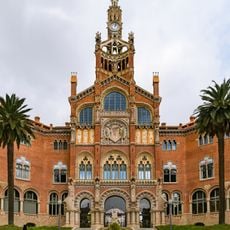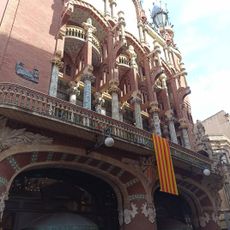
Palau de la Música Catalana, Concert hall in Sant Pere district, Barcelona, Spain
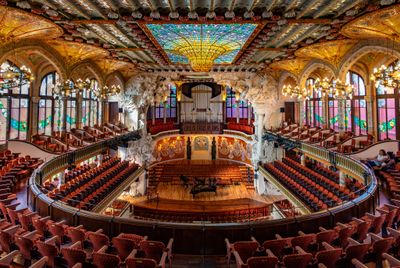
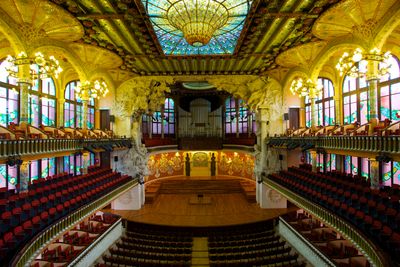
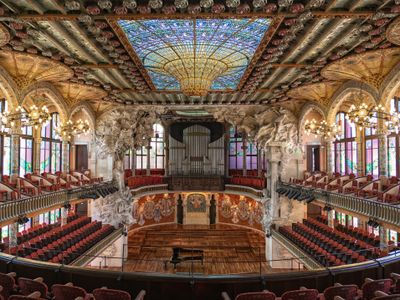
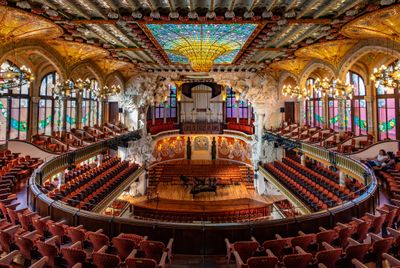
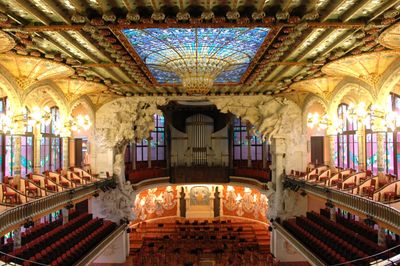
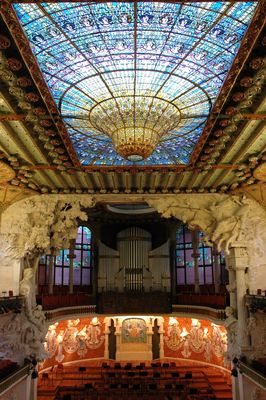
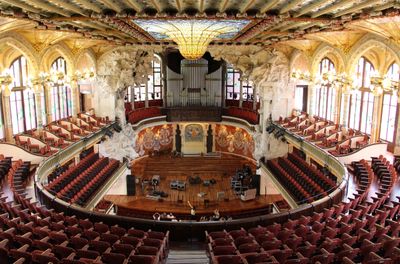
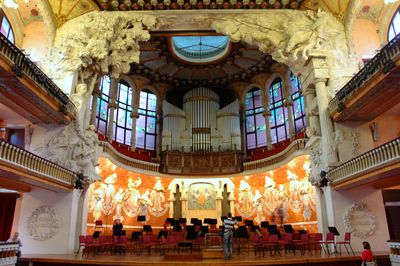
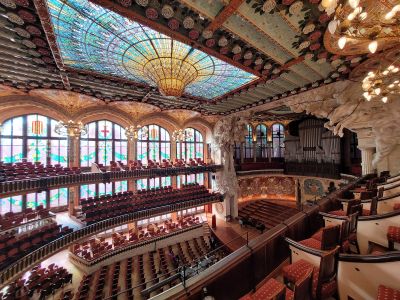
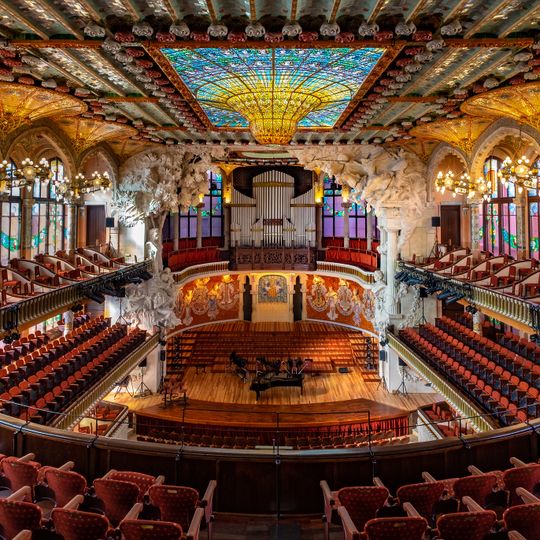
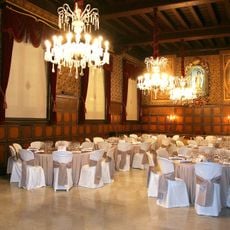
The Palau de la Música Catalana features curved architecture, colored glass windows, and a central skylight that fills the auditorium with natural illumination.
The building, designed by architect Lluís Domènech i Montaner, opened its doors on February 9, 1908, after three years of construction funded by local patrons.
The concert hall serves as home to the Orfeó Català choral society, established in 1891, which performs traditional Catalan music throughout the year.
Guided tours operate daily from 9:00 to 15:30, allowing visitors to explore the main hall, rehearsal spaces, and learn about the building's architectural elements.
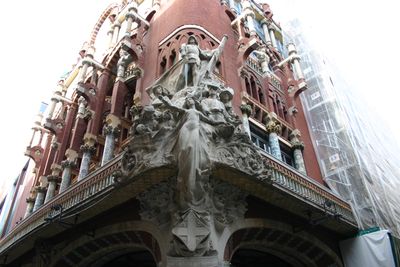
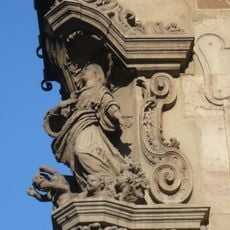
The main concert hall contains sculptures representing sixteen musical muses, along with busts of Bach and Beethoven integrated into the decorative elements.
Location: Sant Pere, Santa Caterina i la Ribera
Architects: Lluís Domènech i Montaner
Official opening: February 9, 1908
Architectural style: Catalan modernism
Accessibility: Wheelchair accessible
Part of: list of Modernista buildings in Barcelona, Palau de la Música Catalana and Hospital de Sant Pau, Barcelona
Address: C/ Palau de la Música, 4-6, Ciutat Vella, 08003 Barcelona, Spain
Opening Hours: Monday-Sunday 09:00-15:30
Phone: +34932957200
Website: http://palaumusica.cat
GPS coordinates: 41.38767,2.17528
Latest update: May 28, 2025 18:30
Art Nouveau emerged between 1890 and 1910 as one of Europe's most influential architectural and decorative movements. Architects of this period broke from historical precedents to develop a new visual language characterized by curved lines, plant motifs and richly ornamented facades. The movement took different names across countries: Modernisme in Catalonia, Jugendstil in German-speaking regions, Secession in Austria and Liberty in Italy. This diversity led to regional interpretations that incorporated local craft traditions and cultural characteristics. This collection includes buildings across Barcelona, Paris, Budapest, Vienna, Prague, Brussels and other European cities. In Barcelona, works by Antoni Gaudí and his contemporaries shape entire streetscapes, including Casa Batlló with its undulating facade and the Sant Pau Recinte Modernista. Paris preserves the celebrated metro stations by Hector Guimard, while Budapest features the Gresham Palace, Museum of Applied Arts and Gellért Baths. Vienna presents characteristic examples of the Austrian variant with the Secession Building and Majolica House. The collection also includes less visited sites such as the Kőrössy Villa in Kecskemét, Horta Museum in Brussels and the railway station in Helsingør, Denmark.
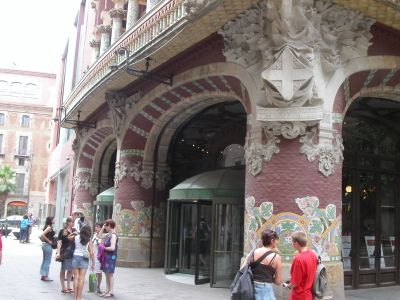
Between 1890 and 1910, Art Nouveau spread across Europe, producing buildings that combined craft traditions with industrial techniques through organic forms, natural motifs, and detailed ornamental work. Architects including Victor Horta in Brussels, Antoni Gaudí in Barcelona, and Otto Wagner in Vienna designed structures that departed from historical revival styles, instead emphasizing curved lines, wrought iron elements, and colored glass. The movement encompassed concert halls and railway stations as well as private homes and commercial facades, creating a body of work that remains central to the architectural identity of several European cities. Visitors can trace this development through multiple locations. Brussels offers the Victor Horta Museum, Tassel House, and Hôtel van Eetvelde as prime examples of the Belgian variant. Barcelona showcases Gaudí's Casa Batlló and Bellesguard alongside the Palau de la Musica Catalana with its elaborate tilework. Paris preserves Hector Guimard's Métropolitain entrances and the Lavirotte Building, while Prague presents the Municipal House and the Bedřich Smetana Museum. Nancy serves as a center of French Art Nouveau with the School Museum and Villa Majorelle, and Budapest displays the style through Gresham Palace and the Liszt Academy of Music. From Riga to Turin, Vienna to Belgrade, these buildings document a brief but influential period when architects reshaped urban environments across the continent.
Barcelona offers a wide range of architectural and cultural sites that reflect centuries of Catalan history. The city combines Gothic churches and medieval streets with the organic forms of Antoni Gaudí's modernist buildings. From the Sagrada Família to Parc Güell, his designs shape the cityscape, while the Gothic Quarter and palaces such as Palau Güell represent earlier periods. Museums including the Picasso Museum and Joan Miró Foundation illustrate the city's artistic legacy. Markets like La Boqueria and Sant Antoni provide insight into Catalan daily life. The waterfront district of La Barceloneta, the Olympic Port, and Montjuïc with its cable car and fountain broaden the range. Other destinations include Casa Batlló, Casa Milà, the Hospital de Sant Pau, the National Art Museum of Catalonia, and the Aquarium.
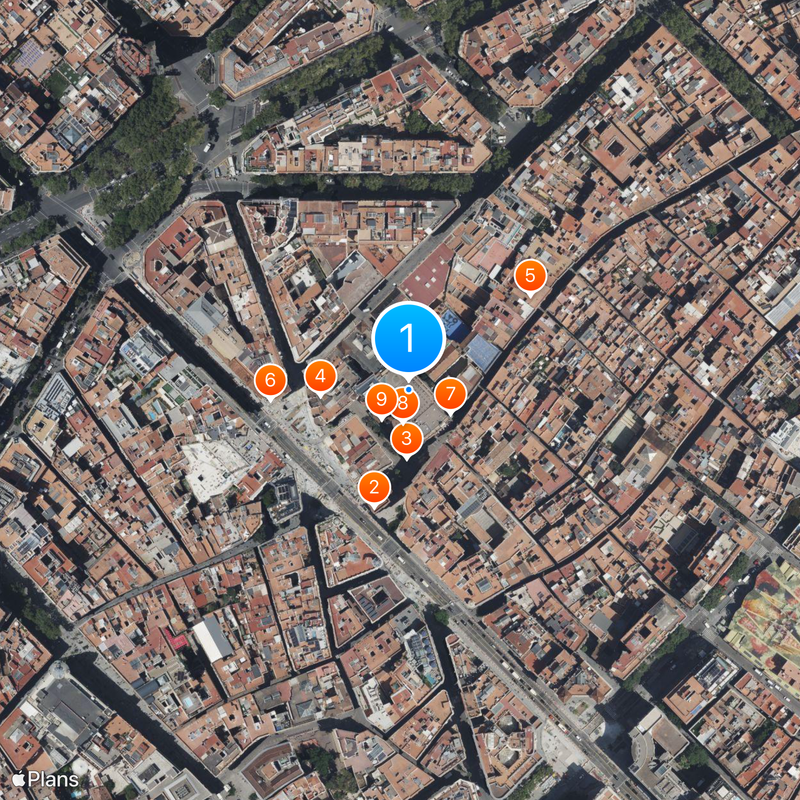
Casa del gremi de velers
85 m
Casal de la Previsió
61 m
Casa Castanyer
107 m
Casal de l'Estalvi
96 m
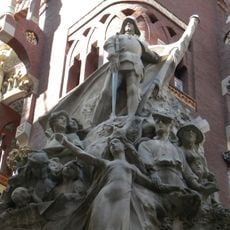
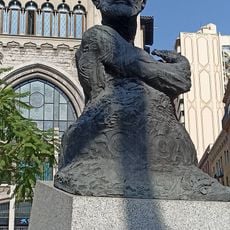
La cançó popular
33 m
A Lluís Millet
23 m
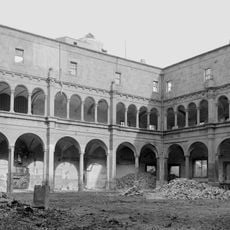
Convent de Sant Francesc de Paula de Barcelona
28 m
Casa Cordelles
147 m
Centre de Cultura de Dones Francesca Bonnemaison
147 m
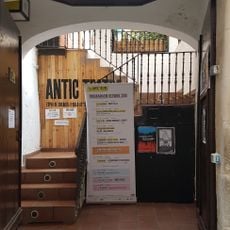
Antic Teatre
71 m
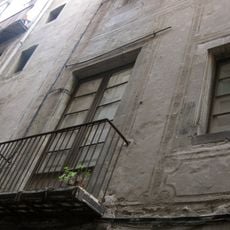
Casa Antoni Cardeñas
61 m
Casa Ignasi de Dou
149 m
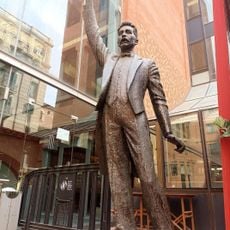
A Francesc Cambó
83 m
Casa del gremi dels velers
84 m
Casa Tilebein
77 m
Magatzems Serra i Balet
89 m
Casa Josep Ravella
62 m
Palau de la Música Catalana and Hospital de Sant Pau, Barcelona
26 m
Teatre del Centre de Sant Pere Apòstol
97 m
Edifici d'oficines Antonio Martínez Salcido
121 m
Building in c. Sant Pere més Alt, 24
87 m
Arbre
41 m
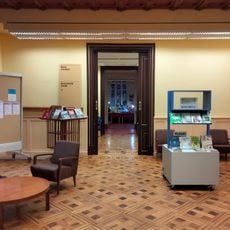
Biblioteca Francesca Bonnemaison
151 m
Miquel Llobet
154 m
Casa Miquel de Magarola
91 m
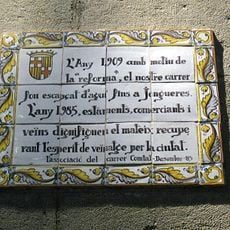
Reforma de 1909
134 m
Mare de Déu dels Àngels
80 m
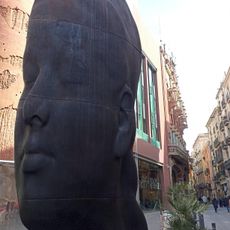
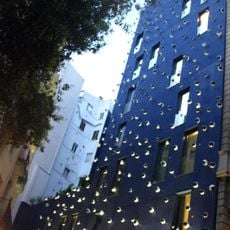
Globus oculars
100 mReviews
Real people, real opinions — but not verified.
Visited this place? Tap the stars to rate it and share your experience / photos with the community! Try now! You can cancel it anytime.
A bit less known than other monuments of the Catalan capital, the visit to the Palau de la Música is a must!
Discover hidden gems everywhere you go!
From secret cafés to breathtaking viewpoints, skip the crowded tourist spots and find places that match your style. Our app makes it easy with voice search, smart filtering, route optimization, and insider tips from travelers worldwide. Download now for the complete mobile experience.
A unique approach to discovering new places❞
— Le Figaro
All the places worth exploring❞
— France Info
A tailor-made excursion in just a few clicks❞
— 20 Minutes