Villa Majorelle

Log in to your account

AroundUs is a community-driven map of interesting places, built by curious explorers like you. It grows with every review, story, and photo you share.
Connect to save your favorite spots, contribute locations, and create personalized routes.
By continuing, you accept our Terms and Conditions and our Privacy Policy
Add to collection
Map
Suggest a change
Share

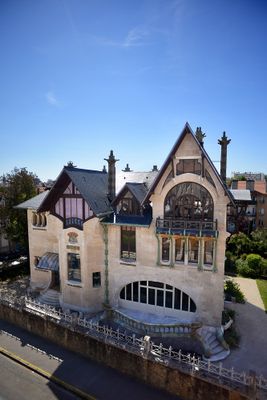
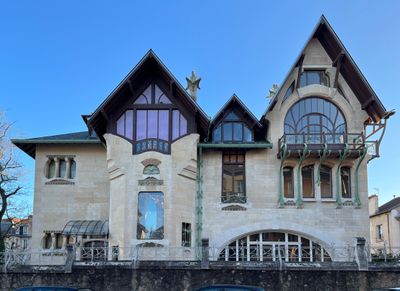
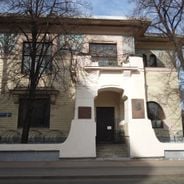
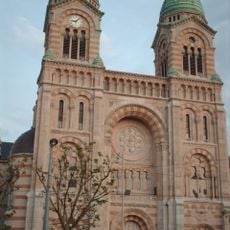
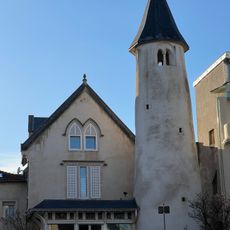
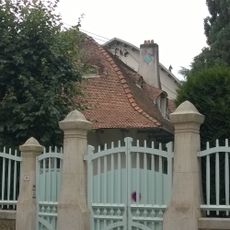
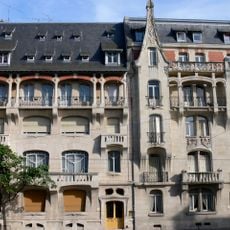
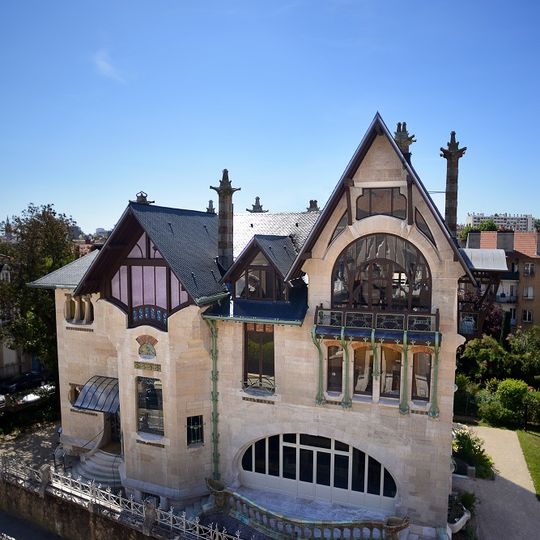
Villa Majorelle, Art Nouveau villa in Nancy, France

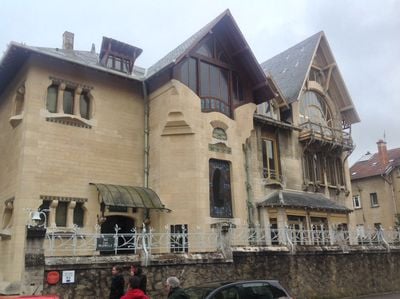
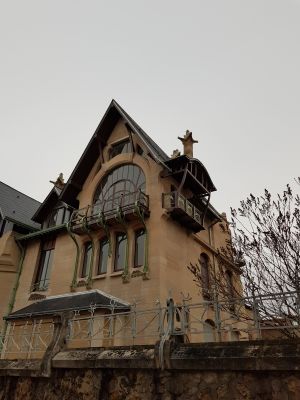
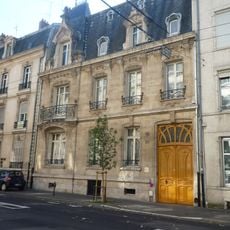
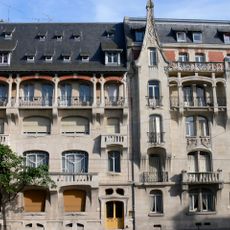
Villa Majorelle is an Art Nouveau house in Nancy, built around 1900 for a furniture designer. The exterior features wrought iron decorations, colored ceramic tiles, and glass elements that flow seamlessly into the curved architectural forms.

The building emerged in the early 1900s as an expression of the Art Nouveau movement that shaped Nancy at that time. The designer used the house until his death in the 1920s, after which it was later protected as a historical monument.

The house was home and workshop for Louis Majorelle, a renowned furniture designer of the city. Here he created his works and welcomed artists and collectors who admired his innovative designs.

The house can be toured on certain days; check the opening times beforehand. Comfortable shoes are advisable, since you will explore various rooms and stairways, and the original interior requires care when walking on the floors.

The house was a place where experimental craft techniques were completely woven into the living space. Rather than separating workshop from residence, the owner designed a place where artistic creation was directly intertwined with everyday life.

Location: Nancy

Architects: Henri Sauvage

Architectural style: Art Nouveau architecture

Opening Hours: Wednesday-Sunday 09:00-12:00,14:00-18:00

Phone: +33383853001

Website: https://musee-ecole-de-nancy.nancy.fr/la-villa-majorelle-2887.html

GPS coordinates: 48.68550,6.16389

Latest update: December 6, 2025 16:02

Art Nouveau architecture: the 50 buildings to see absolutely

Between 1890 and 1910, Art Nouveau spread across Europe, producing buildings that combined craft traditions with industrial techniques through organic forms, natural motifs, and detailed ornamental work. Architects including Victor Horta in Brussels, Antoni Gaudí in Barcelona, and Otto Wagner in Vienna designed structures that departed from historical revival styles, instead emphasizing curved lines, wrought iron elements, and colored glass. The movement encompassed concert halls and railway stations as well as private homes and commercial facades, creating a body of work that remains central to the architectural identity of several European cities. Visitors can trace this development through multiple locations. Brussels offers the Victor Horta Museum, Tassel House, and Hôtel van Eetvelde as prime examples of the Belgian variant. Barcelona showcases Gaudí's Casa Batlló and Bellesguard alongside the Palau de la Musica Catalana with its elaborate tilework. Paris preserves Hector Guimard's Métropolitain entrances and the Lavirotte Building, while Prague presents the Municipal House and the Bedřich Smetana Museum. Nancy serves as a center of French Art Nouveau with the School Museum and Villa Majorelle, and Budapest displays the style through Gresham Palace and the Liszt Academy of Music. From Riga to Turin, Vienna to Belgrade, these buildings document a brief but influential period when architects reshaped urban environments across the continent.

Nancy instagrammable photography spots

Nancy presents an architectural range spanning from the medieval Porte de la Craffe to the ornamented facades of the Art Nouveau era. The city served as a center for the Art Nouveau movement in the late 19th and early 20th centuries, evident in structures such as Villa Majorelle and Maison Weissenburger. Beyond these decorative residences, buildings like the Palais du Gouvernement and Palais Ducal document the political and dynastic history of Lorraine, while religious structures including Basilique Saint-Epvre and Chapelle Ducale represent the region's spiritual architecture. The city spreads across several historic districts with distinct visual characteristics. Place de la Carrière and surrounding streets such as Rue des Maréchaux and Rue Félix-Faure demonstrate classical and Baroque urban planning with symmetrical facades and uniform design. The Quartier des Trois Maisons preserves medieval elements, while Cours Léopold presents wider boulevards and neoclassical structures. Public spaces such as the Marché Couvert offer everyday scenes within architectural frameworks dating to the 19th century. Green spaces provide contrast to the urban density. Parc de la Pépinière extends across 52 acres (21 hectares) in the city center, combining formal gardens with wooded paths. Jardin Dominique Alexandre Godron displays botanical collections adjacent to the Musée-Aquarium de Nancy. Smaller parks like Parc de la Cure d'Air and Parc Olry offer elevated vantage points over the cityscape. The Quai Sainte-Catherine along the canal connects waterways with historic infrastructure, creating linear compositions along the waterfront.

Reviews

Visited this place? Tap the stars to rate it and share your experience / photos with the community! Try now! You can cancel it anytime.

« Villa Majorelle - Art Nouveau villa in Nancy, France » is provided by Around Us (aroundus.com). Images and texts are derived from Wikimedia project under a Creative Commons license. You are allowed to copy, distribute, and modify copies of this page, under the conditions set by the license, as long as this note is clearly visible.

Discover hidden gems everywhere you go!

From secret cafés to breathtaking viewpoints, skip the crowded tourist spots and find places that match your style. Our app makes it easy with voice search, smart filtering, route optimization, and insider tips from travelers worldwide. Download now for the complete mobile experience.

Around Us App Screenshot

A unique approach to discovering new places

Le Figaro

All the places worth exploring

France Info

A tailor-made excursion in just a few clicks

20 Minutes