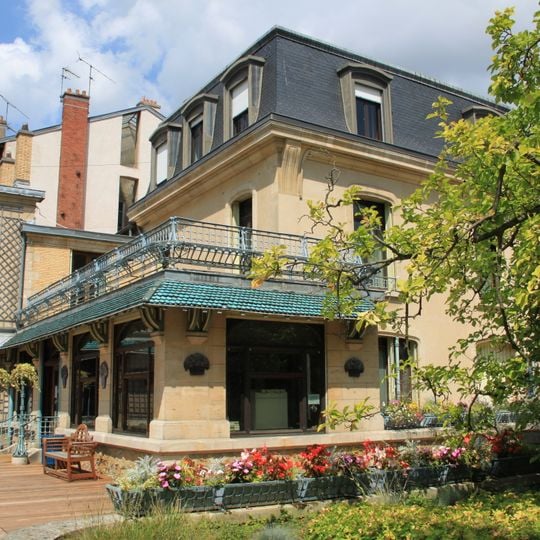
Musée de l'École de Nancy, Art Nouveau museum in Nancy, France
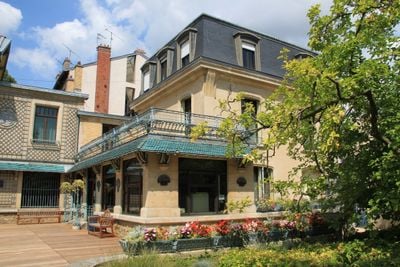
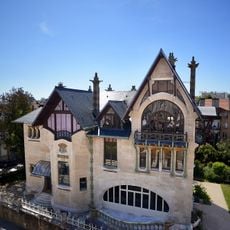
The Musée de l'École de Nancy occupies a late 19th-century bourgeois house with a pale stone facade, a steep grey slate mansard roof with three round-arched dormer windows, and a projecting canopy of green glazed tiles on stone brackets and dark wooden posts. A balcony with a pale blue metal railing sits above the canopy. Inside, rooms are arranged as an Art Nouveau bedroom, bathroom, study and dining room, with display cases for glass by Émile Gallé and the Daum manufacture.
The museum opened in 1964 in the former house of Eugène Corbin, a patron of the École de Nancy, in a building designed by architect Lucien Weissenburger. Its roots go back to 1900, when Nancy's municipal council created a decorative arts museum, and to 1901, when the École de Nancy was founded by Émile Gallé, Victor Prouvé, Louis Majorelle, Antonin Daum and Eugène Vallin. Corbin's collection was given to the city in 1935.
The collection features works by artists like Émile Gallé and Louis Majorelle, who shaped glass, furniture, and ceramics with organic forms here. You can see how these makers translated natural shapes directly into their designs, creating a fresh approach to everyday objects.
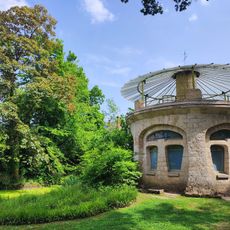
The museum occupies Eugène Corbin's former house at 36-38 rue du Sergent Blandan, in the north of Nancy, not in the old town. The garden, reached from the building, holds the listed aquarium, a gate made for Émile Gallé's factories and a funerary monument. Rooms are arranged as period interiors across the house, with a side wing added in 1923.
In the garden stands an aquarium pavilion listed as a monument historique, along with a door made for Émile Gallé's factories and a funerary monument. The museum building itself was designed by architect Lucien Weissenburger, and a side wing was added in 1923.
The community of curious travelers
AroundUs brings together thousands of curated places, local tips, and hidden gems, enriched daily by 92,789 contributors worldwide.