Lavirotte Building

Log in to your account

AroundUs is a community-driven map of interesting places, built by curious explorers like you. It grows with every review, story, and photo you share.
Connect to save your favorite spots, contribute locations, and create personalized routes.
By continuing, you accept our Terms and Conditions and our Privacy Policy
Add to collection
Map
Suggest a change
Share

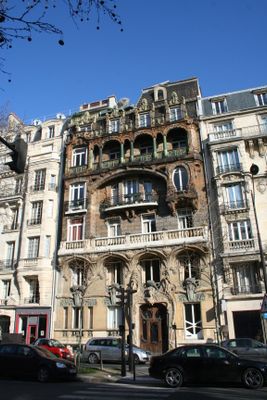
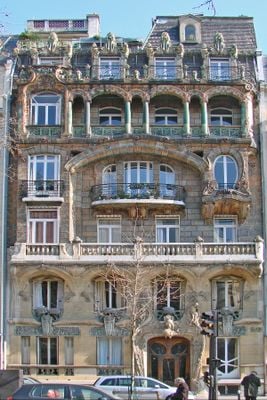
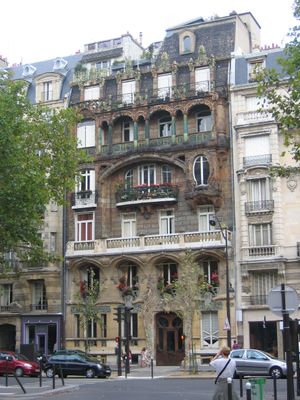
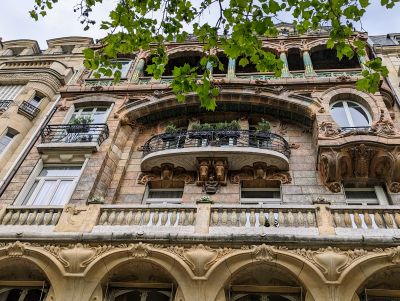
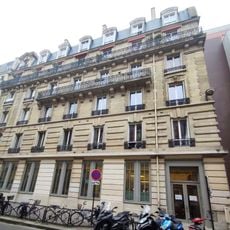
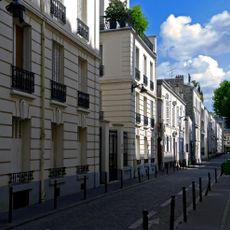
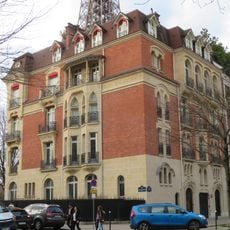
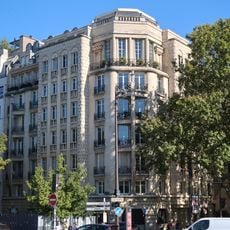
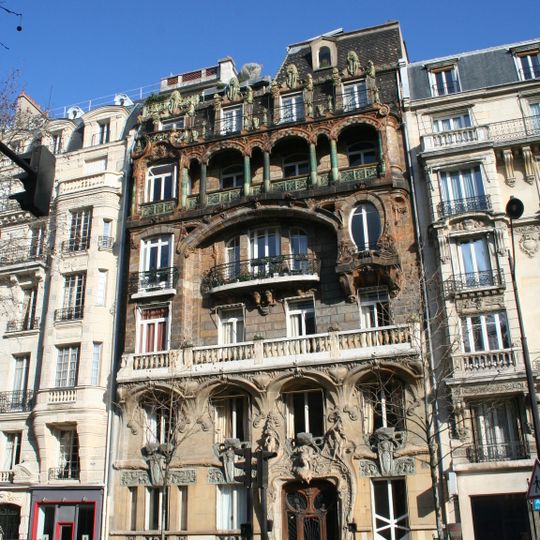
Lavirotte Building, Art Nouveau apartment building in 7th arrondissement, Paris, France.

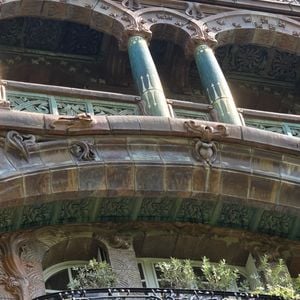
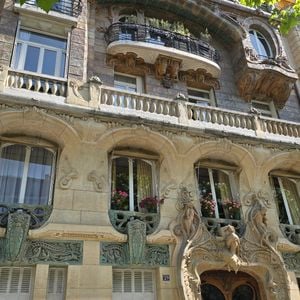
The Lavirotte Building at 29 Avenue Rapp features a facade covered in ceramic tiles, sculptures, and intricate iron decorations throughout its five floors.

Architect Jules Lavirotte designed and constructed this residential building between 1899 and 1901, incorporating early reinforced concrete and hollow brick techniques.

The building earned the Paris facade competition award in 1901, recognizing its innovative design that merged Baroque influences with organic decorative elements.

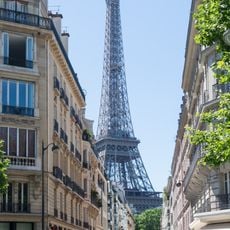
The structure stands near the Eiffel Tower and visitors can reach it via RER C train station at Pont de l'Alma or Metro station Alma-Marceau.

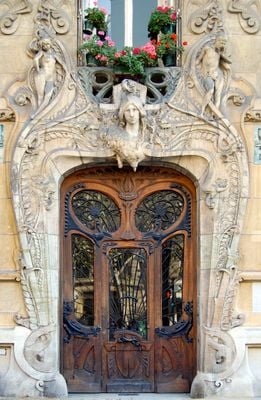
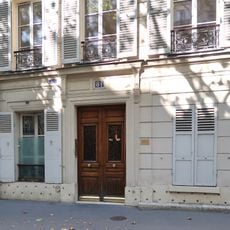
The entrance portal displays elaborate carvings and ceramic work, including figures and patterns that generated discussions about their symbolic meanings.

Location: 7th arrondissement of Paris

Inception: 1900

Architects: Jules Lavirotte

Creator: Alexandre Bigot, Jean-Baptiste Larrivé

Architectural style: Art Nouveau architecture

Address: 29 Av. Rapp, 75007 Paris, France 75007

Phone: +33149524263

GPS coordinates: 48.85910,2.30094

Latest update: June 23, 2025 09:40

Hidden architectural sites in Paris

These locations showcase the architectural diversity of Paris through buildings spanning from medieval times to the modern era. The city preserves structures from two millennia: Roman baths from the 3rd century, Gothic churches like Saint-Julien-le-Pauvre, Renaissance mansions, and Art Nouveau apartment buildings designed by Hector Guimard. Beyond the famous monuments, visitors find hidden lanes with medieval timber-framed houses and private villas from the 19th century. The collection includes both public and private buildings. Visitors can explore the remains of the Arènes de Lutèce, where Romans once held gladiatorial contests, as well as the oldest residential houses in the city dating from the 15th century. The selection ranges from medieval church towers and classical arcades to modernist experiments of the early 20th century.

Art Nouveau architecture: the 50 buildings to see absolutely

Between 1890 and 1910, Art Nouveau spread across Europe, producing buildings that combined craft traditions with industrial techniques through organic forms, natural motifs, and detailed ornamental work. Architects including Victor Horta in Brussels, Antoni Gaudí in Barcelona, and Otto Wagner in Vienna designed structures that departed from historical revival styles, instead emphasizing curved lines, wrought iron elements, and colored glass. The movement encompassed concert halls and railway stations as well as private homes and commercial facades, creating a body of work that remains central to the architectural identity of several European cities. Visitors can trace this development through multiple locations. Brussels offers the Victor Horta Museum, Tassel House, and Hôtel van Eetvelde as prime examples of the Belgian variant. Barcelona showcases Gaudí's Casa Batlló and Bellesguard alongside the Palau de la Musica Catalana with its elaborate tilework. Paris preserves Hector Guimard's Métropolitain entrances and the Lavirotte Building, while Prague presents the Municipal House and the Bedřich Smetana Museum. Nancy serves as a center of French Art Nouveau with the School Museum and Villa Majorelle, and Budapest displays the style through Gresham Palace and the Liszt Academy of Music. From Riga to Turin, Vienna to Belgrade, these buildings document a brief but influential period when architects reshaped urban environments across the continent.

Alternative destinations in Ile De France

Île-de-France offers numerous historic sites beyond Paris, including medieval fortresses, artist residences, botanical gardens and art museums. The Château de Blandy-les-Tours preserves 13th-century military architecture, while the Albert Kahn Museum & Gardens contains a collection of historic photographs and themed gardens representing different continents. The Château d'Écouen houses the Musée National de la Renaissance, featuring significant holdings of 16th-century furniture, tapestries and ceramics. The Domaine de Sceaux encompasses a park designed by André Le Nôtre with formal parterres and a 19th-century château. The Roseraie du Val-de-Marne displays more than 3,000 rose varieties across a 3.7-acre (1.5-hectare) garden. The region preserves literary sites including the Maison Littéraire de Victor Hugo in Bièvres, where the writer spent his final years, and the Maison Fournaise in Chatou, which served as a subject in Renoir's paintings. The Musée de la Toile de Jouy documents the history of regional textile production. Architectural features range from the medieval Donjon de Houdan to the Château de Monte-Cristo, Alexandre Dumas' neo-Gothic residence. Fort de Sucy represents late 19th-century military architecture, while Le Cyclop stands as a monumental metal sculpture by Jean Tinguely. These locations demonstrate the historical and cultural development of the region from medieval times through the modern era.

Reviews

Real people, real opinions — but not verified.

Visited this place? Tap the stars to rate it and share your experience / photos with the community! Try now! You can cancel it anytime.

micvi
@micvi

May 4, 2025 16:53

Beautiful building, dating from 1901, seen in 2025

« Lavirotte Building - Art Nouveau apartment building in 7th arrondissement, Paris, France » is provided by Around Us (aroundus.com). Images and texts are derived from Wikimedia project under a Creative Commons license. You are allowed to copy, distribute, and modify copies of this page, under the conditions set by the license, as long as this note is clearly visible.

Discover hidden gems everywhere you go!

From secret cafés to breathtaking viewpoints, skip the crowded tourist spots and find places that match your style. Our app makes it easy with voice search, smart filtering, route optimization, and insider tips from travelers worldwide. Download now for the complete mobile experience.
Around Us App Screenshot

A unique approach to discovering new places

Le Figaro

All the places worth exploring

France Info

A tailor-made excursion in just a few clicks

20 Minutes