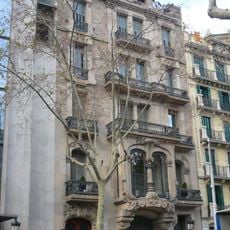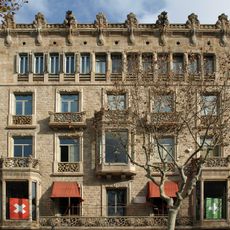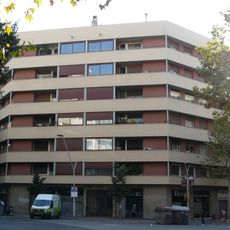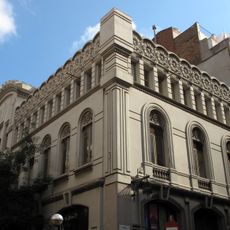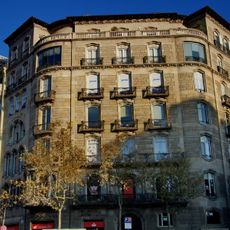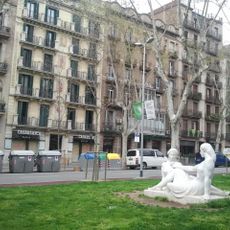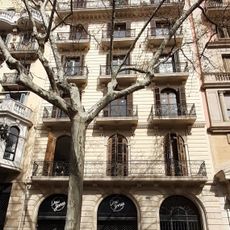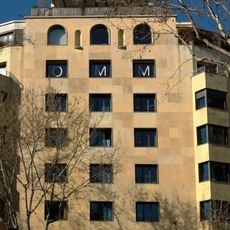
Casa Comalat, Modernist residential building in Dreta de l'Eixample, Spain.
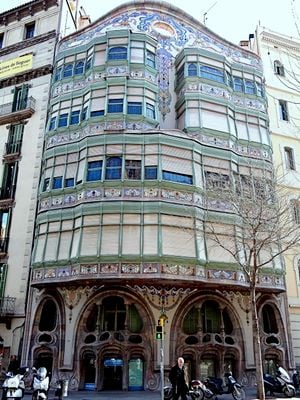
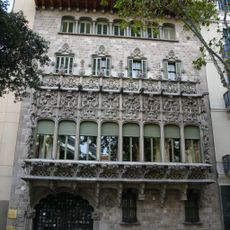
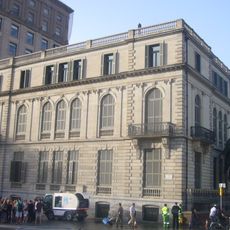
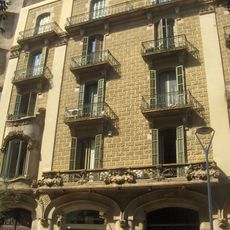
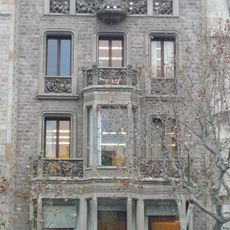
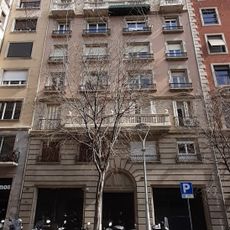
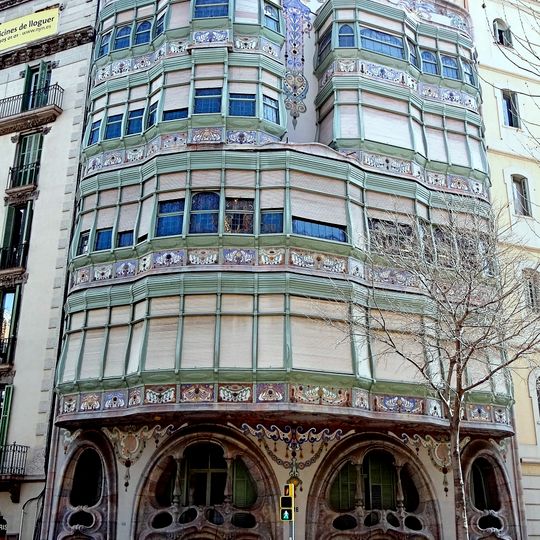
Casa Comalat features two distinct facades: a stone monochrome one on Diagonal Avenue and a colorful ceramic-decorated one on Corsega Street.
The building, constructed between 1909 and 1911, represents architect Salvador Valeri i Pupurull's interpretation of Catalan modernism influenced by Antoni Gaudí's style.
The structure displays intricate stone carvings, wooden galleries, parabolic arches, and polychrome ceramic mosaics created by artist Lluís Bru i Salelles.
Located at Diagonal Avenue 442, the building remains accessible through nearby metro stations Hospital Clinic on Line 5 and Diagonal on Lines 3 and 5.
The rear facade appears inflated with bulging forms, creating an organic architectural expression that contrasts with neighboring buildings.
Location: Dreta de l'Eixample
Architectural style: Catalan modernism, Art Nouveau architecture
Address: Av. Diagonal, 442 i Còrsega, 316
GPS coordinates: 41.39705,2.16070
Latest update: May 14, 2025 16:33
Between 1890 and 1910, Art Nouveau spread across Europe, producing buildings that combined craft traditions with industrial techniques through organic forms, natural motifs, and detailed ornamental work. Architects including Victor Horta in Brussels, Antoni Gaudí in Barcelona, and Otto Wagner in Vienna designed structures that departed from historical revival styles, instead emphasizing curved lines, wrought iron elements, and colored glass. The movement encompassed concert halls and railway stations as well as private homes and commercial facades, creating a body of work that remains central to the architectural identity of several European cities. Visitors can trace this development through multiple locations. Brussels offers the Victor Horta Museum, Tassel House, and Hôtel van Eetvelde as prime examples of the Belgian variant. Barcelona showcases Gaudí's Casa Batlló and Bellesguard alongside the Palau de la Musica Catalana with its elaborate tilework. Paris preserves Hector Guimard's Métropolitain entrances and the Lavirotte Building, while Prague presents the Municipal House and the Bedřich Smetana Museum. Nancy serves as a center of French Art Nouveau with the School Museum and Villa Majorelle, and Budapest displays the style through Gresham Palace and the Liszt Academy of Music. From Riga to Turin, Vienna to Belgrade, these buildings document a brief but influential period when architects reshaped urban environments across the continent.
Palau del Baró de Quadras
66 m
Palau Robert
147 m
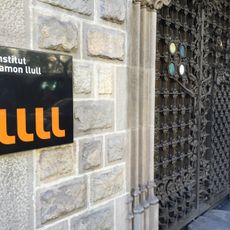
Institut Ramon Llull
62 m
Casa Bonaventura Ferrer
198 m
Jardinets de Gràcia
163 m
Casa Ramon Casas i Carbó
187 m
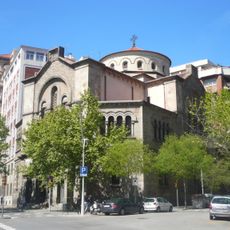
Mare de Déu del Carme de l'Eixample
168 m
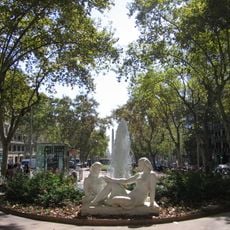
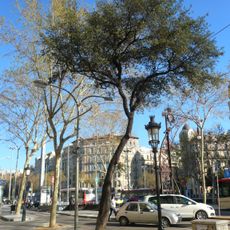
L'alzina de Mossèn Cinto
138 m
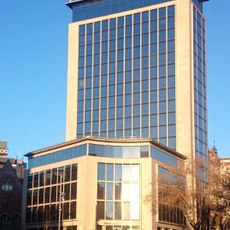
Deutsche Bank Building
186 m
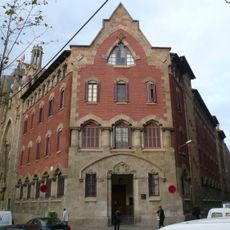
Convent de Pompeia
212 m
Casa Mercedes Ymbern de Cardenal
188 m
Antiga Editorial Seguí
204 m
Casa Garriga
95 m
Sector de conservació de l'Eixample a Gràcia
166 m
Casa Ferrer-Vidal
209 m
Casa de Frederic Vallet II
191 m
Casa Josep Codina
205 m
Biblioteca Bernat Lesfargues
66 m
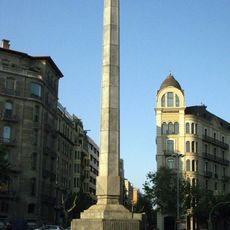
Obelisc
116 m
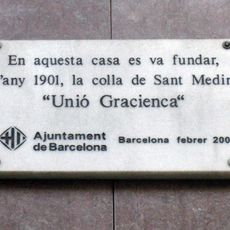
Unió Gracienca
219 m
Casa de València
69 m
Cases Jacint Esteva Fontanet
111 m
Casa d'habitatges de Maria Henrich
106 m
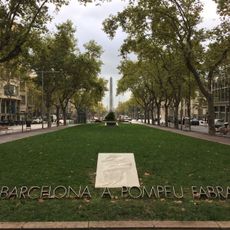
La Lectura. A Pompeu Fabra
190 m
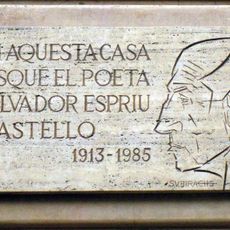
Salvador Espriu
146 m
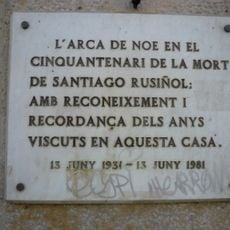
Santiago Rusiñol
185 m
Metro L3 Estació Diagonal. L'Eixample
126 m
Santiago Rusiñol
184 mReviews
Visited this place? Tap the stars to rate it and share your experience / photos with the community! Try now! You can cancel it anytime.
Discover hidden gems everywhere you go!
From secret cafés to breathtaking viewpoints, skip the crowded tourist spots and find places that match your style. Our app makes it easy with voice search, smart filtering, route optimization, and insider tips from travelers worldwide. Download now for the complete mobile experience.
A unique approach to discovering new places❞
— Le Figaro
All the places worth exploring❞
— France Info
A tailor-made excursion in just a few clicks❞
— 20 Minutes