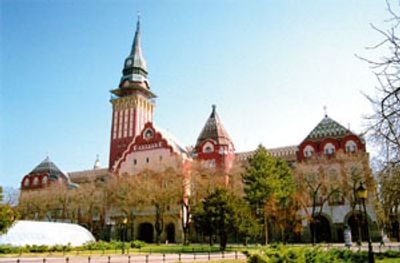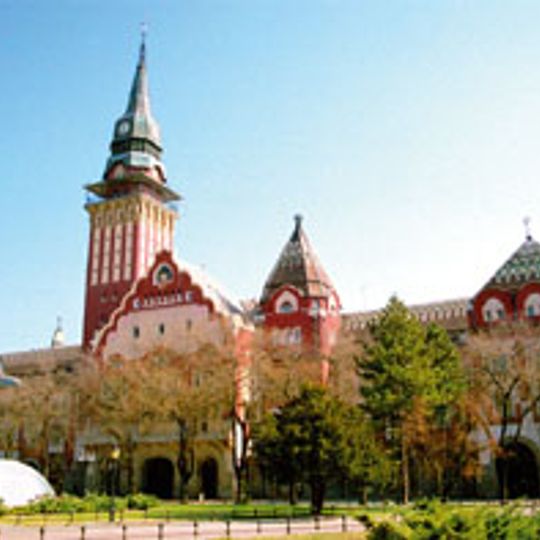
Town Hall, Municipal building in Subotica, Serbia
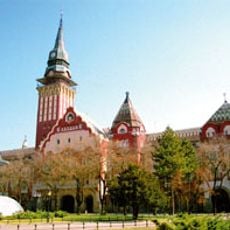
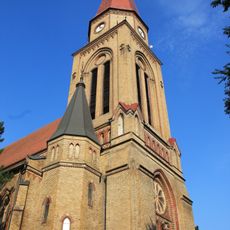
The town hall displays architectural elements with red bricks, ornate ceramics, and a central tower reaching 76 meters into the sky.
Architects Marcell Komor and Dezső Jakab completed this administrative center in 1912, incorporating Hungarian Secessionist design principles throughout the structure.
The ceremonial council hall features detailed stained glass windows and serves as a central location for municipal ceremonies and community gatherings.
The observation deck at 45 meters provides views across Subotica, while the building houses government offices, shops, and banking facilities.
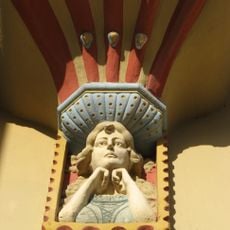
The structure combines Hungarian folklore elements with ceramic floral patterns and wrought iron decorations across its extensive facade.
Location: Subotica
GPS coordinates: 46.09966,19.66458
Latest update: November 29, 2025 16:04
Between 1890 and 1910, Art Nouveau spread across Europe, producing buildings that combined craft traditions with industrial techniques through organic forms, natural motifs, and detailed ornamental work. Architects including Victor Horta in Brussels, Antoni Gaudí in Barcelona, and Otto Wagner in Vienna designed structures that departed from historical revival styles, instead emphasizing curved lines, wrought iron elements, and colored glass. The movement encompassed concert halls and railway stations as well as private homes and commercial facades, creating a body of work that remains central to the architectural identity of several European cities. Visitors can trace this development through multiple locations. Brussels offers the Victor Horta Museum, Tassel House, and Hôtel van Eetvelde as prime examples of the Belgian variant. Barcelona showcases Gaudí's Casa Batlló and Bellesguard alongside the Palau de la Musica Catalana with its elaborate tilework. Paris preserves Hector Guimard's Métropolitain entrances and the Lavirotte Building, while Prague presents the Municipal House and the Bedřich Smetana Museum. Nancy serves as a center of French Art Nouveau with the School Museum and Villa Majorelle, and Budapest displays the style through Gresham Palace and the Liszt Academy of Music. From Riga to Turin, Vienna to Belgrade, these buildings document a brief but influential period when architects reshaped urban environments across the continent.
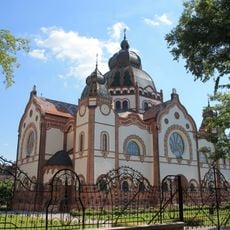
Subotica Synagogue
333 m
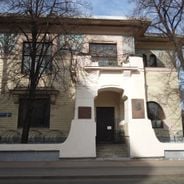
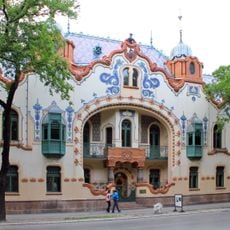
Raichle Palace
377 m
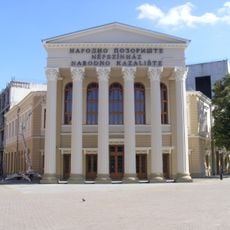
National Theatre in Subotica
145 m
Srpska pravoslavna crkva
459 m
Municipal Museum in Subotica
373 m
Crkva sv. Roka u Keru
1.2 km
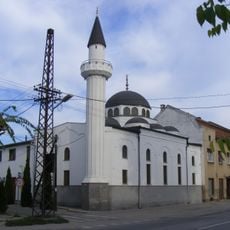
Muhajir Mosque, Subotica
1.4 km
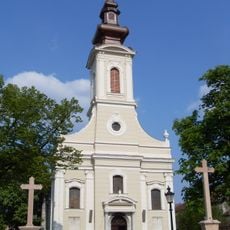
Franciscan church in Subotica
206 m
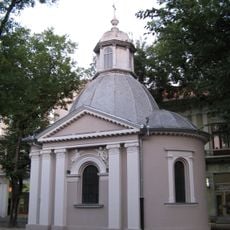
Kapela Sv. Roka
208 m
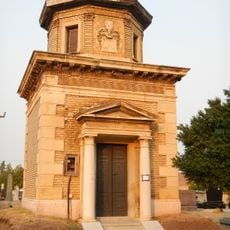
Chapelle Milinović à Subotica
1.4 km
Bâtiment de la Communauté juive à Subotica
231 m
Historical Archives of Subotica
13 m
Maison de Luka Sučić à Subotica
146 m
Bâtiment de l'école Lazar Nešić à Subotica
870 m
Cimetière juif de Subotica
548 m
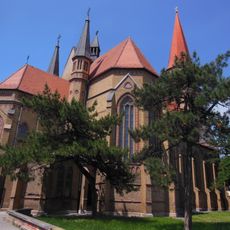
Saint Roch church in Subotica
1.2 km
Bâtiment de la banque Putnik à Subotica
205 m
Palais Leović à Subotica
570 m
Chapelle Radić à Subotica
1.1 km
Bâtiment situé 21 rue Maksima Gorkog à Subotica
595 m
Кућа на Тргу Синагоге бр. 3 у Суботици
357 m
Palais du maire Lazar Mamužić à Subotica
486 m
Bâtiment situé 8 rue Štrosmajerova à Subotica
453 m
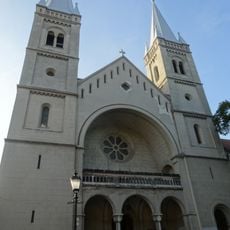
Subotica Cathedral
467 m
Bâtiment de l'école de mécanique et de génie électrique à Subotica
442 m
Bâtiment situé 2 rue Frankopanska à Subotica
715 m
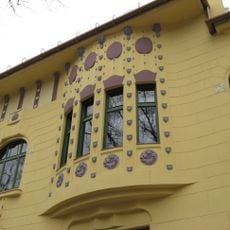
Maison Lončarević à Subotica
276 m
Bâtiment de la Galerie Vinko Perčić
631 mReviews
Visited this place? Tap the stars to rate it and share your experience / photos with the community! Try now! You can cancel it anytime.
Discover hidden gems everywhere you go!
From secret cafés to breathtaking viewpoints, skip the crowded tourist spots and find places that match your style. Our app makes it easy with voice search, smart filtering, route optimization, and insider tips from travelers worldwide. Download now for the complete mobile experience.
A unique approach to discovering new places❞
— Le Figaro
All the places worth exploring❞
— France Info
A tailor-made excursion in just a few clicks❞
— 20 Minutes