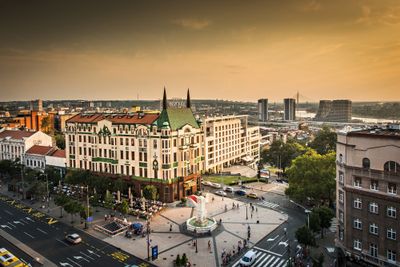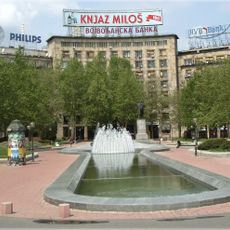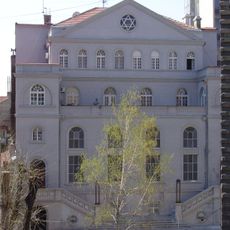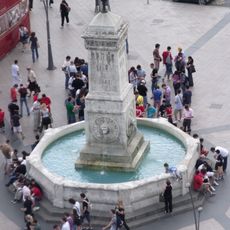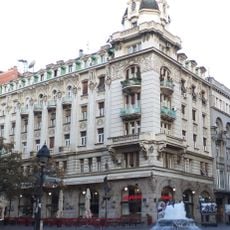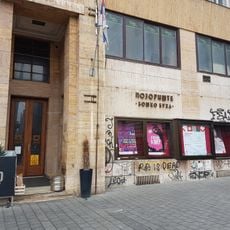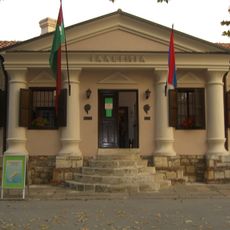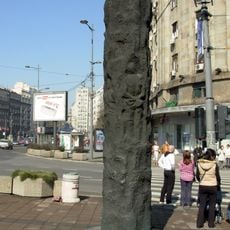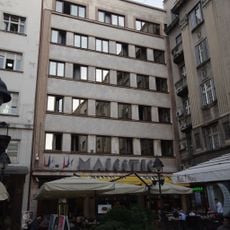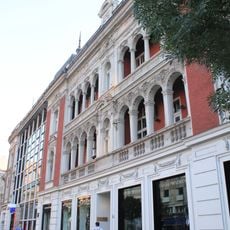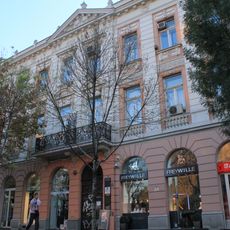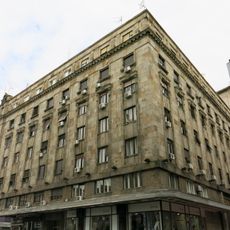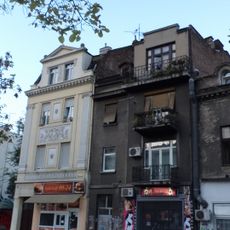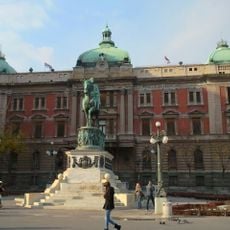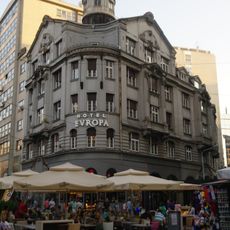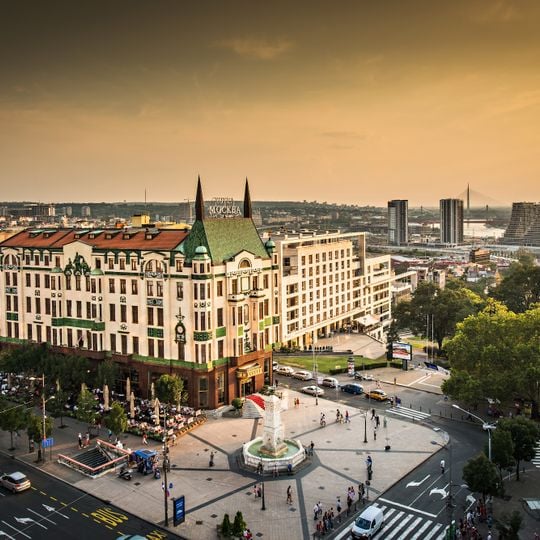
Hotel Moskva, Art Nouveau hotel at Terazije Square, Belgrade, Serbia.
The five-story Hotel Moskva presents a Russian Art Nouveau design with decorative taupe and emerald ceramic tiles adorning its exterior walls and facades.
Hotel Moskva opened in 1908 during a ceremony with King Peter I of Serbia, marking the completion of the largest private building in Serbia at that time.
The hotel functions as a gathering place where visitors can view photographs of past guests including Albert Einstein, Indira Gandhi, and numerous international celebrities.
Located at the intersection of Terazije, Prizrenska, and Balkanska streets, the hotel contains modern rooms, a spa center, and a renowned pastry shop.
The property maintains its original Russian-influenced pastry shop, which creates the signature Moskva šnit cake following traditional recipes from 1908.
Location: Belgrade
Inception: 1908
Architects: Jovan Ilkić
Official opening: 1906
Architectural style: Art Nouveau architecture
Floors above the ground: 5
Address: Balkanska 1, Beograd 11000
Phone: +381113642000
Website: http://hotelmoskva.rs
GPS coordinates: 44.81359,20.45995
Latest update: November 29, 2025 16:04
Between 1890 and 1910, Art Nouveau spread across Europe, producing buildings that combined craft traditions with industrial techniques through organic forms, natural motifs, and detailed ornamental work. Architects including Victor Horta in Brussels, Antoni Gaudí in Barcelona, and Otto Wagner in Vienna designed structures that departed from historical revival styles, instead emphasizing curved lines, wrought iron elements, and colored glass. The movement encompassed concert halls and railway stations as well as private homes and commercial facades, creating a body of work that remains central to the architectural identity of several European cities. Visitors can trace this development through multiple locations. Brussels offers the Victor Horta Museum, Tassel House, and Hôtel van Eetvelde as prime examples of the Belgian variant. Barcelona showcases Gaudí's Casa Batlló and Bellesguard alongside the Palau de la Musica Catalana with its elaborate tilework. Paris preserves Hector Guimard's Métropolitain entrances and the Lavirotte Building, while Prague presents the Municipal House and the Bedřich Smetana Museum. Nancy serves as a center of French Art Nouveau with the School Museum and Villa Majorelle, and Budapest displays the style through Gresham Palace and the Liszt Academy of Music. From Riga to Turin, Vienna to Belgrade, these buildings document a brief but influential period when architects reshaped urban environments across the continent.
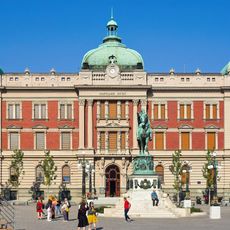
National Museum of Serbia
354 m
Palace Albania
164 m
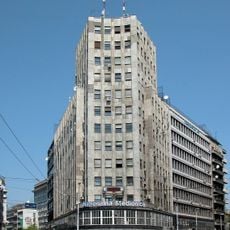
Dom Sindikata
182 m
Belgrade Synagogue
286 m
Terazije Theatre
154 m
Terazijska česma
56 m
Krsmanović's House at Terazije
244 m
Museum of Illusions
222 m
Ruski car Tavern
242 m
Belgrade Youth Center
292 m
Boško Buha Theatre
283 m
Museum of Natural History
183 m
Památník oběšených na Terazijích
192 m
Hotel Majestic
201 m
Palata Atina
203 m
Anker Palace
170 m
Milan Jovanović photo studio
281 m
Zgrada Smederevske banke
307 m
Bâtiment de la Maison de la presse à Belgrade
224 m
Igumanova palata
205 m
Hempro Building
83 m
Bâtiment du ministère de la Justice
288 m
Pension Fund Building
205 m
Abadžija houses in Belgrade
164 m
Maison de Zdravko Đurić
78 m
Library of the National Museum of Serbia
300 m
Budova Pražské úvěrní banky
115 m
American corner in Belgrade
298 mReviews
Visited this place? Tap the stars to rate it and share your experience / photos with the community! Try now! You can cancel it anytime.
Discover hidden gems everywhere you go!
From secret cafés to breathtaking viewpoints, skip the crowded tourist spots and find places that match your style. Our app makes it easy with voice search, smart filtering, route optimization, and insider tips from travelers worldwide. Download now for the complete mobile experience.
A unique approach to discovering new places❞
— Le Figaro
All the places worth exploring❞
— France Info
A tailor-made excursion in just a few clicks❞
— 20 Minutes