Park Güell

Log in to your account

AroundUs is a community-driven map of interesting places, built by curious explorers like you. It grows with every review, story, and photo you share.
Connect to save your favorite spots, contribute locations, and create personalized routes.
By continuing, you accept our Terms and Conditions and our Privacy Policy
Add to collection
Map
Suggest a change
Share

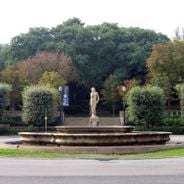
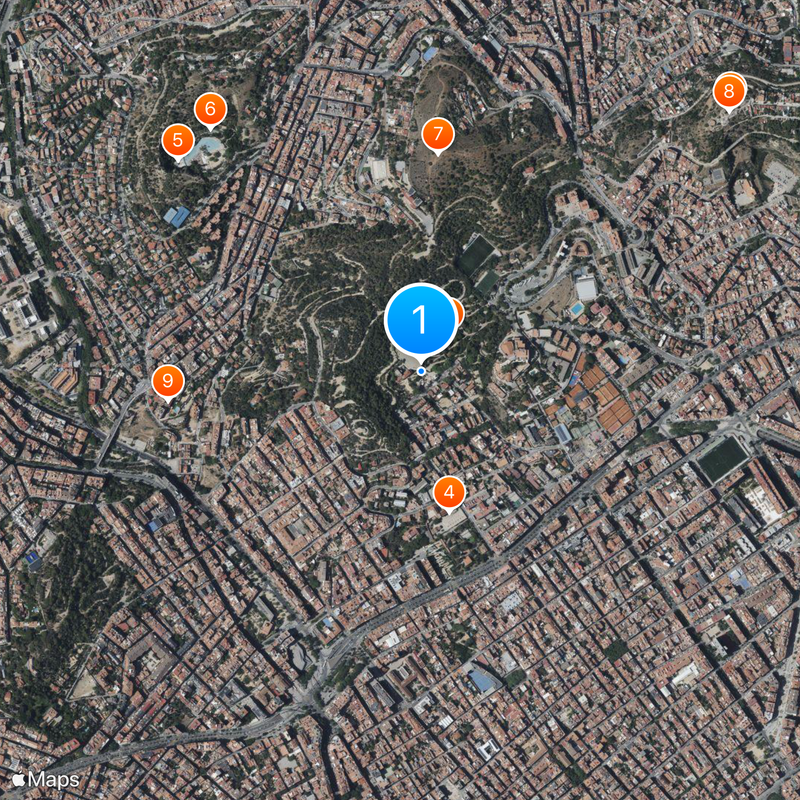
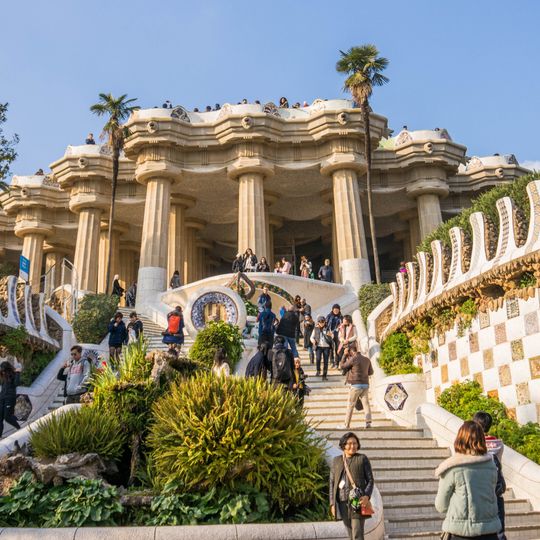
Park Güell, Architectural park in La Salut, Barcelona, Spain

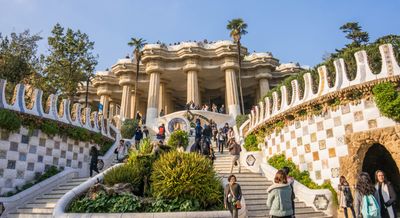
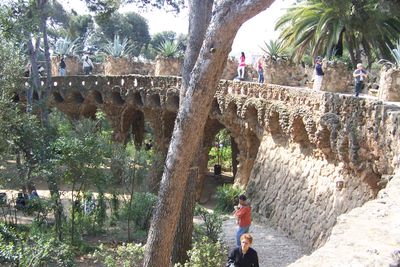
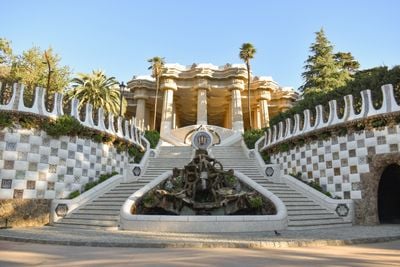
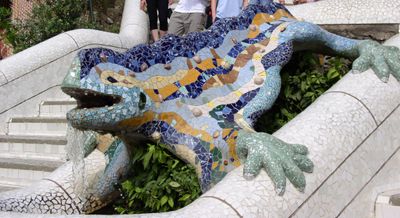
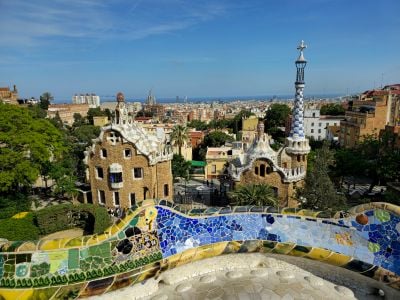
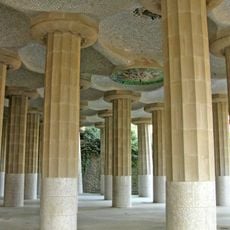
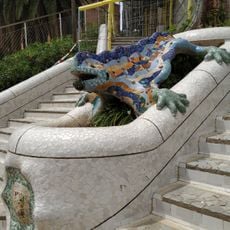
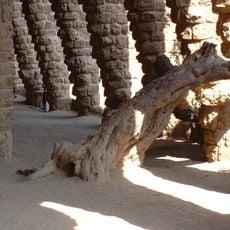
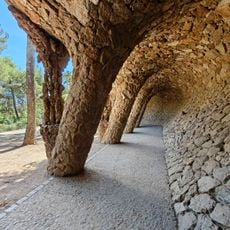
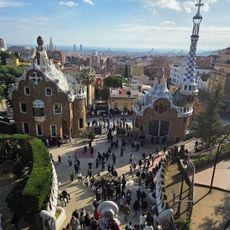
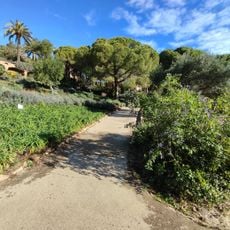
The park extends across 17 hectares of land, featuring stone structures, winding paths, gardens, and architectural elements decorated with ceramic mosaics.

Construction occurred between 1900 and 1914 under Antoni Gaudí's direction, initially planned as a residential development but later transformed into a public space.

The park represents a prime example of Catalan modernism architecture, incorporating natural forms and innovative structural solutions throughout its design.

Visitors need to purchase timed entry tickets in advance for the Monumental Zone, while the surrounding woodland areas remain free to access.

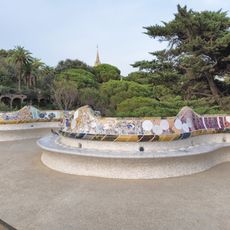
The main terrace contains a serpentine bench spanning 110 meters, designed to accommodate multiple small groups while maintaining privacy between conversations.

Location: La Salut

Architects: Antoni Gaudí

Official opening: 1926

Architectural style: Catalan modernism

Accessibility: Wheelchair limited access

Fee: Yes

Made from material: trencadís, ceramic

Part of: Works of Antoni Gaudí

Address: Gràcia, 08024 Barcelona, Spain

Opening Hours: January 01-March 24,October 28-December 31: 08:30-18:15; March 25-April 29: 08:00-20:30; April 30-August 26: 08:00-21:30

Phone: +34934091831

Website: https://parkguell.barcelona/ca

GPS coordinates: 41.41361,2.15278

Latest update: May 26, 2025 19:04

The most incredible structures in the world

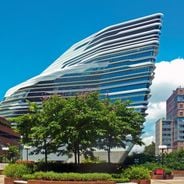
Architecture does not have to follow straight lines and right angles. This collection presents buildings that stand out through their form: domes, spirals, tilted facades or organic structures that recall animals or plants. From Gaudí's mosaic covered works in Barcelona to the stacked concrete cubes of Habitat 67 in Montreal or the conical trulli of Alberobello, these structures demonstrate alternative approaches to construction. Some emerged from technical necessity, such as the temporary cardboard cathedral in Christchurch after the 2011 earthquake. Others are artistic statements: the Guggenheim Museum in Bilbao with its titanium plates, the Dancing House in Prague or the cubist houses in Rotterdam. In Đà Lạt, the Crazy House transforms tree trunks and caves into habitable spaces, while the Atomium in Brussels represents a magnified iron crystal. These structures attract visitors but also raise questions about function and livability. The Longaberger Basket Building in Ohio takes the form of a seven story basket. The Lotus Temple in New Delhi uses concrete shells to form 27 petals. The Aldar headquarters in Abu Dhabi resembles a circular coin. These buildings expand the definition of what architecture can be.

Antoni Gaudi architecture in Barcelona

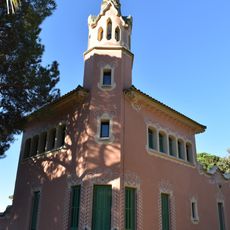
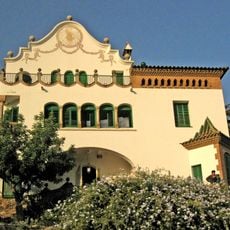
Antoni Gaudí shaped Barcelona's cityscape with his modernist buildings that combine organic forms, natural motifs and structural innovations. His work spans more than four decades and includes residential buildings, parks, churches and experimental structures. The Sagrada Família, his monumental basilica under construction since 1882, demonstrates his understanding of geometry and light. Casa Batlló and Casa Milà show his ability to transform facades into sculptural surfaces, while Park Güell implements his vision of architecture within nature. Beyond Barcelona, projects like El Capricho in Comillas and the crypt at Colònia Güell in Santa Coloma de Cervelló demonstrate Gaudí's influence across Catalonia. His early works, including Casa Vicens and Palau Güell, document his evolution from traditional historicism to his characteristic style. The Gaudí House Museum in Park Güell provides insight into his life and working methods. These buildings are distributed throughout the city and mostly accessible to visitors, though some remain residential or operational.

Stone mosaics in buildings around the world

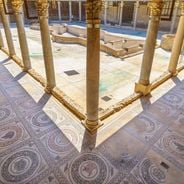
Stone mosaics adorn buildings across continents, offering insights into the artistic traditions of different eras. Roman floor mosaics feature mythological scenes and geometric patterns in villas and public baths. Byzantine wall mosaics in churches depict religious figures using gold tesserae, while Islamic mosaics in mosques and palaces showcase intricate geometric and floral compositions. Examples of this art form can be found at Hagia Sophia in Istanbul, where Christian and Islamic elements coexist, in the early Christian basilicas of Ravenna with their detailed biblical narratives, and at the Dome of the Rock in Jerusalem with its elaborate arabesques. Modern interpretations appear in subway stations, public squares, and contemporary buildings, demonstrating the continued relevance of this technique.

Must-see sites in Barcelona

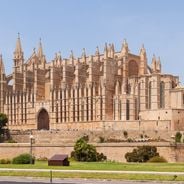
Barcelona offers a wide range of architectural and cultural sites that reflect centuries of Catalan history. The city combines Gothic churches and medieval streets with the organic forms of Antoni Gaudí's modernist buildings. From the Sagrada Família to Parc Güell, his designs shape the cityscape, while the Gothic Quarter and palaces such as Palau Güell represent earlier periods. Museums including the Picasso Museum and Joan Miró Foundation illustrate the city's artistic legacy. Markets like La Boqueria and Sant Antoni provide insight into Catalan daily life. The waterfront district of La Barceloneta, the Olympic Port, and Montjuïc with its cable car and fountain broaden the range. Other destinations include Casa Batlló, Casa Milà, the Hospital de Sant Pau, the National Art Museum of Catalonia, and the Aquarium.

Reviews

Real people, real opinions — but not verified.

Visited this place? Tap the stars to rate it and share your experience / photos with the community! Try now! You can cancel it anytime.

jeff
@jeff

May 16, 2025 13:42

maria
@maria

Apr 1, 2025 12:00

The place is beautiful but very crowded.

stephren
@stephren

Mar 30, 2025 17:09

A magical stroll on the city's heights!

« Park Güell - Architectural park in La Salut, Barcelona, Spain » is provided by Around Us (aroundus.com). Images and texts are derived from Wikimedia project under a Creative Commons license. You are allowed to copy, distribute, and modify copies of this page, under the conditions set by the license, as long as this note is clearly visible.

Discover hidden gems everywhere you go!

From secret cafés to breathtaking viewpoints, skip the crowded tourist spots and find places that match your style. Our app makes it easy with voice search, smart filtering, route optimization, and insider tips from travelers worldwide. Download now for the complete mobile experience.
Around Us App Screenshot

A unique approach to discovering new places

Le Figaro

All the places worth exploring

France Info

A tailor-made excursion in just a few clicks

20 Minutes