Cueva de Nerja, Natural limestone cave system in Nerja, Spain
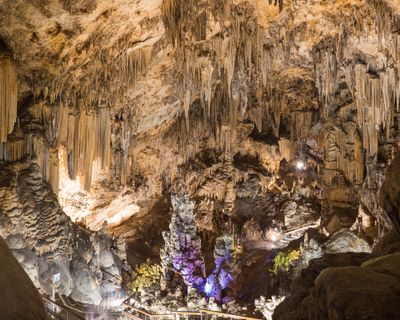
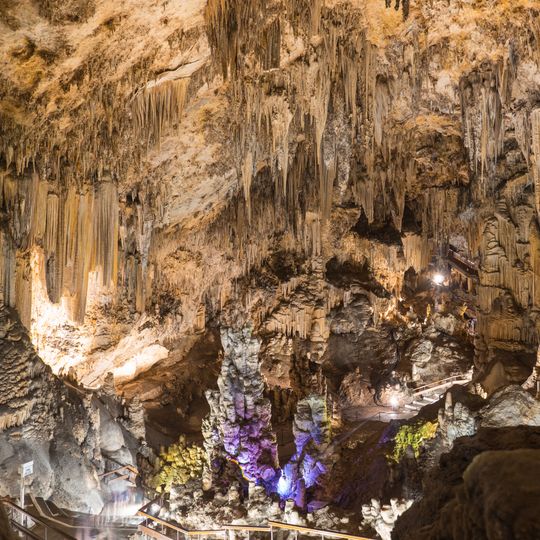
The Cueva de Nerja is a limestone cave system in the municipality of Nerja on the Costa del Sol. The passages and chambers extend through multiple levels and contain stalactites, columns, and other mineral deposits formed over thousands of years.
Five young men from the area discovered the cave in 1959 while searching for bats and came across prehistoric paintings and tools. Archaeologists later found traces of human settlement reaching back to the Paleolithic era, along with remains of Ice Age animals.
The name derives from the Arabic word for "abundant spring," reflecting the region's Moorish past. Visitors today can experience music and dance performances in one of the halls, where the acoustics of the natural rock formations create an extraordinary sound setting.
Guided tours follow a paved circuit through lit areas, with the temperature remaining around 20 degrees Celsius year-round. The paths include steps and inclines, so visitors with limited mobility should plan accordingly.
One of the chambers holds the largest known stalagmite column in the world, standing over 32 meters (105 feet) tall and still slowly growing. Researchers have also found remains of seals here that lived in the cave thousands of years ago, when the sea was closer.
The community of curious travelers
AroundUs brings together thousands of curated places, local tips, and hidden gems, enriched daily by 60,000 contributors worldwide.