Acueducto de Maro, 19th-century aqueduct in Nerja, Spain
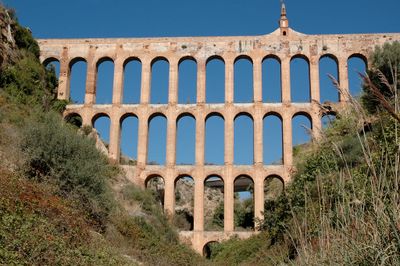
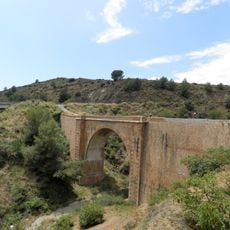
The Acueducto de Maro is a 1800s aqueduct in Nerja that stretches about 1600 meters and rises roughly 38 meters high. It consists of 37 brick arches spanning across the valley to carry water across the landscape.
Construction took place between 1887 and 1891 under engineer José de la Cruz Cañaveral during Spain's industrial expansion period. The aqueduct was built to supply water to a sugar factory operating in the area at that time.
The structure shows Moorish influences in its arches and brickwork, reflecting regional building practices of the 1800s. People visiting the site notice the skilled craftsmanship and careful attention to detail in how the materials were placed and finished.
You can best see the aqueduct from a viewing point along the N-340 road between Nerja and Maro. Free parking is available nearby, making it easy for visitors to stop and take time to look at the structure.
A weather vane shaped like a double-headed eagle sits atop the central tower of the structure. This distinctive detail led locals to call it by an alternative name, Acueducto del Águila.
The community of curious travelers
AroundUs brings together thousands of curated places, local tips, and hidden gems, enriched daily by 90,813 contributors worldwide.