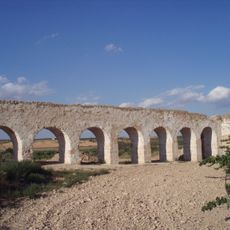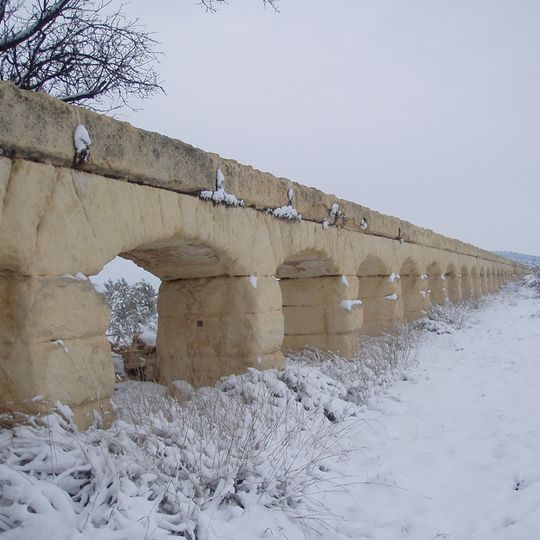
Aqueduct of Albatana, Historic aqueduct monument in Albatana, Spain.
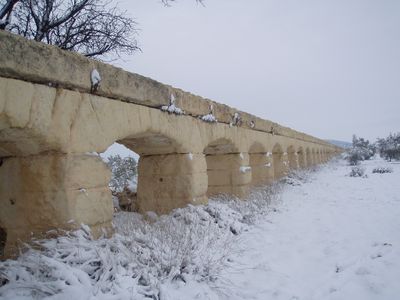
The Aqueduct of Albatana stretches 470 meters through the Los Molinos area, featuring a combination of masonry construction and stone arches with square pillars that transport water across varied terrain with remarkable engineering precision.
Originally constructed in the 18th century, this hydraulic structure initially served as a fulling mill for wool washing before being converted into a flour mill, demonstrating the adaptive reuse of infrastructure throughout different historical periods.
Declared a Cultural Heritage Site in 1990, the aqueduct represents traditional water management practices in Castilla-La Mancha region and serves as a tangible symbol of rural economic activities from past centuries.
The structure maintains a constant 0.5% gradient along its straight canal route, efficiently channeling water from a natural spring located between Albatana and Tobarra using gravity-fed flow without requiring additional pumping mechanisms.
This monument combines two distinct construction phases with different architectural styles, showcasing the evolution of civil engineering techniques while maintaining functional water transport capabilities for over three centuries.
The community of curious travelers
AroundUs brings together thousands of curated places, local tips, and hidden gems, enriched daily by 60,000 contributors worldwide.