Tolmo de Minateda, Archaeological site in Hellín, Albacete, Spain
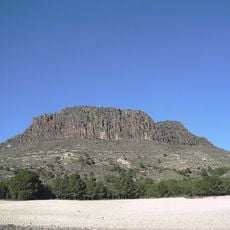
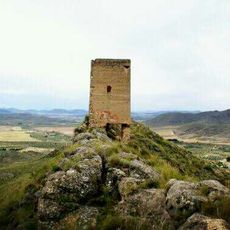
Tolmo de Minateda is an archaeological park on a rocky hill featuring excavated remains from several historical periods positioned at a strategic crossroads. The site spans about 7 hectares and reveals settlement patterns from multiple eras of occupation.
The site was founded as the Roman municipality of Ilunum in 9 BC and later became a Visigothic episcopal center called Eio before passing under Islamic rule. This sequence shows how this strategically important location transformed significantly under different rulers and belief systems.
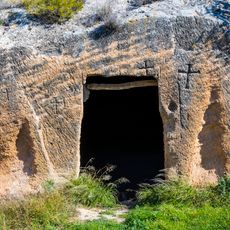
The name Minateda derives from the Arabic Madinat Iyyuh, itself an adaptation of the Visigothic see of Eio. Bishops of Eio signed council acts as ilicitanae, qui et eiotanae, indicating dependence on the bishop of Ilici (La Alcudia, Elche). The Visigothic religious complex was created between 589 and 610 to administer the part of the Ilici diocese still in Visigothic hands.
The interpretation centre of the Parque Arqueológico del Tolmo de Minateda opened on 4 March 2019. The site lies about 5 km from Hellín's railway station, and the final approach follows El Reguerón, the sunken track whose bedrock still shows ruts cut by cart wheels. Wear sturdy shoes for the slope and the uneven excavated ground.
The entrance displays defensive structures from three distinct periods, each reflecting different construction techniques used by different occupiers. This layering of walls and fortifications is unusual and makes the transitions between rulers visually apparent to visitors.
The community of curious travelers
AroundUs brings together thousands of curated places, local tips, and hidden gems, enriched daily by 94,627 contributors worldwide.