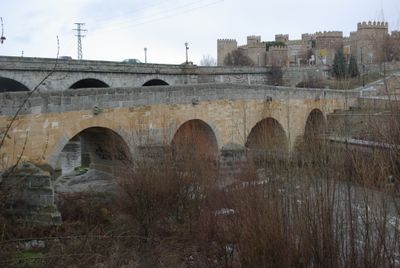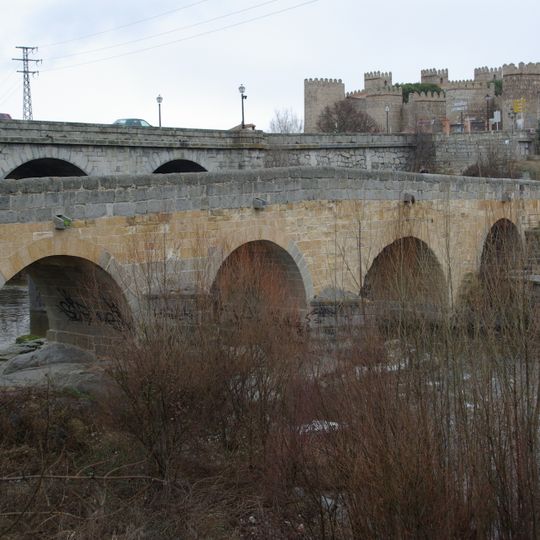
Roman bridge of Ávila, Roman bridge above Adaja River in Ávila, Spain.
The Roman bridge of Ávila is a stone structure spanning the Adaja River with five arches and four pillars of varying heights to maintain consistent spans. The construction uses local granite and sandstone materials throughout its length.
The bridge was originally built during Roman times but underwent substantial changes during the medieval period. The central arch was later rebuilt with granite quarried from La Colilla, reflecting how the structure evolved across different eras.
The bridge serves as a link between the western side of Ávila and the riverside, functioning as a crossing point that locals have relied on for centuries. The combination of Roman and medieval building techniques is visible in the gray and blue granite used throughout the structure.
The bridge is easily accessible to pedestrians and provides a direct route from the western gate of the city toward the riverside area. The crossing is relatively level, making it manageable for visitors of varying mobility.
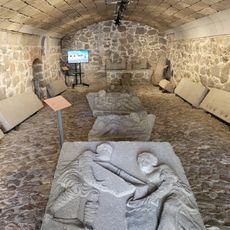
A Roman cinerary urn was discovered within one of the central arches, revealing evidence of ancient funeral practices near the city gate. This artifact offers a rare glimpse into burial customs of the Roman period in this area.
The community of curious travelers
AroundUs brings together thousands of curated places, local tips, and hidden gems, enriched daily by 92,244 contributors worldwide.