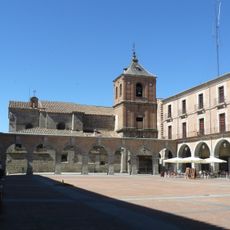
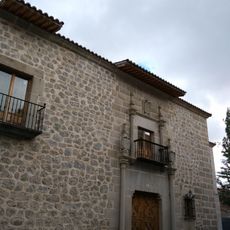
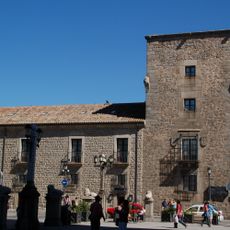
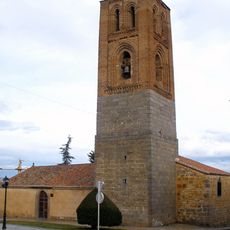
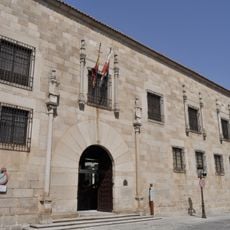
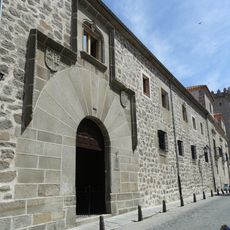
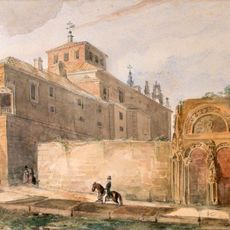
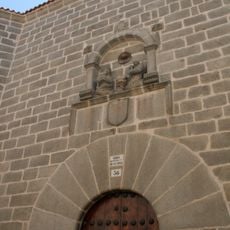
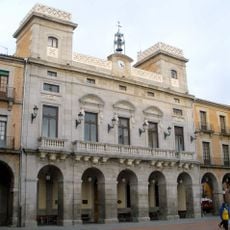
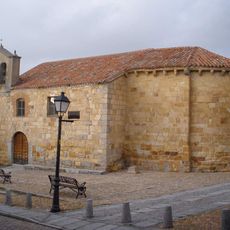
Palacio de Polentinos, Renaissance palace in Ávila, Spain.
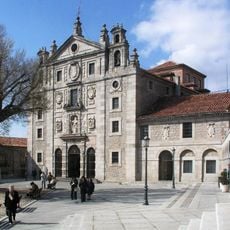
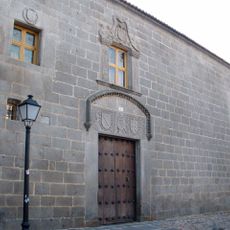
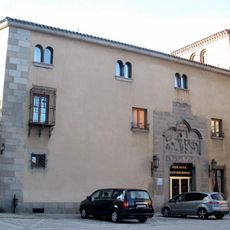
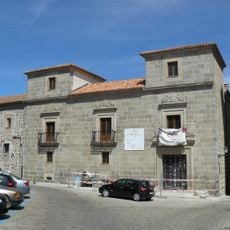
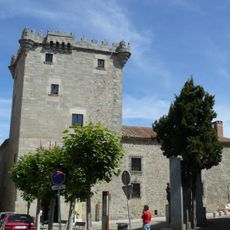
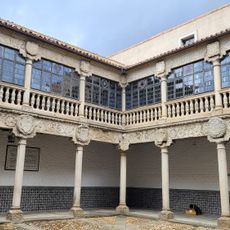
The Palacio de Polentinos is a 16th-century Renaissance building inside the walled city of Ávila. Its richly carved portal is among the most important in the city, and its square courtyard has two levels of five monolithic columns topped by plateresque friezes with coats of arms and plant motifs.
The palace was built in the early 16th century by the Contreras family, who owned it until the early 18th century, when María A. de Contreras y Santisteban, Marchioness of Olivares, married Francisco J. de Colmenares y Fernández de Córdoba, Count of Polentinos. It remained with the counts of Polentinos until the late 19th century, when the city council acquired it. From 1993 it housed the General Military Archive of Ávila, and since July 2011 it has also held the Museum of Intendancy.
The building displays decorative work by artists from the school of Spanish sculptor Vasco de la Zarza, shaping the appearance of this Renaissance residence. The artistic details on portals and courtyards reflect the wealth and status of the family who lived here.
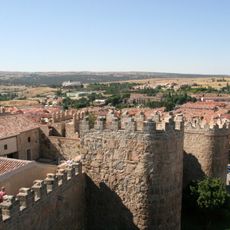
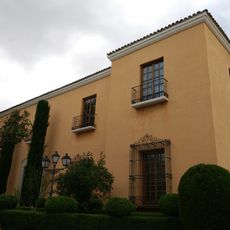
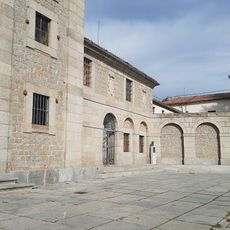
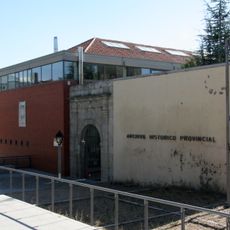
The palace stands inside Ávila's walled enclosure, within the complex that houses the Army's archive and museum. Since 1993 it has been the seat of the Archivo General Militar de Ávila, and since July 2011 it has also held the Museo de Intendencia. The rear area, once a Spanish Renaissance garden, now serves as the building's car park.
The ceremonial hall contains a coffered ceiling with wooden beams supported by carved corbels beneath. This Renaissance craftsmanship reveals the high technical skill applied to the residence's formal rooms.
The community of curious travelers
AroundUs brings together thousands of curated places, local tips, and hidden gems, enriched daily by 94,638 contributors worldwide.