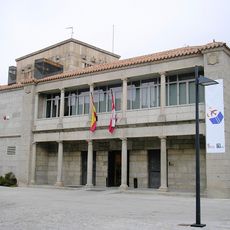
Palacio de Bracamonte, Ávila, Renaissance palace in Ávila, Spain.
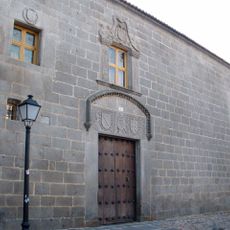
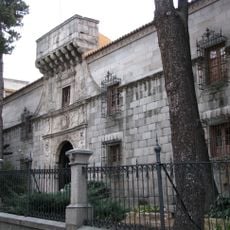
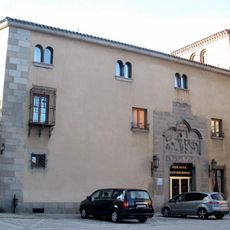
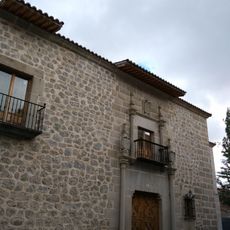
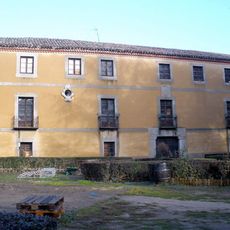
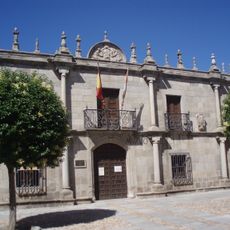
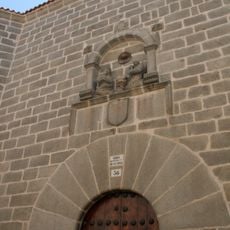
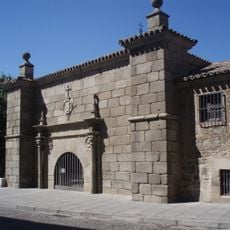
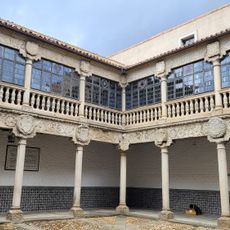
The Palacio de Bracamonte is a square-plan palace in Ávila built of ashlar, rubble and rammed earth, mixing late Gothic and early Renaissance elements. Its two-storey courtyard has three segmental arches per side on slender Tuscan columns, with noble shields in the spandrels; the upper gallery is trabeated, divided into five openings per side, with Gothic tracery parapets and a ball motif. The main façade was completely altered.
Álvaro Dávila, marshal of Castile, built the first palace in the 15th century against the city wall, at the gate still called Puerta de Mariscal. A second owner ordered its rebuilding in 1510, work that dragged on until about 1597. The Bracamonte name came through Álvaro's marriage to the daughter of the first Bracamonte, a Frenchman who came to Spain to aid Enrique II against Pedro I.
The heraldry is concentrated in the courtyard, not on the exterior walls: the spandrels of the lower arcades carry shields of the Bracamonte, Velasco, Guzmán, Dávila, Águila and Valderrábanos families. The upper gallery's parapets repeat these arms in Gothic tracery, and the stair doorway bears the Velasco and Bracamonte blasons inside laurel wreaths.
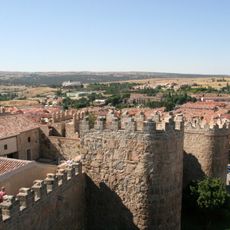
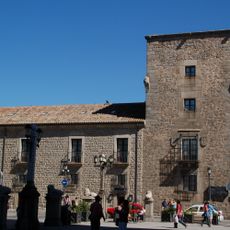
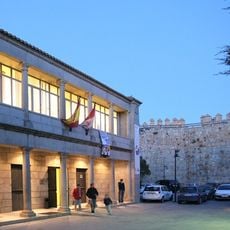
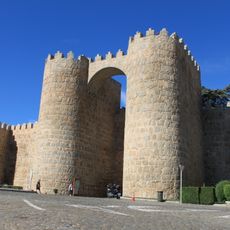
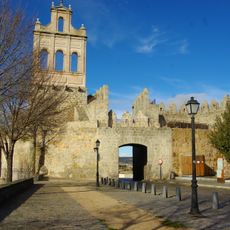
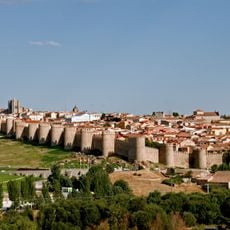
The palace is attached to the Puerta de Mariscal, the wall gate named after its first owner, so it is found by following the eastern stretch of the Ávila wall. It now houses the Servicio Territorial de Cultura and the Sección Agraria Comarcal of the Junta de Castilla y León, so visits are limited to the administrative opening hours.
The palace is attached to the Puerta de Mariscal, a gate in Ávila's walls named after its first owner, Álvaro Dávila, marshal of Castile. The central courtyard was walled up in the early 20th century because of the intense cold in its rooms.
The community of curious travelers
AroundUs brings together thousands of curated places, local tips, and hidden gems, enriched daily by 94,250 contributors worldwide.