Posada del Rosario, Renaissance building in central Albacete, Spain.
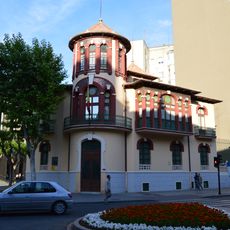
Posada del Rosario is a Renaissance building in central Albacete with a square courtyard enclosed by eight Ionic columns supporting a wooden gallery above. Various arch types frame the interior space, creating a layered composition of structural elements throughout the structure.
The house belonged to the Cantos Barnuevo lineage and passed through a mayorazgo to the Pando Barnuevo heirs; with the family reduced, it was turned into an inn. Manuel Pando y Barnuevo, baptised in 1751, made the conversion, and the first mention of the posada appears in notarial protocols of 1797, when he denounced the innkeeper Santos Corominas, who had run it since 1795, for trying to leave before the agreed term. It closed as a lodging in the mid-20th century and was declared a national historic-artistic monument in 1980.
The name comes from the nearby hermitage of Nuestra Señora del Rosario, mentioned in an 18th-century deed describing the house at the corner of the street leading to the Vía Crucis. During the city's Feria the historic rooms are used as a theatre stage, as they were in its early days. The building also houses the Real Academia de Medicina de Castilla-La Mancha.
The building holds six municipal study rooms with 162 seats in total, reached through a side door added during the 1994 restoration; that doorway is the main portal of the former Casa de los Picos, dismantled around 1977. It is also the seat of the Real Academia de Medicina de Castilla-La Mancha. During the city's Feria the historic space is used as a theatre stage.
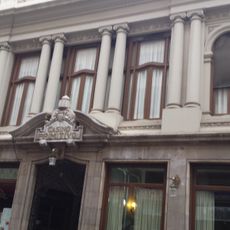
The side entrance to the study rooms is not original: it is the main portal of the so-called Casa de los Picos, a 16th–18th century palace of the counts of Villaleal on Calle de Gaona, dismantled around 1977 and re-erected here during the 1994 restoration.
The community of curious travelers
AroundUs brings together thousands of curated places, local tips, and hidden gems, enriched daily by 94,774 contributors worldwide.