Museo de los Faroles y Rosario de Cristal, Religious art museum in Zaragoza, Spain
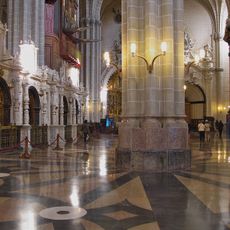
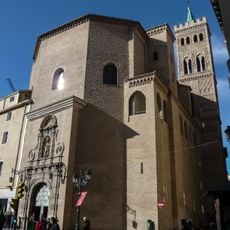
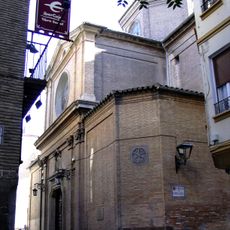
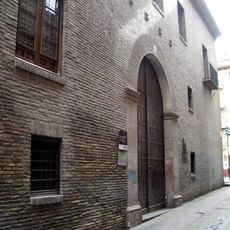
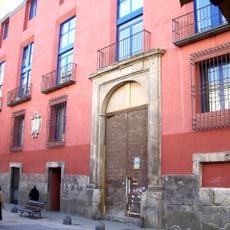
The Museo de los Faroles y Rosario de Cristal occupies the church of the Sagrado Corazón de Jesús on Plaza de San Pedro Nolasco. Its three exhibition spaces follow the order of the October 13 procession and hold 300 lanterns and banners, lit in sequence with a recorded commentary. The glass carriages and lanterns were designed by Ricardo Magdalena and built by León Quintana.
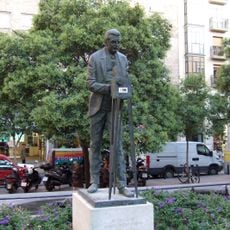
The Real Cofradía del Santísimo Rosario de Nuestra Señora del Pilar was founded on 2 January 1889. Its board commissioned architect Ricardo Magdalena to design carriages for each part of the rosary, built by master craftsman León Quintana. The first parade took place that same year; in 1890 it moved to 13 October and was named Rosario de Cristal. Electric lighting replaced candles in the last third of the 20th century.
Every October 13, the collection participates in a night procession through Zaragoza's streets, with illuminated glass pieces reflecting the city's devotion. This yearly tradition has drawn people together in shared religious observance for generations.
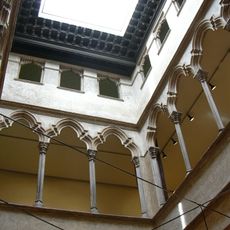
The museum occupies the church of the Sagrado Corazón de Jesús on Plaza de San Pedro Nolasco. The visit follows the procession order through three separate spaces, with a recorded commentary synchronised to the lighting of each piece. The display includes 300 lanterns and several banners.
The lantern representing the Temple of the Pillar is made from over 130,000 pieces of glass. The museum also holds part of the 63 star-shaped lanterns that stand for the Litany of Loreto. Some lanterns, such as those of the Holy and Angelic Chapel, were carried in processions before the Crystal Rosary began.
The community of curious travelers
AroundUs brings together thousands of curated places, local tips, and hidden gems, enriched daily by 93,356 contributors worldwide.