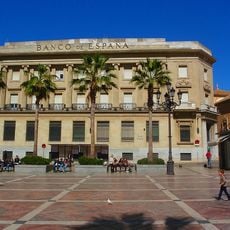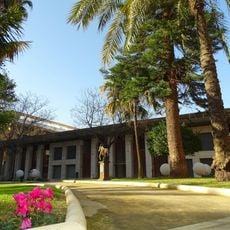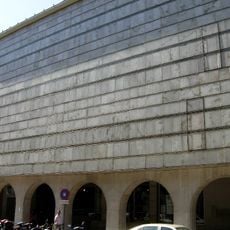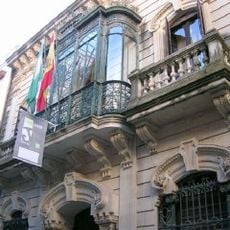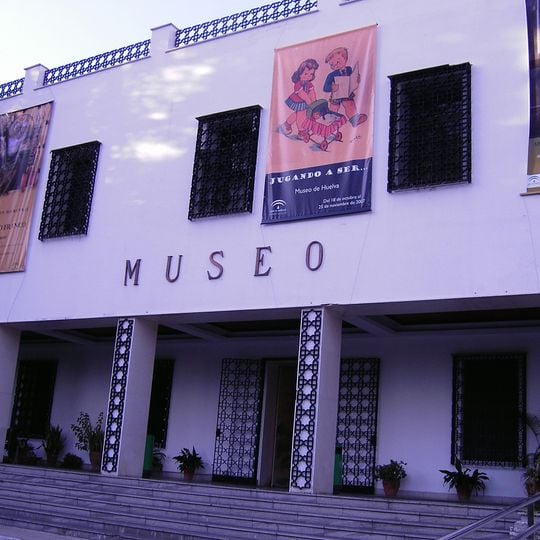
Museum of Huelva, Regional history museum in Alameda Sundheim, Huelva, Spain
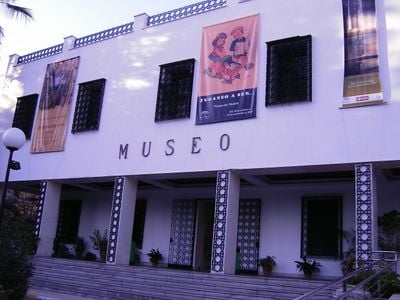
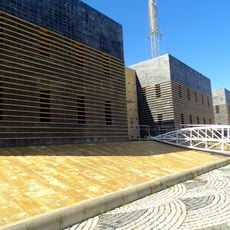
The Museum of Huelva is a regional repository located in Huelva, Spain, that displays archaeological finds and artworks across multiple levels. The exhibition spaces feature items ranging from prehistoric periods through the Roman era, along with paintings and sculptures spanning several centuries.
The Museo Provincial de Bellas Artes de Huelva was created on 7 July 1920, and the painter José Fernández Alvarado opened it on 25 May 1921 in calle Ricos, combining the Academia de Pintura with exhibition rooms. An archaeology section led by Carlos Cerdán Márquez was added, and the present building on the Alameda Sundheim was inaugurated on 12 October 1973. It was declared a monument in 1962.
The museum's name recalls its origin as the Museo Provincial de Bellas Artes, created on 7 July 1920 and opened on 25 May 1921 by the painter José Fernández Alvarado, who combined the city's painting academy with an exhibition room. Since 1973 the painting collection has centred on Daniel Vázquez Díaz, born in Nerva, including his cubist portrait of the poet Juan Ramón Jiménez of Moguer.
The museum operates on varying schedules throughout the week and may close on certain public holidays. Visitors should check current opening times before arriving to ensure it is open for their visit.
The entrance hall features an ancient Roman water wheel from the Riotinto mines, revealing how advanced the mining infrastructure was in this region. This mechanical device shows the technological sophistication applied to mining during the Roman period.
The community of curious travelers
AroundUs brings together thousands of curated places, local tips, and hidden gems, enriched daily by 93,519 contributors worldwide.