Reserva del Regajal-Mar de Ontígola, Protected wetland in Aranjuez, Spain
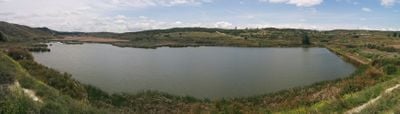
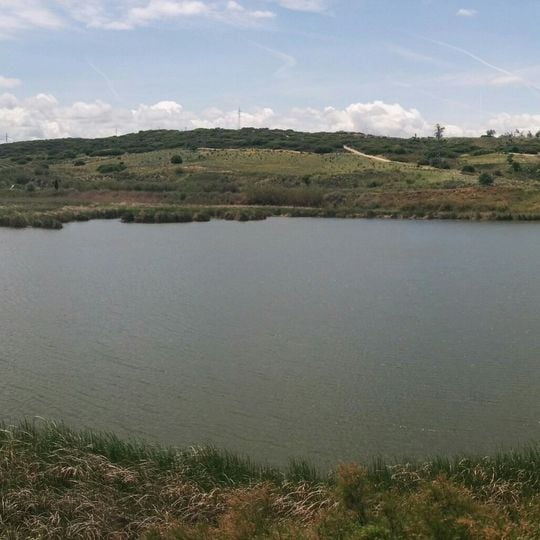
The Reserva del Regajal-Mar de Ontígola covers 629.21 hectares in Aranjuez, Madrid, and combines two environments: the Mar de Ontígola, a Renaissance reservoir now fully naturalized, and the adjoining El Regajal estate, a Mediterranean-subdesert scrubland. The photograph shows grey-green water below a band of dense shrubs and grasses, with rolling hills of scrub, dry grass and scattered trees behind, crossed by a pale dirt path on the right.
The Mar de Ontígola lagoon was created in the 16th century on the orders of King Philip II to supply water to the royal gardens of Aranjuez. Over time it lost its original function and was eventually declared a protected area, which now also covers the surrounding dry scrubland known as El Regajal.
The name Mar de Ontígola comes from the Toledo village of Ontígola, under three kilometres away, and "mar" refers to its size compared with other wetlands in the area. In the 17th and 18th centuries the reservoir was also used for recreation: boats were rowed on it and tournaments, parties and games such as the despeñaderos were held there.
Most of the reserve, including the El Regajal estate, is private land, and only the Mar de Ontígola belongs to Patrimonio Nacional, so access is limited to the paths and the areas the regional administration has ceded. Four major routes cross the reserve: the N-IV road, the A-4 motorway, the R-4 toll road and the Madrid-Levante high-speed rail line, which passes through a 2,080-metre tunnel under El Regajal built in 2008.
El Regajal, the dry scrubland section of the reserve, is one of the richest areas for butterflies in Europe, with several species found almost nowhere else on the continent. On warm spring days, dozens of different species can be seen flying low over the flowering plants along the paths.
The community of curious travelers
AroundUs brings together thousands of curated places, local tips, and hidden gems, enriched daily by 95,179 contributors worldwide.